

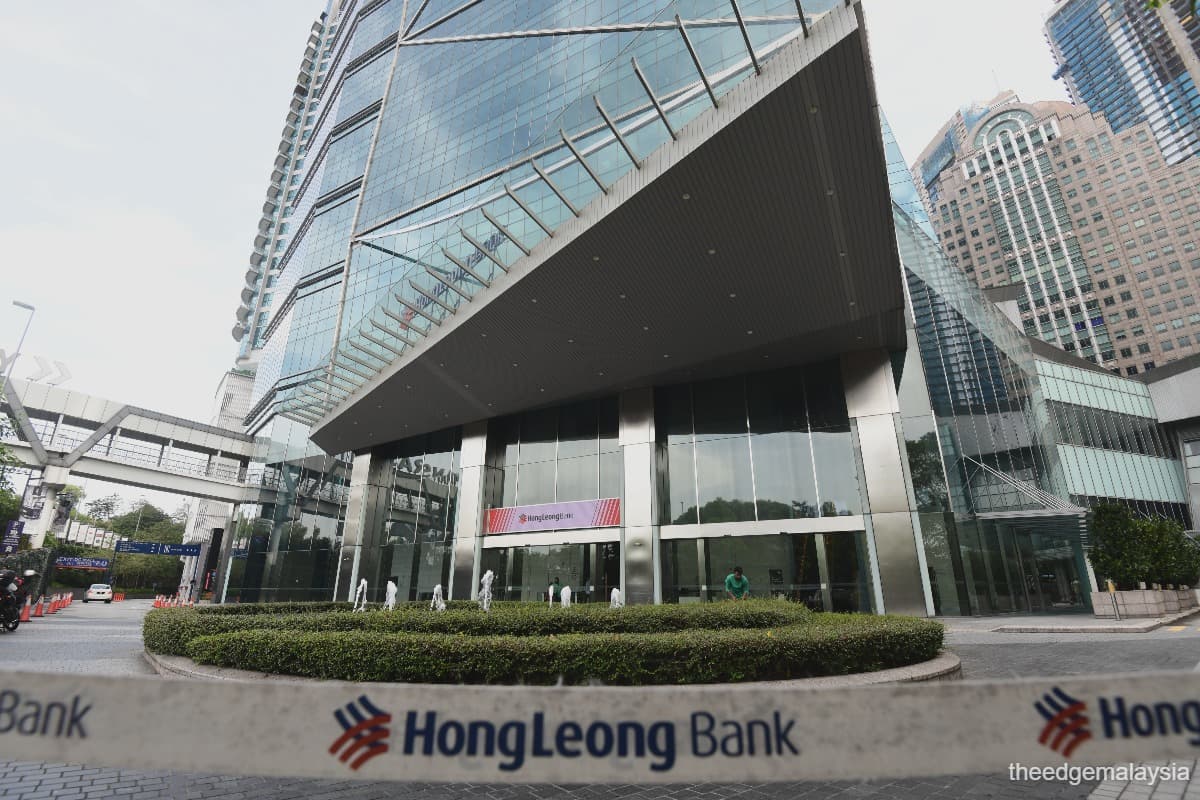
This article first appeared in The Edge Malaysia Weekly on November 9, 2026 - November 15, 2026
HONG Leong Bank Bhd (KL:HLBANK) plans to sell a smaller stake in China-based Bank of Chengdu Co Ltd (BoCD) than previously indicated, as slower growth at the associate and stronger expansion in its own core business ease concerns about BoCD’s outsized contribution to group earnings. The country’s fifth-biggest banking group by assets currently holds a 17.8% stake in BoCD.
“We may still want to hold about 15%. So maybe, 2.5%, 2.8%, 3% [stake sale] should suffice already,” group managing director and CEO Kevin Lam tells The Edge in an interview. The bank previously indicated a maximum 5% stake sale.
“We may not need to sell the full 5%, although the final stake will depend on the price. Potential buyers may want a board seat — we have two board seats — so these are matters that need to be negotiated,” he adds.
HLBB’s 17.8% stake has a market value of RMB14.98 billion (RM9.09 billion), based on BoCD’s Nov 5 closing on the Shanghai Stock Exchange.
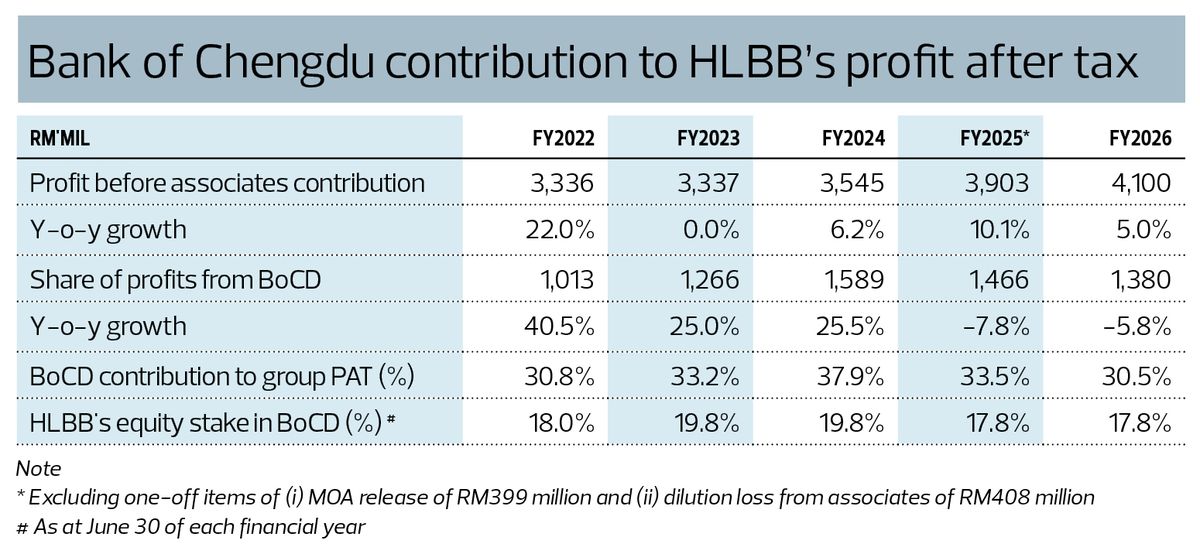
BoCD’s contribution to HLBB’s net profit fell from a peak of 37.9% in the latter’s financial year ended June 30, 2024 (FY2024), to 30.5% in FY2026. Lam indicates that it is likely to decline further to about 29% in FY2027.
Ideally, HLBB wants to bring the contribution to below 25%. He does not exclude the possibility of this happening within the time frame of its five-year transformative plan that ends in FY2028.
The gradual decline in BoCD’s contribution reflects both the reduction in HLBB’s shareholding over the years and slower growth at the China-based bank.
After recording annual bottom-line growth of close to 20% for several years, the Chinese bank’s new top officials, who took over in 2025, have indicated that they intend to pursue a more measured growth trajectory.
“They want to be able to grow the bottom line at the mid-single-digit … 4% to 5% is where they want to be, which sits very nicely with us. And we, on the other hand, have grown our core business (excluding BoCD) at an average of slightly over 7% in the last three years. So if we can [continue to] do 7%, and they do 5%, I think we will be okay,” says Lam.
Hence, HLBB is not rushing the sale and is seeking a price close to BoCD’s book value. “The right price would have to be near our book value. One thing about BoCD is that most banks are down sub-one time book value, but BoCD is near one time book value,” he adds.
Lam says the process remains ongoing and subject to rigorous Chinese regulatory approval. He points out that the right buyer was as important as the price, given HLBB’s intention to remain a major shareholder and preserve BoCD’s long-term prospects.
Asked who potential buyers might be, considering such a small stake, Lam says they may include insurers, securities firms and financial investment groups that could bring expertise in wealth management, insurance or financial technology. Existing shareholders are also being considered. “Those with some fintech capability, AI capability … those are the potential kinds of buyers we would want to consider.”
He stresses that the planned sale is not driven by concerns about BoCD’s performance or asset quality, reiterating that the Chinese lender has exited relationships with troubled property developers and maintained strong credit discipline.
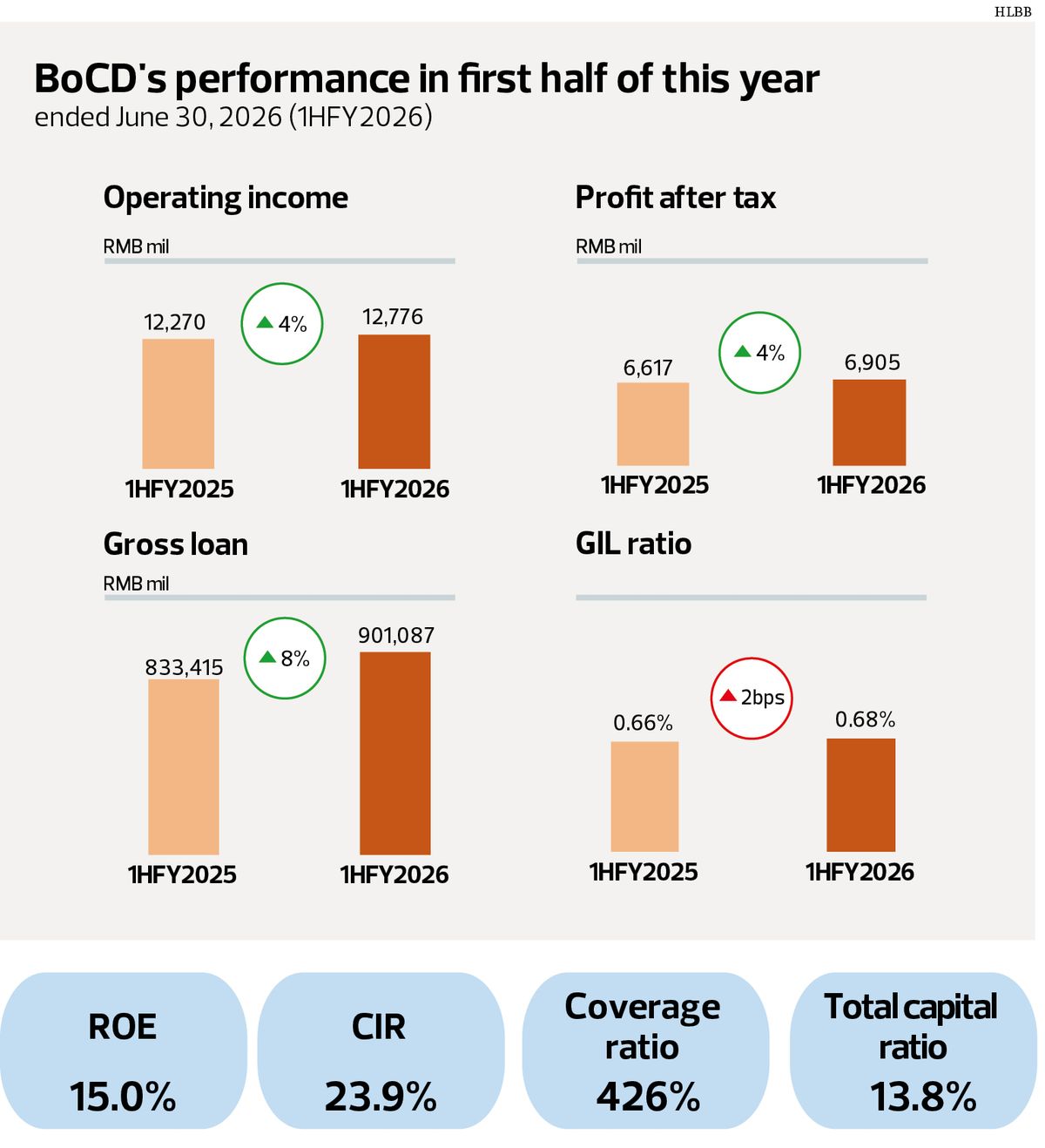
BoCD’s profit after tax (PAT) grew by 3.3% to RMB13.28 billion in the financial year ended Dec 31, 2025, following year-on-year growth of 10.2% in 2024, 16.22% in 2023 and 28.24% in 2022. It recently reported 4.5% y-o-y growth to RMB9.92 billion in 9MFY2026, on the back of a 9.84% increase in revenue to RMB19.81 billion. Its gross impaired loan ratio stood at 0.68%, unchanged from end-2025, and provision coverage strengthened to 448%, indicating that asset quality remained sound despite slower earnings growth.
Despite BoCD’s slower growth, the Chinese lender has been a “great investment” for HLBB, says Chan Jit Hoong, a banking analyst from AmIvestment Bank Research.
“I think some may be hoping that the planned stake sale will also allow HLBB to release some immediate capital that can potentially be returned as dividends. But for me, it doesn’t matter if they sell, I can live with them holding on to the 17.8% stake as BoCD is an asset that they have not nailed to full potential yet. The dividend payout ratio (DPR) is still low, just over 30%,” he says.
Separately, he notes that recent Basel III reforms may provide a 70 bps uplift to HLBB’s CET-1 ratio, as guided by the bank. “We believe they have the ability to pay out more dividends and they have also expressed the intention to do so sustainably in a progressive manner. So, the way I look at it, dividends this year should be better than last year.”
HLBB has steadily increased its dividends over the last three years. Its total dividend per share rose to 110 sen (DPR: 50%) in FY2026 from 59 sen in FY2023 (DPR: 32%).
The bank acquired a 19.99% stake in BoCD in 2008 for RM877.5 million, which was later diluted to 18% after the Chinese bank was listed on the Shanghai Stock Exchange in January 2028. In March 2022, HLBB subscribed for convertible bonds issued by BoCD, which later upon conversion, restored its equity interest to 19.8% by FY2023. The stake fell to the current 17.8% following the completion of the conversions by remaining shareholders.
Bloomberg data as at Nov 5 shows 13 “buy”, three “hold” and no “sell” calls on HLBB, with the 12-month average target price at RM26.74, suggesting further upside from its closing price of RM22.20. At that price, the bank has a market value of RM48.12 billion.
Cover Story 2: Avoiding the success trap
Save by subscribing to us for your print and/or digital copy.
P/S: The Edge is also available on Apple's App Store and Android's Google Play.