

This article first appeared in The Edge Malaysia Weekly on November 9, 2026 - November 15, 2026
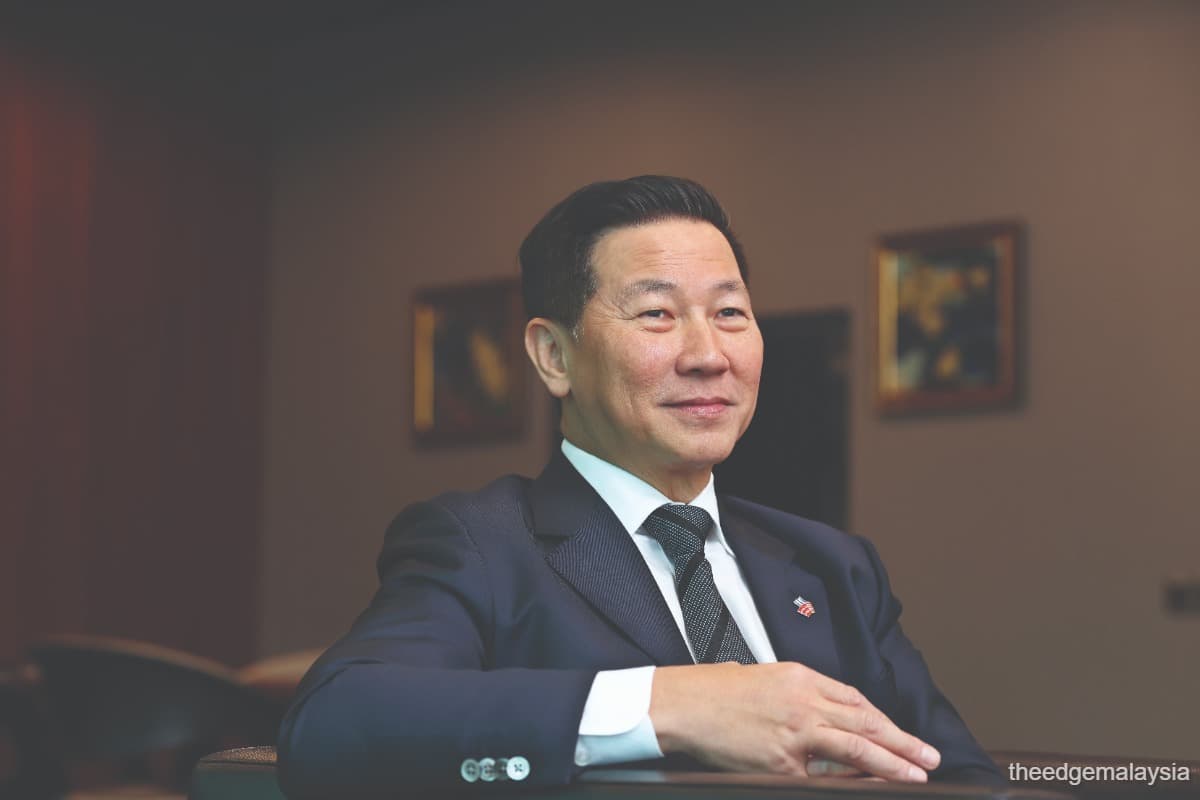
THREE years into its transformation journey, Hong Leong Bank Bhd (KL:HLBANK) is making headway in its ambition to become the country’s best-run bank. Its return on equity (ROE), cost-to-income ratio (CIR) and asset quality are already among the industry’s best, leaving group managing director and CEO Kevin Lam with the challenge of sustaining that performance without falling into what he calls a “success trap”.
“We have set such a high benchmark for ourselves that it becomes harder to balance growth with maintaining that performance,” the 57-year-old banker, who joined the group in July 2023, tells The Edge in an interview.
Nevertheless, finding the right balance is crucial as the country’s fifth-largest banking group by assets continues on its journey to drive long-term sustainable growth. The following is an excerpt from the recent interview.
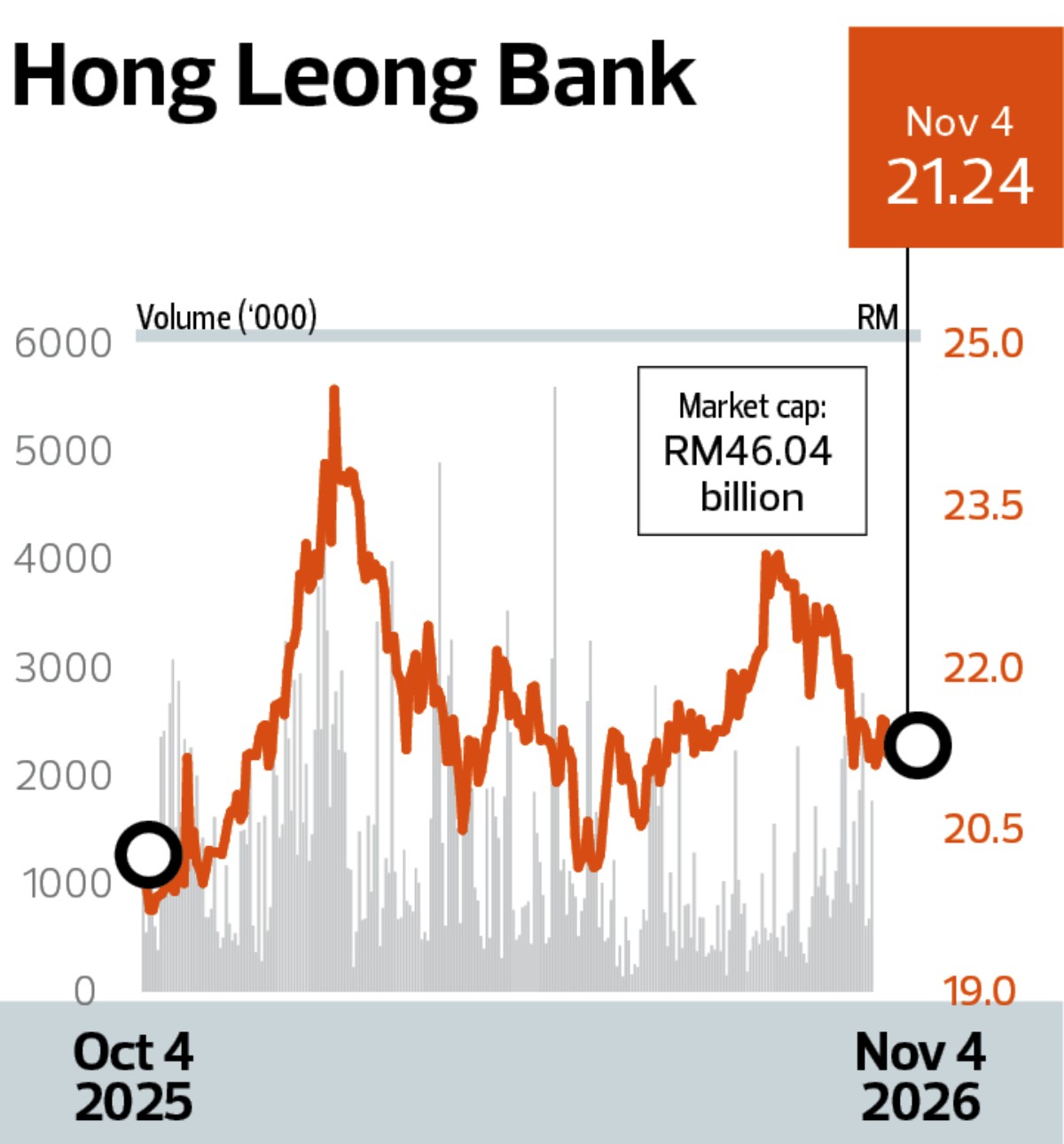
The Edge: Why wasn’t the bank able to reach its ROE target? We note that you meant to achieve over 12.5% by the third year of your plan.
Kevin Lam: Let me give you some context. First, when we made this particular plan, our Bank of Chengdu (BoCD) stake was at 19.8%, but it has since come down to 17.8%. Three years ago, we were already thinking about what we should do with this big contribution from BoCD. But at that point in time, the [target] numbers were made with the intent that we would hold on to our 19.8%. We did not anticipate the dilution of the [stake] and various other things we are now thinking about. So that has an impact. If we put that back, it’s actually at least a 40-basis-point (bp) impact on ROE.
[Another factor was] overseas contribution. It was during this period, against the trend, [that] the ringgit strengthened against all other currencies. So, that foreign exchange impact and the dilution of our stake in BoCD impacted ROE. If we so-call normalise it, we’re actually at about 12%. It’s not 12.5% … but we are near.
How do you see competition for deposits playing out in the industry? Will it intensify further?
Yes it will, because it’s the fourth quarter. Usually, after the seasonal competition for deposits, things will normalise. But [this year], I don't think it will. If you look at the loan-to-deposit ratio (LDR) of the Malaysian banks … many are at 95% to 100%. Public Bank is about 100%. We are one of the few below 90% (HLBB: 88.7%). So, I think that intensity for deposits will continue, even after the seasonal period.
Is this a Malaysia-specific problem, or do you see it in your other markets too?
If you compare Singapore and Malaysia, the situation is more specific to Malaysia because Singapore is flush with liquidity. Its system LDR is still around 60% to 70%. In fact, even after very strong loan growth in the third quarter, its LDR came down.
We see LDRs are high in the Nordic countries in Europe, but banking analysts are not particularly concerned because of their strong pension fund systems. Similar to Malaysia’s Employees Provident Fund (EPF) and other savings institutions, these funds channel savings back into the financial system through debt instruments and bank shares. If EPF can pay 6%, for instance, it makes little sense for savers to leave their money in deposits earning 2% to 3%.
I think, structurally, Malaysia is moving in that direction. It is something banks will have to learn to live with and manage over the long term.
While deposits remain an important source of funding, banks may need to look more closely at other liability management strategies. Hybrid and structured deposits, medium-term instruments and Cagamas are also important sources of funding.
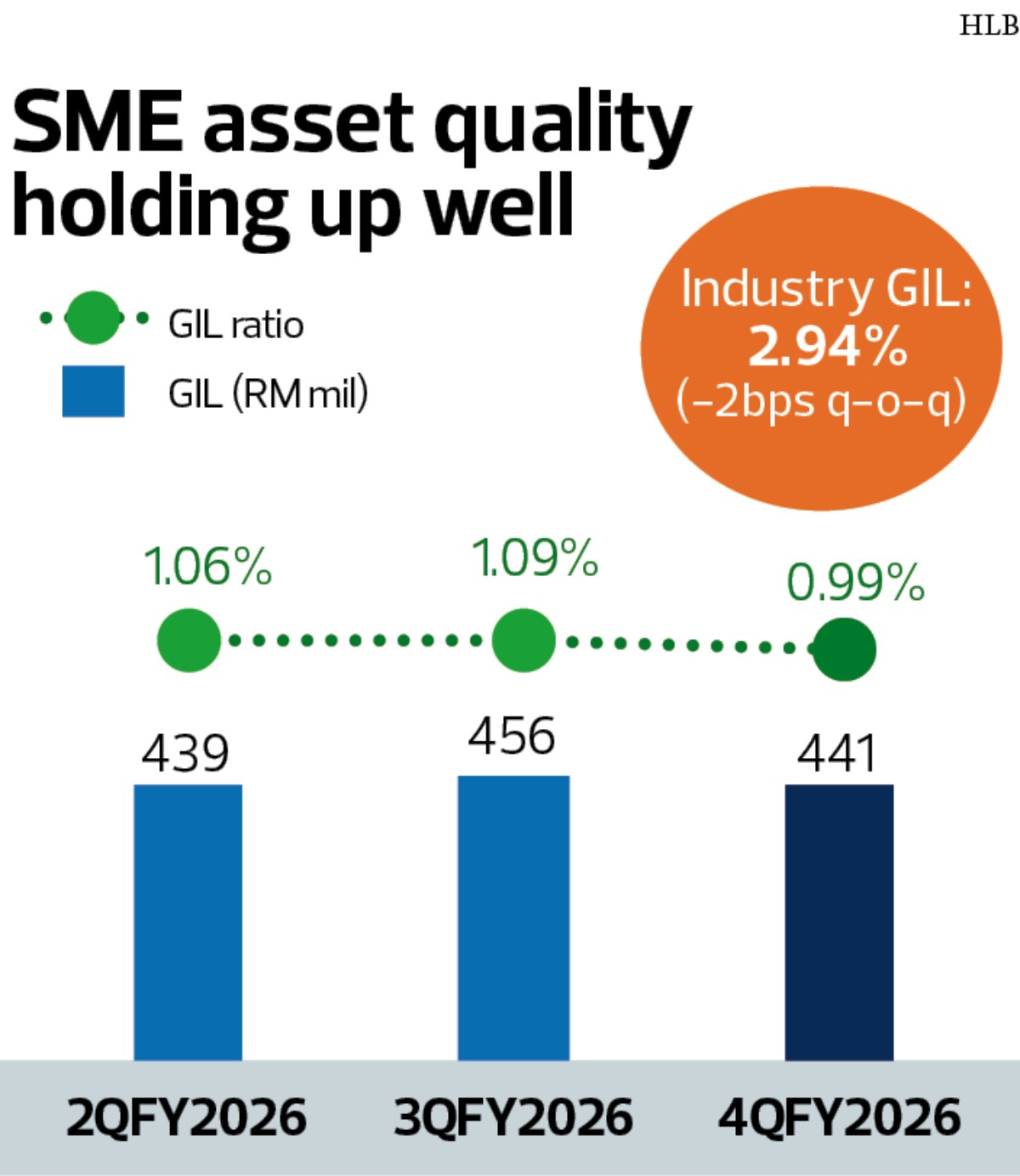
How is your asset quality holding up amid rising cost pressures for borrowers, especially small and medium enterprises (SMEs)?
We must be thankful that our credit quality has held up, and is still holding up.
Nothing in particular that warrants concern? No repayment issues?
No. I think what warrants concern is the competition. We see Chinese online companies are able to deliver goods, including shipping, at a fraction of what local wholesalers or retailers can offer. This spans a whole range of products, from garments and home appliances to towels, tables and curtains.
But thankfully, our client selection and the way we work with them are generally proactive and pre-emptive. So far, our results have held up.
We saw net write-backs in the recent quarter which helped boost profits. Do you expect more write-backs going forward, or could provisions increase?
We see this as business as usual. Some of the write-backs or recoveries involve long-standing cases that we have been working on for several years and have now managed to recover. We still expect some further recoveries, fingers crossed, which should be helpful. So it is still coming through.
No further need for additional provisions?
Most of these loans are fully secured, so there is no need for additional provisions. We have adequate security coverage for these loans should any issues arise.
You also have a presence in challenging markets such as Cambodia. Are there any plans to exit the market?
Cambodia is in a difficult place right now for several reasons. It exports a lot to the US, so the tariffs have had a significant impact. The conflict along the Thai-Cambodian border has also affected economic activity, while the authorities have recently stepped up their crackdown on scam operations, which will have a short-term economic impact. But in the longer term, I think it is good for the country to address these issues. So, it remains a challenging market.
But you intend to stay?
Yes, we are still there. However, in terms of resource allocation, our focus remains on Singapore and Vietnam, followed by Hong Kong. Another challenge is the requirement for banks to keep their data centres and systems within the country. This makes operating in these markets more challenging and costly.
You’ve recently guided that recent Basel III reforms would result in a 70bps uplift to Common Equity Tier 1. What do you plan to do with the surplus?
We want to assess the various options available to us. These could include acquisitions, supporting loan growth in some markets or simply maintaining an adequate capital buffer to ride through uncertainties.
What would you tell investors hoping that some of the additional capital could be returned through higher or special dividends?
We are working towards progressively improving dividends on a sustained basis. But we do not see the Basel III uplift as a windfall that should simply be paid out, as we have other uses for the capital.
Shareholders should be confident that we have a game plan and have demonstrated our ability to deliver sustained improvements in dividend returns. We want shareholders to take a longer-term view of the bank, rather than invest purely for a short-term gain. HLBB is seen by some as a growth stock, not just a dividend play, although we recognise the need to improve payouts, and have been doing so.
We have plans for the additional capital and want to assess how best to deploy it without setting premature expectations. Nevertheless, we remain committed to progressively improving dividends.
What are the group’s thoughts on bank mergers and acquisitions at the moment?
It’s not something that we’re not thinking about. We can say we’re thinking about it, but we don’t want to talk about it publicly.
We hear the owner, Tan Sri Quek Leng Chan, has been talking to shareholders of some banks. Can you comment?
No, as I said, that’s a shareholder-and-owner discussion. At management, we are not at liberty to discuss this.
Can Hong Leong remain a standalone bank and stay competitive over the next five to 10 years? What will be its competitive edge?
Yes, we can. SMEs are one of our key competitive strengths. We have been able to deliver high single-digit growth while keeping our credit charge and non-performing loan (NPL) ratio at low levels. I think we have something of a secret sauce there.
And now, we are also building up non-interest income and doing cross-selling. This includes expanding our wealth management, private banking, advisory and hedging capabilities.
There is also room to improve overall customer profitability, particularly in the Malay market, where we have yet to make a meaningful impact.
So, I don’t see an issue over the next five to 10 years. But the challenge is that we could be more. We could be more.
You’ve made strong investments in tech and AI. To what extent is the bank actually using AI in its businesses?
I think we’re now at a stage where AI is quite embedded into how the bank works. We have a five-year strategic partnership with Google, and all 8,000-plus employees have access to its enterprise tools, including Gemini.
We’re already using bots in collections, at the call centre and across our digital channels. We’re also applying AI-powered OCR (optical character recognition) to mortgages, car loans and trade financing. That helps reduce manual processing and checking. We also use AI and machine learning in fraud detection and customer verification to strengthen security. These are practical applications that can improve turnaround times and help protect customers.
We recently set up a Strategy and Operations structure, bringing resources together to relook at our operations and reimagine them with AI. I think that’s where the bigger opportunity is. We can step back and ask: Does this process still make sense? Can we do it better?
We’re building more of these capabilities ourselves, too. That gives us greater ownership of our technology and the ability to test ideas, learn and improve more quickly. Of course, as a bank, we have to be clear about the controls. AI gives us more capacity, but our people remain accountable for how we use it.
What do you see as your biggest challenge currently?
I think our biggest challenge is what I would call a success trap. Take our gross impaired loan (GIL) ratio, which is now below 0.6%, against our guidance of 0.65%. The challenge is that if we take on more risk in order to grow, and the GIL ratio rises to 0.8% or even 1%, people might say, ‘Oh, you’ve lost your credit discipline’, even though that would still be below the industry’s 1.5%. We have set such a high benchmark for ourselves that it becomes harder to balance growth with maintaining that performance.
The same applies to our CIR. We had targeted 40%, and are now at 37.6%, with AI potentially taking it down further to 37%. But if we keep driving it lower without reinvesting, we risk underinvesting in the business. We need to continue to invest in infrastructure, in technology, in people.
So, that success trap, whether it’s from a credit perspective, credit culture, our willingness to invest, I think that is the biggest challenge — striking the right balance without compromising on our discipline.
Cover Story 2: Eyes on Hong Leong Bank’s scaled-back BoCD stake sale plan
Save by subscribing to us for your print and/or digital copy.
P/S: The Edge is also available on Apple's App Store and Android's Google Play.