


This article first appeared in The Edge Malaysia Weekly on November 9, 2026 - November 15, 2026

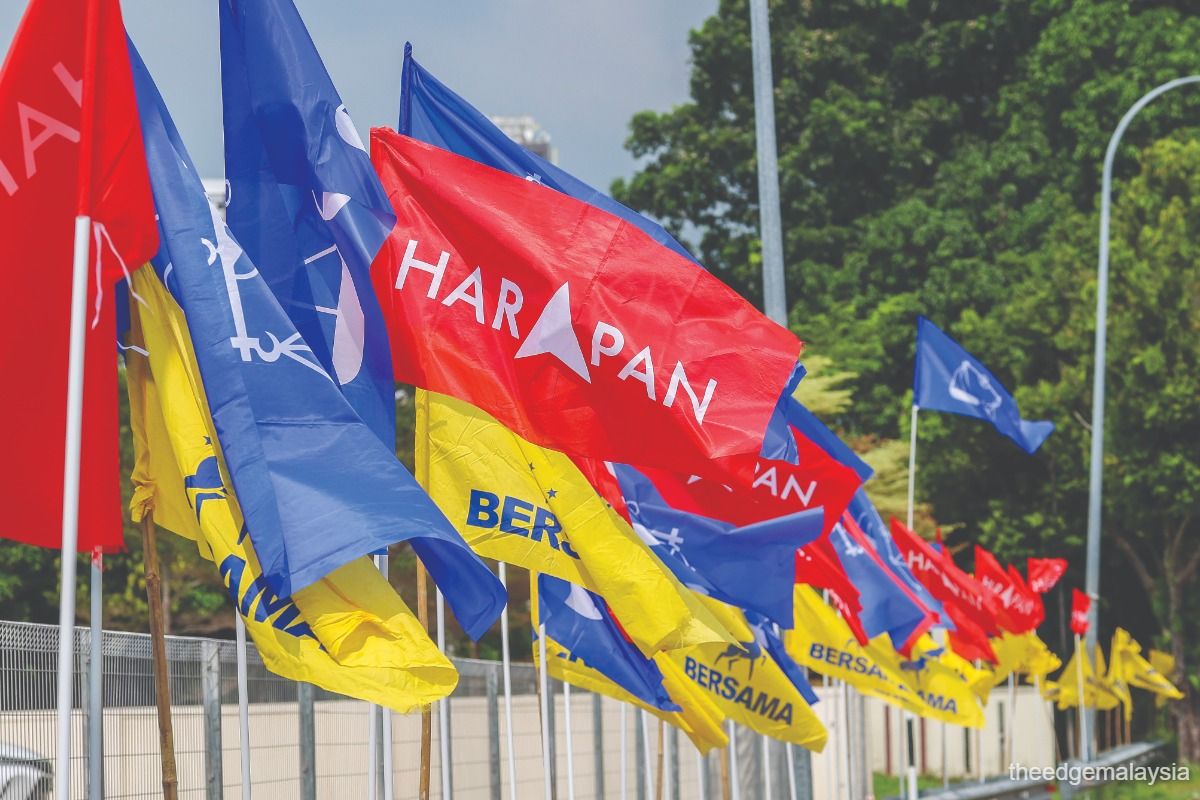
DAP, the largest component party of Prime Minister Datuk Seri Anwar Ibrahim’s Pakatan Harapan (PH) coalition, is hoping that Melaka — historically billed as “where it all began” — could spark a political revival as it strives to reverse its declining fortunes and regain its footing.
However, the electoral battle awaiting DAP in the southern state is likely to be another tough one, with much of the attention focused on its performance in Ayer Keroh. The party’s two-term incumbent, Kerk Chee Yee, is facing a four-cornered fight against Perikatan Nasional’s (PN) Datuk Michael Gan Peng Lam, Parti Pribumi Bersatu Malaysia’s (Bersatu) Mohd Hamnaim Mohamad and Parti Bersama Malaysia’s (Bersama) Muhammad Muhaimin Lau Abdullah.
Ayer Keroh, where the Melaka state administrative centre is, has been under DAP’s control since 2008, when the party first wrested the seat from MCA. The party’s winning margin widened to 42.4% in the watershed 2018 general election, reinforcing the perception that Ayer Keroh had become one of its strongholds.
However, the constituency’s changing voter demographics have made it a more closely contested seat. Chinese voters account for 47.6% of the electorate, followed by Malays at 42.4% and Indians at 8.3%. This makes DAP’s ability to secure support beyond its traditional voter base an important factor in the contest.
“This is by far the biggest challenge I face,” Kerk told The Edge during a walkabout at the busy Bukit Beruang morning market. He said the party had come under pressure, particularly from the potent penyatuan ummah (Malay unity) narrative, which has been leveraged by the Umno-led Barisan Nasional (BN) as well as PN.
“Elections should always be a contest of ideas. I hope this will prevail over identity politics,” he noted, adding that he hopes voters will take into account his track record and ability to address local issues when deciding whom to support.
However, DAP’s struggle isn’t limited to winning Malay support but also in retaining its traditional core supporters among the Chinese electorate. The Ministry of Education’s plan to reduce the teaching hours for Mandarin in Chinese primary schools under the new curriculum next year has sparked concern among the Chinese community, who view education as a particularly sensitive issue.
Rival parties, including MCA and Gerakan, have been vocal in criticising the proposal and using it to challenge DAP. The issue could add another layer of difficulty to the party’s campaign in Ayer Keroh.
Adding to the complexity is the presence of Bersama, which could further complicate DAP’s efforts to retain the seat. Bersama co-leader Datuk Seri Rafizi Ramli’s appearances at the Bukit Beruang morning market have drawn the attention of local residents, despite the party having been rebranded only five months ago.
The party’s decision to introduce its candidate three months ahead of polling may also give it an advantage on the campaign trail, allowing the candidate more time to familiarise himself with voters in Ayer Keroh.
“Even though Bersama has denied that its supporters are mainly from PH ... given that its party leadership stems from PH roots, this will be a tough fight for us,” said Kerk.
PKR seeks breakthrough in key seats
For Anwar’s Parti Keadilan Rakyat (PKR), the state election is about regaining its political footing in Melaka, with the party pinning its biggest hopes on two constituencies — Klebang and Paya Rumput.
Situated along the Strait of Malacca just northwest of the city of Melaka, Klebang is home to fishing communities and agricultural workers, reflecting its coastal and semi-rural character. The constituency has a predominantly Malay electorate, with Malays accounting for 68.5% of voters, followed by Chinese at 27%, Indians at 2.3% and other communities at 2.2%.
Interestingly, Klebang is one of three constituencies where PH will go head to head with Bersatu. PKR has fielded Gen Z candidate Farzana Hayani Mohd Nasir in a four-cornered contest against incumbent Datuk Lim Ban Hong of BN, Datuk Seri Mohamad Ali Mohamad of Bersatu and Young Jie Yu of Bersama.
A visit to the constituency offers a glimpse into the complicated electoral dynamics on the ground, where the contest between PH and Bersatu could further complicate BN’s efforts to consolidate Malay support, particularly if racial considerations continue to play a significant role in shaping voter preferences.
“Ali Pasir is a well-known figure here in Klebang. The locals even know where his house is,” said a Malay resident queuing for Melaka’s famous coconut shake, pointing towards a residential neighbourhood beside the stall where Mohamad Ali’s home is located.
His sprawling residence, Baitul Tariq, stands out in an otherwise modest residential neighbourhood. Adorned with Bersatu flags, it doubles as the party’s local operations centre. It is also used for hosting religious activities and community events.
A split in the Malay vote between BN and Bersatu could potentially create an opening for Farzana, who will also be counting on continued support from the constituency’s sizeable non-Malay electorate. This adds another dimension to an already closely watched four-cornered contest.
In Paya Rumput, meanwhile, PKR is placing its hopes on political heavyweight Datuk Azman Abidin, the prime minister’s political secretary, to wrest the seat.
In the previous state election, Umno regained Paya Rumput with a thin majority of 629 votes, or a margin of 3.7%, in a five-cornered contest. This time, however, Umno has relinquished the seat to PAS as part of the electoral pact between BN and PN.
Paya Rumput is a Malay-majority constituency, with Malays accounting for 62.4% of voters, followed by Chinese at 28.9% and Indians at 6.1%.
The outcome of the Nov 14 polling day hinges on two decisive factors: whether BN and PN can successfully transfer their supporters to each other’s candidates and the voting pattern of the constituency’s non-Malay voters.
Read also:
MELAKA: ELECTION WAR DRUMS BEATING | A tested partnership versus an uneasy alliance
MELAKA: ELECTION WAR DRUMS BEATING | Last state polls in Peninsular Malaysia before GE16
Save by subscribing to us for your print and/or digital copy.
P/S: The Edge is also available on Apple's App Store and Android's Google Play.