

This article first appeared in The Edge Malaysia Weekly on October 26, 2026 - November 1, 2026
SINCE Prime Minister Datuk Seri Anwar Ibrahim mentioned in August that the Ministry of Finance was conducting a study on a hybrid sales and service (SST) system that would incorporate some elements of the goods and services tax (GST), businesses and consultants have been waiting to see the end result.
Yet, there were also those who argued that instead of a hybrid system, which may not be too different from GST especially if input tax credits are involved, it would be better for the country to return to the GST system that was abolished in 2018.
However, the topic was not broached at all in the recent Budget 2027, leaving many disappointed.
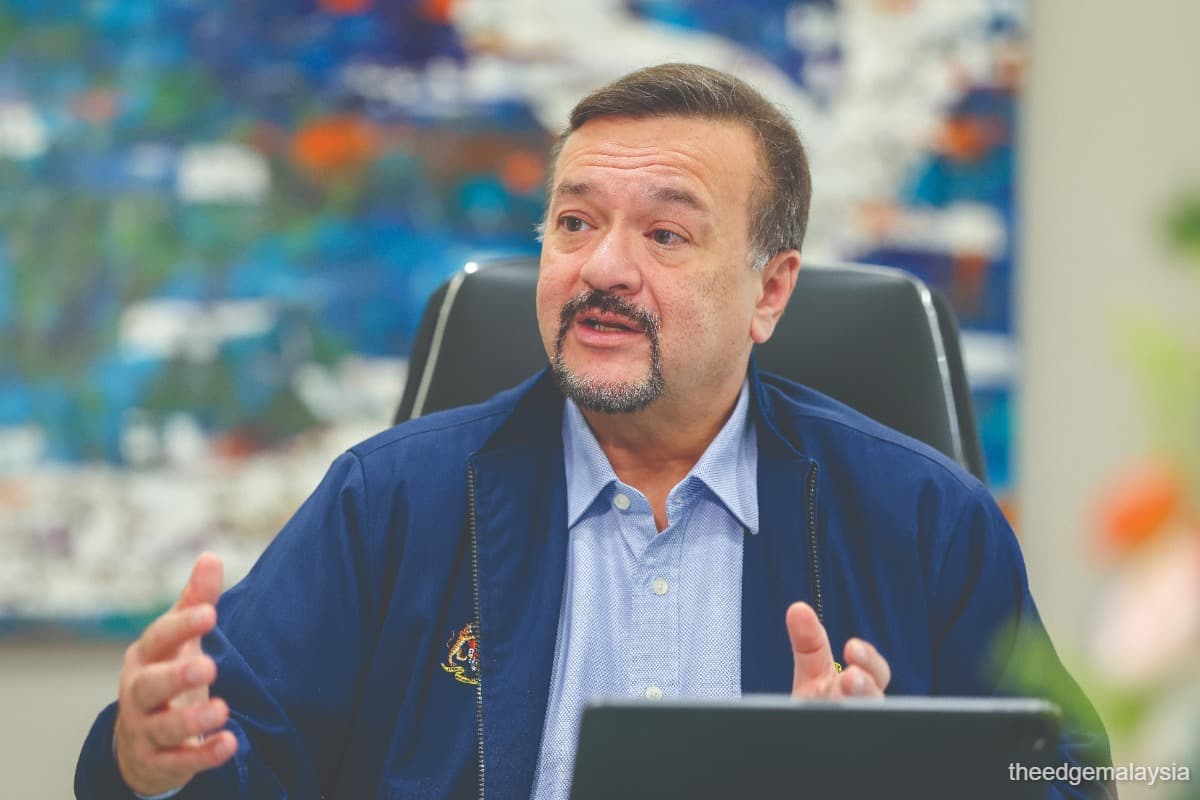
In a recent interview, Minister of Finance II Datuk Seri Amir Hamzah Azizan did not directly address the question on what a hybrid GST-SST model would look like. Instead he said the SST model forced businesses to share the burden of the tax.
“SST forces the entities that are imposed with the tax to decide on what they are going to do on a competitive basis. Do you absorb the tax or do you pass it through to the consumers?
“Businesses have to think in a competitive landscape, if they were to increase prices (because of the tax) but their competitors don’t, they will lose volume and sales,” explained the technocrat.
One of the commonly cited drawbacks of the SST is that being a single-stage tax system without an input tax credit mechanism, it could result in a cascading effect where tax is embedded in the goods or services as it moves through the supply chain. The end result is that the prices of goods could potentially be higher than they should be, thereby impacting consumers and at times export competitiveness.
However, Amir, a finance and economics graduate, suggested that because of the competitive business landscape, businesses might choose to absorb the tax rather than pass it on to consumers. From the business perspective, absorbing the tax would be at the expense of the profit margin.
How much of this is happening remains to be seen.
Amir added that the prime minister had always highlighted how GST gets transferred down to the consumer quickly because the tax is passed through.
“I know it’s very popular among the businesses, right? Because they are kept whole — I (business) pay, I claim back. Net-net, I don’t pay. I’m straightforward, I’ll call it out. But we have to be careful that we don’t have distortion. The reality is, in last year’s budget (2026) and this budget (2027), there were no tax measures. We’ve given space to the businesses,” said Amir.
It is notable that SST revenue collection exceeded the amount collected under the GST regime from 2024. SST collection totalled RM44.76 billion compared with the RM44.35 billion collected under GST in 2017.
This could be attributed to the expansion of SST in 2024, where the scope widened to include logistics, brokerage, karaoke, maintenance and repair services. The service tax rate was also increased to 8% for most services.
In 2025, the SST collection increased further to RM55.87 billion. Once again, the big jump was attributed to another round of expansion in taxable services, including rental and leasing, construction works, private education, fee-based financial services and private healthcare. More items were also subject to a sales tax.
SST collection in 2026 is estimated at RM66.99 billion and this has been budgeted to reach RM73.34 billion in 2027.
Tax consultants have argued that SST, once favoured for its narrower taxable scope, is no longer what it was before.
Essentially, Amir argued from a practical standpoint where any attempt to implement a GST system would mean significant infrastructure spending, especially for new companies that never came under the GST regime.
“I think the people who talk about GST have not thought it through fully and the implication that’s going to go around. The government is always very concerned with what happens to the rakyat,” he says.
The main focus now, says Amir, is raising the wealth levels in the country, something that is often reiterated by the prime minister.
“I can do theoretical things and say, yes, the GST cake is better. If I set my rate at 7%, I will be better. When the government gets more money, it can subsidise along the way. But these things always have transmission issues.
So, the key for the government is always to think through the transmission effect and to see the change management required to do it,” he says.
Read also: Save by subscribing to us for
your print and/or
digital copy. P/S: The Edge is also available on
Apple's App Store and
Android's Google Play.
Special Report: Harnessing assets, institutional capacity to deliver tangible change faster
Special Report: Institutionalising reforms to build intergenerational wealth and long-term sustainability