

This article first appeared in The Edge Malaysia Weekly on October 26, 2026 - November 1, 2026
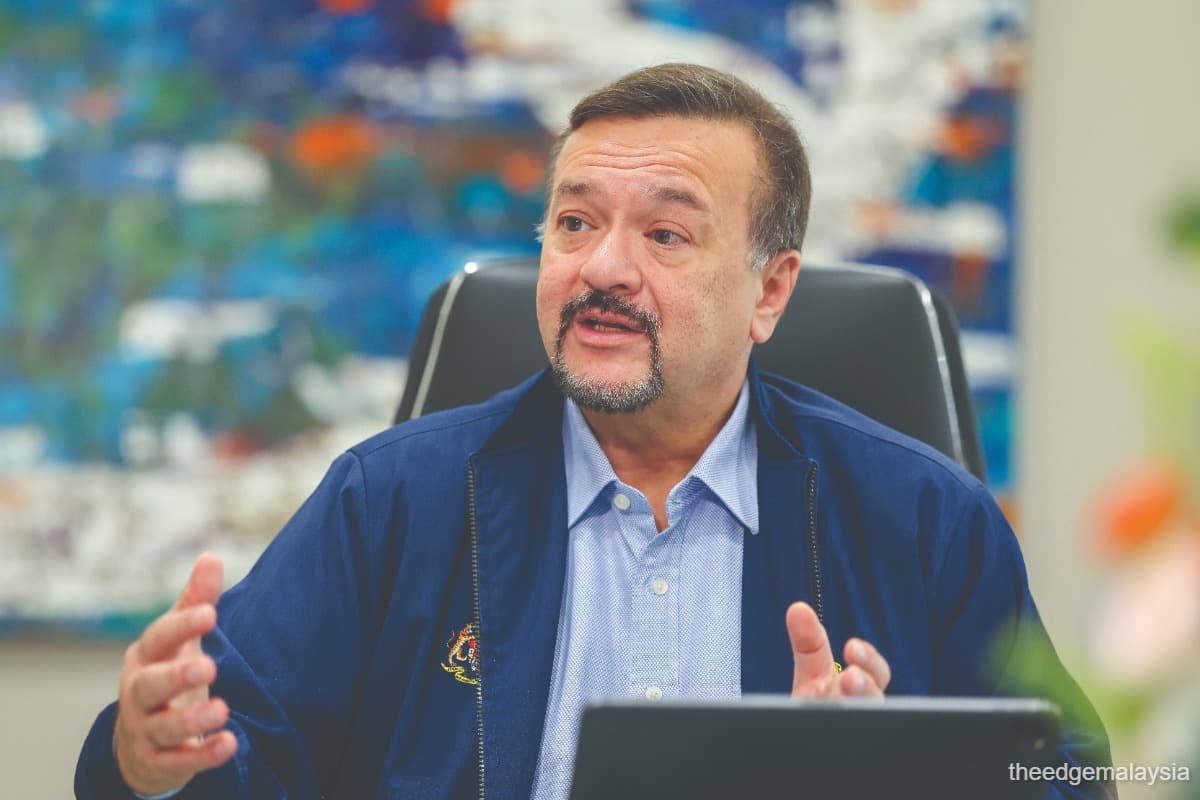
Fresh from promoting Malaysia to the world at the IMF-World Bank Group annual meeting in Bangkok (Oct 12 to 18) as head of the country’s delegation, Minister of Finance II Datuk Seri Amir Hamzah Azizan tells The Edge’s Cindy Yeap and Esther Lee more about Malaysia’s gargantuan Budget 2027, which increased spending yet pointed to a lower fiscal deficit of 3.3% for next year. The following are excerpts from the interview, edited for clarity.
The Edge: Everyone is surprised at the size of Budget 2027. Could you talk us through that?
Datuk Seri Amir Hamzah Azizan: Budget 2027 reflects reality. Operating expenditure and development expenditure are about RM460 billion or so, with another RM50 billion or so coming in from GLICs (government-linked investment companies), agencies, governments, and so on. So that puts us at RM510 billion. The size of the budget reflects what we need to do, the scope of things that we are going to do and the activations that we’re trying to do to make the economy stronger, also how we address the challenges that are happening in the economy today.
And because of that, I think what we’ve been able to achieve in the Ekonomi Madani framework is consistency. This is the fifth budget of this government. In the fourth budget, I think the themes remained pretty much the same. It is actually very, very important that we lift the ceiling because the economic cake is very, very important. If you don’t have the cake growing, then you argue about how you cut the cake. And that’s not a great conversation, especially if your population continues to grow and people have more demands.
So, a big theme for the government is ‘How do you raise the ceiling?’ Elements of the talk on lifting the ceiling are about making sure Malaysia always remains very relevant to the changing global patterns. We’ve done a good job of attracting investments internationally and also activating domestic investments to strengthen the engine. This is important not only for the competitiveness of Malaysia going forward, but also in the era of creating better jobs in the country. Better jobs create better social mobility so people can climb the wealth ladder that actually exists. If you do not do that, then in the long term, this country will never be able to punch out of the middle-income trap, and large pockets of society will always be struggling day to day.
So, we’ve done well on that side. That’s why when you look at the economic growth, it’s resoundingly decent. Two years ago [gross domestic product (GDP) growth was at] 5.2%, last year also 5.2%. This year, we’re tracking at 5.5%, including the third-quarter advance estimate. And next year, we’re projecting between 4.2% and 5.2%. But generally, we’ll end up on the upper end — the government is always very conservative when it comes to its estimates.
So, the engine of growth is actually very good. But the other thing that we wanted to address is actually making sure society feels the growth that’s coming in. And because we have done a lot of reform agendas before, and we have created physical space, we are now able to deploy it better through this budget. But if we didn’t do that, then we wouldn’t have the space and we would only make the situation worse.
I think this government is very clear that we cannot pass on our problems to future generations. That’s why we have to address fiscal discipline now. It’s not fair that we get to enjoy the fruits of the labour, and our children and grandchildren pay for our excesses along the way. Because of that, there has been a lot of focus on how we address governance issues in the country, how we put a stop to leakages, how we institutionalise things to make sure we don’t allow it to drip backwards again. That’s what’s going to secure our future.
This year, the focus in terms of addressing issues such as cost of living meant that the government continues to give support, whether through STR (Sumbangan Tunai Rahmah), Sara Sumbangan Asas Rahmah), Jualan Rahmab, or targeted elements where we have lifted support to selected groups, whether you are school children, in Form 6, OKU (people with disabilities) … all have been given it because it reflects the growing pressures of the cost of living. At the same time, maintaining Budi95 and Budi diesel is no small amount … budgeted RM15 billion, but spending RM40 billion … but we’re able to do that and still lower the deficits because I think the government’s approach of managing its fiscal discipline has been good.
If we didn’t do that, we wouldn’t be able to live this way, and everybody would have to pay the price. So, in essence, sometimes fiscal discipline is not about austerity. Fiscal discipline is about putting the right controls and using the money in a better form so we get better outcomes from the money that we have. And I think that’s what we’ve been able to do.
That’s why, if you look at it from this budget, the cake has got bigger because our economy has got bigger, so we can spend more. It’s a lot sharper and more targeted so that we make sure we also protect society and lift them also. And there are elements of reform in lifting the floor because you will see us do things such as minimum wage adjustments, indicating that we are trying to introduce a semi-skilled labour and graduate minimum wage.
So that’s fair because what we don’t want to do is to have wage compression occurring inside it. And also continuing down the path that we want to encourage people to follow the GLICs and the GLCs (government-linked companies) adopting a living wage. GLCs have also pushed up their living wage from RM3,100 to RM3,400. Because they compete in the market, they will compete for labour. And we hope this will be an indication … to pull the rest of the private sector to move along the way [and] in that sense, making sure the prosperity of the nation translates to the people.
This is your third budget with the prime minister. How have you seen the thought process change?
I have to give recognition to the PM because fundamentally his framing has been correct in terms of what we needed to do with the economic framework. We had to make the cake bigger. We need to make sure we carry everybody along and we cannot forget that part. But more importantly, this governance frame was fundamental. I think if you look at the beauty of Malaysia, it is the consistency of the approach. We have not gone, ‘This budget you do this, that budget you do something else’, and people would get confused about what the priority of the government is. That has not been the case.
I think that’s why, when you look at the international environment, people look at Malaysia differently. Because they say, ‘I can come here. I trust this place, I want to be in it because the consistency of policy has been good, the clarity, it makes sense … the rule of law exists’. So, we are differentiating ourselves from a lot of other places in the world today. Because of that, you see the results, the numbers are coming in.
The PM’s approach of being fairly international and continuing to maintain our position that we’re trading with everybody, we’re friends with all, and enemies none, because we’re an open trading nation. That has always been Malaysia’s strength and we will continue to reinforce that part. The ability not to have to choose sides is actually allowing us to get a better outcome. I assure you, it’s not easy. All sides want attention. All sides say, ‘You don’t love me if you don’t give me more than somebody else’. But maintaining that delicate balance has been something this government has been able to navigate. That’s probably underappreciated, but it has been the heart of why we are successful. When I joined the government nearly three years ago, when we talked about the Ekonomi Madani framework, people would say, ‘I’ll believe it when I see it’. In the second year, people said, ‘These guys are serious because they are prepared to do difficult things that most people are not prepared to do’. This is the third year. When I went around, and even when I did my sukuk roadshow, there was no issue about directionality, capability, execution or point of view because our credence is there. I think that made the difference. So, in essence, the PM should be credited for designing and rolling out these elements. The rest of us are ready behind, making sure we execute it in a better form, and execution builds credibility.
The GLICs — Bank Negara Malaysia, Khazanah Nasional Bhd, Petroliam Nasional Bhd (PETRONAS), Kumpulan Wang Persaraan (Diperbadankan) (KWAP) are all contributing significantly more than previously. We also saw large increases in the revised Budget 2026 and we understand not all their contribution is cash. Could you walk us through how their contributions are different from what is done under GEAR-uP, which is not part of the budget?
It’s interesting, right? Malaysia went through this journey for the last four years and fundamentally, what we said is that in order for the nation to grow, everybody has to play a part, not just the government. This is not new, right? It’s not like overnight we decided I don’t have enough money, so let’s go and ask the GLICs to do things along the way.
And in the conversations that we’re having at the IMF (International Monetary Fund) and World Bank, they’re seeing what happened in Malaysia. In the themes of the IMF and World Bank, it’s also how you mobilise private capital to play a bigger role in actually stimulating and growing the economy. So, this is not unique.
From Malaysia’s point of view, what we’ve been orchestrating is trying to make sure we can find a common ground. Where the GLICs can find an ability for them to continue to fulfil their mandate, to continue to earn returns commensurate with their requirements as investors, and align directionality with where this government is going. So, when we rolled out, we said lift the ceiling, lift the floor. What are going to be the key drivers? When we rolled out NIMP (New Industrial Master Plan 2030), we told everybody quite clearly which key industries we want in Malaysia. We anchored that with our NSS (National Semiconductor Strategy) because the semiconductor space is extremely important. We also said Malaysia subscribes to net zero.
When you look at these things, these are all investable … from industries to companies, they require capital. If you want an energy transition, it will require capital. Surely, in this space, there must be room for GLICs to look for opportunities. That’s all we’ve encouraged. We just pointed them to this space and said ‘Mind this space’. If it becomes something good, we’ll be supportive of what you find. And if there are roadblocks, if the government has mechanisms, we can unblock that roadblock so you’ll be able to earn the returns that are required by your mandate. But you also push Malaysia ahead in the right segments.
That’s why you’ve seen GEAR-uP is a RM120 billion commitment. Last year, we had RM20 billion deployed and next year, they are targeting about RM25 billion. This year, it will be above RM20 billion. So it’s translating into activity — real things that matter. But the government is also conscious that the GLICs alone are not enough. The key is actually to induce more private capital to be crowded in. Khazanah’s Cambrian Fund also co-invested with other investors. When KWAP put out Dana Pemacu, Dana Perintis, it brought in experienced fund managers, because we wanted to turbocharge our entrepreneurs in Malaysia … in that sense, we get better outcomes. So all we’re trying to do is help point and reinforce the good direction we’re actually in.
I think the GLICs will never invest when it is not in line with their mandate and I don’t tell them that they must, because at the end of the day, they have to answer to their fund investors, whether it is EPF (Employees Provident Fund) or PNB (Permodalan Nasional Bhd) money. When they don’t behave the right way, investors do react — either they’re very noisy or they start taking out money, which they can. And we have not seen that happen in this area, which means they’ve found a sweet spot. They are adding to things that matter and it’s growing.
From what we understand from Budget 2027 and the revised Budget 2026, PETRONAS’ contributions of RM27 billion this year and RM32 billion next year are not all cash dividends. What is non-cash, and is it only PETRONAS?
If companies make money, what do they do?
Pay dividends.
Correct. So, will this year be a good year for PETRONAS or not?
We hope so.
So, if PETRONAS’ dividends go up, it is not illogical. That’s what is being reflected in the budget today. The fact that because crude oil prices have gone up, LNG prices have gone up. PETRONAS is in a better position. They’ve made a lot more money. Some of that money is reverted back, some of the money is reinvested. You’ve seen PETRONAS expand their operations into Turkmenistan, Canada … which means they are also investing for the future.
When Budget 2026 was created, all of us were expecting low crude oil prices. We targeted US$65 a barrel because nobody expected the Middle East conflict to happen. From the government’s point of view, our expectation of a RM20 billion dividend from PETRONAS reflects the fact that they will earn less and we will not put pressure on them during that time. Now, we’ve adjusted from the previous year, which is a higher dividend to us, right?
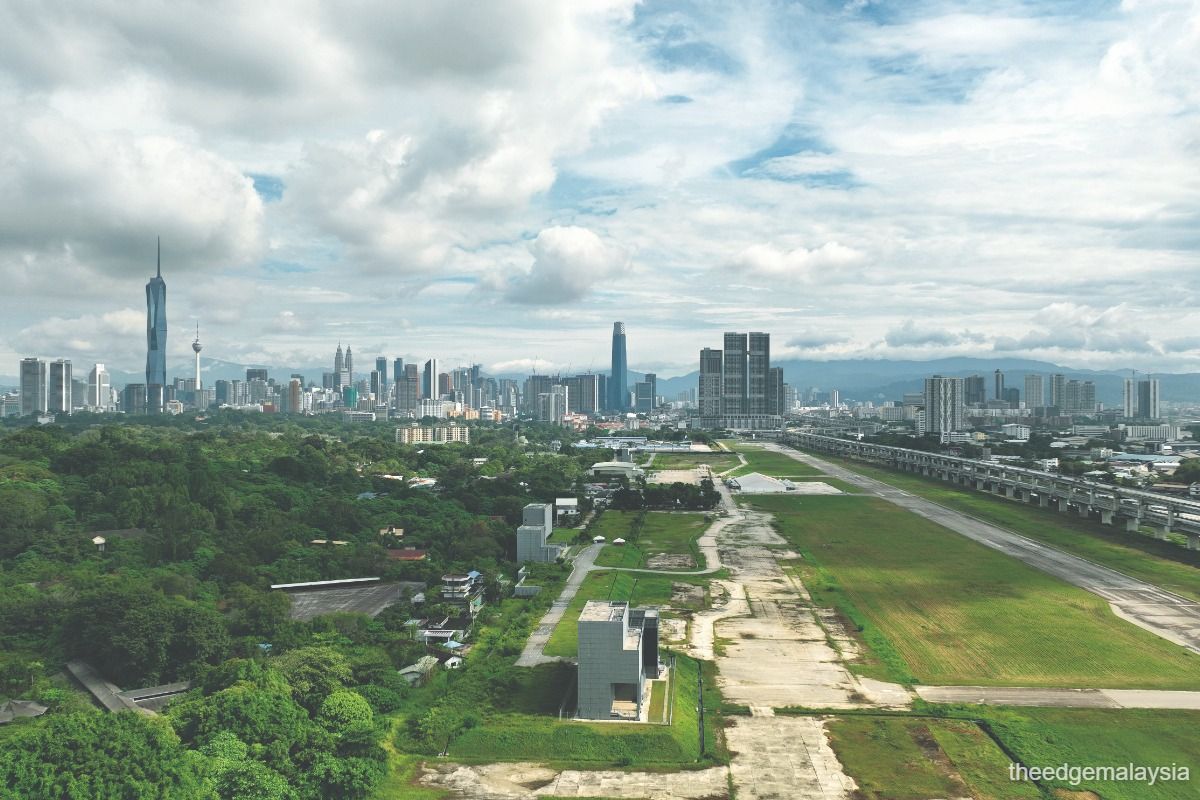
Sometimes PETRONAS will also have growth expectations and there are components in their portfolio that they see as opportunities. Last year, it was Bandar Malaysia. PETRONAS came and took over Bandar Malaysia from the government because it’s not different from their KLCC Holdings, Putrajaya Holdings-type of investments. So, that’s one of the ways that some of the cash also came to the government, but it was anchored on the core growth areas that PETRONAS wants.
You said there’s some cash, some not cash, right? When they see opportunity and the government says, ‘Yes, I think you are a better minder of that business because the government cannot prioritise this element yet. Maybe you can house it, but you pay us fair value’. So, those conversations have occurred, and I think both parties end up in a better space.
Are you saying what PETRONAS did for Bandar Malaysia forms part of the RM27 billion dividend for 2026?
No, that was last year’s. Let me just give you an example of how things are done cash and non-cash. Clearly, what motivates everybody is that it must be anchored in the mandate. Can we make money or cannot make money? Is it fair or not? This government has to tread very carefully because it says it doesn’t go and do things that are against the framework of governance. In this instance, when PETRONAS tries to do other things, it has to meet its test. Is it within their scope?
The confusing part is this non-cash portion. What exactly is that? How big is the non-cash portion, and is it only at PETRONAS?
If I remember what’s inside the budget itself, most of the returns will be dividends. But there will be some areas that possibly they will be looking at things in the property sector, like Bandar Malaysia, where they say, ‘Okay, I will take this thing out because I want to have growth. I can drive this growth. It is a good part of my portfolio’, and the government will cash out on that portion.
That means it’s something that is already pre-determined, like a development that they have in mind, right?
Correct.
This is usually initiated by the GLICs themselves or through the government saying, ‘Hey, there’s this potential here’?
I think it comes both ways, but definitely both minds must meet. I can ask, but if they don’t want to, I cannot force them. And they can ask, but I can say no, so it doesn’t move either. So, both sides must agree.
Is the government getting PETRONAS to do housing in Bandar Malaysia or somewhere suitable, and that forms part of the non-cash dividend, which is revenue to the government?
For example, when PETRONAS bought Bandar Malaysia, they paid cash. But as any developer, when you come into a particular area, the seller may actually put some conditions.
When Bandar Malaysia was transferred to PETRONAS with a certain return, you may give us this amount of money. There were qualifications that say 50 acres of that land need to be Malay Reserve land, and on that land, you need to have some affordable housing. So, they priced it in. The net price to the government was factored in based on after they looked at the remaining acreage that they could get better commercial returns. If not, they wouldn’t do it, right?
When EPF bought Kwasa Damasara, the RRI (Rubber Research Institute) land, the state government imposed conditions where we had to allocate certain pieces of land for affordable housing … EPF got returns because they bought pieces of land that now you can see developments going on pretty well. So, everybody’s been able to gain something. The art is actually to find deals like these, right? Deals that fit the mandate — yields can be earned plus returns. It’s also not unusual. For example, now if you do a development project in the UK, if it’s a big project, there will always be components that are required.
Perhaps I’m not understanding this correctly, but it seems that if the government were to have done the affordable housing project itself, it would have been perhaps development expenditure. But right now, the portion is taken under PETRONAS and it is marked as revenue to the government?
It’s not marked as revenue to the government. For example, if the requirements say I give you a piece of land, 50 acres is carved out as Malay Reserve land, that’s a gazetting mechanism only. But PETRONAS pays. What is the value of the total land? This much, but there are special conditions.
What does Malaysia get? Malaysia gets a developer who wants to develop the land, as opposed to somebody who didn’t, or [the land] sits on the books of the government and nothing ever happens. No development is not great from a growth point of view. Second, the government also gets to create pockets of land where we can add things like affordable housing that are useful to help the rakyat.
But because the government may not have the capacity to pay for them now, somebody else has done it for us in this manner. So, it’s a win-win on both sides because it gets to accelerate that piece of work that maybe in the past would have sat on the books for 30 years before you saw anything happen.
Because if I have to do it, first I have to get the land … then do the development project, a development expenditure. I take away money from somewhere else to be able to do that. Here, it is realised that when we transfer the land, somebody else does that for me. But they’ve paid me. It’s valuable enough that they were willing to pay X amount of money, and they get a fair return. I get this Malay Reserve land and I get affordable housing.
In this example, the Malay Reserve land and affordable housing, is that what is recognised as non-cash revenue?
No, it’s not revenue. It’s the side benefit of bringing private money in.
Is the non-cash contribution from this the land or affordable housing?
No. I gave you an example of Malay Reserve land and what happened with Bandar Malaysia. What did the Bandar Malaysia [deal with PETRONAS] give us? It gave the government cash. If not, Bandar Malaysia would have sat with the government unmonetised. And what the government wanted was not just cash, it wanted to address its social agenda, which is important. Because there’s not enough public housing in Malaysia. But if you ask the government to do it now, because its fiscal space is constrained, by doing this mechanism, I suddenly get not only cash coming in, but I also get the ability to get the social agenda at a faster pace. So that is a smarter mechanism that we’ve done.
If I go back a long time ago, in the late 1990s, 2000s, Putrajaya was developed by PETRONAS through Putrajaya Holdings. There was a mechanism that they would build this building on behalf of the government, and the government would lease it from them. But at the end of the period, the government would get ownership — which is what’s transpiring at this juncture because the lease periods are coming to an end. But PETRONAS got returns because, as the developer, they got a developer’s return, and as the lease payments were made, they got yield, and Malaysia got a new capital. The rakyat here got better housing, better developments. We got to de-congest KL somewhat. So, the total outcome was better.
Now, this building, for example, is nearly at the end of its lease. It will be handed over to the government. What the government can also do is, say, a sale and lease back. You take the building, you lease it back to the government, we’ll pay you this amount. But these are the obligations that you need to do. It’s a 25-year-old building, so it probably needs some renovations. So, these are things that we can do to create a non-cash-dividend payment. But all parties actually gain from this one.
I think this is where you need to be smart at looking at opportunities that exist — achieve the nation’s agenda and manage it well, but also involve more people who, in the past, would have just set it aside and that doesn’t help Malaysia to move forward. In this instance, that whole idea was a good idea in order to accelerate development and to also allow the government to accelerate its social agenda because we all know that the bottom end of society struggles with affordable housing. So, the more we can do this, the better it is for us.
Could we get a breakdown of how much is cash and non-cash? Is this the first time it is happening, and is it just PETRONAS?
I don’t think it’s just PETRONAS. I’m sure there are a lot more, but I don’t have the numbers in front of me now … it’s probably not material per se, as it is not very large yet. But the more important thing for me was getting to accelerate things that the country desperately needs.
The non-cash dividend was one of the things that surprised us. We had never heard of that before this budget.
It’s the interpretation of cash. It’s non-government cash. But somebody needs to invest to make sure it happens, right?
Definitely. Okay, there have also been comments that the government is pushing the GLICs too hard to keep fuel subsidies at this level.
I don’t think the government pushed Bank Negara, Khazanah, KWAP to backfill its requirement. It’s been a good year for most of the GLICs. Bank Negara is also an investor, right? The markets have been decent. All of them have yielded more. And like PETRONAS, in a good year, they pay more. In this instance, they’re paying more. You can have proxy comparison, right? EPF publishes its numbers every quarter. You’ve seen the EPF numbers, the first quarter, second quarter have been fairly strong. So, indicatively, you kind of get the sense that the other GLICs are also doing okay.
Are you hinting that EPF dividends will be very good this year?
No, the year is not out. Volatility is still there. But they’ve had a good first half already. The third-quarter numbers should come out before end-October, which is their normal timing. So let’s see what comes out then. But so far, so good.
Are the fuel subsidies sustainable, with Brent crude close to US$120 a barrel at one point and still above US$100 a barrel?
Brent has gone up. The other ancillary costs have all gone up more — insurance costs, shipping costs … the risk premium has gone up quite dramatically because of what’s happening in the Middle East. But this is transitionary. It’s not sustained for the long term. When things cool down in the Middle East, prices will adjust accordingly. So, the key question most governments have had to ask is, how much does it pass on [to consumers] and how much does it absorb? Also [to assess] how bad the negative implications on the environment will be if you pass it on?
I think this government has chosen that it’s important because the cost of living pressures have been high. We will still cushion the blow because all the reforms that we’ve done in the past gave us space to be able to do it. All the reforms we’ve done in the past are also auto adjusting mechanisms. So, when the oil prices drop, automatically my subsidies will drop. So again, the view is this is transitionary. Whether it’s six months, a year, whatever it is, at some point, it will come down, it will self-adjust back on the path. But the key for us was actually to help cushion the blows for the moment.
And if you look at subsidy rationalisation, the focus for the government was to cut out leakages. Smugglers benefit people outside by using our tax dollars. So, when we did Budi diesel, Budi95, what we did was cut eligibility to locals only.
You may disagree with me in terms of whether we should actually have income tests … but for the moment, what’s important is to cut out people who never contributed to Malaysia. I know today, you don’t get a foreign car coming in at our petrol stations and buying petrol at RM1.99. If they buy petrol at the pump, they pay market price, which is maybe cheaper than in their own home country, but we want them to buy RON97. Malaysians, when they see a foreign car pumping RON95, they get angry right? So they’re looking after our fiscal health. So, there is a lot of value coming from the reform mechanism.
This year’s reform, we made sure there is consistency between Sabah and Sarawak so that everybody’s on the same system. Nobody can say we’re not fair. Second, we also made sure we cap leakages on diesel … we can already see the beginnings of those numbers adjusting because they can’t access it anymore.
With oil prices at this level, how much are the savings from the reforms and are actually channelled to the rakyat?
Sometimes people take it for granted, right? Let’s say the RON95 quota is 300 litres. If you max out your quota, that means you are saving something close to RM800 per month per eligible user. If you max out your 400-litre quota on diesel, which means you’ve applied because you have a pickup truck or jeep, you’re probably going to get a saving of about RM1,220, depending on what the market price actually is. I think these are important support mechanisms for society, which is facing cost of living pressures.
It’s also important that it helps us to lift income levels through these types of adjustments right now. Because at the end of the day, one of the things on the reform agenda that this government is trying to do is to get better wages in society. For the moment, that has been done by passing through minimum wage increases, from RM1,200 to RM1,500 to RM1,700 and now RM2,000. Accelerating that path, more catchment of money going to the employee, which means the rakyat. This is a stopgap measure that helps to top up as the income is actually coming up.
When you rolled out Budi95 more than a year ago, you estimated about RM4 billion in annual savings, but oil prices went up even higher. Are savings a lot more than what was initially estimated?
If you look at our savings for this year, my estimate is now somewhere between RM2 billion and RM3 billion for Budi95 … a little bit less than what we thought, mainly because for the months of February and March, we could not push up the retail price fast enough because the price at the pump went very high when the oil price jumped suddenly from US$65 to US$90 a barrel.
Theoretically, the price at the pump had to jump by US$1.50 per litre. But the government couldn’t do a RM1.50 per litre jump, so we had to stagger it up. If you go back to your data, you’ll see that prices were staggered up because we needed to think whether there were any unintended consequences when we raised it up fast. But now, the price has got to the point where the pump now is not subsidised anymore. That’s why we always say don’t allow foreigners to buy RON95. We didn’t get RM4 billion savings but it’s okay, we still got RM3 billion, which is good money, and it is from these sorts of savings that we can cushion the blow from any increases coming up.
There was criticism that Budget 2027 lacked revenue reform. What do you say to that?
I think we’ve done a lot of the changes over the last two years. In 2025, we had the [sales and service tax] expansions … we also wanted to allow that to settle down, and also because we know with the geopolitical environment, the pressure points are actually very high. So, when pressure points are high, don’t break the camel’s back … So, our focus at the moment is to let things settle down. Tax collections are at a good pace already. What we wanted to do was to close the gap from an efficiency point of view and shadow economy, which is why we pushed e-invoicing. I think e-invoicing is working. We’re getting transparency. The last report LHDN (Inland Revenue Board) released showed 77,000 companies voluntarily filed a tax return, with RM6.5 billion previously unreported income and RM1.38 billion in taxes due.
We can do more to drive up efficiency. So long as the Malaysian economy continues to generate good growth, tax revenue will also go up. So long as society has money in their hands and they spend, private consumption numbers in the country will also grow. And that adds to growth. So I didn’t have to take tax revenue measures. In order to get the tax numbers up, sometimes we need to give people breathing space. If every year, you do some tax measures, after a while people will say they don’t want to do business in this country.
Where Malaysia is currently at in terms of the e-invoicing ecosystem, do you think it’s already enough to sort of uncover all this shadow economy, and nudge those who are below the threshold to actually report their income appropriately as well?
Over time, the greater the transparency we build, the more likely we’ll get better tax compliance. E-invoicing is one version of tax compliance. Pushing greater transparency to cashless payment also makes it easier. Now, you have a lot of the banks pushing QR payments. That’s useful because then you have footprints.
But more important from the footprints is allowing our micro businesses to also have a track record. We want the footprints because of the track record. So the next time they go to the bank to say they need to get a loan, they can actually show money in, money out, [which] then backs their credit standing. So all these digital reforms are actually very important to make the economic foundation stronger and better, so that it can self-build along the way.
This goods and services tax/sales and service tax (GST-SST) hybrid that people are talking about, is it more of expanding tax bubbles or are you thinking of doing cash refunds?
The reality is that SST has been in this country for 40 to 50 years. It is a mature system, it’s running and we have refined it to allow us to get what we need to be able to support tax income growth that supports development growth in the country.
GST has a slightly different complexion to it. I think the key question for us with GST was maybe threefold. First is, if you wanted to do GST, how long would it take and who would be affected. The last time we had GST was in 2018. So today, it’s eight years down the road. Based on the thresholds that were applied, nearly 700,000 entities had to come into the GST system. For the 700,000 entities, they had to invest in infrastructure, upgrade their IT systems. In 2016 and 2017, when GST was implemented, you had a lot of hue and cry among companies that had to invest in all these things. Today, if I were to do GST, there would be the same hue and cry.
For large companies, maybe they turned off [the GST system]. Medium companies dumped it and new companies don’t have it. If we were to do GST, there would be a lot of infrastructure spending that has to occur, which is why we’ve always said that to do GST, [it would be] two to three years before the system can even be installed.
The other consideration that we also said is that if you look at GST, there are 700,000 entities. Today, under SST, the total number of entities registered is less than 150,000. So, the step up for the entities that have to come to GST is very big. Let’s be practical about it. There are a lot of entities that have not even done SST today that will have to do GST if there is a turnaround and that is an administrative transformation question that needs to be addressed. This government has said that if you want to do any reform, study it well, define the processes, don’t rush things. Because if you rush, it breaks. If you saw us when we rolled out Budi95 … the whole plan went well, right? It didn’t break.
The other philosophy on SST [is that] it forces the entities that get charged SST to decide from a competitiveness basis, whether they should absorb [the cost] or pass it on to the consumer. So, some of it is not passed on to the consumer. The company absorbs because it has to think [whether] its competitor will increase prices or not. If it doesn’t increase price, and I increase price, I will lose volume, I will lose sales, I will lose income. So, the burden is partly shared by the industry.
In GST mode, it’s full pass through. [Businesses] get to claim back [input cost]. There’s a timing difference, but the companies are kept whole. That’s why the PM says GST goes down to the consumer very fast and the bottom of society pays first because if you’re the middleman, you pass through. GST is more efficient, I don’t disagree. And if we were to implement GST, at what rate do we charge? Anything less than 6% will mean the government will get less than what it gets today. So I think the people who talk about GST have not thought it through fully and the implications that will go around. For the government, it is always very concerned with what happens to the rakyat.
In Budget 2027, there is RM61 billion in debt service charges, which is huge compared to development expenditure. Realistically, can that be brought down in the medium term?
This doesn’t happen overnight. It took long years to build to that level of debt service ratio, right? So, what this government’s reform agenda has been is, let’s get fiscal discipline in the country.
What we actually did was put the Fiscal Responsibility Act (FRA) in place and then push the system to make sure we work towards achieving the goals of the FRA. The fiscal deficit has dropped, and the moment we drop the fiscal deficit, new debt drops. People complain that the debt is still high. Yes, absolute debt is high but if I let new debt climb up even faster, then the new debt level will be even worse and the burden for future generations gets worse. We’ve been consistent in pushing down that. So next year, the budget says 3.3% fiscal deficit over GDP. So that means by 2028, we are looking at 3%, which is the FRA target. But what has happened at the same time is debt-to-GDP has also begun to come down. Last year, it was 65.2%. This year, it’s down to about 64.1% and next year, down to 63.7%. So, the overall debt portion of GDP is dropping.
As we go down that trajectory, we’ll get to below 60%. That creates the space that we need. People ask me why that still grows? Fundamentally, because we are in a deficit budget, we will grow. As the debt stabilises, then we will get addressed on the debt service cover charge ratio.
The key to whether we accelerate that element? GDP needs to be stronger. If we get GDP stronger, revenue collection gets better and the debt will also go down. It includes improving efficiency of collection and cutting leakages. That’s our focus. Again, these are not issues where you can take a magic pill and everything is solved.
The key is that this government has done it and it shows it can be done. In previous governments, they were not able to show that they had the backbone to drive through difficult reforms and hold, deliver growth and confidence in the economy, and make sure that is passed through to the rakyat. That’s what we are orchestrating. I’m sure the rakyat will always tell me I need more. I agree. We need to get that [income] up faster. But again, it doesn’t happen overnight. Directionally, we are pushing in the right form.
In terms of fiscal sustainability-related reforms, what has been checked off as achievements? And what is the so-called to-do list?
I think the most important thing that we’ve done is actually the subsidy rationalisation. And we handled the big-ticket items first, such as electricity, chicken, eggs, fuel … Is it perfect yet? Not necessarily, but you must also time when you can refine it and whether the system can adjust along the way.
But at this juncture, from what we have been able to put in, we’re happy that it’s holding well enough. The key area that the government wants to tighten up more is to make sure government efficiency is better. That’s why last year, we pushed through parliament the Procurement Act because we know for procurement, if we do it well, we will get tangible savings along the way.
And in the budget this year, the PM made a very clear commitment. He says that from next year, by the end of the fiscal year, we will publish all tenders that come out. We are saying that it’s important that the rigour behind tenders are made aware. We created an appeal process behind tenders. We put in the procedures to make sure there are penalties and criminal charges for people who interfere with that, the processes along the way. The team is busy trying to make sure that we tie in all these tenders and to make the systems available to make everything transparent.
The basic tenders today are already transparent. You can find these in the procurement system. Now, we’re putting everything inside [available] for transparency. So I think that reform will end up with us getting savings coming in because it puts competitive pressures there.
The second reform is that the role of MyCC (Malaysia Competition Commission) is also stepped up. And MyCC plays an important role to make sure the competitive environment in the market is solid.
Third, you’ve seen a lot of work coming in from consumer protection, right? And there are a couple of acts that have already gone through, and there will be one more act from e-commerce that will be coming from KPDN (Ministry of Domestic Trade and Cost of Living) in order to protect consumers.
So, I think when you look at these types of reforms, it is institutionalising things that will make sure the conditions of leakages are taken out, or inordinate pricing that allows abnormal returns to go to one side is also cut out from the system. That’s one other reform that we will make sure sustains. And I think the lessons that this government has been telling people is, when you do reform, institutionalise. Be it making the institution itself stronger or independent, or make it Acts in parliament so that it will be hard to move away from it because these Acts are binding and transgenerational.
You have seen the beginnings of it. We make sure that we deal with issues today and don’t pass on our problems to somebody else. The KWAN Act was an important anchor on the ground. We all live on the gifts that God has given us. And part of the gifts that we have is oil and gas. And KWAN had gaps in the system that allowed money to flow out. So now, we’ve tightened it up. Because we want to make sure that we put aside some part of what we’re enjoying today for future generations.
We’ve also tightened up the methodology of running KWAN so that the yields that we can get from KWAN will also go up. KWAN is now something like RM23 billion to RM24 billion already — higher than when money was taken out from KWAN, which is good. It’s on the trajectory of being repaired. And the KWAN Act was gazetted in September this year. So it means we will abide by all the terms of KWAN, in terms of how much money has to go in, the contribution from the federal government, the contribution from the portion that we take from the PETRONAS dividend and the contribution from the export duty transfers from January next year.
Part of the reform is to deal with things today, make sure you’re fair to intergenerations and be prepared for things that matter in the long term. One of the key issues that we will all have to deal with is ageing. You’ve seen in this budget that we are laying the beginnings of the foundation to tackle ageing matters.
One is we’re reinforcing again that retirement savings are fundamental. So you continue to get support that has been given to EPF and so on, to buffer up the informal sector. We continue the support to make sure the refinement of schemes go out, so that schemes don’t go out purely on a lump-sum withdrawal but a monthly one — which is voluntary for now through the [rebranded] i-Emas scheme.
In this budget, we are supportive of the care economy. So, we’re giving incentives to care workers — some tax breaks, some allowances, and so on. Because we need to create a much stronger support for the elderly. Because the elderly do better when they age in place than they do in their homes. So we want to encourage the care economy to be able to support it.
When the care economy is not mature, in dual income families, sacrifice is needed when something happens. When your mother or father gets ill, one member of the family steps off employment. So there’s a dramatic shift downwards on income. But if you create a better care economy, that is a supportive mechanism, they come and help. So, it makes the elderly happier but it also protects the ability of society to handle shocks to the system better.
We have also given relief for retirement homes — the SST rate dropped from 8% to 6%. For those which are charging less than RM8,000 a month, they’re exempted from SST to make sure this is a bit more affordable.
A lot more money is given to KPWKM (Ministry of Women, Family and Community Development) to focus on activity centres for the elderly and all these things to create the ecosystem of others. That’s the beginning to build the foundations for elderly care. Of course, underlying it is not about living longer. It’s about living longer and better, which means health and activities are important. So, KPWKM focuses on getting activities.
KESUMA (Ministry of Human Resources) focuses on how we encourage people to have more opportunities post-retirement — part-time work, increasing flexibility and all these things that give people the ability to earn and a bit more fulfilment — and also trying to get healthcare better in the country. A lot of healthcare reforms are ongoing today, so we have to make sure that we have enough to look after people as they get up early. So, if you ask me about reform, these are the types of reforms that we must do right. Not only address the rationalisation of resources but also build institutions that protect resources going forward. A balance between the choices of things we do today and in the future.
Read also: Save by subscribing to us for
your print and/or
digital copy. P/S: The Edge is also available on
Apple's App Store and
Android's Google Play.
Special Report: Harnessing assets, institutional capacity to deliver tangible change faster
Special Report: SST makes businesses share the tax burden, says Amir Hamzah