

This article first appeared in The Edge Malaysia Weekly on October 5, 2026 - October 11, 2026
A real estate investment trust (REIT) is often seen as the ultimate destination for property developers to unlock the value of assets they have developed.
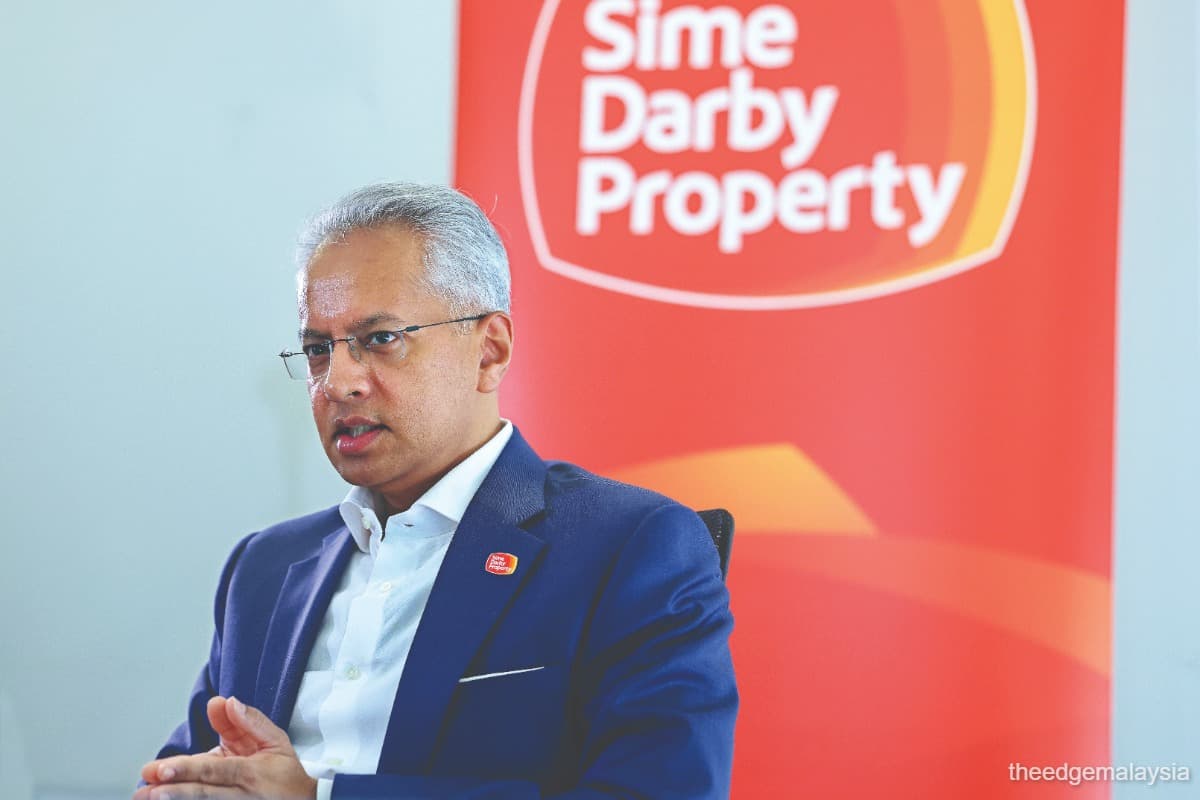
Datuk Seri Azmir Merican, group managing director and CEO of Sime Darby Property Bhd (SDP) (KL:SIMEPROP), however, is of the opinion that money can be made even before the assets are built.
That conviction led SDP on a different route to grow its business five years ago — via investment funds. The property group has so far set up two private, institution-backed real estate development funds to raise capital for new assets, while regarding REITs as the ultimate goal for monetising those assets.
Setting up investment funds to pool capital from third parties allows SDP to scale up without stretching its balance sheet.
“Fund management means not just managing the funds, but fundraising, identifying opportunities, identifying the types of funds that you can raise,” says Azmir.
“To me, a REIT is the boring part. Everybody wants to have a REIT. It’s not complex to set up. Everybody can do one. Nothing sexy about it. It just allows you to recycle capital.
“Funds are more interesting. I can do it [alone]. I can just do it with [selected] investors. I don’t have to disclose too much to anybody. We earn more money from doing this type of funds. But to complete the value chain, we will do a REIT as well. It will allow us to recycle capital.”
SDP’s development funds are the Industrial Development Fund (IDF) and the New Economy Venture (NEV).
The IDF was set up in 2021 as a joint venture (JV) with LOGOS SE Asia Pte Ltd. SDP holds 51% of the JV, called SDPLOG, making it the first public listed Malaysian property developer to create a development fund in the industrial and logistics sector. The fund is anchored by institutional investors such as Permodalan Nasional Bhd (PNB) and Kumpulan Wang Persaraan (Diperbadankan) (KWAP).
The immediate capital available at its first close was RM500 million. This enabled the development of logistics assets over three years, starting with the 177-acre E-Metro Logistics Park in Bandar Bukit Raja, Klang. The project has ready-built and built-to-specification facilities that target Gold LEED certification for sustainable buildings. The fund has since reached RM1 billion in size.
The NEV, meanwhile, was launched in June this year to invest in build-to-suit-to-lease data centres, and industrial and logistics development projects within SDP’s key townships in Malaysia.
The NEV is a RM1.25 billion shariah-compliant close-ended, discretionary investment platform with a fund life of five years. It secured 100% of its capital commitments at first close. Its backers include the Employees Provident Fund, Lembaga Tabung Angkatan Tentera (LTAT) and Great Eastern Life Assurance (Malaysia). Great Eastern also invested in the IDF, a move SDP sees as a sign of institutional confidence.
SDP, the general partner and manager of the NEV, contributed RM500.1 million to the main fund.
Two seed assets, Elmina Business Park and the City of Elmina, have already been secured. The construction of both developments is expected to be completed in the second half of 2027.
“When we presented the idea of a development fund, I think the board was very receptive. And I have PNB on my board — my chairman is from PNB — and they get it.
“They are very used to it. Most of the board members got it anyway, so the board wasn’t the challenge. I think it was like the board was waiting for someone to kind of convert this idea, which was less of a problem at that level. It was more of how do we find a way to conceptualise and execute. So that was the challenge,” says Azmir.
The NEV is part of SHIFT32, SDP’s seven-year business road map.
The fund enables the company to diversify its recurring income through investment yield and fee-based income, while leveraging third-party institutional capital to accelerate development, in line with its capital-light approach.
SDP’s investment and asset management division already manages about RM4.4 billion in assets, backed by a long-term hyperscale data centre lease that came onstream in April this year.
While a REIT monetises stable, income-producing assets after they have been built, a development fund brings in institutional money while the assets are being built and leased, enabling SDP to earn fees and co-investment returns along the way. Once the assets mature, a REIT would be a natural place for it to exit or recycle them.
Read also: Save by subscribing to us for
your print and/or
digital copy. P/S: The Edge is also available on
Apple's App Store and
Android's Google Play.
Cover Story: Reworking the developer model
Cover Story: ‘We went against the grain’