

This article first appeared in The Edge Malaysia Weekly on October 5, 2026 - October 11, 2026
Five years ago, Sime Darby Property Bhd (KL:SIMEPROP) (SDP) was still predominantly a township developer whose earnings depended largely on building properties, selling them and moving on to the next parcel of land.
Most of these were landed homes.
Today, while property development remains the backbone of the group, it is also building up a recurring-income portfolio of industrial, logistics, retail and data centre assets. On top of that, it is developing a fund management platform and experimenting with untapped real estate segments.
Its financial results speak for its SHIFT25 transformation strategy, which was undertaken from April 2021 to the end of 2025.
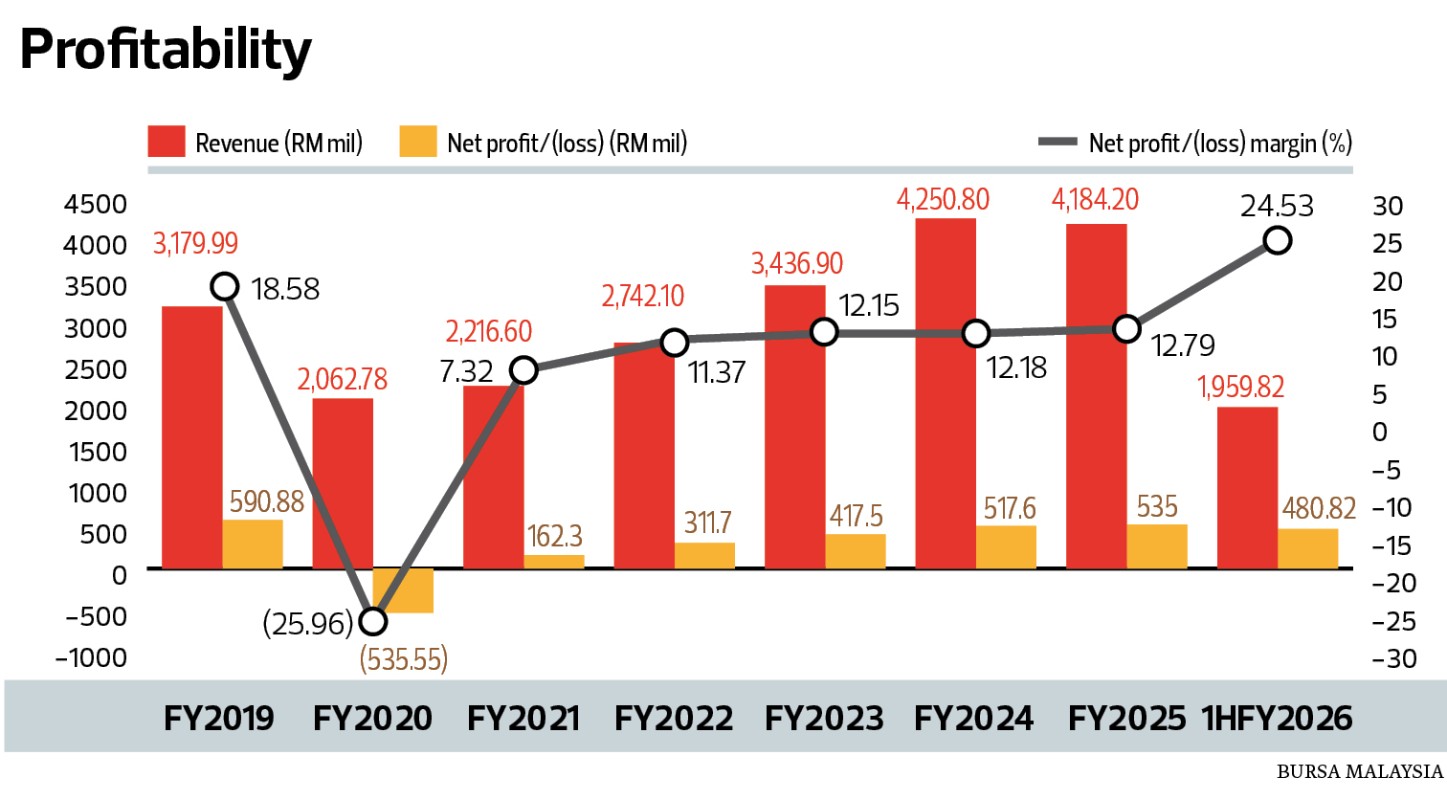
The property group’s earnings reached new peaks in those following years. For the financial year ended Dec 31, 2025 (FY2025), SDP posted a revenue of RM4.18 billion, with record sales of RM4.2 billion. Its profit after tax came in higher at RM535 million compared with RM517.6 million in the previous year.
Before Datuk Seri Azmir Merican became group managing director and CEO in April 2020, FY2019 revenue stood at RM3.18 billion. Its net profit of RM598.5 million that year included RM245.5 million in one-off disposal gains.
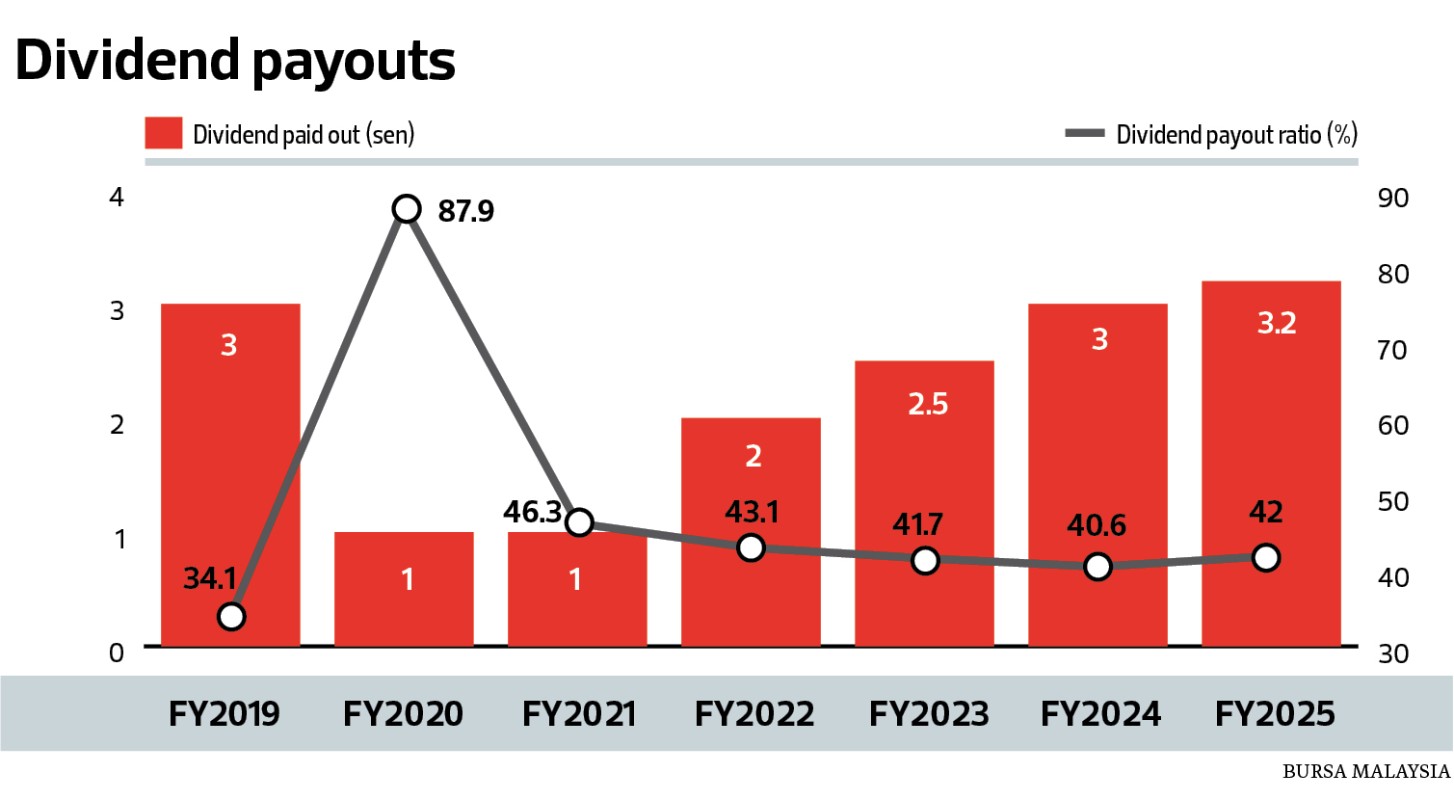
This year, the group raised its dividend payout policy to between 40% and 60% of consolidated profit after tax and minority interests, excluding extraordinary items, from “not less than 20%” previously, although it had in practice already been paying out more than 40% in recent years.
“Peer companies have similar plans but not all have been able to deliver them. What is impressive is that SDP has implemented and delivered on what it set out to do,” says an analyst who spoke to The Edge on condition of anonymity.
The analyst does not regard the new payout policy as particularly generous, but says the higher range is positive given the group’s funding requirements for new projects.
SHIFT25, with “25” denoting its 2025 end point, was designed to move SDP beyond the traditional pure-play development model. Its successor, SHIFT32, maps out the next seven years to 2032, with greater emphasis on recurring income, investment management and more-efficient use of capital.
As it stands, SDP has secured RM7.6 billion in lease value from two build-to-suit hyperscale data centres at Elmina Business Park under 20-year leases, with the first facility already contributing recurring rental income.
For Azmir, who comes from a private equity background and previously led the integration of five companies under UEM Edgenta Bhd, among other leadership roles, the transformation starts with the constraint that “land is finite”.
Since the 2017 demerger of the old Sime Darby group separated the property and plantation businesses, SDP no longer receives a continuing stream of plantation land to convert into townships.
“There was one year that we did 1,200 acres a year. So if we take 10 years, we will be out of land,” Azmir tells The Edge in an exclusive interview at the group’s headquarters in Ara Damansara in Selangor.
“Typically, developers treat land as inventory. But the thinking has to shift to treating land as capital,” he says. “It’s like putting your money in the bank. Your capital has to earn money.”
That philosophy underpins SDP’s three growth engines. “Engine 1 is the platform on which we cement our role as the best developer in town, and that includes ‘fixing’ areas where the group has had less consistency, such as high-rise development.”
Recurring income and investment management come under Engine 2. Case in point: The group has retained its data centre assets at its Elmina Business Park in Selangor, rather than selling the land. Engine 3 is what Azmir calls “experimental projects”, in which ideas are “seeded, tested, and scaled if they work”.
“SDP is definitely more solid today than before its transformation. Property sales are stable at about RM3.5 billion to RM4 billion a year, while it is gradually accumulating a portfolio of industrial assets,” says the analyst who does not want to be named.
It is not unusual for Malaysian developers to build a recurring income stream. Groups such as IGB Bhd (KL:IGBB), Sunway Bhd (KL:SUNWAY) and privately held See Hoy Chan Sdn Bhd have long retained and managed their own shopping malls for recurring income. This is in contrast to the practice in the 1980s and 1990s when developers would build shopping malls and sell strata-titled retail lots.
SDP, however, is extending the model into newer asset classes.
Its Aurum development on Queen Street in the Melbourne central business district in Australia is a mixed-use tower combining apartments for sale and purpose-built student accommodation (PBSA). Azmir says the PBSA portion will be retained as an income-producing asset and operated by a third party. The group is exploring bringing in an equity partner while retaining a majority interest.
“For us, this is also a chance to do it with third-party capital while we retain the majority interest, and earn recurring income,” he says.
SDP has also taken a relatively unconventional route through real estate development funds (see sidebar).
Kenanga Research analyst Chris Tong sees the fund-management platform as one of the more innovative elements of the transformation.
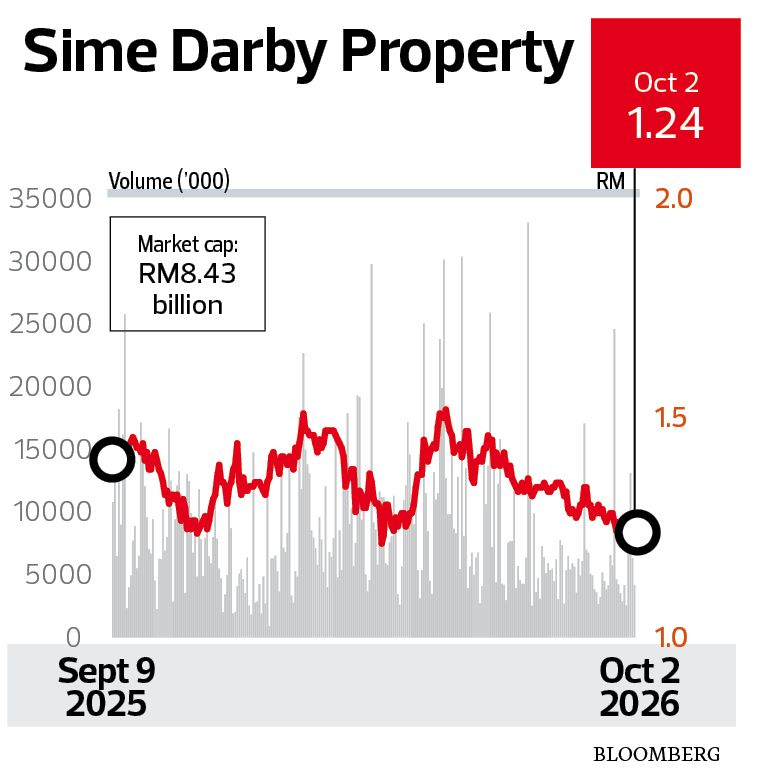
“Instead of relying solely on bank borrowings, the group is leveraging the capital markets, setting up funds and bringing in third-party institutional capital. That gives it an additional earnings stream and allows the group to accelerate growth and expansion without putting the same strain on its balance sheet,” says Tong, who has an “outperform” call and RM2 target price on the stock.
“Meanwhile, the group’s recurring income stream is building up traction in line with our expectations,” he says, adding that it gives the group a more predictable and resilient income stream.
Meanwhile, affordable housing is an Engine 3 experiment that has made the cut. SDP is developing more than 3,000 homes on 249 acres in Gurun, Kedah, marking a move into affordable housing as a dedicated business proposition rather than merely as a component within larger townships.
“Affordable homes have been something that we’ve experimented [with],” Azmir says. “We know we could do a lot more here.”
Within SDP, the bigger transformation is how its team thinks about its land and resources. Azmir says that the conventional property development model is hard to sustain when land cannot be replenished indefinitely, which explains why SDP retained the land on which its data centres stand rather than selling it outright.
SDP has a proven township development model and has been a market leader for over five decades.
Even so, transforming the government-linked company has been no easy feat for Azmir since SDP no longer enjoys the certainty of land injections that came with being part of the larger Sime Darby group.
“The biggest thing in any organisation is its people and culture. It starts from the top. The first thing we did was to make sure the top team gelled. That cohesion needs to be demonstrated,” he says, when asked about how he got the buy-in across the group.
“Once I knew the team could work together, I had a lot of confidence in how far we could push the envelope.”
Read also:
Cover Story: Driving growth in an unconventional way
Cover Story: ‘We went against the grain’
Save by subscribing to us for your print and/or digital copy.
P/S: The Edge is also available on Apple's App Store and Android's Google Play.