

This article first appeared in The Edge Malaysia Weekly on August 17, 2026 - August 23, 2026
MALAYSIA Aviation Group Bhd (MAG) is considering expanding its planned fleet of long-range widebody aircraft beyond the seven jets needed to replace its existing Airbus A350-900s, as it seeks to improve efficiency and strengthen Malaysia Airlines Bhd’s premium offering.
The airline group had initially planned to issue a request for proposal for the aircraft before end-2025 and make a decision by mid-February 2026. That timeline has since been pushed to late 2026.
“We’ve got seven [leased A350s] today. So of course, there will be a minimum seven to replace. But we’re looking at growth as well. So there will be more than seven,” MAG president and group CEO Captain Nasaruddin A Bakar tells The Edge in an interview.
The long-range widebody selection is part of a broader fleet-renewal programme aimed at supporting Malaysia Airlines’ growth while lowering operating costs and enhancing its cabin product.
In a November 2025 interview with The Edge, former MAG group managing director Datuk Captain Izham Ismail said aircraft under consideration included the new-generation A350-1000, Boeing 787-9, 787-10 and 777X, with Rolls-Royce’s Trent and GE Aerospace engines as possible options to power the widebody planes.
Nasaruddin says MAG has been in discussions with aircraft manufacturers for the past two to three months and expects to make a decision before the end of the year.
The process has taken time as MAG balances its growth ambitions with the need to maintain financial discipline.
“As a company, we need to ensure that we are financially sustainable. As Malaysia’s national carrier, MAG also needs to consider the broader economic role of the airline,” says Nasaruddin.
The decision will ultimately come down to the economics of each aircraft, including its purchase or leasing cost, fuel efficiency, cabin product and suitability for Malaysia Airlines’ network.
MAG is under pressure to make a decision as delivery slots for new aircraft become increasingly difficult to secure.
The global commercial aircraft order backlog stands at about 18,000 aircraft, and an aircraft ordered today could take five to seven years to be delivered, according to Nasaruddin.
“We do recognise that the longer we wait, the longer the slot will be.”
Still, he believes MAG’s relationships with aircraft manufacturers will help the group retain some delivery positions.
Under MAG’s Long-Term Business Plan (LTBP) 3.0, the group estimates that the capital needed to take delivery of about 50 of its new aircraft on order would be about RM38 billion based on catalogue value.
The group is considering a combination of operating leases, finance leases and debt to fund its fleet expansion, rather than financing the entire programme from its own balance sheet.
“We are looking at all sources, either bankers or aircraft lessors, and others,” says Nasaruddin.
The choice between operating and finance leases will also depend on which structure offers MAG the strongest financial returns.
The group currently has a cash balance of about RM1.1 billion. It has drawn RM1.8 billion of the RM3.6 billion in capital support provided by its main shareholder Khazanah Nasional Bhd following its Covid-19 restructuring, leaving about RM1.77 billion available to be drawn.
Nasaruddin says financing for the new aircraft on order is an ongoing process, with a significant portion yet to be secured.
“Even if we make the purchase or the order for the long-range wide-body, that financing will normally happen about three years before the aircraft are delivered,” he says.
Fleet renewal is essential to MAG’s ambition for Malaysia Airlines to be placed among Skytrax’s top 10 global airlines by 2030.
The carrier faces stiff competition from Singapore Airlines, Qatar Airways, Thai Airways International and Philippine Airlines, all of which are investing in newer aircraft with upgraded cabins.
“This industry, I call it the world of sameness. It means everybody is the same, all are playing on the same field,” says Nasaruddin, noting that the challenge is to give passengers a reason to choose Malaysia Airlines over competitors. For Malaysia Airlines, the answer lies in its customer proposition: aircraft, food and hospitality.
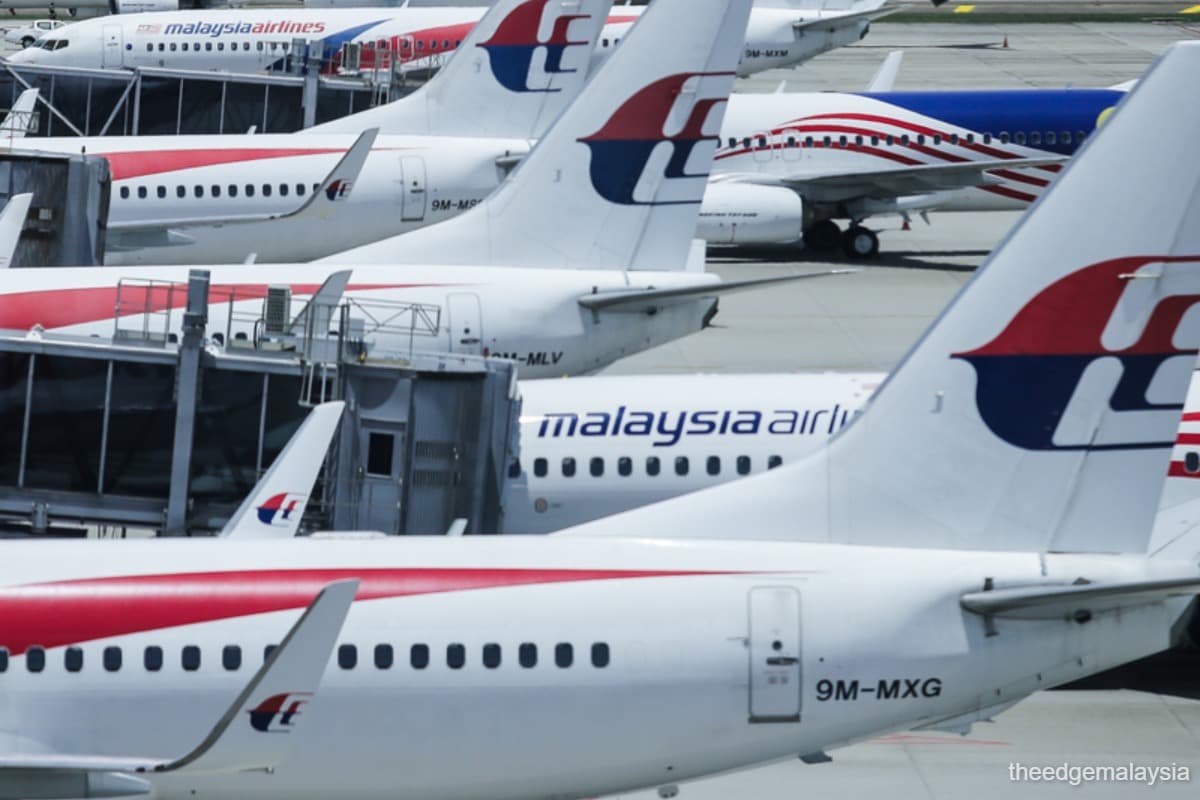
MAG currently operates a fleet of 106 aircraft across Malaysia Airlines, FlyFirefly Sdn Bhd (Firefly) and MAB Kargo Sdn Bhd.
Firefly remains part of MAG strategy
Nasaruddin says MAG’s loss-making low-cost arm Firefly will remain part of the group’s strategy despite pressure to improve its financial performance.
Malaysia Airlines serves the premium market, while Firefly is intended to cover leisure, low-cost and value-oriented segments.
Firefly currently operates nine ATR 72-500 turboprops, which are about 12 to 15 years old. MAG is studying options to replace the ageing fleet, although no decision has been made.
As with the group’s wider fleet programme, the choice will depend on the economics, including aircraft costs, expected fares and passenger load factors.
The suspension of Firefly’s jet operations from Sultan Abdul Aziz Shah Airport in Subang, Selangor in 2025 has helped stem the haemorrhage. However, maintenance costs for its ageing ATR fleet have increased.
Firefly’s jet operations from Kuala Lumpur International Airport, meanwhile, remain only marginally profitable.
“For every RM100, I make RM1 only,” he says, meaning the returns are insufficient to offset the losses elsewhere in the business.
For MAG, the challenge is to determine whether fleet renewal can make Firefly financially sustainable without undermining its role in the group’s wider network and market strategy.
Read also:
Cover Story 2: Malaysia Airlines chief says ‘not reversing gears’, pushes ahead with premium strategy
Cover Story 2: ‘We are not cancelling destinations’
Save by subscribing to us for your print and/or digital copy.
P/S: The Edge is also available on Apple's App Store and Android's Google Play.