

This article first appeared in The Edge Malaysia Weekly on August 17, 2026 - August 23, 2026
MALAYSIA Airlines Bhd is pressing ahead with its ambition to be ranked among the world’s top 10 airlines by Skytrax, putting it in the same league as Singapore Airlines (SIA), Qatar Airways and Cathay Pacific Airways even as the Middle East crisis continues to push up fuel costs and disrupt global air travel.
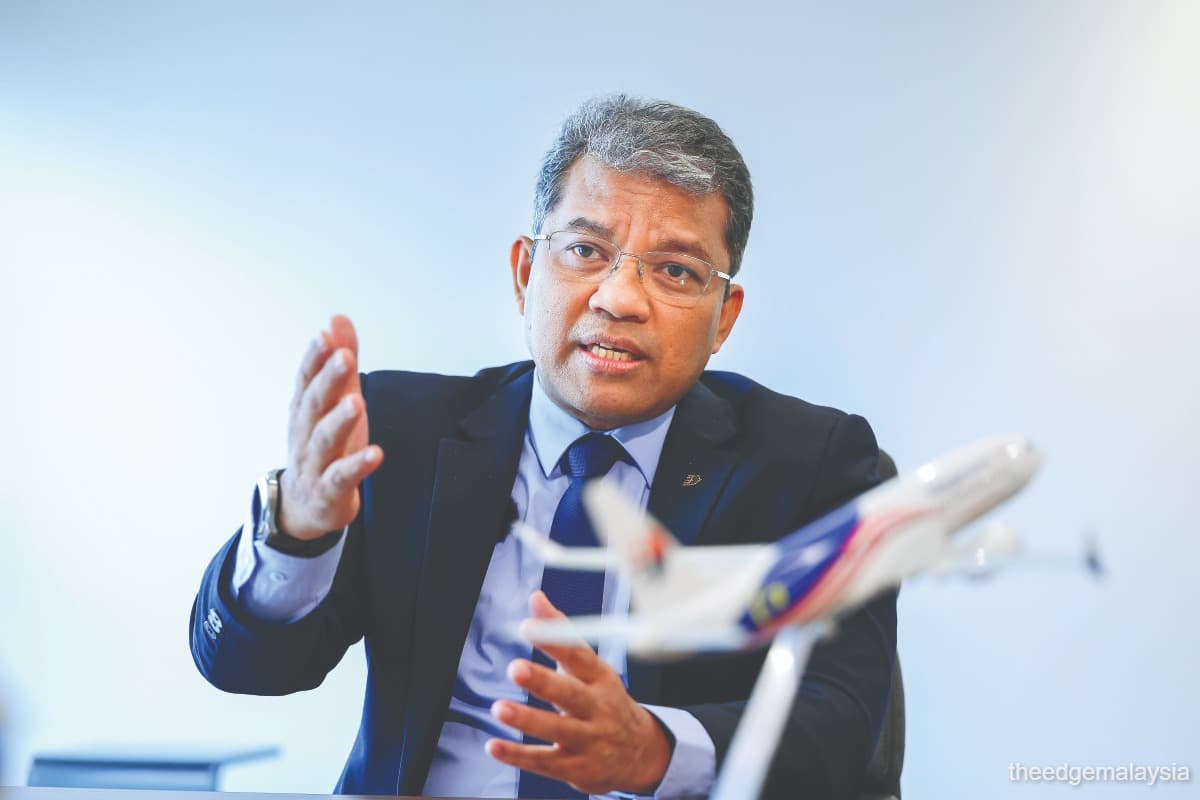
Malaysia Aviation Group Bhd (MAG) president and group CEO Captain Nasaruddin A Bakar says the airline’s experience of past crises has taught it three lessons: be clear about the business model, keep investing in the product and people, and manage cash carefully.
“If you’re a premium airline, you have to perform like one,” the 52-year-old tells The Edge in an interview.
MAG, the parent of Malaysia Airlines, will continue investing in its products and employees despite the turmoil.
“Right now, we are not reversing our gears,” Nasaruddin assures, adding that recruitment is continuing in selected areas and that operations remain as normal.
Nasaruddin, better known as Captain Nasa, took the helm on Feb 1, succeeding Datuk Captain Izham Ismail, who stepped down after more than eight years in the role. During his tenure, Izham is credited with restructuring the group’s finances, reducing liabilities by more than RM15 billion and eliminating RM10 billion in legacy debt.
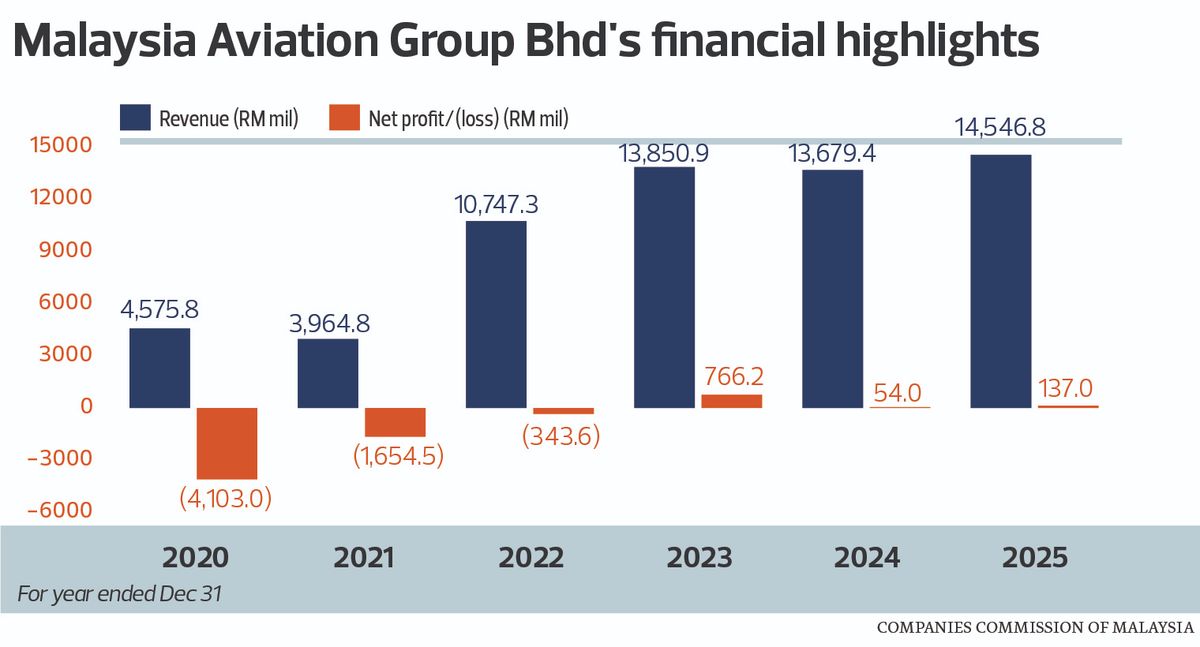
The group had also returned to profitability under his leadership. In the financial year ended Dec 31, 2025 (FY2025), MAG reported a net profit of RM137 million, up 154% from RM54 million in the previous year. Revenue rose 6% to RM14.55 billion from RM13.68 billion.
Hopes were high that the group would post its fourth consecutive year of net profit in FY2026. But those plans have been complicated by the conflict in Iran, which has pushed airlines to deal with rising fuel costs, cut flight capacity and rethink business plans. According to the S&P Global Platts Jet Fuel Price Monitor, the global average jet fuel price in the week ended Aug 7 stood at US$146.93 (RM600) per barrel, 63.2% more than a year earlier.
Nasaruddin, who took over MAG just as the Iran war broke out, says that the national carrier had been performing strongly in January and February before the conflict propelled fuel prices sharply higher.
“I took the helm at MAG on Feb 1 and then on Feb 28, the Iran war started. Jet fuel prices were about US$96 per barrel before the conflict, but rose above US$220 within 10 days. For a medium-sized airline group that operates a fleet of 106 aircraft like MAG, every US$1 increase in fuel prices has an estimated RM51 million impact on our bottom line,” he explains.
The conflict forced the new CEO to reprioritise his agenda almost immediately.
“My 100-day plan was obviously disrupted. After the Iran war began, it pivoted to managing the crisis,” he says.
In the early days of the war, the focus was on protecting the airline’s passengers, employees and assets as airspace restrictions disrupted services across the Middle East.
Malaysia Airlines temporarily suspended operations to Doha, Jeddah and Madinah. Services to Jeddah and Madinah resumed after about a week, while Doha reopened roughly a month ago, according to Nasaruddin.
“We had to make a number of decisions within the first week of the war [such as] whether to put affected passengers in hotels or to transfer them,” he recalls.
The airline also had to assess the safety of employees stationed across the region and determine where they should be relocated. “So, in the first few weeks of the war, my focus was on managing the crisis and ensuring everyone’s safety.”
The disruption initially brought an unexpected benefit. Malaysia Airlines was among several Asian carriers to see stronger demand, as travellers sought alternatives to Gulf hubs affected by the conflict. The closure of Middle Eastern airspace during the conflict redirected some passengers towards Malaysia Airlines, boosting its load factor and making certain routes more profitable. Routes to Europe, in particular, have benefited from stronger yields, allowing the airline to pass some of the higher costs on to passengers without significantly reducing demand.
But the longer-term impact has been far less positive, with higher fuel costs and weaker margins putting pressure on MAG’s finances.
A challenging 2026 amid fuel price volatility
The rise in fuel prices has significantly increased the group’s costs.
“If jet fuel price remains high until year end, the additional incremental cost to us is going to be about RM7.5 billion just on fuel cost alone,” Nasaruddin warns.
Fuel typically accounts for about 30% of MAG’s total costs. With the latest increase, that figure has doubled to 60%.
Nasaruddin reckons MAG’s financial performance will be “challenging” in FY2026, with rising fuel costs putting further pressure on already thin airline margins. But he says, “Never say never” when asked whether the group could still turn a profit this year.
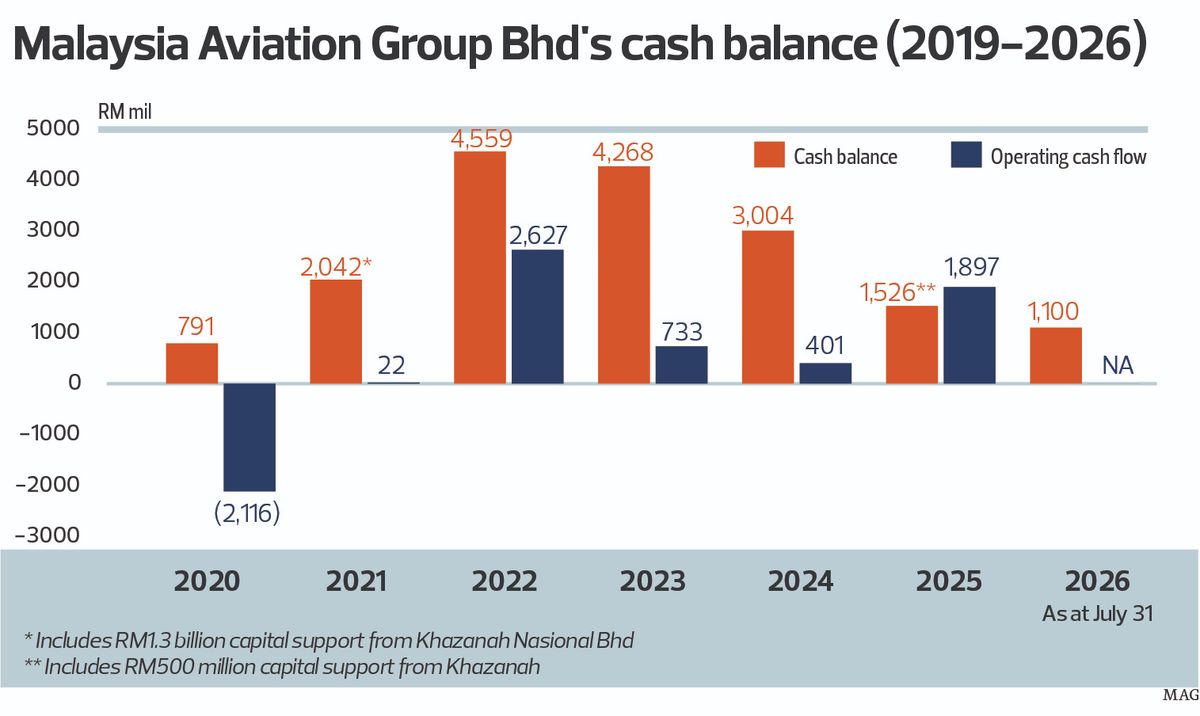
One factor cushioning the increase is the group’s fuel hedging programme. MAG has hedged about 36% of its fuel requirements on average, with coverage exceeding 50% in some quarters.
“That has cushioned the impact of the fuel increase. Having said that, it’s not sufficient,” Nasaruddin acknowledges, noting that the group must find other ways to protect its margins. “We have to be very smart both in managing our costs and gaining our revenue.”
Analysts note, however, that MAG’s hedging is on crude oil rather than jet fuel. Thus, even if crude prices ease, an elevated “crack spread” — the margin refiners earn from turning crude into fuel — could still leave MAG exposed, as its hedges cover only the crude component.
At the same time, partnerships with other airlines are also becoming increasingly important, Nasaruddin says.
Despite higher fares, passenger demand has remained resilient. Malaysia Airlines expects to carry about 18 million passengers this year, from 16 million in 2025, a gain of about 14%.
Nasaruddin expects fare increases, currently at about 20% to 25%, to eventually plateau.
“Growth has been very healthy. Having said that, it’s going to be quite a challenging year financially even though the load factor has increased.”
MAG is not alone in facing the financial impact of the conflict.
SIA recently reported its first quarterly net loss since 2022, as higher fuel costs and losses at associate Air India outweighed record revenue. The carrier posted a net loss of S$76 million (RM243 million) for the three months ended June 30, 2026, compared with a net profit of S$186 million a year earlier. Revenue rose 19.3% year on year to S$5.71 billion.
Nasaruddin notes that even in the best of times, the airline industry operates on thin margins. The International Air Transport Association expects the global airline industry’s net profit margin to fall to about 2% in 2026, from 4.2% in 2025.
“For airlines in Asia-Pacific, the average net profit margin was only about 1.4% even in a good year, as seen in 2025. This is going to be a very tricky year because margins will drop,” says Nasaruddin.
Malaysia Airlines has responded by adjusting fares and managing its seat inventory more closely. It has also reintroduced fuel surcharges, but Nasaruddin says the carrier cannot fully pass higher fuel costs on to passengers. “We can’t, because the scope to raise fares is limited and yields aren’t high enough. We have to bear some of the costs.”
As a result, some routes are no longer profitable. This has led to the airline cancelling selected flights, based on expected fuel prices and the profitability of individual routes.
“We had to make the smart choice to cancel some of our flights. Of course, we give passengers ample notice, cancelling about three months in advance when we see fuel prices are unlikely to fall and assess which parts of the network we need to manage,” he explains.
Managing expectations
After dealing with the immediate operational crisis, Nasaruddin says his focus shifted to the group’s financial performance and then managing key stakeholders, including the Malaysian government, controlling shareholder Khazanah Nasional Bhd and its 14,800 employees.
“We needed to manage expectations and also the efficiency of our internal staff.”
Despite the challenges, he says the group’s broader strategy remains unchanged. The objective is to ensure MAG continues to invest in its product and people and deliver the level of service expected of a premium carrier.
For an airline industry facing another major crisis, the challenge will be to do so while keeping costs under control and protecting its already narrow profit margins.
As if it did not already have enough on its plate, just as Malaysia Airlines was making progress in improving customer satisfaction, the airline suffered another setback in July after one of its pilots was detained in Indonesia over an alleged drug-smuggling attempt. Following the incident, MAG ordered mandatory drug screening for all 1,260 Malaysia Airlines pilots. Nasaruddin stresses that the group remains focused on maintaining its safety standards.
“When the news was out, one of the first things we did was to ensure that safety was upheld across the company,” Nasaruddin says, adding that the airline aims to complete screening of all its pilots by Aug 15, before extending the exercise to about 4,000 cabin crew, with completion targeted for Sept 15.
Nasaruddin says the airline is also reviewing its policies and procedures to identify potential gaps.
“We’re looking at the past, the present and the future,” he says, pointing to Malaysia Airlines’ recent award of a Seven Star PLUS safety rating by AirlineRatings.com, its highest safety rating, alongside carriers such as Etihad Airways, Cathay Pacific and Air New Zealand.
While pilots are already required to undergo annual medical examinations, the latest incident has prompted the group to review whether additional measures are needed to address drug use.
“In the future, there will be some adjustment of our policy internally and also with other stakeholders in the country,” he says.
Nasaruddin expects changes to policies on drug abuse or drug use among pilots, with the issue likely to involve the wider aviation industry and government agencies, including the Civil Aviation Authority of Malaysia.
Investing through the crisis
Despite the challenges posed by the Middle East conflict and the pilot drug case in Indonesia, MAG has no plans to slow down on its investment in aircraft, people or the wider premium proposition, Nasaruddin says.
Malaysia Airlines’ customer value proposition (CVP) is built around three areas: its cabin, food and cabin crew.
“The first is our cabin, meaning our fleet must be good,” Nasaruddin says, pointing to the airline’s ongoing fleet renewal programme.
Malaysia Airlines has ordered 95 aircraft over the past four years, comprising 55 Boeing 737 MAX narrow-body jets and 40 Airbus A330neo wide-body aircraft. As at mid-2026, 27 have been delivered.
The second priority is food, particularly the quality of Malaysian cuisine offered onboard.
“We believe investing in food is super important, especially [when it comes to] Malaysians. Malaysians love to eat, right?” Nasaruddin asks rhetorically.
Although Malaysia Airlines operates in a global market, he says the national icon wants its food offering to showcase what the country can offer international travellers.
To that end, the group is building its own catering facility at Kuala Lumpur International Airport (KLIA) under MAG Culinary Solutions Sdn Bhd. Construction is expected to be completed by the fourth quarter of 2028, with operations targeted to begin in the first quarter of 2029.
Malaysia Airlines currently requires about 22,000 meals a day. The new facility is expected to have capacity to produce between 50,000 and 60,000 meals a day. That would allow MAG to cater to its own flights while also generating additional revenue by supplying other airlines and customers.
“Once that facility is up and running, we’ll go back to handling 100% of our in-flight catering ourselves.”
The facility will be wholly owned by MAG, which is currently working with eight service providers for its in-flight meals following the end of its partnership with Brahim’s Food Services Sdn Bhd in 2023.
The third element is its cabin crew, which Nasaruddin describes as one of the airline’s most important assets.
“I need to ensure that our cabin is being replaced and maintained accordingly, our food is able to deliver to what is expected by a premium customer, and our cabin crew are able to deliver our Malaysian hospitality across all our network. So that is the focus today.”
MAG also plans to expand its Golden Lounge facility at Terminal 1 of KLIA as part of its broader premium strategy. Nasaruddin says lounge expansion remains a priority, but the group is taking time to assess the required investment and availability of space at KLIA. Detailed investment plans are expected to be finalised this year, with expansion targeted for next year.
Cautious hiring
Malaysia Airlines has been through several rounds of restructuring in the past two decades. In 2006 and again in 2015, the airline cut about one-third of its workforce as part of efforts to restore profitability. Its workforce had previously reached about 20,000 and was criticised as being too large and inefficient.
Today, MAG employs about 14,500 people and is taking a more selective approach to expansion. Recruitment is continuing for operational roles, including pilots, engineers, cabin crew, ticketing staff and check-in personnel. Back-office employees, who account for about 20% of the group’s workforce, are being managed more cautiously.
“We need to manage our costs,” says Nasaruddin.
Under MAG’s Long-Term Business Plan (LTBP) 3.0, the group is targeting average annual capacity growth of 8.5% between 2026 and 2030. The five-year plan also aims to move Malaysia Airlines into Skytrax’s top 10 global airlines, from 27th currently, while more than doubling group revenue to above RM24 billion and increasing third-party revenue from its aviation services businesses by more than 60%.
Nasaruddin says the group needs to continue investing despite the current Middle East conflict so it would be ready when market conditions improve.
“The crisis will end. It’s just a matter of when the fuel prices come down. The impact of a stronger US dollar against the ringgit will also ease. So we have to be ready when growth returns,” he says.
A key part of LTBP 3.0 is to reduce the group’s reliance on the low-margin airline business by expanding its aviation services operations, comprising maintenance, repair and overhaul (MRO), engineering, ground handling, training and cargo.
“The margin for an airline is so small. It’s only about 1%. This means that every time I sell you RM100, I only make RM1. If the fuel price goes higher, I may not make RM1,” Nasaruddin observes.
By comparison, he points out that cargo and MRO generate high-single-digit margins, while the group’s training business generates double-digit margins.
Aviation services currently contribute about 20% of MAG’s group revenue.
Nevertheless, MAG is taking a cautious approach to expanding its cargo fleet. The group currently operates three dedicated A330-200F freighters, but Nasaruddin says there are no immediate plans to replace them. At about 12 years old, the aircraft still have considerable operating life remaining.
Instead, MAG plans to expand its cargo business through partnerships and by making greater use of belly capacity on passenger aircraft. The group already has joint business arrangements with partners including Qatar Airways Cargo and IAG Cargo, which have helped boost cargo revenue.
New passenger aircraft on order will also add belly-hold cargo capacity. Freighters currently account for about 27% of MAG’s total cargo capacity, with the remaining 73% coming from passenger aircraft belly-hold space.
Cargo demand in the Asia-Pacific region is growing about 6% per year, outpacing passenger growth of around 4%, Nasaruddin says, adding, “Our intention is not to be the biggest [cargo] airline in the world.”
Meanwhile, he says the disposal of MASwings Sdn Bhd to the Sarawak government in January had only a limited financial impact on MAG. MASwings, which operated rural air services (RAS) in Sabah and Sarawak, generated relatively little revenue for the group and operated under a public-service obligation arrangement with the government.
“In terms of the impact on the organisation, it is very minimal. We are looking at an incentive of about RM9 million to RM11 million a year from MASwings,” he says.
The federal government provides a further RM209 million in annual subsidies for the RAS.
Read also:
Cover Story 2: ‘We are not cancelling destinations’
Cover Story 2: Malaysia Airlines mulls purchase of more than seven long-range widebody jets
Save by subscribing to us for your print and/or digital copy.
P/S: The Edge is also available on Apple's App Store and Android's Google Play.