

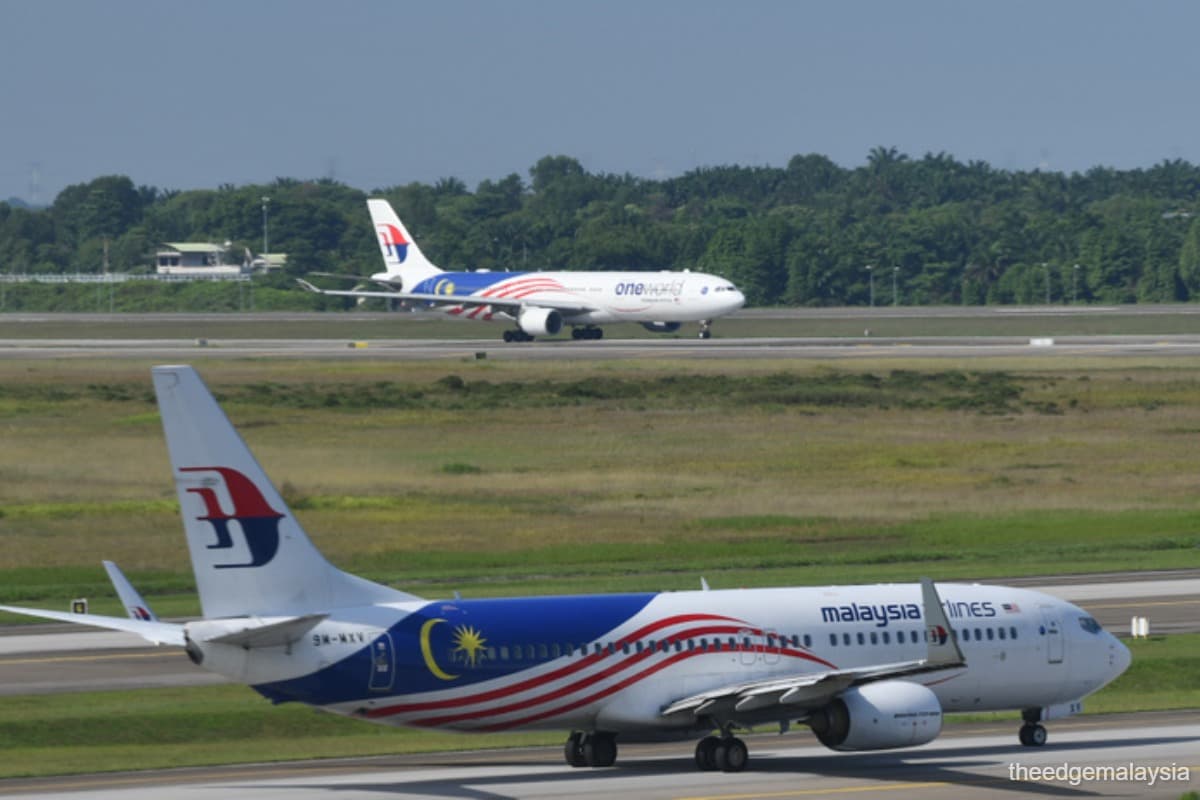
This article first appeared in The Edge Malaysia Weekly on August 17, 2026 - August 23, 2026
The following is an excerpt from The Edge’s exclusive interview with Malaysia Aviation Group Bhd president and group CEO Captain Nasaruddin A Bakar.
The Edge: Some airline operators have cut flight capacity, introduced unpaid leave and cut jobs amid rising fuel prices. What about MAG?
Captain Nasaruddin A Bakar: In any business, there are two main elements: revenue and costs. In this crisis, MAG is focused on both: How do we drive additional revenue and how do we optimise our costs?
On the cost side, one of the things that we are doing is reducing non-essential spending. For example, if there are events that do not add much value, we won’t hold them. Another example of non-essential spending is duty travel. It may seem small, but it has a big impact.
If we believe we need to trim our manpower, we will do that. But recruitment for operational staff will continue. Back-office hiring will be managed more cautiously.
A third area is managing our network. Some sectors are not profitable, meaning that every time we fly those routes, we are effectively subsidising passengers because we are losing money. So what we are doing is making surgical cuts. Malaysia Airlines has reduced capacity by about 5% over the past few months.
We are not cancelling destinations but reducing frequencies. For example, if we fly to Singapore 10 times a day, we may reduce that to seven. If we fly to Kota Kinabalu 10 times a day, we may reduce it to eight or six.
In fact, we’re adding a new destination, Fukuoka, next month. We launched flights to Changsha and Shenzhen in July.
Why is Malaysia Airlines able to reduce capacity by only 5%, compared with cuts of as much as 30% by low-cost carriers such as Batik Air and AirAsia? What’s driving the difference?
As a premium airline, one of the first things we have done is fuel hedging. That gives us an advantage in managing our fuel costs.
For this year, we have hedged about 36% of our fuel requirements. In the second quarter, the hedging was as high as 50%. That has given us some flexibility in managing capacity. All airlines, whether low-cost or premium, will run the numbers and determine the right level of capacity to put into the market.
Based on our calculations, we believe a 5% surgical cut is acceptable for the group in managing the current crisis, while also taking into account the growth we expect when fuel prices return to normal.
When you took the helm, MAG announced a new leadership line-up, including Bryan Foong Chee Yeong as CEO of the airline business and Low Wen Long as group chief strategy officer. How much support are you getting from the new management team?
This is my 33rd year in the industry, all with one company. The management team we have announced comprises internal people who have moved into different roles. Our teamwork is very strong, not just within management but across the company.
One of the priorities during my first 100 days was to provide clarity across the organisation. I have personally met more than 4,000 people across the organisation to ensure we are working together as a company.
The camaraderie among the management team is strong. Of course, there are differences, and I need those differences. It is important for us to challenge each other. The objective is to make better decisions for the company.
So, in short, with the changes to management, we are strong together as a team. We are trying to solve the issues we have in front of us.
Have you completed the management changes?
No, there are still vacancies in certain positions. We are working on those appointments and announcements will be made eventually. They are important positions, but we currently have strong support teams that can cover the vacancies.
Some of the changes are also replacements for executives who have retired. (MAG group chief financial officer Boo Hui Yee retired at the end of May. Muhammad Najmi Mansor has been the acting group CFO since June.)
Next year, there will be another one or two retirements, so those replacements will continue.
Are you concerned that the workforce could become bloated again, now that you have close to 15,000 employees?
I am very mindful of the lessons learnt from every crisis. One of these is that we need to continue investing. Investment is not just about products or buying new aircraft; it is also about investing in talent.
That is why recruitment of overseas staff is continuing. But we are managing the numbers carefully.
Our compound annual growth rate is 8.5% based on the aircraft orders we have today. We currently have 106 aircraft, and with the new aircraft coming in, we expect to have close to 120 aircraft in another six or seven years.
The company and management are projecting that growth and the resources needed to support it.
The main lesson from every crisis is to be ready for growth while remaining cautious about what we do today. Our spending has to be smart; so does our revenue strategy.
How frequently do you review fares and fuel surcharges?
We have been using dynamic pricing for more than 35 years. Under this model, fares and charges are continuously reviewed.
If there are mandatory charges, such as sustainability or fuel-related charges required by regulators in certain countries, we may pass those costs on to passengers.
Since we use dynamic pricing, fares can range from as low as RM300 to as high as RM1,000, depending on when you book, the timing of your purchase and the day you travel. Ultimately, pricing depends on demand and market conditions at the time.
There has been an increase of about 20% to 25% in all-in fares since the Middle East conflict began. Nevertheless, demand remains steady. We are seeing load factors of more than 90% on our European routes and in the high 80s for Australia. That has helped us manage pricing. Ultimately, it is about supply and demand — that’s how dynamic pricing works.
What’s staff morale like now?
We have 15,000 people, and I cannot speak for every individual because everyone may feel differently. But generally, morale is good. As I said, I have met more than 4,000 staff personally — not one by one, of course, but across the organisation.
Our on-time performance (OTP) this year has also been very good. It is close to 92% year to date. So far in August, it is close to 95%. Within the oneworld Alliance, we were ranked second for OTP among the 15 member airlines.
Our customer satisfaction index (CSI) remains stable. Our cabin and food satisfaction scores are also consistent. With operational performance remaining strong, the morale of our people has remained steady.
Having said that, Malaysia Airlines has been in the news because of the Jakarta issue (the July arrest of one of its pilots in Indonesia for allegedly attempting to smuggle a large quantity of drugs).
The incident upset some of our people. But it also shows how committed they are to rebuilding public trust.
I can see some frustration among our people because of what has happened. After all the hard work we have put in, suddenly this has emerged for the wrong reasons.
But we remain confident in our ability to maintain complete safety. Our 15,000 people are behind that agenda.
Read also:
Cover Story 2: Malaysia Airlines chief says ‘not reversing gears’, pushes ahead with premium strategy
Cover Story 2: Malaysia Airlines mulls purchase of more than seven long-range widebody jets
Save by subscribing to us for your print and/or digital copy.
P/S: The Edge is also available on Apple's App Store and Android's Google Play.