

This article first appeared in The Edge Malaysia Weekly on July 27, 2026 - August 2, 2026

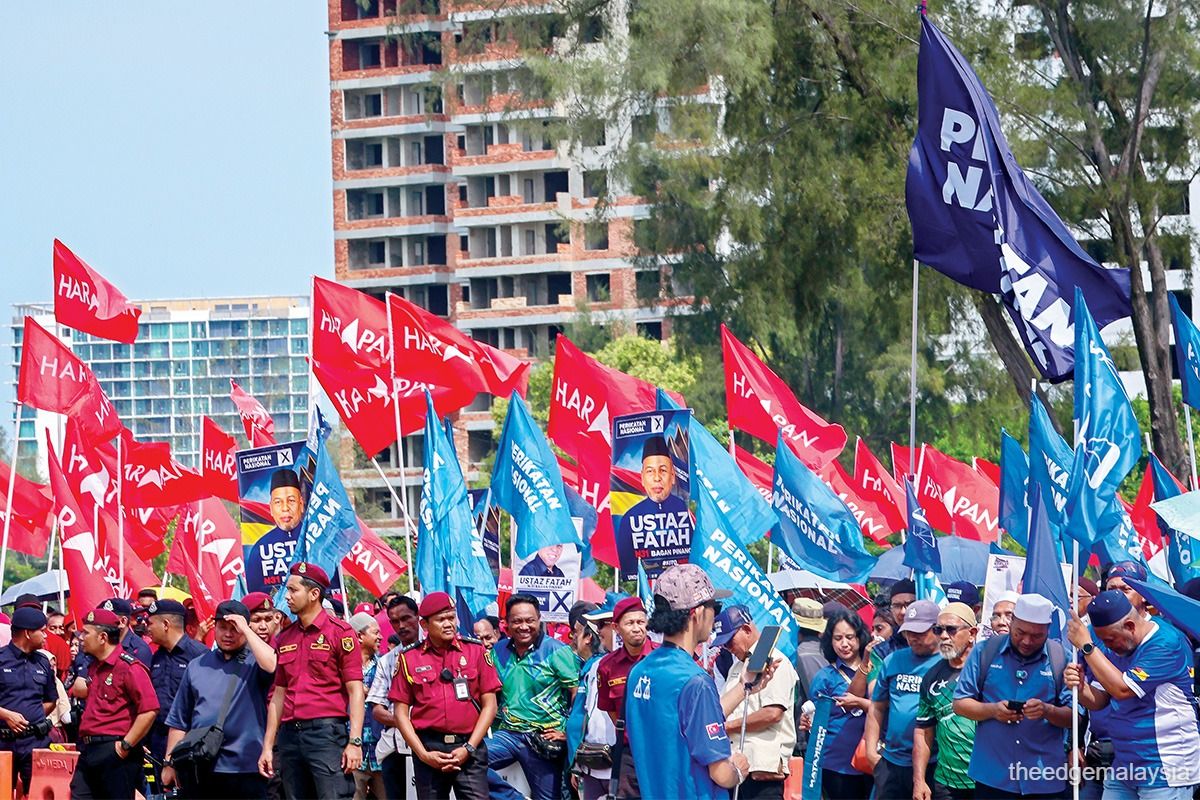
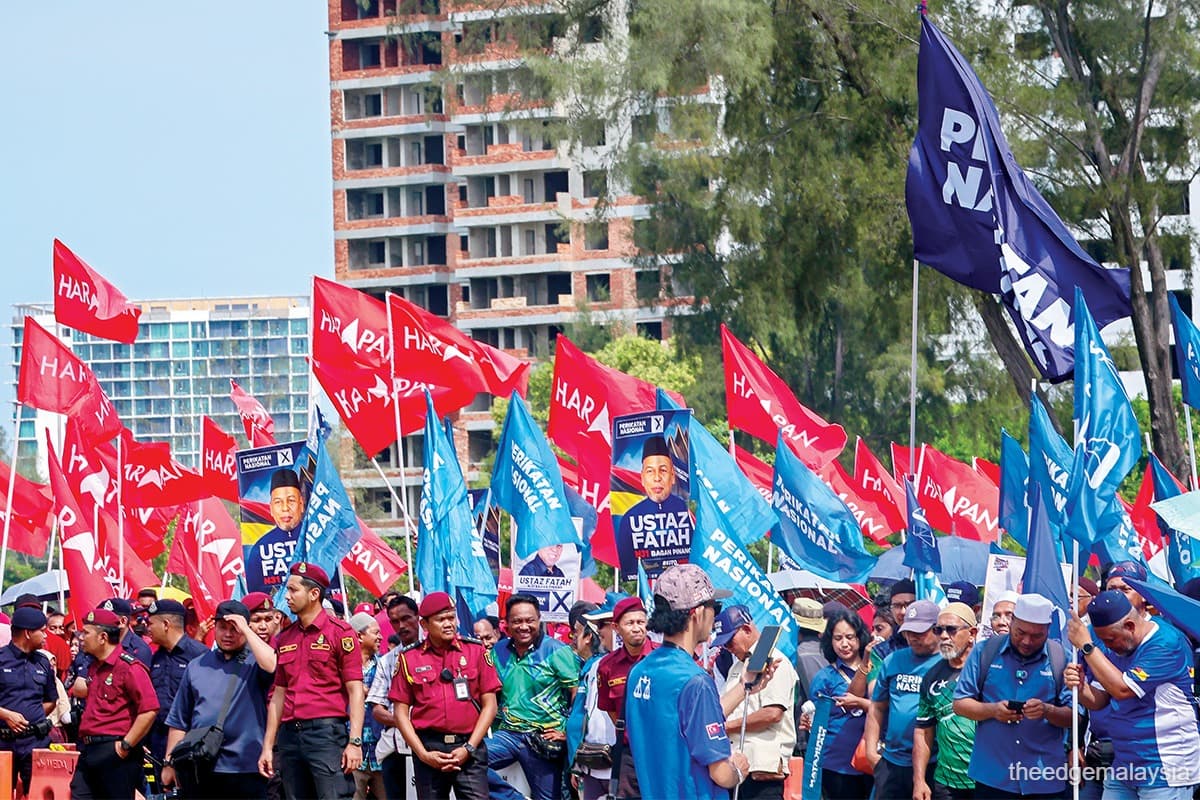
THE stakes are high as rival “frenemy” parties within and outside the federal unity government realign in a bid to secure at least a simple majority of 19 out of the 36 seats contested on Aug 1, which would allow them to form the Negeri Sembilan state government.
On top of retaining the 17 seats it won in the previous polls, Prime Minister Datuk Seri Anwar Ibrahim’s incumbent coalition Pakatan Harapan (PH) will need to gain at least two more seats to claim victory in “Nismilan” or “Nogoghi Sombilan”, as the state with Minangkabau roots is colloquially known.
Hot on the heels of its supermajority win in the July 11 Johor state election, Barisan Nasional (BN) — a component of the PH-led unity government at the federal level — has allied with the opposition pact Perikatan Nasional (PN).
Together, they are also aiming to win at least two more seats apart from retaining their existing 17 seats for a simple majority in the polls. This was after PAS signalled its willingness to work with Umno for the state election. Umno-led BN had 14 seats while PN (excluding Bersatu) had three in the previous state polls.
The two seats that could tip the balance in Negeri Sembilan may be the very ones Tan Sri Muhyiddin Yassin’s Parti Pribumi Bersatu Malaysia (Bersatu) is determined to defend. Bersatu is contesting solo in the coming polls after PAS president Tan Sri Abdul Hadi Awang announced on June 8 the end of their six-year alliance. Hinting at “a new grand coalition” and an exit from “toxic” PN, Muhyiddin said Bersatu “will no longer be alone” after the Negeri Sembilan state polls. PN did not win any of the 33 seats it contested in Johor.
Will Bersatu find new allies, or will the newly allied PAS-led PN and Umno-led BN prevail in Negeri Sembilan and strengthen their partnership?
Or will PH have the last laugh by not only defending its seats and winning more, thus saving face after the 48 to eight bashing it took in Johor?
Here The Edge looks at 12 hot seats which may tip the balance in the “frenemies” battle for Negeri Sembilan.

(N01) Chennah — Loke’s test of the ‘fixed deposit’

Top of the list of seats to watch is N01 Chennah where Transport Minister and DAP secretary-general Anthony Loke Siew Fook has served for three consecutive terms since May 2013. Here, Loke is in a straight fight with MCA Youth chief Siow Kong Choon to secure his fourth straight term as its state assemblyman.
Defending the seat with a 47.8% Malay electorate will be an uphill battle for Loke, as the BN-PN electoral understanding could give MCA an advantage in courting Malay votes.
Loke has built goodwill among Malay voters, with on-the-ground checks by The Edge showing praise for his efforts and responsiveness to their calls for assistance, often going the extra mile to resolve issues raised.
The DAP leader also remains popular among the Chinese community, with many commending his efforts to support and care for the local constituency, according to those approached by The Edge.
Still, gains by MCA in the recent Johor state election on the back of the new BN-PN partnership cannot be ignored. The seat will also be closely watched to see if the low turnout of Chinese voters observed in Johor will be repeated in Negeri Sembilan.
Chennah will be a “50-50” seat, as Loke puts it, given that no single ethnic group forms the majority here.
(N24) Seremban Jaya — Gauge of Indian support at four-term stronghold

Questions over Indian and non-Malay support for PH arose after BN component party MIC unexpectedly won all four seats it contested in the recent Johor state election, including DAP’s stronghold Perling. MIC’s victory in Perling, a three-way contest, was largely driven by Chinese voter support.
In N24 Seremban Jaya, Chinese voters make up the largest bloc at 45.5%, while Malays comprise 25.1% and others 1.5%. The seat with a 27.9% Indian electorate, the second largest in the state after N07 Jeram Pendang, will be a key test for DAP. The party has held the seat for four terms since 2008 and is now fielding newcomer S Mugunthan.
DAP’s four-term incumbent, Gunasekaren Palasamy, has opted not to seek re-election, paving the way for Mugunthan, who previously served as Gunasekaren’s special officer and is currently a research officer to state executive councillor J Arulkumar.
It will be a three-corner fight for Mugunthan, who faces BN’s (MIC) Thinalan T Rajagopalu, the son of former MIC Negeri Sembilan chairman Datuk T Rajagopalu and Bersatu’s (Urimai) Mahendran Ramasamy.
While DAP’s winning margin stood at a sizeable 59.2% in 2023 and 61.4% in 2018, the possibility of a large swing remains following the informal BN-PN tie-up.
The seat will be closely watched to gauge Indian support and to see whether Chinese voter turnout will be significant.
(N32) Linggi — Aminuddin’s gambit in leading the charge for PH

Caretaker Menteri Besar Datuk Seri Aminuddin Harun of PKR leads the charge in N32 Linggi, the tip of the spear in PH’s bid to gain additional ground in Negeri Sembilan and form the state government on its own.
Aminuddin faces a tough siege in Linggi. The 61.8% Malay-majority seat has long been a stronghold for BN lynchpin, Umno, having been under the party’s control for over half a century.
Indians account for 17.3% of voters, while Chinese comprise 16.7% — together forming 34% of the electorate. That means non-Malay support alone will not be enough for Aminuddin to succeed in Linggi.
This seat will test PKR’s ability to garner support from Malay voters.
Declines in Umno’s winning margins in past election cycles show the stronghold is not unassailable. The party’s margin fell to a low of 5% in 2018, when PH’s momentum was at its peak. Under the unity pact in 2023, Umno’s margin rose slightly to 10.3% over PN (Bersatu).
On the ground, residents expressed discontent over the lack of development under Umno and voiced positive sentiments towards Aminuddin, citing his role as menteri besar. Another factor that could come into play is Bersatu, which might split the traditional Malay BN-PN voter base, though analysts view this as unlikely.
This will be a tough fight for Aminuddin, who stepped away from his traditional seat of N13 Sikamat in an attempt to make inroads for PH’s quest for a simple majority.
(N13) Sikamat — A smooth passing of the baton for PKR?

In stepping away from N13 Sikamat, PKR’s Aminuddin has passed the baton to his political secretary, Nor Azman Mohamad, who faces the challenge of filling big shoes. His predecessor held the seat for four consecutive terms since 2008.
The 71.6% Malay-dominant seat has been a stronghold of PH (PKR) under Aminuddin’s watch. The remainder of the voter base comprises 19% Chinese, 7.7% Indian and 1.8% others. In the previous state election, where PH had an electoral pact with BN, Aminuddin secured the seat with an 11.5% margin over PN (Bersatu).
In Sikamat, Nor Azman is contesting against Bersatu’s Tun Faisal Ismail Aziz and PN’s (Wawasan) Razali Abu Samah.
PKR retaining this seat is not a foregone conclusion. Nor Azman’s takeover from Aminuddin is a calculated risk the party has chosen to take. While not a parachute candidate, Nor Azman admitted to the press last week that many Sikamat residents had hoped Aminuddin would remain in the state constituency.
PKR machinery on the ground described Nor Azman as having a different style from Aminuddin, noting he is regarded as more tegas (strict) than his predecessor.
While Nor Azman remains the favourite to win, failure to retain the seat would mark a clear upset for PKR and weaken PH’s chances of forming the state government.
(N18) Pilah — Another PKR seat under threat

N18 Pilah is another seat considered at risk for PH’s PKR. On-the-ground checks found both the press and party machinery suggesting that Pilah will likely be a heated battleground.
The numbers back this up. PKR captured the seat from BN (Umno) in 2018 with a 16.6% margin under Mohamad Nazaruddin Sabtu. In 2023, the margin fell to 9.5% over PN (PAS) under Datuk Noorzunita Begum Mohd Ibrahim, despite the unity pact with BN.
Now, incumbent Noorzunita is in a one-on-one bout with BN’s (Umno) S Leza Md Yasin, after PAS chose to give way to BN under their informal electoral alliance.
With a 65.6% Malay electorate, a consolidation of BN and PN support, framed against PKR’s marginal victory in the previous election, puts this seat at risk. The Kuala Pilah parliamentary seat, where Pilah falls under, is also considered an Umno stronghold.
Continued support from the seat’s non-Malay voters — which make up over a third of its voter base — will be crucial for PKR to retain the seat. Will enough votes show up?
(N04) Klawang — Amanah’s bid to avoid a possible wipeout

Since securing N04 Klawang from Umno (BN) in 2018, Amanah’s support in the seat has steadily declined. From a margin of 11.7% in 2018, it slipped to just 6.4% over PN (Bersatu) in 2023. Before Amanah’s win eight years ago, Umno had held the seat since 1986.
The drop in support was not confined to Klawang alone — Amanah fell from three seats in Negeri Sembilan in 2018 to just one, Klawang, in 2023.
Two-term incumbent Datuk Bakri Sawir is tasked with defending the seat in a three-corner fight with his cousin, PN’s (Wawasan) Danni Rais, and Bersatu’s Mohd Adib Musa. Danni was Bersatu’s candidate in 2023.
With a voter base comprising 66.3% Malay, 27.4% Chinese, 3.7% Indian and 2.7% others, Klawang could see a tight race if Amanah manages to secure Malay support.
The contest in Klawang has also provided an early glimpse of internal debate over the BN-PN informal partnership.
Umno branches initially shuttered BN’s district centre in Klawang in protest against the leadership’s decision to give way to PN to contest the seat. The issue appears to have been resolved, with BN reopening its district centre and operation rooms.
Amanah’s failure to retain Klawang, along with losses in its six other contests in this round of the state election, would leave the party wiped out from Negeri Sembilan.
(N09) Lenggeng — The seat that BN fought to keep

Incumbent Datuk Mohd Asna Amin of BN (Umno) will defend Lenggeng against Amanah’s (Amanah) Zarinna Abu Zarin and Bersatu’s Zool Amali Hussin in a three-cornered contest.
The constituency has emerged as one of the election’s key battlegrounds after becoming one of the most fiercely contested seats during PH-BN negotiations ahead of the 2023 state election. Amanah, which captured Lenggeng in 2018, eventually gave way to BN under the unity government’s seat-sharing arrangement.
The seat has changed hands in the past two state elections. PH ended BN’s five-term hold on the constituency in 2018 with a 6.3% margin before BN reclaimed it in 2023 by a slimmer 3.5% margin.
With Malays accounting for 76.7% of the electorate, the outcome will offer an indication of whether BN can retain its support in a key Malay-majority constituency.
Residents in Lenggeng whom The Edge spoke to generally expect Asna to retain the seat, citing his active presence in the constituency and responsiveness to local issues. Many said they had backed Amanah in 2018 in the hope of seeing change, but were left disappointed by what they described as a lack of development and engagement during former assemblyman Suhaimi Kassim’s tenure.
(N02) Pertang — Can BN hold its rural heartland?

Pertang remains one of BN’s key rural strongholds, with its large Federal Land Development Authority (Felda) settler community making it an important gauge of the coalition’s traditional rural Malay support. Malays account for 66.4% of the electorate, followed by Chinese (19.3%), others (7.8%) and Indians (6.5%).
Negeri Sembilan Umno chairman and Jelebu MP Datuk Seri Jalaluddin Alias, who led the no-confidence move against Menteri Besar Datuk Seri Aminuddin Harun earlier this year, is defending the Pertang seat in a three-cornered contest against PH’s (PKR) Mohd Umry Abdul Khois and Bersatu’s Mohd Faizal Fadli Mohd Idrus.
BN strengthened its hold on Pertang in the 2023 state election, widening its winning margin to 32.9% from 5.1% in 2018. Jalaluddin Alias secured 5,634 votes (66%), defeating PN’s (PAS) Amirudin Hassan, who garnered 2,844 votes (34%).
Interviews by The Edge with settlers at Felda Pasoh 4 in Simpang Pertang — where Malays make up about 70% of the electorate — suggest Jalaluddin retains strong backing among settlers, with many citing his regular engagement with the community and support for Felda residents. The result this time will show whether the coalition can sustain that level of support, particularly in Felda settlements that have long formed the backbone of its voter base.
(N14) Ampangan — Mohamad Rafie’s comeback bid

Another constituency to watch is Ampangan, which is expected to serve as a barometer of whether PH can retain Malay support. PKR has held the seat for the past two terms, but its winning margin narrowed sharply to just 2.2% in the 2023 state election from 10.3% in 2018.
The seat, where Malays account for 72.8% of the electorate, will see a three-cornered fight between PH’s (PKR) Datuk Muhammad Nazri Kassim, PN’s (PAS) Datuk Mohamad Rafie Abdul Malek and Bersatu’s Noor’azah Harun.
Mohamad Rafie is no stranger to Ampangan, having previously served as its assemblyman and as state executive councillor. His PKR membership was terminated after he contested the 2023 state election as an independent, before he joined PAS in June this year. In 2023, Mohamed Rafie garnered 20.7% of votes as an independent.
Now contesting under the PAS banner, he will be looking to win back voters who had previously elected him as a PKR representative.
With Malays making up nearly three-quarters of the electorate, the contest will show whether PH can retain its support base or whether Mohamad Rafie’s return under the PAS banner is enough to swing the seat.
(N25) Paroi — PAS’ first defence

Paroi, which has the largest electorate in Negeri Sembilan, is one of the state’s most closely contested constituencies, having changed hands in each of the past three state elections. BN held the seat in 2013 before Amanah captured it in 2018. PAS then ended PH’s one-term hold in 2023 with a 12.9% margin.
Incumbent Kamarol Ridzuan Mohd Zain of PN (PAS) will defend the seat in a three-cornered fight against PH’s (Amanah) Youth secretary Ahmad Shahir Mohd Shah and Bersatu’s Mohd Nazree Mohd Yunus.
How Malay voters choose is crucial to the outcome. Of Paroi’s 64,998 voters, 78.7% are Malay, followed by Indians (14.4%), Chinese (5.8%) and others (1.2%).
The outcome will show whether PAS can consolidate the support that delivered its breakthrough victory in 2023 with the new BN-PN electoral understanding, a factor which was absent in the last state election.
(N20) Labu — Can Bersatu hold on?

Labu is another constituency where Bersatu will be looking to cement the gains it made in the 2023 state election, when it wrested the seat from PKR.
Negeri Sembilan Bersatu chairman Mohd Hanifah Abu Baker is defending the seat in a three-cornered fight against PH’s (PKR) Datuk Ahmad Faez Abdul Razak and BN’s (Umno) Siti Nur Umaira Hasim.
The constituency with 32,884 voters is another Malay majority seat, with 76.2% of the electorate being Malay, followed by Indians (13.3%), Chinese (7.4%) and others (3.2%).
Mohd Hanifah won the seat in 2023 with a 7.6% margin, overturning PKR’s 6% margin in 2018. As Negeri Sembilan Bersatu chairman, Mohd Hanifah’s re-election bid will also serve as a measure of the party’s strength in one of the state’s key Malay-majority constituencies.
(N12) Temiang — MCA is trying to break DAP’s grip

Temiang remains one of DAP’s strongest constituencies, with the party holding the seat for the past four terms. This time, PH (DAP) is fielding Ho Weng Wah, political secretary to Loke, to defend the seat in a three-cornered fight against Negeri Sembilan MCA chief Datuk Leaw Kok Chan and Bersatu’s Fazly Hamid.
DAP retained the seat comfortably in the 2023 state election with a 34.1% margin, compared with a 33.7% margin in 2018, reinforcing its firm grip on the constituency.
Chinese voters make up the largest share of the electorate at 43.3%, followed by Malays (39.4%), Indians (14.6%) and others (2.8%).
The Temiang contest will test whether BN’s Chinese-based partner MCA can break into one of DAP’s long-held strongholds.
In the July 11 Johor state election, MCA pulled off a surprise by winning eight seats, surpassing DAP’s six. This marked a reversal of its decade-long record of losses in urban, Chinese-majority constituencies. Notably, MCA regained Tangkak, Jementah and Johor Jaya — seats it had previously lost to DAP in 2013, 2018, and 2022. The outcome of this state-level contest may prove significant as momentum builds toward the 16th general election.
Read also: Save by subscribing to us for
your print and/or
digital copy. P/S: The Edge is also available on
Apple's App Store and
Android's Google Play.
A test of Malaysia’s new political equation as BN teams up with PN against PH with Bersatu likely a spoiler
A brief history of the PAS-Umno love-hate relationship
Stage set for rehearsal to GE16
Special Report: Man in the spotlight: Anthony Loke on elections, ‘frenemies’ in politics and transport matters