

This article first appeared in The Edge Malaysia Weekly on June 29, 2026 - July 5, 2026
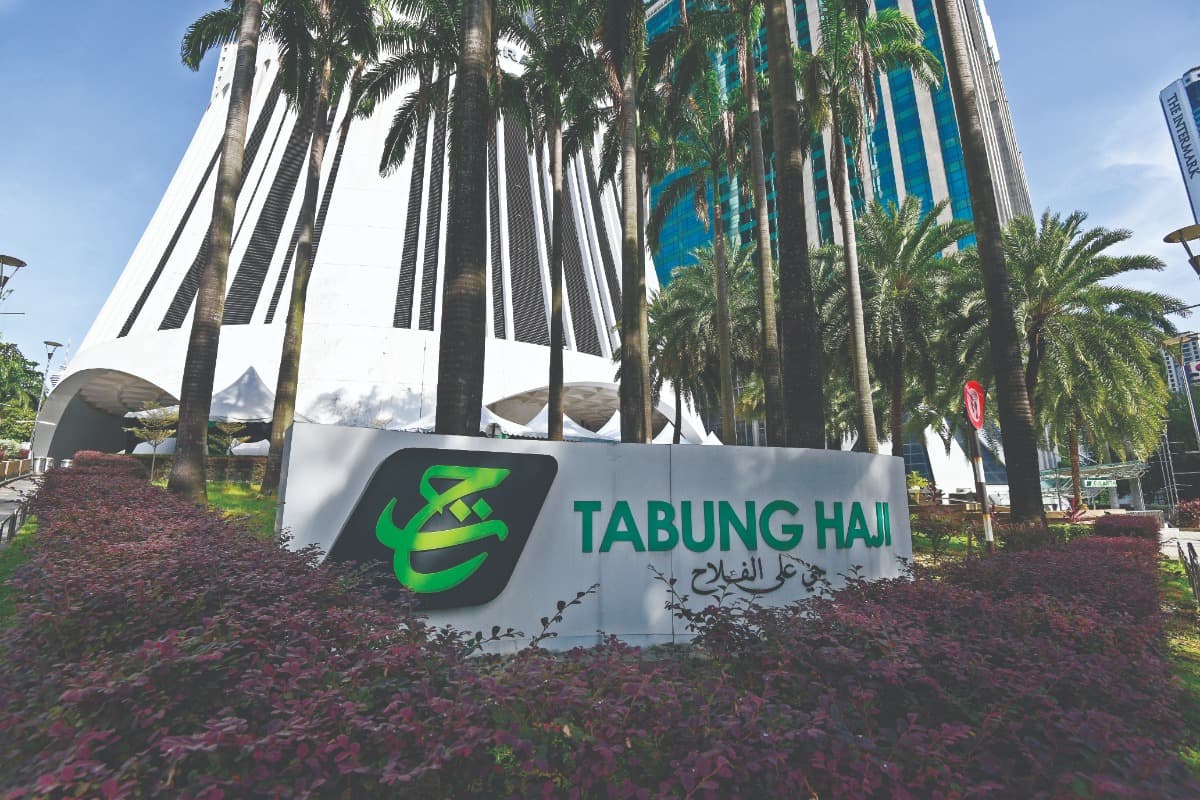
LEMBAGA Tabung Haji (TH) has helped more than 1.5 million Malaysian Muslims fulfil their haj obligation over the last six decades. Besides operating a savings fund, it assists more than 31,000 pilgrims each year by managing their travel and accommodation needs during their stay of more than a month in Makkah and Madinah.
TH has also covered part of the pilgrims’ haj costs since 2001. The Haj Financial Assistance (HAFIS) had risen from less than RM1,000 per pilgrim — about 10% of the cost then — to as high as RM19,944 for each B40 pilgrim in 2024, not including another RM1,000 from the government. The total bill climbed from an estimated RM22 million to RM185 million during the period.
This financial assistance has enabled many pilgrims who would otherwise not be able to afford the trip to perform the haj, the fifth pillar of Islam, particularly the elderly while they are still physically able.
It should be noted that the financial assistance is funded by the investment returns of the savings fund that would otherwise accrue to depositors. Meanwhile, the growth of depositors’ savings had slowed from double digits in the early 2010s to below 2% in 2023 and 2025, although it has since picked up. Deposits contracted in 2019 after TH slashed the previous year’s profit distribution when balance sheet issues were uncovered.

As TH deals with ever-increasing haj costs, a challenging investment climate and rising competition for deposits, the pilgrims’ fund has begun reducing its subsidy burden “so that it is fair to the investors’ returns”, says chairman Tan Sri Abdul Rashid Hussain.
“Please, the government is not the one paying the subsidy. Tabung Haji depositors are paying the subsidy,” he tells The Edge in an interview. The pilgrims’ fund is self-funded, with the investment income used to cover the haj operations and assistance, distribute to depositors and maintain its reserves, he points out.
Describing HAFIS as a political decision when it was introduced in 2001, Rashid acknowledges the difficulty in changing a mechanism that has existed for more than two decades at an institution serving more than nine million Malaysian Muslims.
If TH could help depositors save enough for the pilgrimage, the problem of Muslims being unable to perform the haj would not arise, he says.

“How do you, at Tabung Haji, [explain that] we can’t go on subsidising people who go on the haj? We’re now educating people … There is an Islamic word called istito’ah, which is, you only go for the haj when you can afford it. And therefore, what we’re supposed to do is help you save with us early, systematically and regularly,” he adds.
“Our point is, this cannot be right from a religious principle point of view, and it cannot be right from a sustainability point of view. We have to phase the subsidy out.”
Managing the investment income and subsidy
TH has raised the minimum haj payment three times in the last five years. However, imposing a higher payment isn’t the first option when it comes to managing the subsidy bill.
Despite the rising costs in Saudi Arabia, TH has kept the full cost of performing the haj at RM33,300 per pilgrim since 2024, after reducing it by 10% over the past two years, says Rashid. The pilgrims’ fund is also pursuing longer-term accommodation contracts.
Since 2022, HAFIS has been distributed through a tiered mechanism: B40 pilgrims receive the largest discount, followed by the M40, while the T20 pay the full cost. In 2026, TH is subsidising RM17,300 for each B40 pilgrim and RM9,800 for each M40 pilgrim.
Of Malaysia’s quota of about 31,600 pilgrims annually, 30% travel under private packages (not managed by TH). The B40 and M40 pilgrims make up 42%, while 28% comprise the T20 pilgrims and those who appealed and made the full payment.
With depositors being educated on the principle of istito’ah, a growing number of B40 and M40 pilgrims have opted to turn down HAFIS and pay more than the minimum amount, with a small number of them paying the full cost.
Rashid says some depositors are comfortable knowing that part of the fund’s investment income supports other pilgrims. “For some people, they say ‘no, that’s part of our charity, and we don’t mind’. All right? But we mustn’t take these people for granted,” he adds.
Back-of-the-envelope calculations show that redirecting the subsidies to depositors’ returns would have lifted TH’s total profit distribution by 3%-7% in 2022-2025, and as much as 0.23 percentage points to the distribution rates in the period.
In short, by not having to subsidise pilgrims from the lower income groups, TH will be able to give depositors a higher profit distribution rate and continue helping Malaysian Muslims fulfil their haj obligation without impacting the millions of depositors who are sustaining the institution.
‘A contract with those serious about going for the haj’
Higher investment returns will be central to rebuilding confidence and encouraging regular savings, especially because the balances in the pilgrims’ fund can be withdrawn at any time.
Until last year, depositors could enter the haj queue with only RM1,300 in their accounts, far below the minimum payment of RM15,000. More than half of TH’s 9.86 million depositors have less than RM1,300 in their accounts, while only 1.5 million have at least RM15,000.

Starting this year, depositors must have at least RM15,000 before they are eligible for the pilgrimage. Since the change, the rejection rate for the haj offer has fallen to 18% from about 50%. This suggests that “it is not a question of whether Tabung Haji depositors have the money”, as many can bring in funds held elsewhere, says Rashid.
“They may have money elsewhere, but they’re not taking us seriously at the financial institution to start off with. We say, if you’re serious about us taking you for the haj, you should have a contract with us — basically, to save with us and put your money here so that we will be able to do all the services for you, and in order to make it sustainable,” he adds.
“And that’s fair to everybody. That way, we will bring the cost down. We will bring the cost of the burden, or even the subsidy, down. It’s in the maths.”
After annual net withdrawals of RM1.3 billion in Rashid’s first two years as chairman, the trend began tapering off between January and May 2026, he says. With the costs being managed and new strategies being drawn up to increase its investment returns, TH’s “biggest challenge” is the current-account nature of its deposits, he points out.
“How much do you get in your current account? I’m giving you 3.5% after paying your zakat, and it’s a government-guaranteed fund. So, strictly speaking, we have to do something about whether it will continue to be purely a current account or if it would be better [for it] to be something slightly more sophisticated than that,” he adds.
Can TH transform from being an institution where depositors just maintain the minimum balance to one where they save consistently? Regardless, the longer-term question is no longer simply how much it can subsidise each pilgrim, but how many future pilgrims it can help without weakening the fund that makes it possible.
Read also:
Cover Story: Putting Tabung Haji in order
Cover Story: Urusharta Jamaah and the legacy assets
Cover Story: ‘I can’t apply my level of creativity here that I could do in investment banking’
Save by subscribing to us for your print and/or digital copy.
P/S: The Edge is also available on Apple's App Store and Android's Google Play.