

This article first appeared in The Edge Malaysia Weekly on May 25, 2026 - May 31, 2026

WHOEVER forms Johor’s next state government will inherit not only one of Malaysia’s fastest-growing economies, but also rising pressure to ensure the benefits of rapid development are shared beyond corporations, investors and the affluent.
Over the past few years, the state has emerged as one of the country’s most dynamic economic growth engines, fuelled by billions of ringgit in foreign investments, a wave of data centre developments, expanding industrial activity and deepening economic integration with neighbouring Singapore.
Yet, beneath the optimism surrounding its transformation, anxiety is quietly building among ordinary residents over whether they are truly benefiting from the growth story.
“Of course, we are proud of the development taking place in Johor,” Marina Osman, a property manager based in Johor Bahru, tells The Edge. “But people are also asking whether ordinary people can still afford to live comfortably here in the future.”
Home to about 4.2 million people, Johor has long benefited from its strategic location at the southern tip of Peninsular Malaysia. The state is anchored by major ports such as Port of Tanjung Pelepas and Johor Port, while its direct link to Singapore has made it a natural extension of one of Asia’s largest financial and trading hubs.
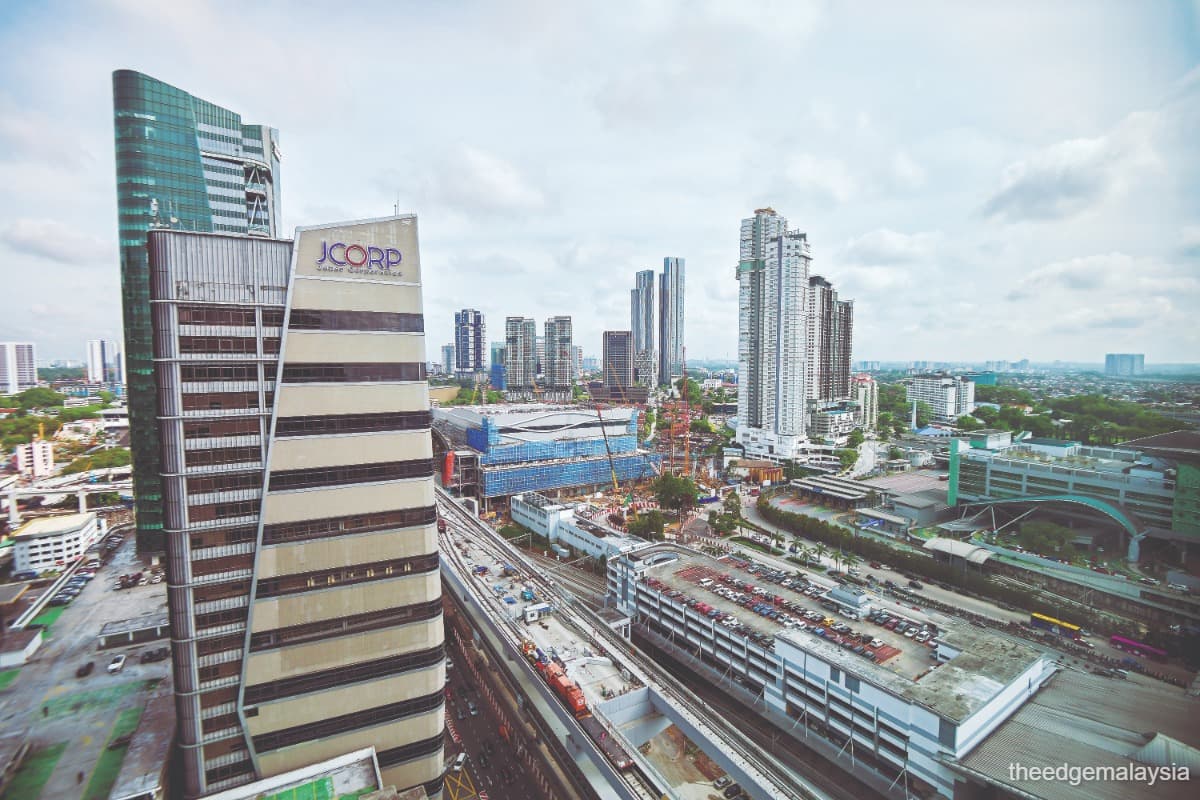
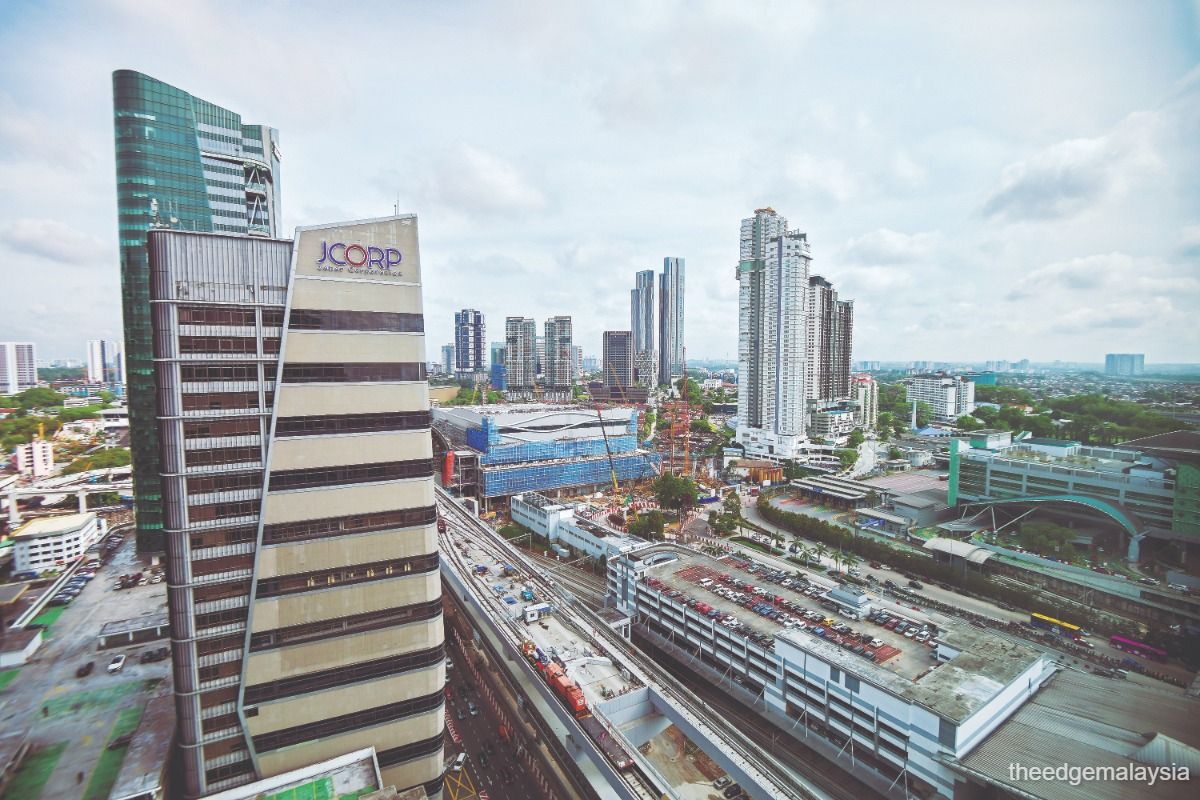
Today, cranes dominate the skyline as high-rise developments continue to mushroom across the Johor Bahru. Elsewhere, data centres are rapidly reshaping areas such as Sedenak, Kulai and Iskandar Puteri. Johor currently hosts 65 data centre projects, with 20 already operational, eight under construction and 37 approved.
The state’s economic trajectory is expected to accelerate further through the federal government’s two major cross-border initiatives: the Johor Bahru-Singapore Rapid Transit System Link (RTS Link) and the Johor-Singapore Special Economic Zone (JS-SEZ).
The RTS Link, scheduled to begin operations at the end of the year and offer full service in January, will connect Bukit Chagar in Johor Bahru to Woodlands North in Singapore in about five minutes, with a capacity of up to 10,000 passengers an hour in each direction.
Meanwhile, the JS-SEZ — formalised in January 2025, but its full blueprint has yet to be unveiled — spans economic corridors such as Johor Bahru, Iskandar Puteri, Pasir Gudang, Sedenak and Desaru, targeting sectors such as manufacturing, logistics, digital infrastructure, tourism and healthcare.
For many residents, however, the pace of development has begun to outstrip improvements in daily living standards.
“Sometimes, I feel Johor is developing very fast,” says a Chinese Grab driver who has worked in the gig economy for nearly two years.
“You can see more high-rise buildings and more people coming here to work. But when you look at wages here, it doesn’t feel like salaries are rising that much.”
Official figures appear to support that perception. Johor’s median monthly wage stood at RM2,982 as at December 2025, below the national median of RM3,167 and trailing Kuala Lumpur, Selangor and Penang, despite the state’s rapid economic expansion.
Several residents interviewed by The Edge estimate that a single person living in Johor Bahru now requires at least RM3,500 a month to live in relative comfort, while households with children may need more than RM4,500 to cope with urban living costs.
That disconnect helps explain why thousands of Johoreans continue to commute daily to Singapore for work despite the chronic congestion at the border.
By 4am, long queues already form at the immigration checkpoints as workers rush to enter Singapore before the peak-hour traffic. Some begin walking across the Causeway before sunrise to avoid kilometres-long jams.
Late one night in the Johor Bahru city centre, The Edge observed several individuals sleeping in public areas before preparing to return to Singapore for early morning shifts. Some were later seen washing up at the Bangunan Sultan Iskandar immigration complex before joining the morning commute across the border.
For many, salaries denominated in the Singapore dollar continue to offer far stronger earning power than equivalent jobs in Johor, especially in lower-skilled sectors such as cleaning, manufacturing and food services.
“Back then, I thought it was easier to just stay in Singapore and rent a room there because it was closer to work,” says Ramli (not his real name), who works as a cleaner in the island state. “But it also meant sacrificing time with my children.”
For years, he returned to his home in Pasir Gudang only once a month, communicating with his family mainly through WhatsApp calls. “In 2024, I decided to start commuting daily instead because I felt really sad when my own child no longer seemed to recognise me as her father because I was rarely home,” he recalls.
Even with the RTS Link nearing completion, uncertainty remains over whether it will significantly ease the burden on lower-income commuters. Many workers say they are still waiting to learn whether ticket prices will be affordable enough for everyday use.
Residents also argue that Johor’s wider public transport system remains inadequate for a state aspiring to become a modern metropolitan economy.
“There are buses, but frequency is still an issue,” says a passenger travelling from Johor Bahru Sentral to Kota Tinggi. He notes that many residents continue to rely on private vehicles because public transport remains inconsistent and poorly connected.
While salary earners grouse about the rising cost of living, which many attribute to the flood of Singaporean visitors coming to Johor for food, haircuts and grocery shopping, business owners are welcoming these visitors with open arms.
‘Affordable housing cannot only exist far away from where people work’
At the same time, concerns are deepening over housing affordability as rising property values and Singapore-linked demand reshape the residential market.
According to Rahim & Co Research, Johor currently has 67,950 new housing units under construction, including serviced apartments and small office home office (SOHO) developments. Yet, the state is also grappling with a large overhang, with 29,142 unsold homes across all stages of construction. Of these, 12,910 completed units worth RM10.87 billion remain unsold, with serviced apartments accounting for 72% of completed overhang units.
Many newer projects clustered around the RTS corridor and JS-SEZ zones are increasingly priced beyond the reach of average households. Recent launches near Johor Bahru city centre and RTS-linked areas have seen serviced apartments priced from RM563,000 to above RM600,000. Landed homes in areas such as Iskandar Puteri and Mount Austin are now commonly priced between RM600,000 and more than RM1 million.
To address affordability concerns, the Johor government has pledged to deliver 80,000 units under the Johor Affordable Housing Scheme (RMMJ) by 2029, with homes priced between RM80,000 and RM300,000.
“Some of the social housing projects are actually quite good and practical for smaller families,” says Nurasma Md Ismail, who declines to disclose her profession.
“But if Johor wants to become a developed metropolitan state, affordable housing cannot only exist far away from where people work.”
Under Menteri Besar Datuk Onn Hafiz Ghazi’s administration, the state recorded its highest-ever revenue collection of RM2.67 billion in 2025, alongside approved investments exceeding RM110 billion.
Johor also emerged as Malaysia’s fastest-growing state economy in 2024, recording gross domestic product growth of 6.4% and total economic output of RM158 billion, outperforming the national growth rate of 5.1%.
Onn Hafiz has pledged that rising state revenues will be channelled into infrastructure upgrades, welfare programmes and broader development initiatives.
Ahead of the coming state election, however, many voters say the question is no longer whether Johor is developing rapidly. Instead, it is whether the people will still be able to share meaningfully in the future being built around them.
Read also:
Johor state assembly dissolved for fresh election
Johor to test unity of Madani’s coalition of coalitions government
Statistics and facts you need to know about Johor state polls
Johor state seat composition over the years
Onn Hafiz emerges as BN’s strongest political asset in Johor
Fragmented politics raises stakes in Johor
Save by subscribing to us for your print and/or digital copy.
P/S: The Edge is also available on Apple's App Store and Android's Google Play.