

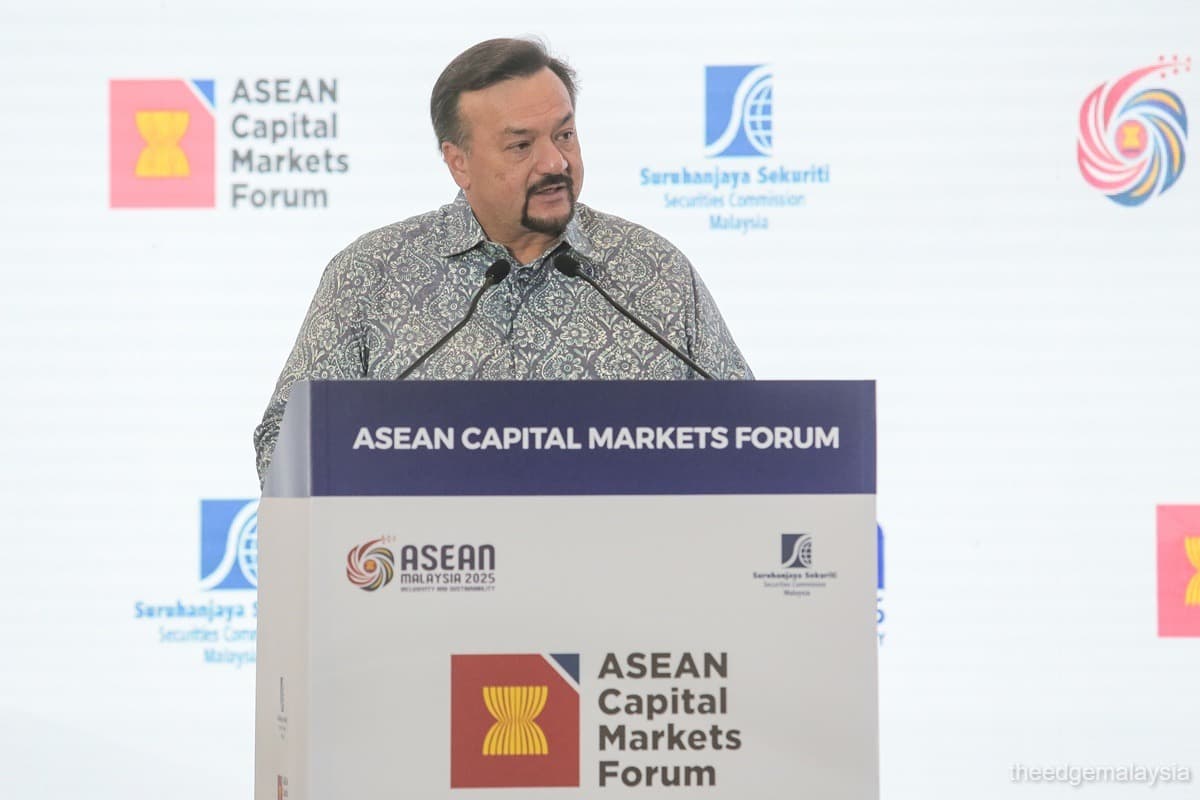
KUALA LUMPUR (Nov 6): The government has yet to determine the carbon tax rate as it is still in the process of drafting the National Climate Change Bill, said Minister of Finance II Datuk Seri Amir Hamzah Azizan.
He said once the bill — expected to be tabled in Parliament next year — is passed, the government will be able to establish baseline data to facilitate the implementation of the carbon tax.
“At this stage, we are conducting a detailed study on the carbon tax. Establishing a baseline is crucial — for now, there is no estimate yet as it’s still too early to report.
“Once the bill is finalised, we will review the baseline and assess the industries involved, such as iron, steel and utilities, which are major emitters,” he told reporters on the sidelines of the Asean Capital Markets Forum International Conference organised by the Securities Commission Malaysia on Thursday.
Amir Hamzah added that accurate baseline data is essential for setting appropriate benchmarks and designing an effective carbon tax framework. “What’s important is that we have a clear baseline and a benchmark to work against,” he said.
His remarks come following a Bloomberg report that Malaysia is considering an initial carbon tax rate of RM15 per tonne of emissions, alongside plans to establish a new agency to oversee climate change initiatives.
Prime Minister Datuk Seri Anwar Ibrahim had earlier indicated in his Budget 2026 speech that the carbon tax will apply to iron, steel and energy companies, starting in 2026.
Singapore, the first country in Southeast Asia to introduce a carbon-pricing system in 2019, currently charges S$25 (US$19.13, or RM104.81) per tonne of carbon dioxide equivalent — up from S$5 in the initial five years — to give emitters time to adapt.
Read more:
SC moots Asean bonds to strengthen cross-border financing, regional integration
Malaysia considers carbon tax at RM15 a tonne to cut pollution — Bloomberg
Govt to ease talent mobility for Asean-linked companies
PM: Asean Capital Markets Forum Action Plan 2026-2030 positions region as responsible investment hub