

This article first appeared in The Edge Malaysia Weekly on November 16, 2026 - November 22, 2026
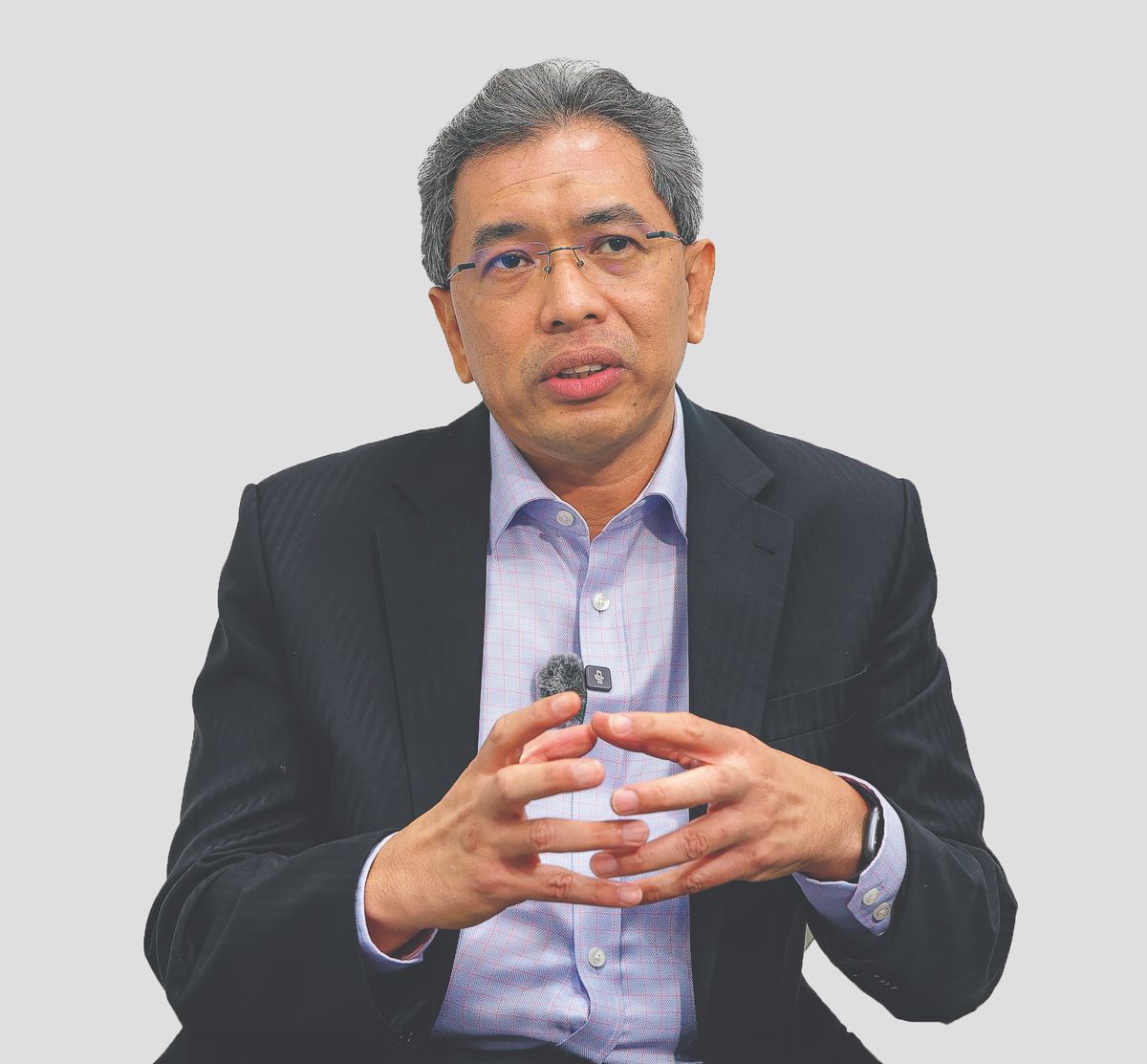
MRT Corp CEO Datuk Mohd Zarif Hashim is clearly an important man, with hordes of people wanting to meet him.
After all, he leads the Minister of Finance (Inc)-owned agency tasked with developing urban rail and transit infrastructure projects in the country. MRT Corp is also the asset owner.
With the last handshake with an entourage of business executives done, he walks into a makeshift meeting room at the Transport Expo Asia 2026 in Kuala Lumpur for his first interview since taking over the helm of the rail operator some six years ago.
While Mohd Zarif seems somewhat nervous, he greets the team warmly, shaking hands before settling into the interview, and explains, “You [The Edge] wanted to talk to me many years ago, back in the early [days] of my tenure at MRT Corp. But I [made] you wait for a while because we had to make some changes and grow a bit more for us to have a bit more of a story.
“And finally we are able to meet with you guys,” he says with a laugh, the initial trepidation melting away for the task at hand — explaining the intricacies at MRT Corp, what it has been doing and what its plans are. “There are a lot of exciting things happening at MRT Corp … The portfolio we are responsible [for delivering over the next eight years] is worth RM75 billion. When we started in 2020, our portfolio was only RM20 billion.”
MRT3 groundwork
The RM75 billion behemoth figure represents the sheer scale of the development pipeline entrusted to the agency and, as anticipated, a sizeable portion of that has been earmarked for the glaring missing link in the Klang Valley transit blueprint — the much touted MRT3 Circle Line, which will traverse around the city centre.
Mohd Zarif says he has sought to keep construction costs for the planned 51km urban rail loop capped between RM31 billion and RM32 billion, before accounting for any subsequent impact from the Middle East conflict. From a cost perspective, that places the project roughly in the same territory as the 57.7km MRT2 Putrajaya Line, which was delivered for RM31 billion, and construction commenced in Sept 2016, or 10 years ago.
“The last time around, before taking into account the impact of the Iran war, we were looking at about RM31 billion to RM32 billion for the construction. Our land acquisition budget is about RM6.5 billion ... So RM38.5 billion. Then there are the other costs, like project management and consultancy, which bring the total closer to RM40 billion. So, from the construction point of view, before [factoring in the impact of] the Iran war, I am trying to lock it in at around RM31 billion to RM32 billion … The price to build MRT3 is the same as that for MRT2.”
Among the salient features are that the Circle Line will be elevated to keep costs low, and the system being opted for now is not a pure MRT system, but a hybrid of LRT and MRT, which reduces costs.
Aside from the MRT3, the RM75 billion also includes the LRT Mutiara Line in Penang, refurbishment of MRT Kajang Line trains, as well as few transit-oriented development (TOD) and transit hub projects.
Other than the TOD agreements with IJM Corp Bhd (KL:IJM) worth RM600 million at Cochrane station and the Bukit Chagar integrated development with Sunway’s property arm, which carry development worth RM2.6 billion, Mohd Zarif is looking at developing transport hubs in Kota Madani Emas in Taman Naga Emas, Salak South, as well as in Segambut, Pandan and Titiwangsa under the MRT3 development.
Minister in the Prime Minister’s Department (Federal Territories) Hannah Yeoh recently told parliament that another transit hub may potentially be built by MRT Corp at the upcoming Bandar Madani Bukit Jalil in order to resolve traffic congestion concerns within the township.
“Those are the major hubs. So we need to establish these hubs. Eventually, we’ll have enough hubs for us to reconfigure the bus network … We want to discuss this plan with developers. Developers may not necessarily have to pay for the land … the land comes from the government and has been alienated to us,” Mohd Zarif says.
The plan for these hubs ties in well with the overall plans involving the entire rail network in the Klang Valley.
Navigating the Klang Valley’s 11 rail lines
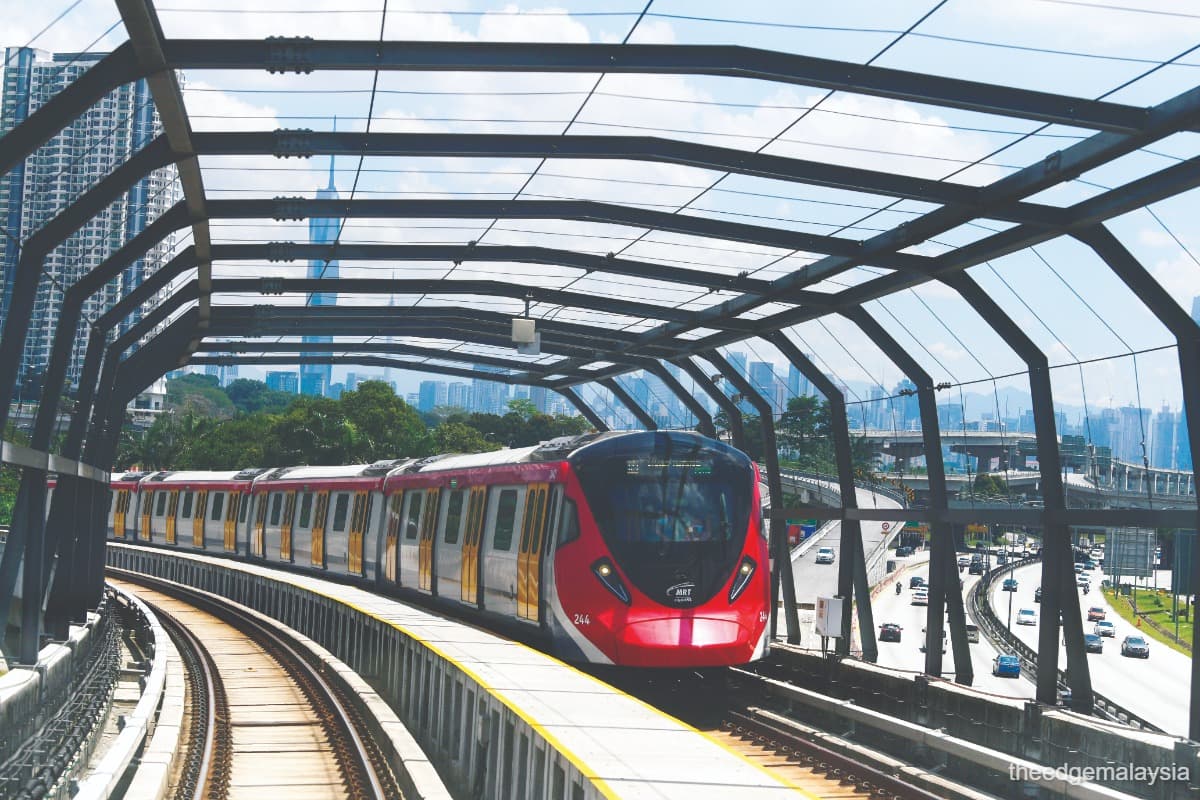
On a map, the Klang Valley is hardly short of rail infrastructure. Its extensive network already boasts 11 distinct rail services including four LRT lines, two MRT lines, the KL Monorail, twin KTM Komuter routes, and the dual airport transfer links — KLIA Ekspres and KLIA Transit.
Yet, a glaring gap is that most of the tracks lack seamless connectivity and convenient journeys across the network. For commuters living beyond walking distance of a station, the decision to leave the car at home is frequently thwarted by first- and last-mile hurdles. Dilapidated, poorly maintained bus shelters and highly unpredictable bus arrival times mean urban rail is often stripped of user-friendliness and practicality.
“What we have in mind at MRT Corp is to create many transit hubs, because eventually we want to influence how the bus network is designed,” Mohd Zarif says. “We want to transform the network through these transit hubs, where people can interchange between buses and other forms of transport.”
MRT Corp is co-developing the blueprint with its sister agency, Prasarana Malaysia Bhd (Prasarana), where Mohd Zarif has been a board member since September 2020.
The blueprint will tackle issues such as those faced in Pandan — a dense enclave that encompasses neighbourhoods such as Pandan Indah, Pandan Jaya, Pandan Perdana and Kampung Pandan — where threading heavy rail infrastructure deeper into the township would trigger severe alignment bottlenecks and prohibitively expensive property acquisitions. Mohd Zarif argues it is far more rational to deploy smaller feeder buses to funnel these disparate residential pockets neatly into a single, centralised transit hub.
“These are places where passengers can transfer between buses and other modes of transport — e-hailing, taxis, micro-mobility, or simply from one bus to another,” he says, noting that rail will handle the main journey while buses act as neighbourhood distributors feeding the stations.
“In every TOD we undertake, we focus on incorporating a transit hub into the design. Once we have enough of them in place, the bus network can be reconfigured,” he says.
TOD developments to complete the network
To kick-start this commercial playbook, MRT Corp has launched its maiden TOD project in collaboration with property giant IJM Corp, carrying an estimated gross development value (GDV) of RM600 million. It is a partnership Mohd Zarif hopes to replicate across a pipeline of upcoming TOD developments valued at a total GDV of RM2.5 billion to RM3 billion.
The joint venture with IJM Corp, dubbed The Linque, sits adjacent to the Cochrane MRT station in Cheras and comprises 586 residential units alongside a dedicated retail component. Its primary commercial hook is its rapid transit proximity to the Tun Razak Exchange (TRX) township and direct interchange access at Maluri, which links the MRT Kajang Line and the LRT Ampang Line.
The site is also flanked by MyTOWN Shopping Centre, IKEA Cheras, Sunway Velocity and nearby healthcare and educational institutions.
Courting collaboration with the private sector makes strategic sense, particularly in addressing upfront capital constraints. Property players often argue that land encircling primary transport anchors commands a heavy premium due to its location, exceptional accessibility and high density potential. Mohd Zarif intends to offset this commercial barrier by waiving the land premium entirely.
“If you can recover that cost without having to pay for the land, surely you can be competitive, right?” he asks.
But if removing land acquisition costs grants developers the financial breathing room to lower entry barriers, will those savings actually be passed on to the public in the form of affordable, high-quality housing and sustainable long-term ownership costs? Private developers, after all, must look beyond raw construction expenditure to recover financing costs, infrastructure levies, professional fees, and an acceptable profit margin within their final selling prices.
Mohd Zarif maintains that MRT Corp is not seeking full cost recovery across every development site. Instead, the agency intends to cross-subsidise, supporting the government’s affordable housing mandates while actively pursuing commercial upside elsewhere. To ensure strict institutional governance, he adds that all subsequent development proposals must clear a competitive, open request for proposals (RFP) process.
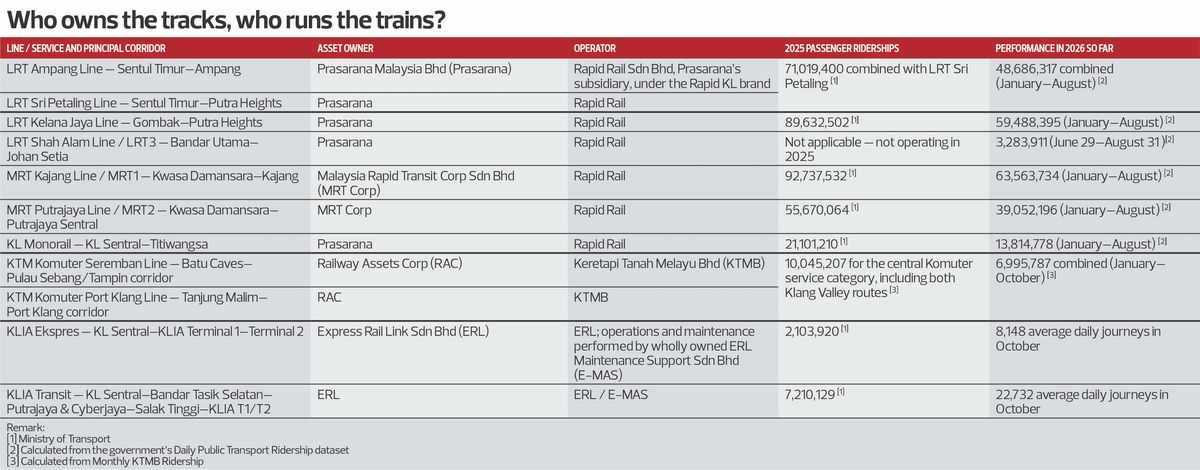
At the end of the day, the fundamental goal of this network expansion is to drive up passenger volume. The latest performance indicators from the Ministry of Transport show that the Kajang Line managed to record a 9.7% bump up in ridership to hit 92.74 million passenger journeys in 2025, while a 15.7% surge for the Putrajaya Line brought its annual total to 55.67 million. (See table above.)With the MRT3 project still pending execution and an expanding pipeline of TODs and interchange hubs currently in the planning phases, the critical question remains whether this massive infrastructural push ultimately accelerates train ridership to the levels the agency envisions.
This, of course, is one of Mohd Zarif’s key tasks. In fact, in taking over at MRT Corp six years ago, the chemical engineer by training had to hit the ground running, with a large number of issues needing to be addressed.
Delivering the lines and paying for their upkeep
When Mohd Zarif, 55, first stepped into MRT Corp’s Bukit Damansara office — succeeding Abdul Yazid Kassim, whose tenure ended on June 30, 2020 — he inherited the monumental task of completing the final phase of the MRT2 Putrajaya Line. The 57.7km rail alignment eventually opened in two stages, in June 2022 and March 2023, bringing all 36 operational stations into service.
Still, completing new train lines is only half the battle. Once construction is completed, the railway continues to accumulate substantial financial obligations long after the opening ceremonies fade. Moreover, Mohd Zarif’s execution mandates have now expanded towards delivering the cross-border RTS Link in Johor and Penang’s Mutiara Line.
As the asset owner, MRT Corp remains responsible for major structural refurbishments and critical asset renewals, even though daily operations and routine maintenance fall squarely on the operator, Prasarana. Because passenger fare revenues flow entirely into Prasarana’s coffers, MRT Corp is left with a nominal line-leasing income of just RM100,000 annually.
This leaves MRT Corp heavily reliant on non-fare commercial earnings, treasury investment income and ad hoc state support to fund its non-project balance sheet obligations. For 2025, Mohd Zarif pegs commercial revenue associated with the Kajang and Putrajaya lines at about RM90 million to RM100 million, supplemented by an estimated RM70 million generated from conservative investment placements.
“So, we have to have the discipline to generate our income and control our costs in such a way that we have free cash flow to put into the maintenance of MRT1 and MRT2,” he says.
While the federal government did provide close to RM270 million this year — which has been utilised to accelerate a backlog of maintenance and refurbishment works — that injection represents just a fraction of what MRT Corp must structurally allocate for the long-term upkeep of its assets.
Overall, the agency estimates it needs at least RM1.2 billion to be ring-fenced over a seven-year cycle for each active transit line. On that basis, the annualised baseline requirement averages out to roughly RM171 million per line, though actual cash outflows remain dependent on overhaul schedules.
A summary of Companies Commission of Malaysia data on MRT Corp shows that it posted a net profit of RM46.18 million for the financial year ended Dec 31, 2025, reversing a RM31.34 million net loss recorded in FY2024. However, since its inception, the state-backed agency has booked a staggering accumulated loss of RM57.61 billion.
Mohd Zarif attributes the bulk of these deep legacy losses to aggressive accounting impairments on completed transit assets, a write-down forced by the minimal direct income flowing back into the agency’s books. The structural mismatch stems directly from MRT Corp’s foundational blueprint.
According to him, the federal government funds rail construction, with capital expenditure capitalised during the development phase. Upon completion, however, financial reporting standards dictate that these multi-billion ringgit assets must be reassessed against the actual, direct cash flows MRT Corp can structurally recover from them.
For Mohd Zarif, the practical response is to keep capital project funding strictly segregated, aggressively scale commercial non-fare income, and retain enough operational surplus to support the infrastructure already in service. The agency must continuously attract private sector investment while protecting the public purse, and deliver complex new mega projects all the while without losing sight of its existing infrastructure obligations.
Save by subscribing to us for your print and/or digital copy.
P/S: The Edge is also available on Apple's App Store and Android's Google Play.