

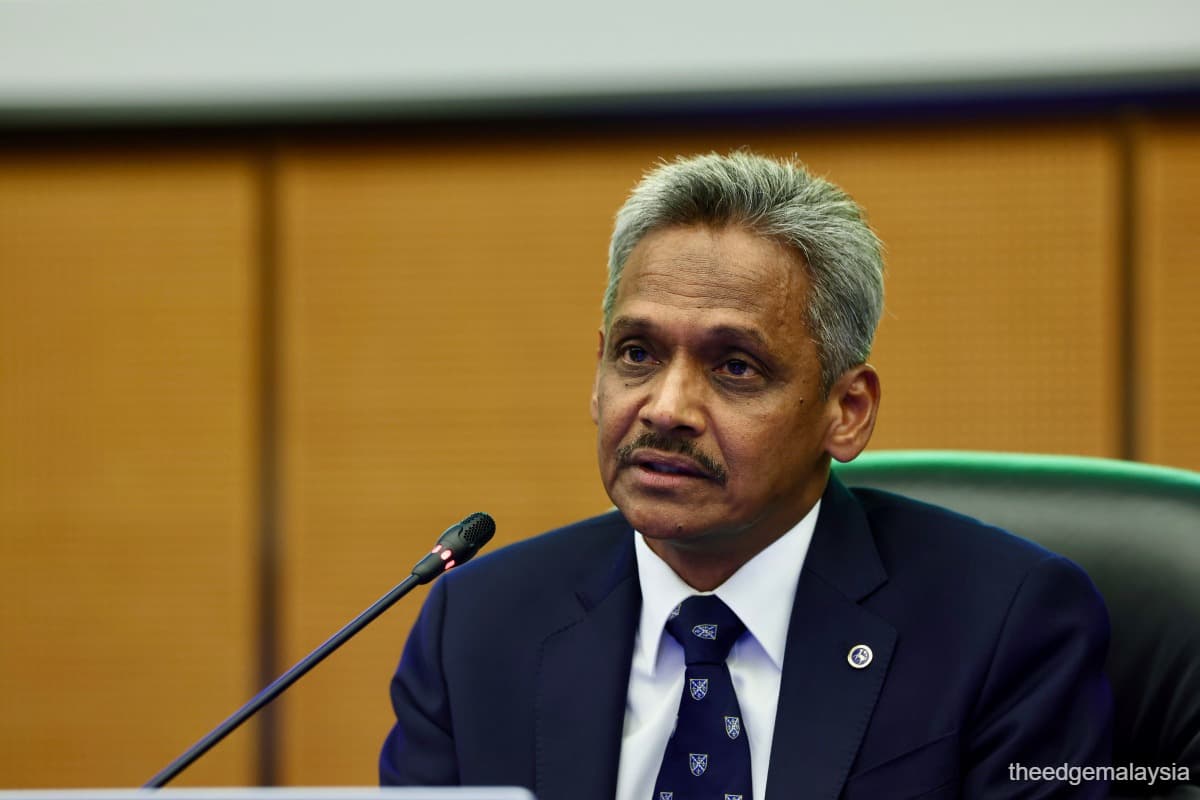
KUALA LUMPUR (Nov 18): Malaysia’s ability to capitalise on the global technology boom is “by design” instead of incidental, Bank Negara Malaysia (BNM) governor Datuk Seri Abdul Rasheed Ghaffour said, playing down concerns over the economy’s heavy reliance on artificial intelligence (AI)-related demand and investments.
While acknowledging that technology-related exports have largely driven the recent growth, Abdul Rasheed said Malaysia remained well diversified in terms of its economic structure, export products and trading partners.
“Malaysia has strong economic fundamentals and a diversified economy, both in terms of its economic structure and its export structure. We have services, manufacturing, mining and agriculture, so we don’t rely on one particular sector.
“Even in exports, we are diversified in terms of the products that we offer to the world and the markets that we trade with. We do not rely on one particular product or one particular market,” he said at a press conference announcing Malaysia’s third-quarter gross domestic product (GDP) figures on Wednesday.
BNM expects the global technology upcycle to extend into 2027, albeit at a more moderate pace, following the exceptional growth seen recently.
"We are benefiting from this as a result of the policies that we have implemented in the past. Our position in the E&E (electrical and electronics) sector and our ability to benefit from the tech upcycle are by design, not by chance,” Abdul Rasheed said.
Accelerating AI adoption is expected to sustain demand for Malaysia’s E&E exports, while the central bank’s engagements with industry players indicate that manufacturers continue to enjoy strong order books.
“The order books have been solid for between 12 and 18 months, so that shows the strong demand that is coming,” he added.
Malaysia’s GDP expanded 5.5% year-on-year in the third quarter of 2026, surpassing the preliminary estimate of 5.3%, though moderating from 6% in the preceding quarter.
Manufacturing sector growth accelerated to 7.7% from 4.1% in the second quarter, lifted by stronger AI-related demand, while net exports grew 5.7%.
Private investment growth also accelerated to 9.4%, supported by spending on structures, machinery and equipment, as the implementation of multi-year projects and the realisation of approved investments, particularly in high-technology sectors, continued.
Nonetheless, the central bank identified the risk of lower-than-expected returns on AI-related investments as among the downside risks to Malaysia’s economic outlook, which could weigh on global growth and spending.
BNM expects Malaysia’s economy to grow by more than 5% this year while maintaining its growth forecast of between 4.2% and 5.2% for 2027, driven primarily by domestic demand.
Read also:
Malaysia’s economy expands faster than first estimates in 3Q
BNM sees strong data centre investment momentum until 2030 despite US chip restrictions
MediAsas pilot focused on operational readiness, not enrolment numbers, says BNM
New US export controls on Malaysia, Singapore for advanced chips to take effect Nov 19