

This article first appeared in The Edge Malaysia Weekly on November 9, 2026 - November 15, 2026
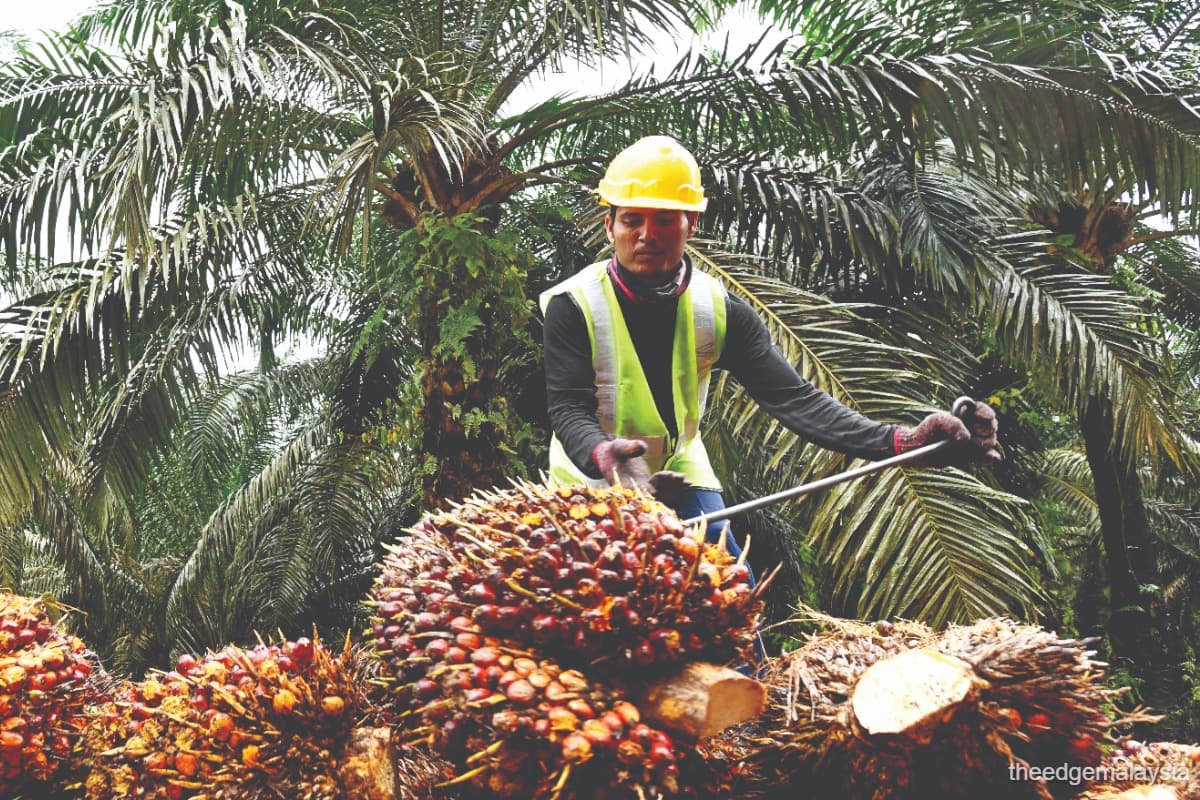
WHILE the public was focused on the plantation sector’s culpability in causing the haze hanging over the region in the last three months, Malaysian planters have been struggling with tight labour conditions in their estates, along with a high level of palm oil inventories.
The labour issue is a recurring problem for the country’s planters because locals shun estate work, which is considered dirty, dangerous and difficult (3D), and the migrant or foreign workers who take up these jobs return home after their contracts end. Furthermore, while certain tasks in the field are mechanised, harvesting the oil palm’s fruit, or fresh fruit bunches (FFB), still requires skilled workers. Harvesters typically comprise Indonesians on most Malaysian plantations. As such, oil palm plantations are heavily dependent on migrant workers who make up more than 70% of the sector’s workforce.
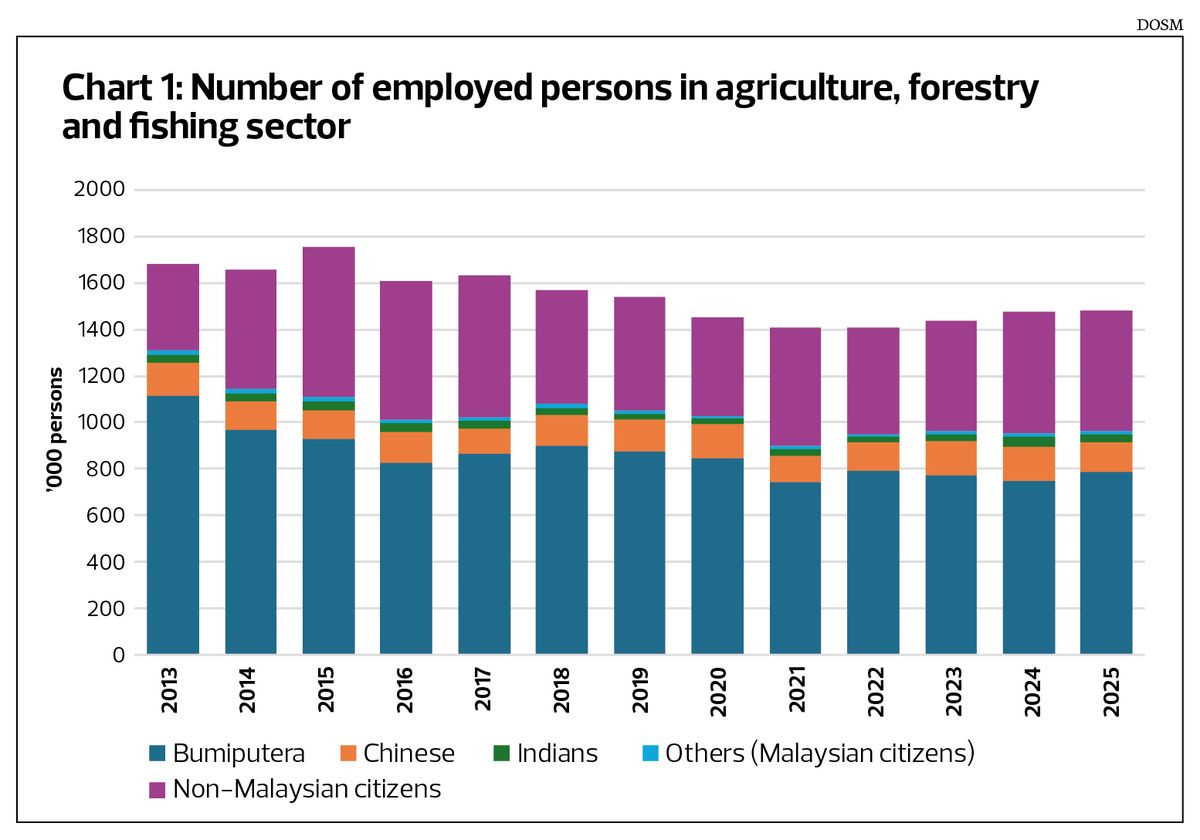
(While not crop-specific, Chart 1 shows the total number of Malaysians working in agriculture, forestry and fishing declining over the period while the number of non-Malaysians rose.)
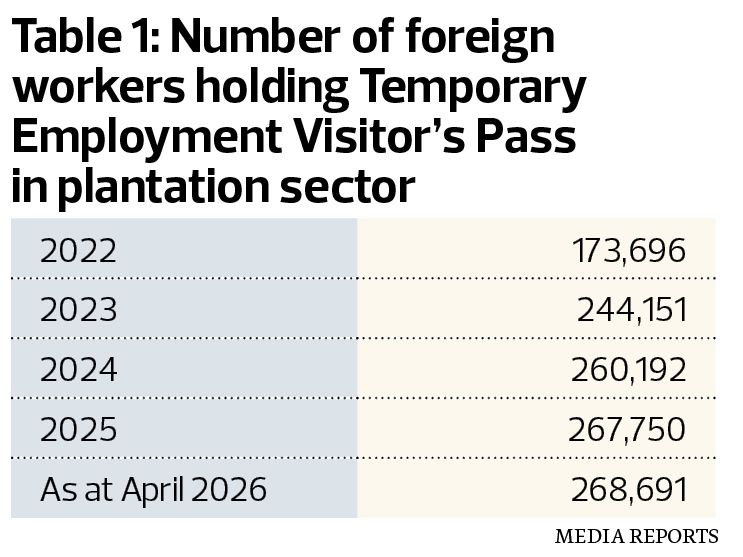
This high dependency on migrant workers has become a pain point for planters as they struggle to fill vacant positions in the field. On Oct 29, Minister of Plantation and Commodities Datuk Seri Dr Noraini Ahmad told parliament that the palm oil sector is short of 30,000 workers. This works out to 11.16% of the number of migrant workers allowed to work in the plantation sector as at April 2026 this year (see Table 1).
Industry players that The Edge spoke with paint a mixed picture. While labour shortages may only be affecting certain pockets for now, all agree that they cannot afford a deterioration of the current situation, as they recall the disastrous effects of the severe shortage during the Covid-19 pandemic.
“The foreign labour situation in the plantation sector is becoming increasingly concerning,” says Roslin Azmy Hassan, CEO of the Malaysian Palm Oil Association (MPOA). “While it remains manageable for some MPOA member companies, others are already experiencing shortages, particularly of oil palm harvesters. Our immediate concern is that if foreign worker recruitment is not facilitated now, the industry could face a much more serious labour shortage in the next few months.”
MPOA members comprise 136 plantation companies operating in Malaysia, many of which are listed on the local bourse.
The situation is similar among members of the Malaysian Estate Owners Association (MEOA), which comprises owner-led estates, independent businesses and family enterprises involved in both oil palm and rubber crops. Its president Ahmad Zachry Anifah Aman tells The Edge that the labour situation is tight among its members, with recruitment and retention especially difficult at remote locations. “The risk is likely to remain in the near term because vacancies are arising faster than they can be replenished. Some estates need to replace workers lost through normal attrition; others because the workforce approved in the past has never met their demonstrated operational requirements. Both needs relate to sustaining existing operations.”
Drawing comparison with Covid-19 lockdown shortage
Hiring a migrant worker is a lengthy process. It takes three months from the recruitment stage to getting the migrant worker in the field, and another three months to train him, according to planters.
“Approval is not the end of the recruitment process. Before an approved worker can report for duty, further steps may include source-country documentation and processing, required medical examinations, immigration clearances and travel arrangements. Delays at any of these stages extend the period during which an approved vacancy remains unfilled. The relevant measure is, therefore, not only the number of approvals issued, but how quickly approved workers can be mobilised and arrive at the estate,” says Ahmad Zachry.
Plantation companies are also mindful of the International Labour Organization’s 11 indicators of forced labour because being accused of any of the indicators could result in huge losses. Sime Darby Plantation (now SD Guthrie Bhd [KL:SDG]) and FGV Holdings Bhd had Withhold Release Orders (WROs) issued against them by the US Customs and Border Protection in 2020 on allegations of forced labour. Both companies took remedial action and reimbursed millions in recruitment fees to migrant workers in order to get the WROs modified and ban on palm oil imports to the US lifted.
While the current shortage has not reached the dire situation seen during the Covid-19 pandemic when borders closed, the fear is that things could worsen quickly if the matter is not addressed.
“Recruitment cannot be delayed until the shortage becomes critical, as the process of bringing in foreign workers takes time. Any delay now will have a direct impact on harvesting operations in the coming months, potentially resulting in unharvested fresh fruit bunches, crop losses and reduced productivity,” says MPOA’s Roslin, who is concerned the industry will, in 2027, face the double whammy of labour shortage and potentially lower production as a result of the ongoing El Niño weather phenomenon.
“There is an urgent need to allow and expedite foreign worker recruitment now, rather than wait until the industry faces a full-blown labour shortage. We hope the government can speed up the approval of foreign worker quotas and allow companies to start recruiting as soon as possible. The industry is already facing some shortages, particularly harvesters, and further delays will only make things worse.”
Datuk Carl Bek-Nielsen, vice-chairman and chief executive director of United Plantations Bhd (KL:UTDPLT) agrees, saying: “This will quickly evolve into an acute labour shortage by March or April next year when production starts to pick up again. It is a bit like seeing a car heading full speed towards a brick wall — the collision, as of now, is unavoidable and the costs will be high.”
The biggest concern for planters is crop losses when ripened FFB are not harvested because of the lack of harvesters, resulting in lower production, loss of revenue and export earnings.
“When the fruit is ripe, it has to be harvested and brought to the mill fast or else it will rot, resulting in large losses in revenue for the farmers and tax revenue for the government,” says Bek-Nielsen.
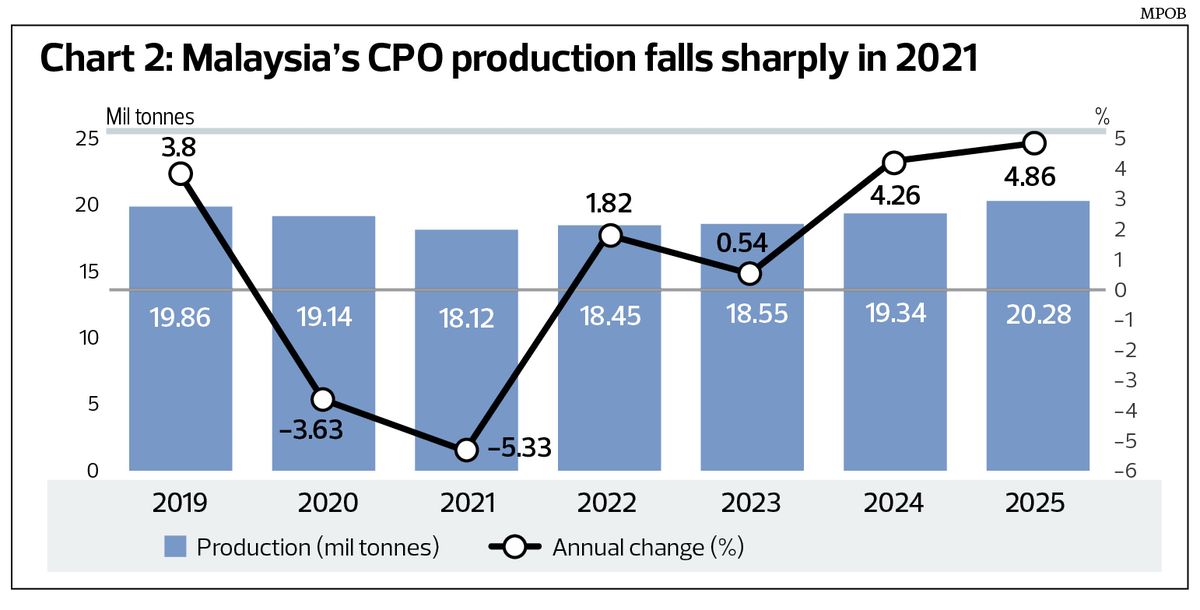
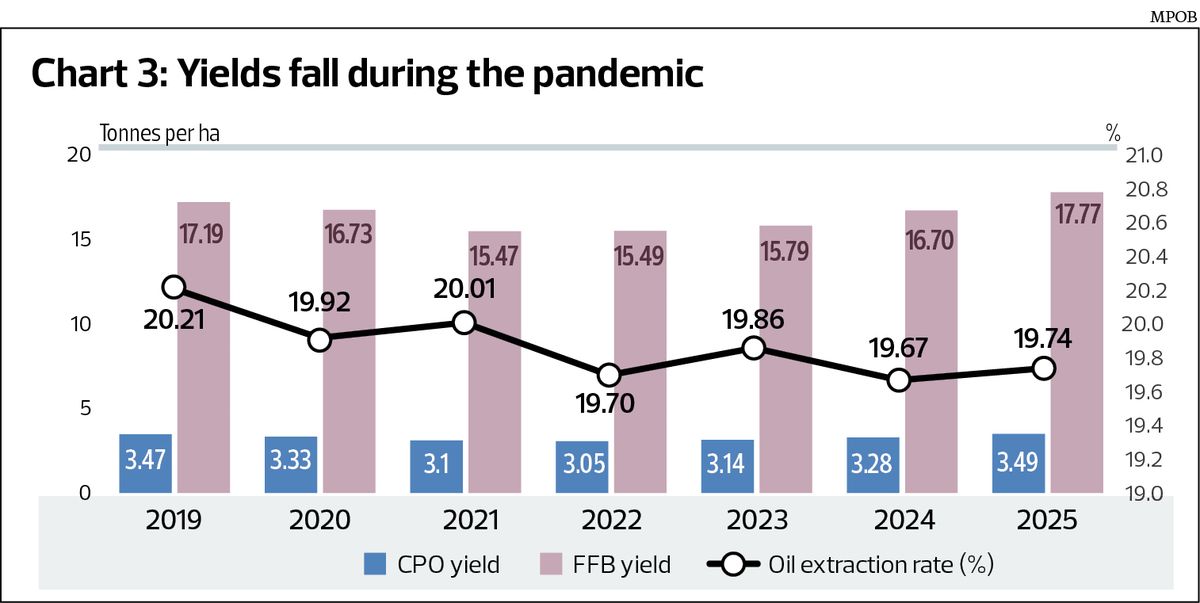
Following the disruptions caused by the Covid-19 lockdown, the industry took a few years to recover, as estates had to be rehabilitated when they were left unattended because of worker shortages. As a result, the national FFB crude palm oil (CPO) yield and total production shrank in 2020, falling to their respective lows in 2021 and 2022 (see Charts 2 and 3).
CPO production dropped 5.33% year on year in 2021 after declining 3.63% in 2020. In 2021, then plantation minister Mohd Khairuddin Aman Razali said annual losses from labour shortages were estimated at RM1 billion, owing to unharvested ripe FFB.
Cause of bottleneck
Last week, Minister of Investment, Trade and Industry Datuk Seri Johari Abdul Ghani told parliament that the government would reject applications for new manufacturing licences that perpetuate heavy reliance on low-skilled foreign labour. He said foreign workers should be confined to 3D jobs only.
Planters agree, as Malaysians have moved on from 3D jobs such as field work in the outdoors, where it is humid and hot. It is the same in other countries where farming has been automated and the number of farmers is shrinking — hence, the dependence on migrant workers.
“In this context, note that salaries paid to plantation blue collar workers are typically 50% to 80% higher than the minimum wage today, with free housing, water and electricity, as well as free medical care,” Bek-Nielsen points out.
Yet, these factors fail to attract locals.
Back in 2020 and 2021, the worker shortage was due to border closures as governments sought to contain the spread of Covid-19. Today, the cause of the bottleneck is not entirely clear. Some blame it on constraints in the administrative processes of the approving authorities.
It is worth noting that from July 1, the management of the one-stop centre for foreign workers was placed under the Ministry of Human Resources (Kesuma), following a cabinet decision. The move is part of efforts to ensure the governance of foreign worker quota applications is implemented effectively and to avoid disruptions to industries dependent on foreign labour. At press time, Kesuma had yet to reply to queries from The Edge.
Notably, under the 12th Malaysia Plan (12MP), there was a 15% cap on the number of foreign workers allowed. Under 13MP, the target is to reduce it to 10% of the total national workforce by 2030.
According to an article on indonesianworkernews.org dated Oct 31, a proposal from Malaysia at the Indonesia-Malaysia Joint Working Group (JWG) to integrate worker recruitment, medical checks and permit approvals directly into its private Foreign Worker Centralised Management System was passed unopposed. The move has faced strong opposition, however, as the JWG did not address the potential risks of transferring citizen data and administrative control to a foreign private platform. Whether this opposition contributed to bottlenecks in deploying migrant workers to Malaysian estates remains unclear (see also “Foreign worker recruitment system faces backlash” on Page 10).
Holy grail of mechanised harvesting
The plantation sector is increasingly adopting automation to reduce manual work in the estates, but this shift takes time and money.
A private planter with 3,000ha who requested anonymity says his family spent RM6 million to mechanise his estate operations. It included buying tractors and machinery, strengthening bridges, widening roads and connecting terraces to allow for mechanised fruit evacuation. The investment helped the family reduce its worker-to-land ratio from the industry standard of one worker per 8ha to one per 10ha.
Still, efficient mechanisation of FFB harvesting remains elusive, earning it the label “the holy grail” of harvesting automation.
“The Indonesian harvesters work best for me,” the private planter says.
Another pathway the industry is working on is education, specifically technical and vocational education and training (TVET).
In 2024, Johari, who was Plantation and Commodities minister at the time, said the government was considering incorporating the harvesting of oil palm fruit bunches into TVET programmes to reduce the country’s dependence on foreign labour.
On this note, IOI Corp Bhd (KL:IOICORP) says the group is working with government agencies and technical training institutions to build a more sustainable local workforce pipeline through TVET and other workforce development initiatives.
An IOI spokesperson says the company is also collaborating with Kesuma through partnerships with technical training institutions to develop TVET graduates as skilled workers in the plantation sector.
“In the longer term, these efforts will support the industry’s mechanisation agenda and gradually reduce dependence on foreign labour,” the spokesperson says.
Economic value and contribution of the sector
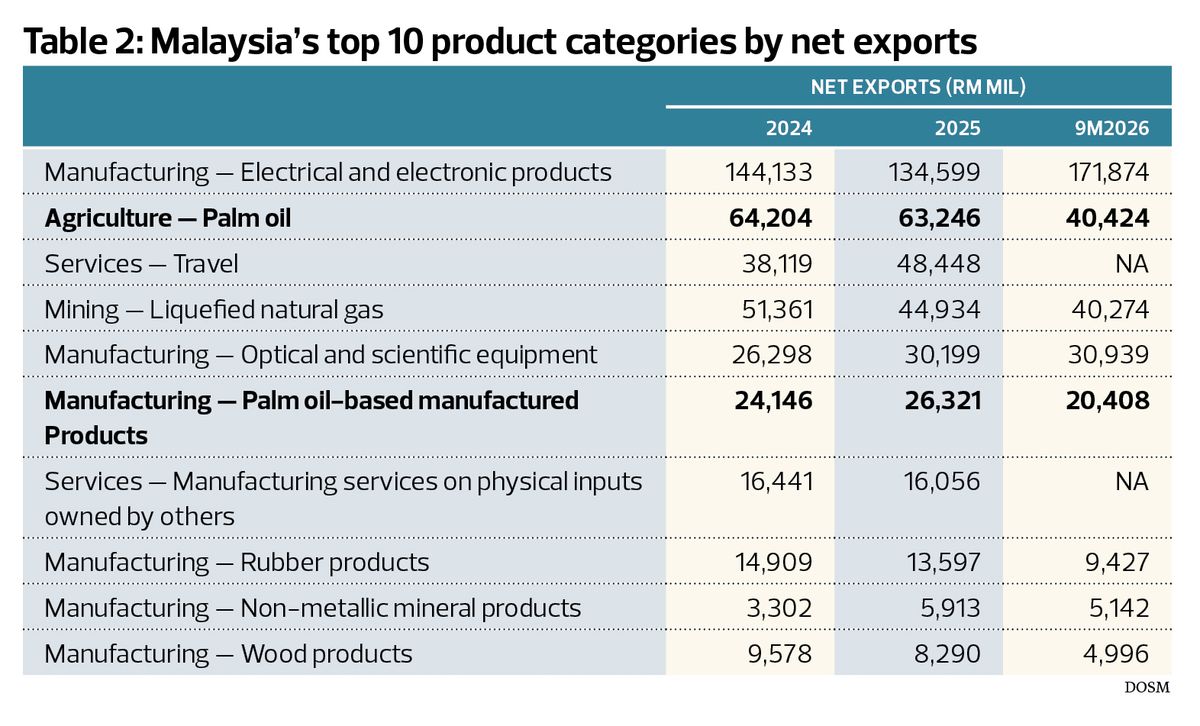
It may surprise many to know that Malaysia’s net exports of palm oil, by value, are second only to the net exports of electrical and electronic products (see Table 2). The country imports very little palm oil, resulting in the high net exports.
In terms of migrant worker requirement, the sector employs 268,691 foreign workers out of the 2.6 million documented foreign workers in the country.
“Palm oil is not talked about gloriously, but the sector generates around RM105 billion in net surplus earnings for the country and all we require is just 12% to 13% of the foreign workers in the country,” says Bek-Nielsen, who is confident that the government will be able to resolve the migrant worker shortage in a timely manner.
While its estates have enough migrant workers, the IOI spokesperson says timely replacements are vital to maintain workforce levels and keep operations running smoothly. “We appreciate the government’s continued support for the plantation sector and hope it will continue to facilitate timely quota applications and recruitment approvals when additional workers are genuinely required by the industry.”
MPOA’s Roslin says: “We hope the government can speed up the approval process of foreign worker quotas and allow companies to start recruiting as soon as possible. The industry is already facing some shortages, particularly harvesters, and further delays will only make things worse. We really need the government to appreciate the urgency of the situation.”
See also ‘Only 3.1% of burned land cover in forest fires within planted oil palm area — Nusantara Atlas’
Read also: Save by subscribing to us for
your print and/or
digital copy. P/S: The Edge is also available on
Apple's App Store and
Android's Google Play.
Cover Story 1: Only 3.1% of burned land cover in forest fires within planted oil palm area — Nusantara Atlas