

This article first appeared in Capital, The Edge Malaysia Weekly on November 9, 2026 - November 15, 2026
AFTER years of investor enthusiasm for semiconductor manufacturers, data centre operators and technology giants pouring billions into artificial intelligence (AI) infrastructure, investors are now scrutinising how the massive spending will translate into sustainable earnings and cash flow.
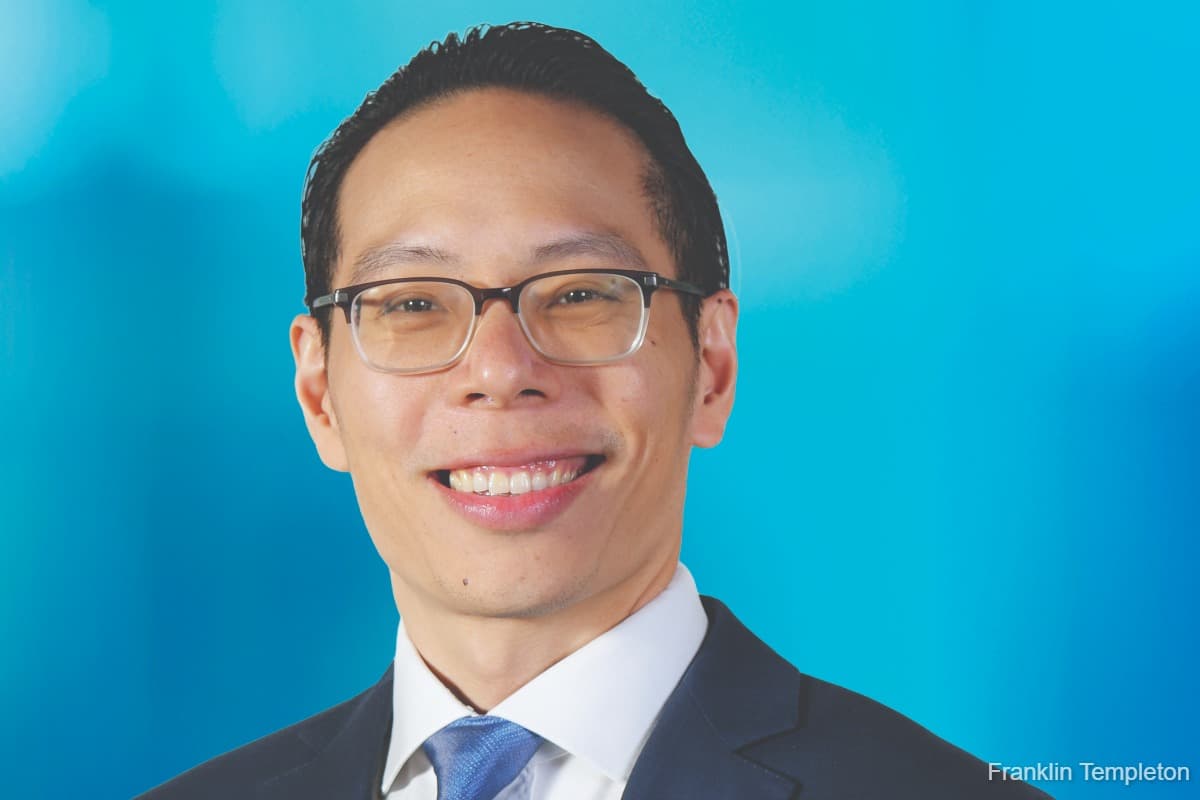
As attention turns to identifying the next beneficiaries of the AI cycle, Franklin Equity head of Asia-Pacific client portfolio management William Chang tells The Edge that businesses putting AI to practical use represent a compelling, underappreciated segment of the investment landscape.
“Some of the products that have been released lately that have been getting a lot of downloads are examples of the way that companies are using AI to grow their new software offerings,” he says, pointing to enterprise AI applications, AI-enabled software platforms and consumer applications, where businesses are developing new products and services as the technology becomes more widely adopted.
“When we look at the use of AI, we think that is a much bigger opportunity.”
Chang notes that investors are paying much closer attention to the quality of earnings reported by US tech giants, particularly whether their massive AI investments are generating adequate returns. Citing Meta as an example of a company whose AI-related products have drawn considerable interest, he says market expectations continue to rise.
“The bar is continually reset higher and higher. We think investors are going to continue to be more particular about what’s coming through in their earnings results and whether or not the billions of dollars of investment that they’re making is able to generate an acceptable return,” he adds.
Cumulative AI infrastructure expenditure is estimated to reach US$9 trillion to US$10 trillion through the early 2030s, while global spending next year alone could amount to US$1.2 trillion to US$1.3 trillion.
Chang believes investors are increasingly shifting their focus from ambitious spending plans and growth projections to actual financial performance. While he remains constructive on global AI spending over the next two to three years, he anticipates near-term volatility arising from US political developments affecting AI model training and concerns about the industry’s growing electricity consumption. “It’s not going to be a straight line up,” he surmises.
For Malaysian investors, a key consideration is whether opportunities in AI extend beyond the semiconductor, construction, utility and data centre-related counters that have dominated attention on Bursa Malaysia. After all, Malaysia’s semiconductor ecosystem and expanding role as a regional data centre hub have positioned it to benefit from the infrastructure-building phase of the AI boom.
While Chang believes the country remains well placed to continue participating in this build-out, he suggests investors consider a broader range of opportunities across the AI value chain, including companies listed overseas. “Certainly, there are opportunities within Malaysia itself, but the growth and rise of AI is global in nature. A lot of these companies are based out of the US but there’re also a lot of companies, particularly the foundries, that are based out of Asia,” he says.
Opportunities in biotech
Beyond mainstream technology hardware and software, Chang sees opportunities in biotechnology, where AI is driving innovation in drug discovery, while rising acquisition interest from major pharmaceutical companies provides another potential valuation catalyst.
Notable listed players leveraging AI in drug development are Recursion Pharmaceuticals and Schrödinger (Nasdaq: SDGR), as well as Hong Kong-listed Insilico Medicine.
For context, the biotech sector endured a prolonged downturn following its pandemic-era boom in 2021, as rising interest rates, tighter funding conditions and regulatory uncertainty weighed on valuations and investor sentiment, particularly among smaller drug developers. The sector began recovering in the latter half of 2025, supported by easing monetary conditions and renewed mergers and acquisitions (M&A).
US biotechnology companies such as Fate Therapeutics, Editas Medicine and Sangamo Therapeutics were among those affected and forced to reduce headcount and scale back development programmes. The segment began staging a recovery in late 2025, driven by renewed fundraising, advances in drug development and increasing M&A as major pharmaceutical companies seek to replenish their pipelines ahead of upcoming patent expirations.
Chang sees AI-driven innovation as one of the major factors behind renewed investor interest in biotechnology. “We are seeing a lot of the innovation taking place in AI trickle into the biotech space, and we think that’s likely to continue,” he predicts.
To illustrate the pace of innovation, Chang notes that the US Food and Drug Administration (FDA) has approved an average of 45 novel drugs annually over the past decade. “[As of quite recently,] the agency had already approved 46, with nearly three months remaining in the year,” he says.
Apart from AI-driven innovation, he highlights the pickup in M&A as another catalyst for the biotechnology sector’s recovery.
According to healthcare research firm IQVIA, the global biopharmaceutical M&A deal value surged 133% year on year to US$133 billion in 2025,before reaching US$130 billion in the first six months of 2026.
“While we’re constructive on the space, stock selection remains critical, particularly around innovative companies. We want to make sure they have differentiated collectible assets and they have a strong management team and improving fundamentals that can continue to generate returns for investors,” Chang emphasises.
Read also: Save by subscribing to us for
your print and/or
digital copy. P/S: The Edge is also available on
Apple's App Store and
Android's Google Play.
Gold’s next opportunity may lie in mining stocks