

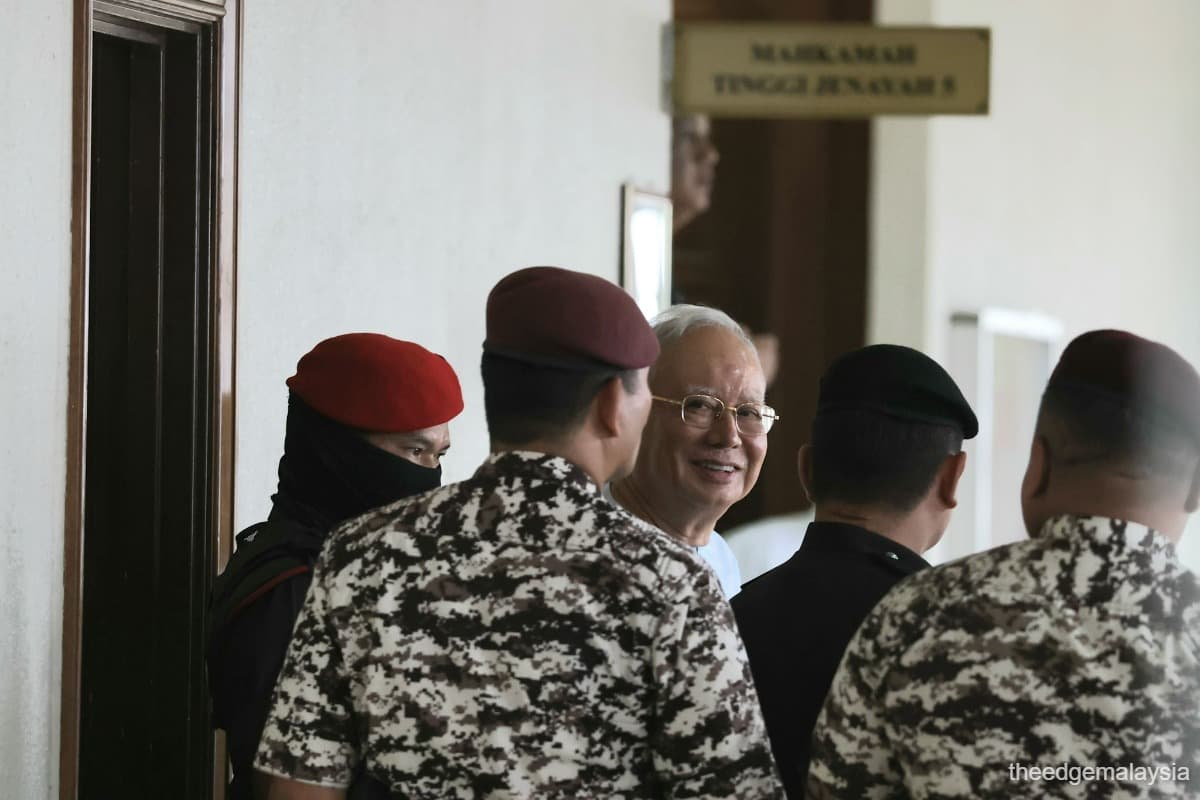
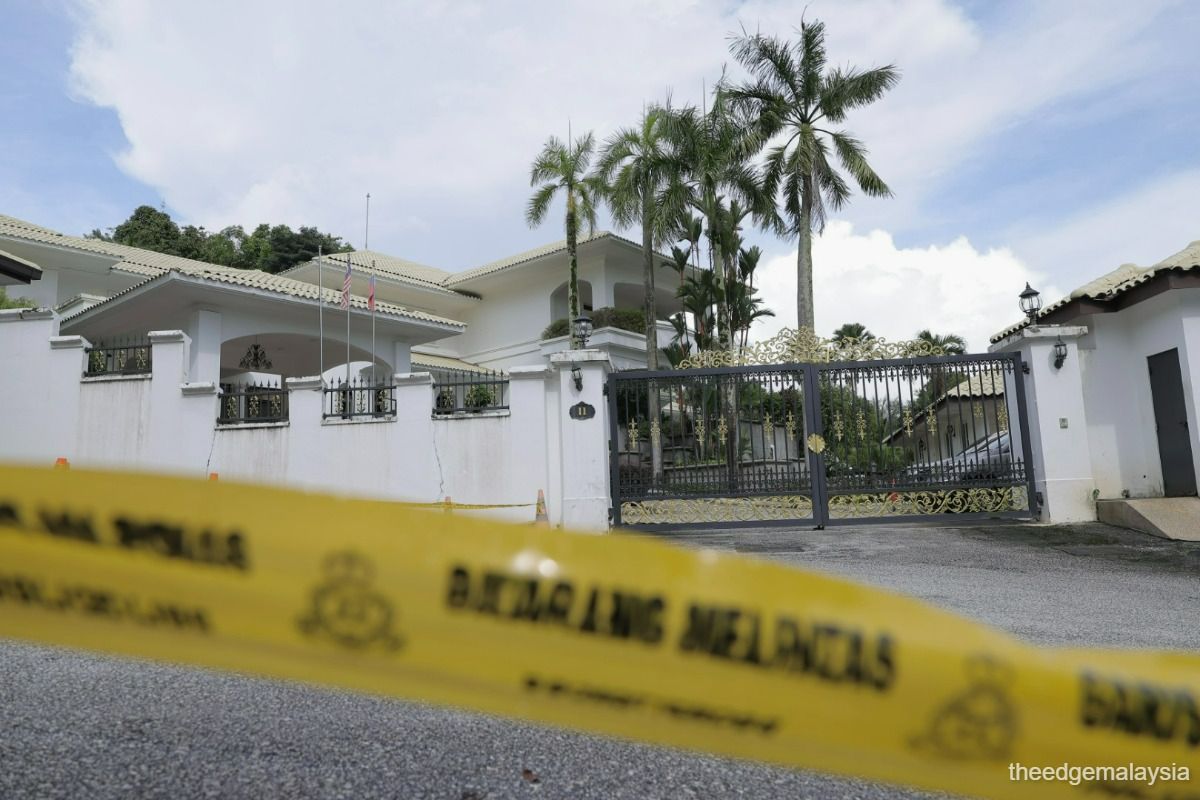
KUALA LUMPUR (Nov 10): Datuk Seri Najib Razak is now allowed to serve the remainder of his SRC International Sdn Bhd jail sentence at his Jalan Langgak Duta home.
High Court judge Datuk Aslam Zainuddin on Tuesday revoked a disputed court order issued on Nov 6 and issued a rectified order that clarified that the twice-convicted former prime minister is now under home confinement until Aug 23, 2028 for siphoning RM42 million from SRC International Sdn Bhd.
One of the rectifications sought by the attorney general is that Najib return to Kajang Prison once the current house arrest ends, to serve a more severe jail sentence for his graft conviction involving RM2.3 billion in 1Malaysia Development Bhd (1MDB) funds. However, Aslam did not pronounce this in court. It should be noted though Najib was found guilty on Dec 26, 2025, he has yet to exhaust all judicial appeals against the conviction and sentence.
After Tuesday's court proceedings, Najib will be brought to Kajang prison first to gather his belongings and sign official papers with the Prisons Department before heading home at No 11, Jalan Langgak Duta.
Najib arrived at the High Court in a light blue “teluk belanga” baju Melayu under heavy escort at 3.07pm.
Present in court was Najib's daughter Nooryana Najwa.
Parties met Aslam in his chambers twice, before proceedings started at 4.10pm.
Prosecution explains rectification
Kuala Lumpur head of prosecutions Datuk Mohd Nordin Ismail introduced parties before deputy public prosecutor Datuk Ahmad Akram Gharib explained why a rectification to last Friday’s order was sought.
Akram related the background of the case, that Najib was originally sentenced to 12 years' jailed and fined RM210 million fine or five years in default, before the Pardons Board granted its first sentence remission on Jan 29, 2024, halving the jail time and reducing the fine to RM50 million.
“On Sept 18, 2026, the King (Sultan Ibrahim Sultan Iskandar)...allowed Najib to serve the remainder of his sentence under house arrest provided that the fine is paid. If there are other conditions of the house arrest not abided, the pardon order would be considered as null and void,” he added.
Akram added the Pardon Board order specifically mentioned the house arrest sentence is for SRC, but the Nov 6 court order, which was based on a routine fine discharge form, was ambiguous when it related to the King's order.
“The court order stipulates the payment of the RM50 million fine and that he is to be 'discharged forthwith immediately'. If read, the payment of the fine is considered an alternative to free him of the prison sentence, where else it should lift the burden of the additional one year sentence if fine not paid.
“For this reason, we sought clarification and the Nov 6 order be set aside for it would be clear and positively reflect the conditional pardon issued on Sept 18, this year,” he said.
Besides Akram and Nordin, DPP Mustafa P Kunyalam and senior federal counsel Ahmad Hanir Hambaly @ Arwi were among those appearing for the prosecution.
Shafee insists no ambiguity, cites UK practice
Najib’s counsel, Tan Sri Muhammad Shafee Abdullah, appearing with Muhammad Farhan Shafee, argued that there is ambiguity in the court order.
He said the Prisons Department director general understood the court order, but was hindered by AG Tan Sri Mohd Dusuki Mokhtar’s statement for the former prime minister to be imprisoned further.
Shafee said Malaysia should take heed from the UK practice, where the court has no participation in a royal pardon order.
“When there is a lacuna (gap in the law), we (Malaysia) should follow the UK practice,” he said.
“Where justice ends, mercy begins and that should be the case and the AG should execute the order," he said.
“The courts (in the UK) are not involved in validating the order. It removes the penalty (served) but does not quash the conviction,” he said, adding the defence understood this.
“The pardon is carried out inside the prison with the royal warrant signed by the Yang di-Pertuan Agong, issued and dispatched to the minister, and then to the prison warden. The royal decree is to execute the order as follows and the authorities should give effect to it.
“The court should not be bothered with the powers of the Yang di-Pertuan Agong as the courts have nothing to do with it."
The AG had applied for the rectification of the Nov 6 order in the morning, which led to the afternoon proceedings.
Read also:
Shafee says Najib is relieved, thanks King for granting house arrest
Loke says resignation as transport minister effective immediately
AG applies to High Court to rectify order on Najib’s release for house arrest
AGC denies defying King in clarifying Najib's conditional pardon
King: Najib’s conditional pardon order must be respected
Attorney general: Najib should remain in jail until house arrest order clarified