

This article first appeared in The Edge Malaysia Weekly on October 26, 2026 - November 1, 2026
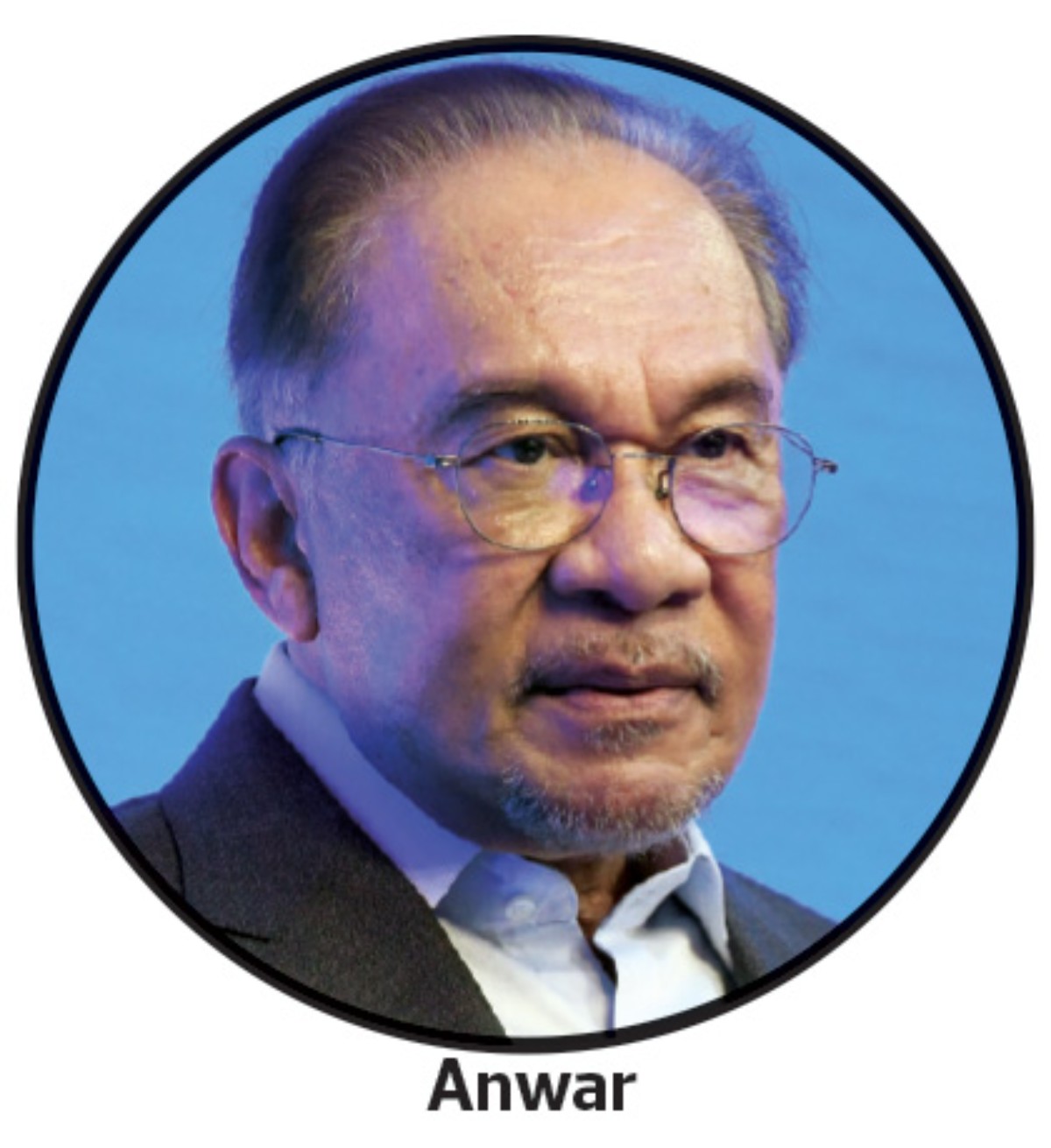

ON Oct 20, 2026, Prime Minister and Minister of Finance Datuk Seri Anwar Ibrahim, while answering a question in Parliament about recent allegations of a corporate mafia, said that this was not new and had existed in the past.
“Corporate mafia” refers to a shadowy nexus of businessmen and enforcement agencies like the Malaysian Anti-Corruption Commission (MACC).
Anwar said that in the past, companies had also been forcibly wrested from their owners. He cited what had happened to three — Multi-Purpose Holdings Bhd (MPHB), Rashid Hussain Bhd (RHB) and PhileoAllied Bhd.
Without naming the person/s responsible, Anwar said that this was done by “the then finance minister”. The finance minister then was the late Tun Daim Zainuddin, who held the post from 1999 to 2001.
MPHB, RHB and PhileoAllied had commercial banks in their portfolio of businesses and were regulated by Bank Negara Malaysia and the Ministry of Finance (MOF). As listed companies, they also came under the purview of the Securities Commission Malaysia, which also reports to the MOF.
Critics said in Parliament that Anwar did not answer the questions posed about today’s corporate mafia, on the excuse that he could not comment on ongoing investigations. (See also “What happens after the corporate mafia probe is crucial” on Page 56.)
The criticism is valid. Nevertheless, it is worth looking back at what happened to MPHB, RHB and PhileoAllied.

WHAT EXACTLY HAPPENED SOME 25 YEARS AGO?
The events Anwar told Parliament about occurred between 1999 and 2002, after the Asian Financial Crisis (AFC) of 1997/98. The AFC had triggered an unprecedented political crisis in Malaysia, after the then prime minister Tun Dr Mahathir Mohamad sacked Anwar as his deputy on Sept 2, 1998.
Daim was a trusted ally of Mahathir’s and was finance minister from 1984 until he stepped down in 1991 to make way for Anwar. But relations between Daim and Anwar deteriorated, as the latter built his political base and became close to the corporate world, emulating what Daim himself did when he was the powerful finance minister.
WHAT DID DAIM DO?
After Anwar was sacked, Daim returned as finance minister from January 1999 to June 2001. Among the major actions he took was the forced consolidation of banks on grounds of strengthening the sector post-AFC. But the way it was carried out was controversial, with allegations of selective targeting of those deemed to be close to Anwar.
• In July 1999, six local banks were designated as anchor banks that would then acquire other local banks.
• The six banks were Malayan Banking Bhd (KL:MAYBANK), Multi-Purpose Bank, Public Bank Bhd (KL:PBBANK), Southern Bank, Perwira Affin Bank and Bumiputra-Commerce Bank.
Surprisingly left out were Arab Malaysian Bank (now AmBank under AMMB Holdings Bhd [KL:AMBANK]), Hong Leong Bank Bhd (KL:HLBANK), RHB Bank (now RHB Bank Bhd [KL:RHBBANK]) and PhileoAllied Bank — whose controlling shareholders were deemed to be close to the sacked Anwar. Ambank was founded by Tan Sri Azman Hashim, Hong Leong Bank was founded by Tan Sri Quek Leng Chan, RHB was co-founded by Tan Sri Rashid Hussain and PhileoAllied was founded by Tan Sri Tong Kooi Ong. (Editor’s note: Tong also founded The Edge Media Group.)
• On appeal directly to Mahathir, AmBank, Hong Leong Bank and RHB Bank were given anchor bank status, which is why they still exist today. PhileoAllied Bank, however, was acquired by Malayan Banking, although it was initially told to merge with Multi-Purpose Bank.

• EON Bank Bhd, whose major shareholder Rin Kei Mei was a close Daim ally, was added as an anchor bank, taking the total to 10. In 2011, it was acquired by Hong Leong Bank.
• While RHB was given anchor status, its controlling shareholder Tan Sri Rashid Hussain, however, had to sell his stake to Utama Banking Group, which was linked to the family of the then chief minister of Sarawak, the late Tun Abdul Taib Mahmud.
• As for Multi-Purpose Bank, while the banking consolidation was taking place, there were rapid shareholding changes at the group level of MPHB, which included gaming firm Magnum Corp Bhd and developer Bandar Raya Developments Bhd (BRDB).
• MPHB’s controlling shareholder Lim Thian Kiat (T K Lim) virtually disappeared from the scene after Anwar was fired and arrested. All of a sudden, new shareholders emerged in mid-1999, led by Datuk Seri Akbar Khan, who was named in Parliament by Anwar as a beneficiary of Daim’s actions. Akbar subsequently sold off parts of MPHB, including Magnum and Multi-Purpose Bank, while retaining BRDB for himself.
• Langkah Bahagia Sdn Bhd, a company linked to Daim, bought Multi-Purpose Bank, which is today Alliance Bank Malaysia Bhd (KL:ABMB). Langkah Bahagia teamed up with Singapore’s Temasek group in a joint venture, Vertical Theme Sdn Bhd, which today has a controlling 29.06% stake in Alliance Bank. Langkah Bahagia has a 51% stake in Vertical Theme, while 49% is held by a Temasek unit, Duxton Investments Pte Ltd. It was reported recently that DBS banking group wants to buy Vertical Theme’s stake in the bank.
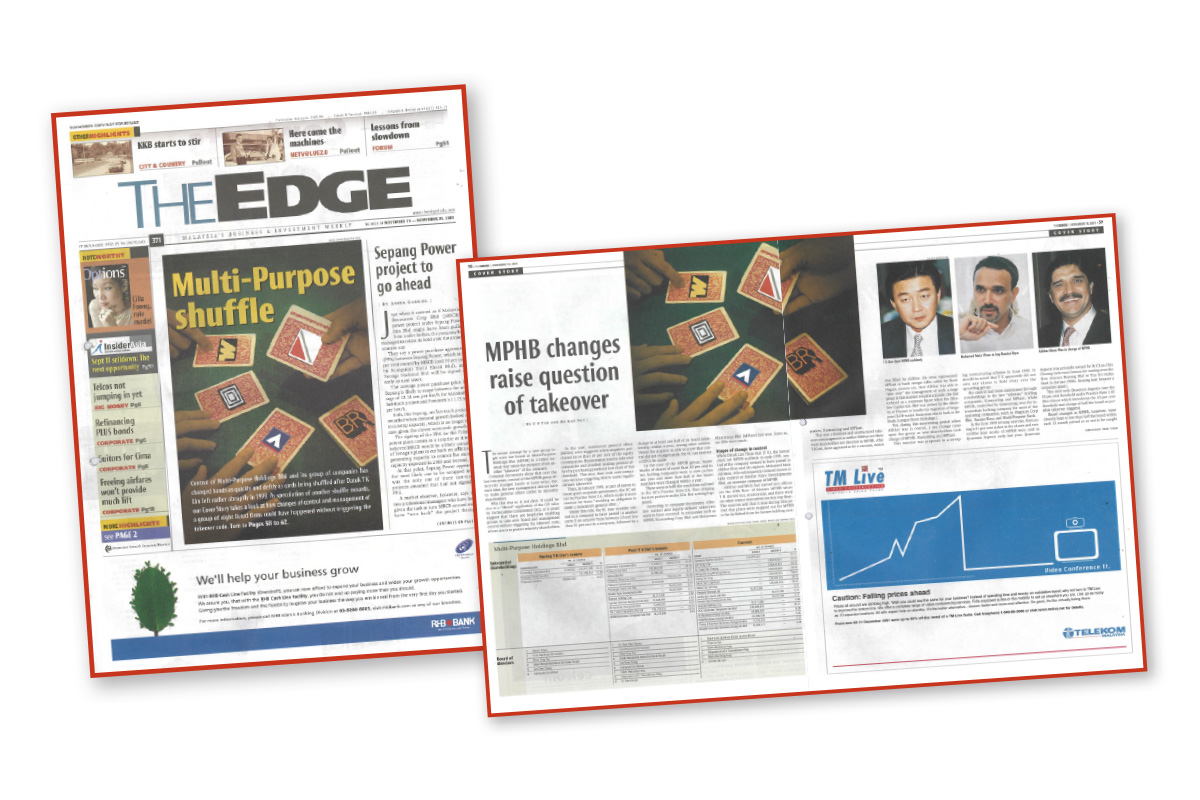
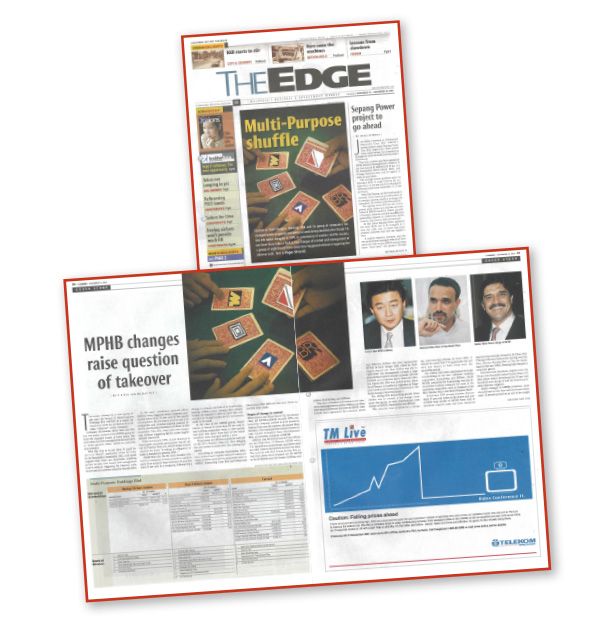
Throughout this tumultuous post-AFC period (1991-2002) on Malaysia’s political and corporate scene, The Edge published many articles on what was taking place, including “Multi-Purpose shuffle” (Sept 19, 1999).
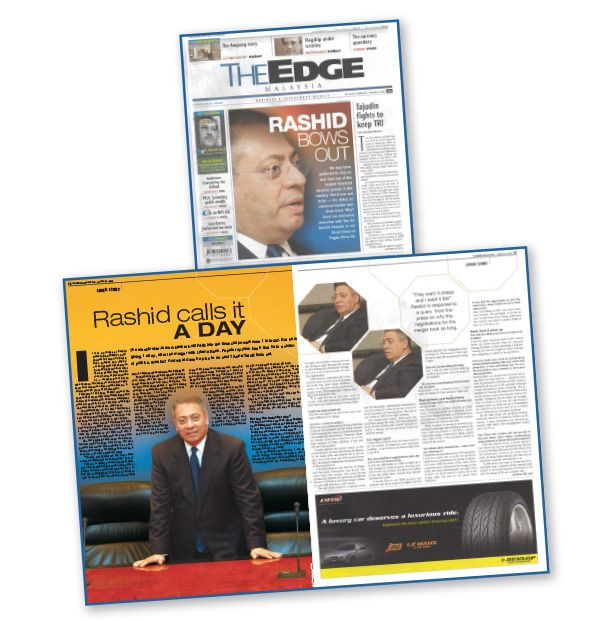
The Edge also had a farewell interview with Rashid on the very day he signed an agreement to sell his interest in RHB to Utama Group: “Rashid bows out” (March 25, 2002).


In the interview, Rashid was reluctant to respond on record to questions on whether he got caught on the wrong side of the fallout between Mahathir/Daim and Anwar. He would only say: “The tide was against me and it was more difficult for me to do things.”
In that interview, Rashid did thank Mahathir for giving RHB the anchor status that was denied by Daim.
T K Lim has kept silent all these years and Rashid’s last comment was that vague answer in the 2002 interview. PhileoAllied founder Tong was, however, very direct in his 2003 book The Phileo Story — A Triumph of the Spirit.
In the epilogue, Tong questioned why PhileoAllied was denied anchor status.
He wrote: “Up until today, we remain unaware of any sound economic rationale for the forced sale of PhileoAllied Bank. There were no fundamental problems relating to our balance sheets or management. The Bank was no worse — probably more than a little better — than some of the others that were chosen to become ‘anchor banks’. And if it were merely certain individuals within the Bank who were perceived as a ‘political problem’ (such as me, the major shareholder, because of my friendship with Anwar Ibrahim), they would have gladly made way for others.”
He added that the bank was instructed to merge into Multi-Purpose Bank and he had attended a meeting at Bank Negara where Akbar was present. Tong said he resisted pressure to sell to Multi-Purpose, as it was neither a better nor stronger bank. Instead, he chose to sell to Malayan Banking.
Besides what he said in his 2003 book, Tong also wrote an article in The Edge (Sept 5, 2022) – “How Malaysia lost the world’s first digital bank and e-commerce platform”.
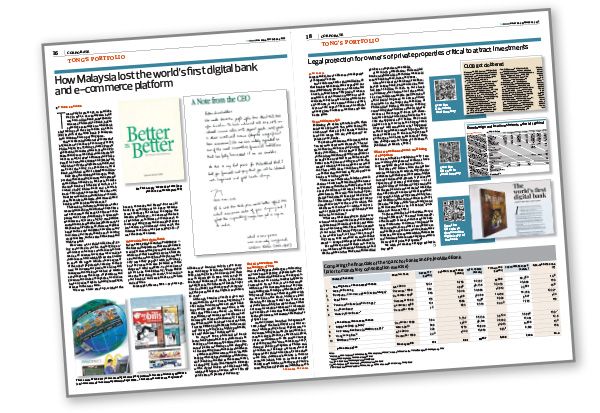

He wrote that instead of acknowledging and supporting the people at PhileoAllied who introduced the first online banking product in Malaysia in 1994, the powers that be chose to oust them from the banking industry under the guise of consolidation.
He said there was no compelling reason to give Multi-Purpose Bank anchor status “except, perhaps its shareholders”.
Besides being forced to sell the bank, Tong said that he was restricted from selling his shares in the holding company, which now had RM1.2 billion cash from the sale of the bank. He could sell his shares only with permission from the Securities Commission — a restriction he said was unprecedented and unfair.
“Who we could and could not sell to was no longer for us to decide, even as bona fide owners of the shares.”
Save by subscribing to us for your print and/or digital copy.
P/S: The Edge is also available on Apple's App Store and Android's Google Play.