

This article first appeared in Forum, The Edge Malaysia Weekly on October 26, 2026 - November 1, 2026
The nexus between business and politics in Corporate Malaysia has always produced a number of casualties. Whenever there was a change in the alignment of power in the government, businessmen who were seen to have been close to the ousted politicians were often punished.
On that score, Prime Minister Datuk Seri Anwar Ibrahim was right when he told parliament last week that the government apparatus was used by politicians to gain control of companies even back in the late 1990s.
The obvious case was how banks were taken over in a forced consolidation that followed the 1998 Asian financial crisis.
The exercise was engineered by the late Tun Daim Zainuddin, who was the then finance minister. The primary government agencies involved in the banking consolidation were Bank Negara Malaysia and the Securities Commission Malaysia.
This was also when Anwar was in jail following a major falling-out with the then prime minister, Tun Dr Mahathir Mohamad.
In the banking consolidation, 40 financial institutions were merged into 10. Financial institutions controlled by those seen as aligned with Anwar were taken over.
Among them were Datuk Lim Thian Kiat’s Multi-Purpose Bank (now known as Alliance Bank), Tan Sri Rashid Hussain’s RHB Bank Bhd (KL:RHBBANK), of which he was a major shareholder, and Tan Sri Tong Kooi Ong’s Phileo Allied Bank.
Lim, better known as T K Lim, unceremoniously left the Multi-Purpose group in mid-1999. It was said that he left the country to avoid possible criminal prosecution in relation to matters pertaining to the Multi-Purpose group.
Rashid had to sell his stake in RHB to Utama Banking Group, which was controlled by the family of the late Tan Sri Taib Mahmud while Tong was forced to sell Phileo Allied Bank to Malayan Banking Bhd (KL:MAYBANK).
Post-2002, the corporate environment saw another change following a falling-out between Daim and Dr Mahathir. Companies that were linked to Daim, such as Renong group, were taken over by Khazanah Nasional Bhd on the grounds that their debts posed a systemic risk to the banking system.
The businessmen aligned with Daim contended that they were forced to dispose of their shares to Khazanah at a cheap price.
However, it was a fact that the Renong group’s exposure to the Malaysian banking sector was so huge that a collapse would have had a knock-on effect on the very foundations of the banking system.
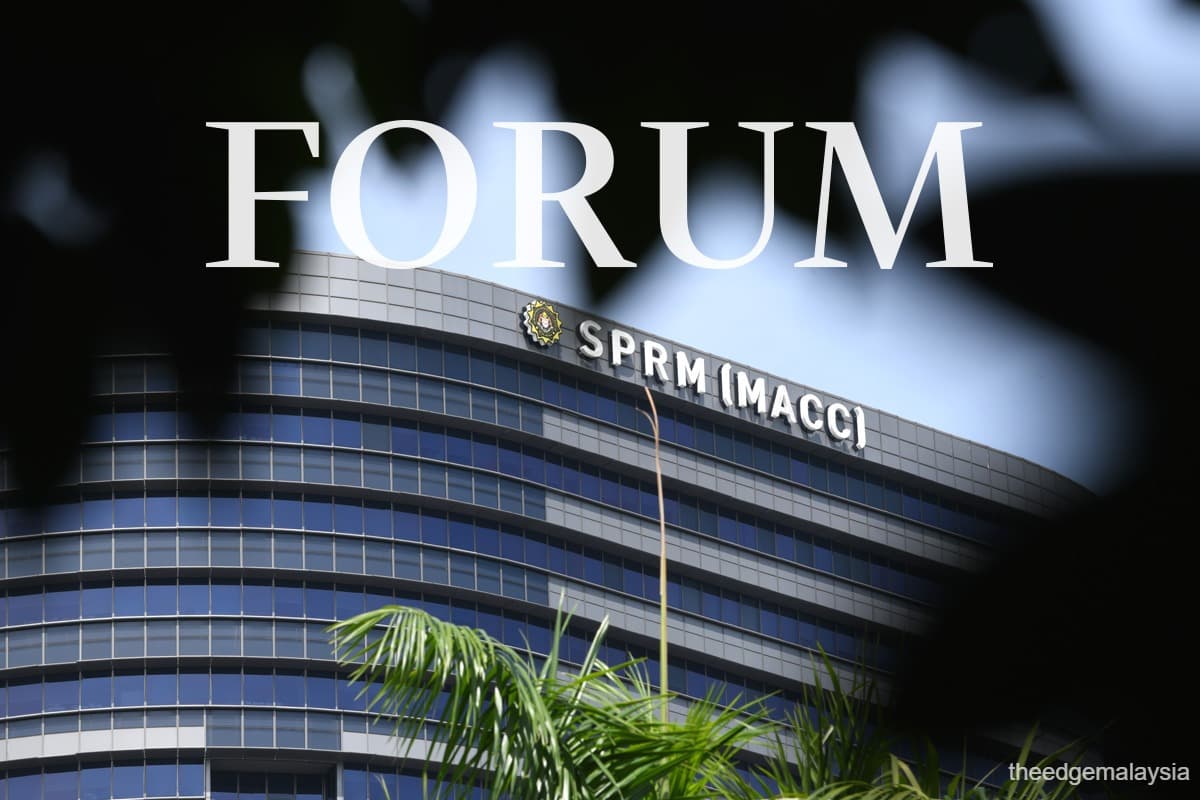
Coming back to the present, in January this year, a report by Bloomberg alleged that the Malaysian Anti-Corruption Commission (MACC) was used by certain “corporate figures” to seize companies.
Among the companies where the major shareholders sold out after investigations by the MACC are Goodway Integrated Industries Bhd (now known as GIIB Holdings Bhd [KL:GIIB]), MMAG Holdings Bhd (KL:MMAG), Caely Holding Bhd (now NexG Bina Bhd [KL:NEXGBINA]) and Revenue Group Bhd (now Revenue IF Bhd). At all of these companies, a change in shareholding took place after a probe by the MACC.
This trend came to be known as “corporate mafia” with allegations that several individuals identified as having close ties with the MACC were using the enforcement agency to take over companies. The MACC and its chief commissioner, Tan Sri Azam Baki, denied the allegations.
The matter came to a head in February this year when Azam was found to be holding 17.7 million shares valued at an estimated RM800,000 in Velocity Capital Partners Bhd (KL:VELOCITY).
Ironically, Velocity Capital is linked to Victor Chin Boon Leong, a prime figure alleged to be behind the corporate mafia.
Chin, in turn, claimed that he himself was a victim of the corporate mafia and alluded to powerful persons close to the current government being responsible for using the MACC to gain control of companies.
Looking back at the history of Corporate Malaysia, there have been many cases of shareholders being muscled out of their companies.
But the allegations surrounding the workings of the corporate mafia are alarming because one of them is that the MACC was being made a tool for the takeover of companies where there was no sign of any alignment with political figures.
Such accusations affect investor confidence in Corporate Malaysia, which is why the probe into corporate mafia has to be undertaken.
In this regard, Anwar has said a special task force headed by Attorney General Tan Sri Mohd Dusuki Mokhtar will investigate corporate crimes and come up with a report in three months. The task force will include several enforcement agencies, such as the Inland Revenue Board and the Anti-Money Laundering Division of the police.
He did not specify the nature of the corporate crimes but vowed to make public the outcome of the investigation even if it implicated persons such as Azam (Baki), Datuk Seri Farhash Wafa Salvador and Victor Chin (Boon Leong).
Farhash was Anwar’s former political secretary and is now a corporate figure who sits on the boards of many listed companies.
Several backbenchers, especially from the DAP, asked for a Royal Commission of Inquiry (RCI) to probe the corporate mafia but since there is not going to be one, a task force would have to suffice.
However, why has the AG been given the mandate to head the task force? He is part of the government by virtue of the prime minister having had a hand in his appointment.
Wouldn’t it be better if the task force were headed by a distinguished member of the judiciary?
The investigation has to be transparent if Corporate Malaysia is to have confidence in its report. So how and who the investigators question in producing it matter.
Particularly, Chin who is now abroad, claiming to fear for his safety.
More importantly, after the report is presented, will it lead to any criminal prosecution? That is what would make the whole exercise consequential.
M. Shanmugam ([email protected]) is a contributing editor at The Edge.
Read also:
Save by subscribing to us for your print and/or digital copy.
P/S: The Edge is also available on Apple's App Store and Android's Google Play.