

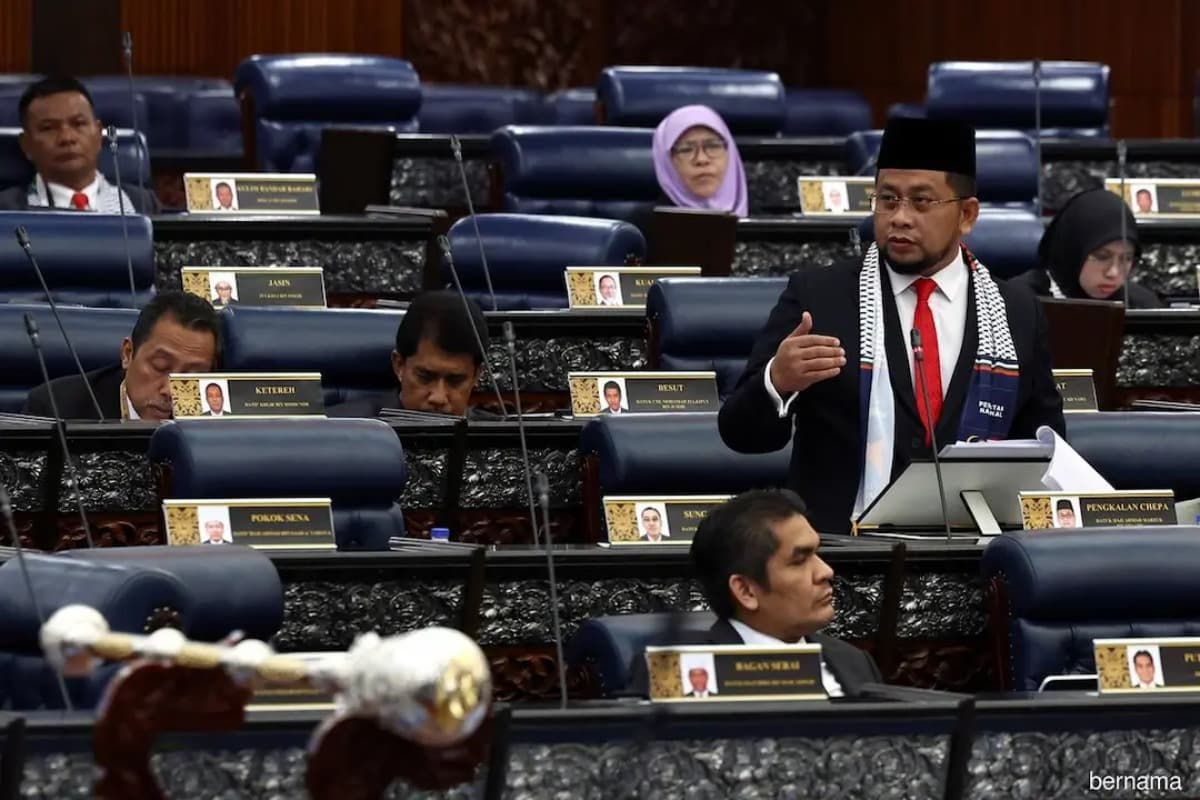
KUALA LUMPUR (Oct 22): A former deputy religious affairs minister has urged the government to look into the financial health of Urusharta Jamaah Sdn Bhd (UJSB), the company set up by the government in 2018 to take over Tabung Haji's troubled assets.
Datuk Ahmad Marzuk Shaary (PN-Pengkalan Chepa) cited UJSB's exit from NexG Bhd, which was renamed Datasonic Group Bhd (KL:DATASONIC) in September, months before the company secured contracts worth RM2.46 billion to supply passports and MyKad.
Speaking during the debate on Budget 2027 in the Dewan Rakyat on Thursday, Ahmad Marzuk highlighted UJSB’s divestment of its 9.2% NexG stake comprising 124 million shares, which began in November 2024 and concluded by April 2025.
He cited an interview by The Edge Malaysia with UJSB chairman Datuk Mohd Shukri Hussin, in which he defended the disposal because NexG's passport and identity card contracts were getting only six-month renewals.
“Among the reasons given was the uncertainty over government contract renewals. UJSB’s chairman explained that the shares were sold on the open market, except for a remaining block of around 3% to 4% that was sold to a buyer,” Ahmad Marzuk said.
He noted that UJSB’s chairman clarified the buyer of the final block was not businessman Datuk Seri Farhash Wafa Salvador, and that Tabung Haji was given the first right of refusal.
UJSB also maintained that it had no prior knowledge of future billion-ringgit contracts as that would have constituted insider trading.
However, Ahmad Marzuk questioned the timing and commercial logic of the disposal, noting that following UJSB’s complete exit, NexG secured the passport and identity card contracts that run until 2032.
“I take note of the explanation, but I want three figures: the asset value of those 124 million shares, the total sale proceeds, and the realised loss — including the transaction price and valuation basis for that final block,” he said, urging the government to table these figures in Parliament.
He also brought up media reports in August regarding a government proposal to acquire NexG's wholly owned unit, Datasonic Technology Sdn Bhd, for RM7.5 billion — a plan that was subsequently not pursued after public scrutiny.
“When the shares were sold, was the potential value of future contracts sufficiently evaluated? Did the decision to sell deliver the best value based on available information?” he asked, warning that selling off valuable holdings at a loss severely hampers UJSB’s ability to service its sukuk obligations to Tabung Haji.
Ahmad Marzuk also cited international media reports about NexG's board room tussles.
He noted media reports mentioning, Farhash, who was reported to have a stake of about 20% in MMAG Holdings Bhd, while NexG held about a 10% stake in MMAG.
Ahmad recorded in the hansard (Parliament verbatim report) that Farhash, through his lawyers, has denied any involvement in attempts to take over NexG or receiving instructions from the prime minister regarding the corporate dispute.
“I am not claiming these allegations are proven, nor am I accusing Farhash, any individual, or UJSB of wrongdoing,” Ahmad stressed.
“However, for a company that was once part of UJSB’s asset portfolio and is now embroiled in high-profile corporate disputes, the history of its share disposal deserves detailed scrutiny.”
While, UJSB has dismissed calls for a forensic audit, arguing that its accounts received a “clean audit opinion” from auditors like Ernst & Young (EY), Ahmad insists on deeper parliamentary scrutiny.
Ahmad Marzuk pointed out that UJSB’s liabilities swelled from RM20.29 billion in 2019 to RM24.81 billion in 2025, while its accumulated losses widened from RM9.8 billion to RM13.2 billion over the same period.
He contrasted UJSB’s performance with Tabung Haji Plantation Bhd, noting that after the Perikatan Nasional government cancelled the proposed sale of its subsidiaries in December 2020, the plantation unit turned around to post nearly RM500 million in cumulative profits between 2020 and 2025.
Given that Tabung Haji has already been investigated, Ahmad Marzuk urged the government to initiate a forensic audit or establish another RCI into UJSB.
“This is to ensure that all recovery transactions are brought to Parliament so we can scrutinise and debate them thoroughly,” he said.
For more Parliament stories, click here.