

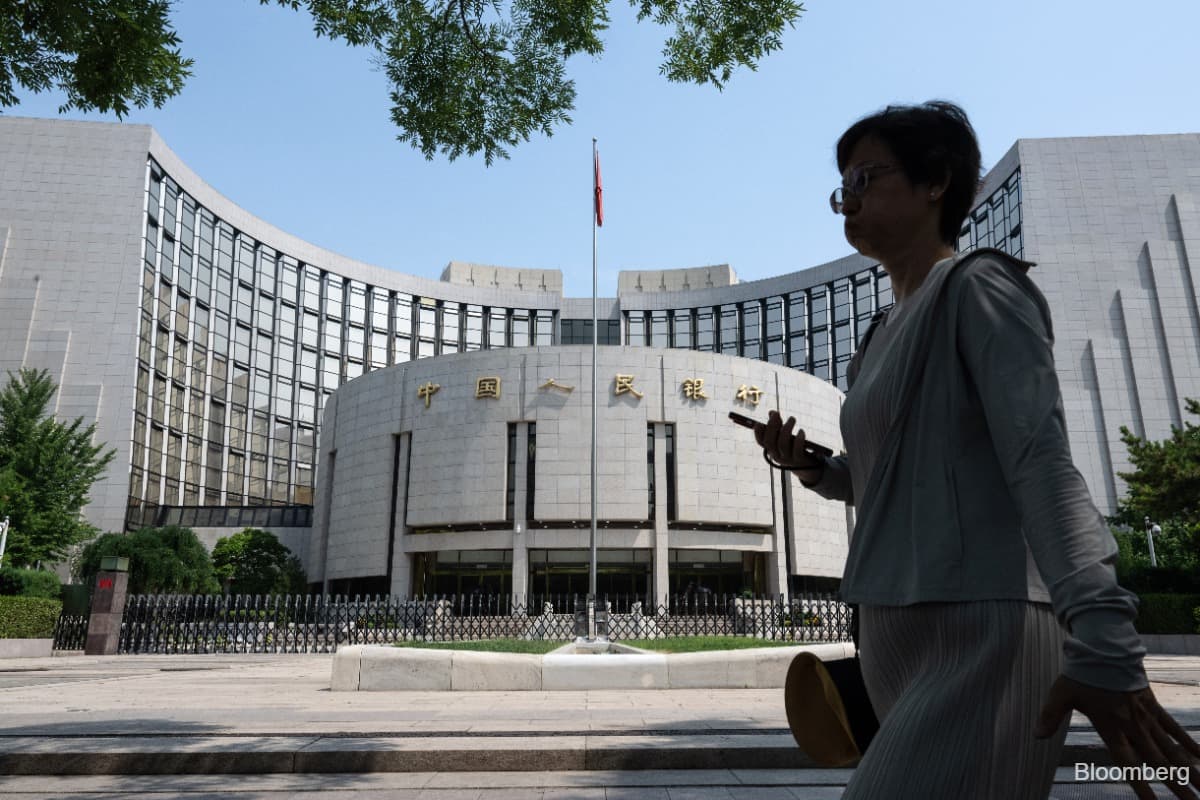
SHANGHAI (Oct 20): China kept its benchmark lending rates unchanged for the 17th straight month in October on Tuesday, in line with market expectations.
The steady loan prime rates (LPRs) suggest policymakers are in no rush to roll out fresh monetary easing after a strong third-quarter gross domestic product outcome, as they focus on reforming the loan pricing framework and improving monetary policy transmission.
The one-year LPR was kept at 3%, and the five-year LPR was unchanged at 3.5%.
In a Reuters survey of 22 market participants conducted on Monday, all participants predicted no change to either of the two rates.
China's central bank is considering switching its main policy rate to the overnight reverse repurchase rate, in a shift aimed at improving the transmission of monetary policy to support the economy.
The People's Bank of China will also issue policy guidance to advance reform of the loan pricing benchmark, shifting lending away from a relatively narrow reliance on the LPR towards a more diversified set of benchmarks, the bank's governor Pan Gongsheng said on Monday.
Some financially strong companies could opt for either the overnight reverse repo rate or the LPR as the benchmark for floating-rate loans, while the overnight rate could also serve as an alternative pricing benchmark for bonds and financial derivatives, Pan said.
China's economy expanded 4.5% year-on-year in the third quarter, topping forecasts and reducing the urgency for Beijing to step up support to meet its annual growth target.
"The latest announcement extends the shift in the policy rate anchor towards asset-side pricing, maintaining a gradual approach. The tiered design — giving large firms the option while keeping small and micro enterprises and individuals anchored to the LPR — is primarily aimed at avoiding a one-off shock to the existing pricing system," Huatai Securities said in a note.
"As more corporate loans are linked to the overnight repo rate, the rate's fluctuation range is likely to narrow, enhancing the stability of liquidity conditions."
Uploaded by Tham Yek Lee