

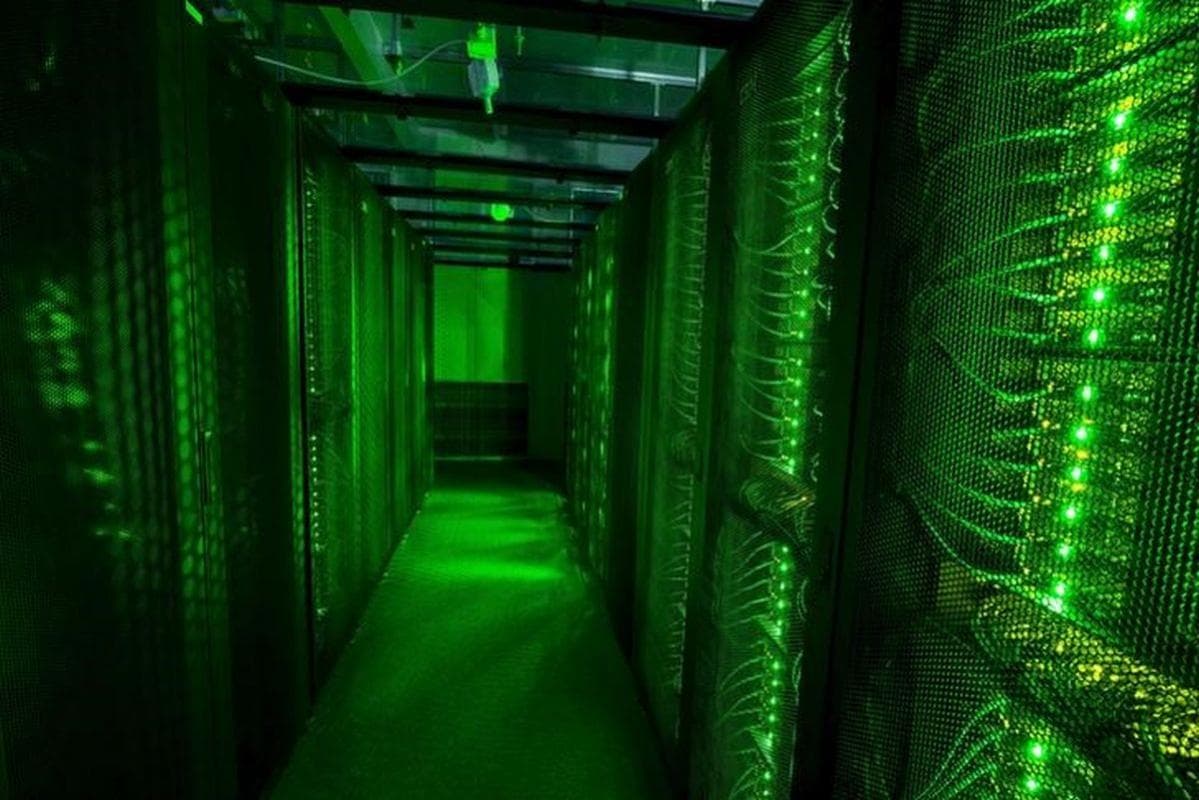
KUALA LUMPUR (Oct 19): The government is drafting a law to regulate the development of date centres as part of a "strategic direction" to sustainably grow the industry and shift towards a circular economy.
The Digital Infrastructure (Data Centre) Bill is expected to be presented to the cabinet next year to tackle concerns about energy and water resources, and ensure investments benefit Malaysia's digital ecosystem, the Economy Ministry said in a statement on Monday.
The plan also aims to support Malaysia’s artificial intelligence (AI) ambitions and address environmental imbalances resulting from the industry.
The statement follows Prime Minister Datuk Seri Anwar Ibrahim’s call for Malaysia to plan the growth of the data centre industry to attract quality investments, strengthen the digital economy and ensure the sustainable use of energy and water while protecting the environment.
In a social media post earlier on Monday, Anwar said infrastructure readiness, energy supply and resource-use efficiency required closer scrutiny as the country pursued sustainable development of the sector.
Data centres now make up a tenth of Malaysia's energy consumption and this is expected go as high as one-third by 2035.
The government intends to make data centre investors to pay for the electricity grid upgrades they need.
Minister of Investment, Trade and Industry Datuk Seri Johari Abdul Ghani told Parliament last week that power for data centres would be unsubsidised and separated from the energy infrastructure for domestic homes and other industries.
This was to protect power generation capacity needed for other economic sectors.
A government task force on data centres had set that at least 30% of a data centre's components must be locally sourced, with greater participation in construction, engineering services, cooling systems and electrical equipment.
Up to July, the government has approved 27 data centre projects valued at an estimated RM225.97 billion, with 89.21% of the high-skilled positions to be filled by Malaysians.
Circular economy, resilience plans also deliberated
Sustainable data centre development was among three strategic priorities reviewed by MTEN, alongside the circular economy and national economic resilience, as the government seeks to strengthen the economy amid structural challenges and global uncertainties.
The Economy Ministry also said the Housing and Local Government; Investment, Trade and Industry; Science, Technology and Innovation; and Human Resources Ministries would be the lead agencies adopting the Circular Economy Framework.
The framework seeks to steer Malaysia away from the traditional “take-make-dispose” economic model towards one that extends the useful life of materials, reduces waste and preserves resource value.
It also aims to address fragmented implementation across ministries, prevent economic losses from the wastage of valuable resources and support the country’s ambition of achieving net-zero emissions by 2050.
The Economy Ministry said MTEN also reviewed the National Economic Resilience Framework (NERF), which is meant to strengthen the country’s ability to withstand external economic shocks, and agreed that further deliberations are needed.