


This article first appeared in The Edge Malaysia Weekly on October 12, 2026 - October 18, 2026

THE Madani government’s fifth national budget tabled in Parliament last Friday by Prime Minister Datuk Seri Anwar Ibrahim had been anticipated to be loaded with “goodies” as the 16th general election is expected in a year or so.
With the theme “Reaching for the skies, while anchored on our values” and a behemoth size of RM459.84 billion, it did not disappoint. For the man in the street, it addressed the issue of the higher cost of living that has been a pain point for many. The small and medium enterprises’ (SMEs) grouses about higher operating costs were also addressed.
Some have described it as a “really generous” budget with the proposed tax rate cuts for the middle-income group and SMEs, as well as the increase in personal tax relief, on top of a continued RM200 cash aid for Malaysians and special financial assistance of RM1,500 for civil servants, among others.
“I think it’s hard to shrug off the sentiment that this is an election-friendly budget. Irrespective of that, I must say the measures, while generous, are addressing key lingering issues, especially related to wages, consumption and productivity,” says CGS International economist Nazmi Idrus.
The measures proposed under the Budget 2027 are possible largely because of the fiscal reforms that have been put in place in recent years.
“Budget 2027 is possible because much of the difficult fiscal work done in recent years, with subsidy rationalisation, expanded tax coverage and broadened revenue base. The deficit continues to narrow to 3.3% of GDP even while support is widened, which underscores the commitment to consolidation,” says Michelle Chia, head of research at CIMB Treasury and Markets Research.
More than that, the measures attempt to make real for the people the economy’s strong headline growth.
Chia describes the budget as presenting a more “progressive effort” to link Malaysia’s headline success back to households, smaller enterprises and provide broader social protection. “Tax cuts, housing incentives, wage measures and cost-of-living assistance should support consumption and household sentiment,” she says.
UOB Malaysia Global Economics and Markets Research senior economist Julia Goh agrees, saying the measures are timely support given the rising cost of living many are grappling with.
Notably, federal government revenue collection is projected to reach RM363.6 billion in 2026, higher than the original estimate of RM343.1 billion, said the prime minister in his speech. Federal tax revenue for 2026 was revised higher to RM280.76 billion, from RM270.38 billion announced during the last budget.
In 2027, the federal revenue is expected to increase further to RM380.8 billion.
The prime minister did not fail to remind everyone that the Madani government had ventured where previous administrations dared not go — removing blanket subsidies and utilising targeted subsidies for better resource allocation.
He highlighted that targeted subsidies have contributed to higher allocation for cost of living assistance under the Sumbangan Tunai Rahmah (STR) and Sumbangan Asas Rahmah (Sara) programmes for the people, for whom the aid will increase to RM16 billion under Budget 2027, from RM15 billion previously.
Attention given to middle-income group and SMEs
What stood out for many in Budget 2027 is the cut in income tax rate for the middle-income group. The government proposed a 1% reduction in personal income tax rate for resident taxpayers with chargeable income of between RM70,000 and RM150,000.
This means that in 2027, taxpayers in the chargeable income band of RM70,001 to RM100,000 will see their income tax rate reduced to 18% from 19% previously, while those in the chargeable income band of RM100,001 to RM150,000 will have their income tax rate reduced to 24% from 25% previously.
Furthermore, there is the proposal to increase the individual tax relief from RM9,000 to RM12,000.
“The increase in the amount of personal relief is also timely. CTIM has proposed this as the personal relief was last reviewed in the year of assessment 2010. It goes without saying that the cost of living has increased significantly since,” says Alan Chung, president of Chartered Tax Institute of Malaysia (CTIM) and senior executive director of Grant Thornton Malaysia.
According to Deloitte Malaysia tax leader Sim Kwang Gek, an individual with chargeable income of RM100,000 could enjoy tax savings of about RM840, while one with chargeable income of RM150,000 could see the total tax savings increase to about RM1,520.
“Taken together, these measures provide targeted relief to the middle-income segment, helping households to better manage the rising cost of living while supporting consumer spending and economic activity,” she adds.
KPMG Malaysia’s head of tax Soh Lian Seng says the attention given to the middle-income group came as a pleasant surprise to him. On top of the personal relief that was increased and the reduction in tax rate for those in the chargeable income bands of RM70,000 to RM150,000, the expansion of relief for areas such as parental care, education and skills suggests that the government has clearly heard the concerns of middle-income taxpayers, he explains.
“We often speak about assistance for lower-income households, and rightly so, but the M40 (middle 40% income group) can sometimes feel squeezed in the middle. They face the same cost-of-living pressures but may not qualify for the same level of targeted assistance. So I think the stronger recognition of the M40 is one of the more notable features of this budget,” says Soh.
Furthermore, middle-income earners who are looking to buy their first home are set to benefit from the extension of the first-home relief proposed in Budget 2027.
For sales and purchase agreements executed from Jan 1, 2027, to Dec 31, 2030, the stamp duty on loan agreements and instruments of transfer is to be fully exempted on homes priced at RM500,000 and below. For homes priced up to RM750,000, there will be a full exemption for the stamp duty on loan agreements for the first RM500,000, with the balance qualifying for a 50% exemption.
“For a first home worth, say, RM670,000, this means stamp duty relief on the first RM500,000 and half of the remaining RM170,000,” says PwC Malaysia tax leader Steve Chia.
He adds that he welcomes the full stamp duty exemption for rescue contractors, developers and original purchasers of abandoned housing projects, as he views it as a practical step towards the target of zero abandoned projects by 2030.
Nevertheless, the tax reduction granted to middle-income taxpayers is coming at the expense of high-income earners. The budget has proposed to increase the tax rate applicable to the RM1,000,001 to RM2,000,000 chargeable income band from 28% to 30%. Previously, the 30% tax rate was only applicable to chargeable income exceeding RM2,000,000.
The proposed structure will mean that taxpayers in the RM1 million to RM2 million chargeable income band could face an additional tax liability of up to RM20,000, depending on their level of chargeable income.
“From a policy perspective, the measure appears intended to partially offset the revenue forgone from the tax reductions granted to middle-income taxpayers while ensuring that higher-income individuals contribute a greater share of overall tax revenues. The proposal therefore reinforces the progressive nature of Malaysia’s personal income tax system by shifting part of the tax burden to those with a greater ability to pay,” says Deloitte’s Sim.
Meanwhile, SMEs also have reason to cheer with the 1% tax rate cut proposed. PwC’s Chia opines that these businesses stand to gain the most from this budget.
The proposed tax rate for SMEs in 2027 is 14% on the first RM150,000 of chargeable income and 16% on income between RM150,000 and RM600,000. This could translate into total savings of RM6,000 a year, benefiting some 300,000 SMEs, says Chia.
“SMEs are also affected by the cost of doing business, especially with disruptions to supply chains and uncertainties caused by the conflict in the Middle East. The reduction in tax rate of 1% will allow SMEs to retain vital funds that will be crucial in sustaining them through this difficult period,” says CTIM’s Chung.
Besides the tax cuts, SMEs will also benefit from the raised threshold in small value asset capital allowances to RM3,000, accelerated capital allowance on local plant, machinery and information and communications technology equipment that is extended to Dec 31, 2030, and the stamp duty flat rate of RM10 on peer-to-peer (P2P) financing and certain credit facilities.
“Together with financing guarantees of up to RM32 billion through Syarikat Jaminan Pembiayaan Perniagaan Bhd (SJPP) and Credit Guarantee Corporation Bhd (CGC), these measures will help SMEs absorb rising operating costs, including the higher minimum wage,” notes Chia.
Lifting labour incomes
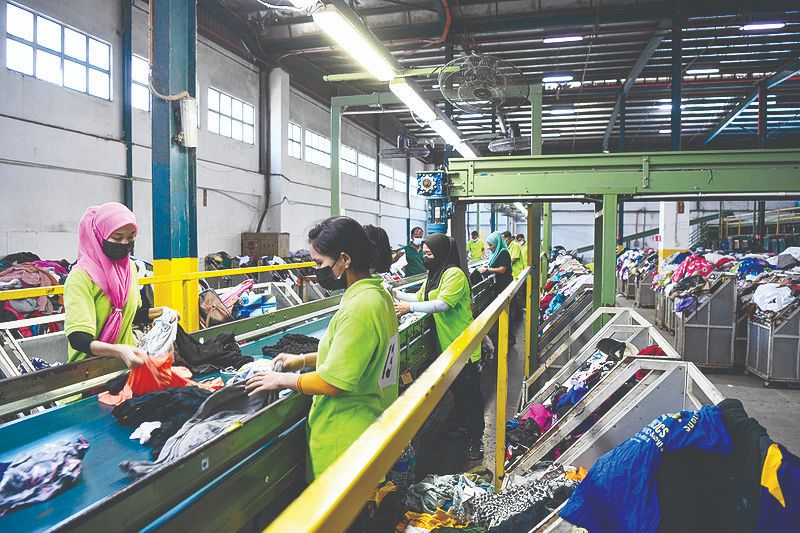
Anwar also announced that the minimum wage will be raised to RM2,000 a month, from RM1,700 currently, beginning in June 2027. He also said micro, small and medium enterprises (MSMEs) with annual sales below RM50 million will be exempted from this requirement to provide room for adjustment to their business models.
Some have wondered whether this could lead to a situation where SMEs which pay less than the RM2,000 minimum wage could end up losing workers to employers who pay RM2,000. Will this ultimately push these SMEs to pay the higher minimum wage despite the exemption given?
What came as a surprise was what the prime minister announced next: a reform of the workers’ income framework, beginning with a minimum wage of RM2,500 per month for semi-skilled workers and graduates.
“The approach for a multi-tier minimum wage was unexpected but a welcome one. However, the devil will be in the details. They will need to clarify what is semi-skilled and what are graduates, as well as the timeline of implementation,” says CGS’ Nazmi.
However, Lee Heng Guie, executive director at the Associated Chinese Chambers of Commerce and Industry of Malaysia’s Socio-Economic Research Centre, believes that regulating the wages of semi-skilled and graduate workers could lead to a distorted market. “Regulating the minimum wage is fine, but should we be regulating semi-skilled and graduate workers’ pay as well?” he asks.
CIMB’s Chia says the budget placed a focus on lifting labour incomes, which complements the focus on lowering the cost of living in previous budgets.
“Higher wages alone do not create productivity. Firms ultimately need to generate more value-add per worker. That is where the investment side becomes important, to raise productive capacity over time,” she explains.
Global Services Hub boost
One of the measures that has received praise from tax consultants is the proposal to extend incentives granted to Global Services Hubs (GSH) for a period of up to 30 years.
“This is a welcomed move. Together with new incentives for Multi-Family Offices, it will promote Malaysia as a destination to set up regional and global offices to service multinational enterprises,” says CTIM’s Chung.
Ernst & Young Tax Consultants Sdn Bhd’s Malaysia tax managing partner Farah Rosley says the enhanced GSH framework introduces a preferential 5% tax rate for qualifying new GSH companies and qualifying incremental income of eligible existing GSH and Principal Hub companies, together with the ability to renew the incentive in five-year periods for up to 30 years.
“The inclusion of withholding tax and stamp duty exemptions for GSH companies undertaking treasury and fund management activities further strengthens Malaysia’s proposition as a location for regional headquarters, shared services and treasury operations,” she adds.
The potential 30-year incentive horizon provides greater visibility for multinational groups when evaluating locations for service hubs and signals the government’s intention to attract more substantive regional management, treasury and decision-making functions to Malaysia, says Farah.
She believes these measures support stronger local supply chains, encourage technology transfer and create broader economic spillovers, while helping to position Malaysia more competitively in regional and global value chains.
Highly anticipated, but not announced
Nevertheless, there were some highly anticipated measures that were not mentioned during the budget announcement. One of them was the possible integration of goods and services tax (GST) elements into the existing sales and service tax (SST) system.
Businesses have been waiting to see how the government would undertake the enhancements to the system following the PM’s comments on the matter in earlier press conferences.
KPMG’s Soh says he does not see that lack of announcement regarding the matter as necessarily a negative one as a reform of such magnitude requires careful consideration. “The focus should ultimately be less about what we call the tax and more about whether we can make the system simpler, more efficient and reduce tax cascading, particularly for businesses,” he notes.
The other area that businesses would want to have clarity on is a simplification of the existing stamp duty framework.
“With the move towards a more self-assessed and digital tax environment, I had also hoped to see greater simplification of the underlying stamp duty framework. In particular, the First Schedule to the Stamp Act has become quite complex over time. There is an opportunity to rationalise and simplify the duty categories so that taxpayers can more easily determine the correct treatment,” says Soh.
“Having said that, the budget speech does not necessarily contain all the tax details, so I would not conclude that this has been left out altogether. We should look to the Finance Bill and accompanying legislation to see whether there are further changes, including possible amendments to the First Schedule.”
Also not mentioned was the proposed carbon tax, while the visibility remains limited on several 13th Malaysia Plan reform priorities, including the multi-tier foreign worker levy, plans for the existing Progressive Wage Policy and changes to the retirement age, CGS’ Nazmi points out.
Many would round this up as a budget that prioritises policy continuity over major new reforms.
“Looking ahead, Malaysia’s growth potential will increasingly hinge on addressing structural challenges, including raising productivity, accelerating technology and AI adoption among SMEs, improving education and skills development, reducing reliance on low-skilled labour and strengthening fiscal revenue sustainability,” says UOB’s Goh.
Read also:
Cover Story: More money for households, tougher calls for investors
Cover Story: A spending boost in store for consumer stocks
Cover Story: Regulators and industry leaders’ take on the budget
Cover Story: Continuing the journey of fiscal consolidation and prudence
Cover Story: Budget 2027 Highlights
Save by subscribing to us for your print and/or digital copy.
P/S: The Edge is also available on Apple's App Store and Android's Google Play.