

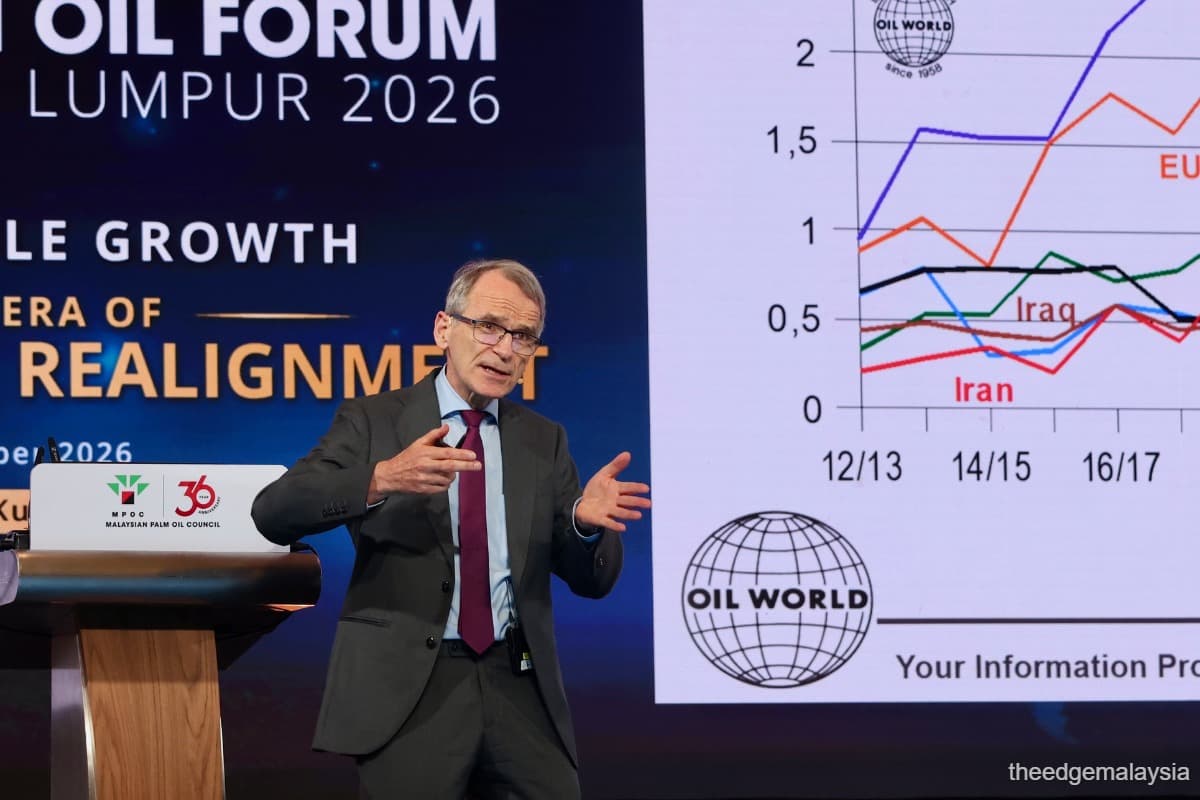
KUALA LUMPUR (Oct 7): Crude palm oil (CPO) prices could trade at a premium to soybean oil as early as April next year, as weather risks and rising biodiesel demand in Indonesia tighten global vegetable oil supplies, said industry analyst Thomas Mielke.
Prolonged disruption to sunflower oil exports from Russia and Ukraine could provide further support for CPO prices, as buyers turn to alternative vegetable oils such as palm oil, Mielke said during a panel discussion at the Malaysian Palm Oil Forum 2026, organised by the Malaysian Palm Oil Council.
“The premium (of palm oil against soybean) should be in periods in which oil supplies are dropping, exports are dropping. And when we ask the question which countries will reduce oil imports, it would be the most price-sensitive markets. The most price-sensitive market has always been India. It’s not only the biggest importer, it’s also the most price-sensitive,” said the editor and CEO of ISTA Mielke GmbH (Oil World).
For refined, bleached and deodorised palm olein, Mielke sees upside potential to US$1,300 a tonne if a safe shipping corridor is established in the Black Sea and de-escalation in the Strait of Hormuz helps ease energy prices.
The benchmark palm oil futures contract for January 2027 delivery closed at RM4,635 a tonne on Bursa Malaysia Derivatives on Tuesday.
At the forum, Mielke said he was not concerned about Malaysia’s elevated palm oil stocks, which he expects to decline over the next five months as sluggish production growth fails to keep pace with rising consumption.
Data from the Malaysian Palm Oil Board showed that Malaysia’s palm oil inventories rose 7.48%, or 196,590 tonnes, to an eight-month high of 2.82 million tonnes in August, from 2.62 million tonnes in July.