

This article first appeared in The Edge Malaysia Weekly on September 28, 2026 - October 4, 2026
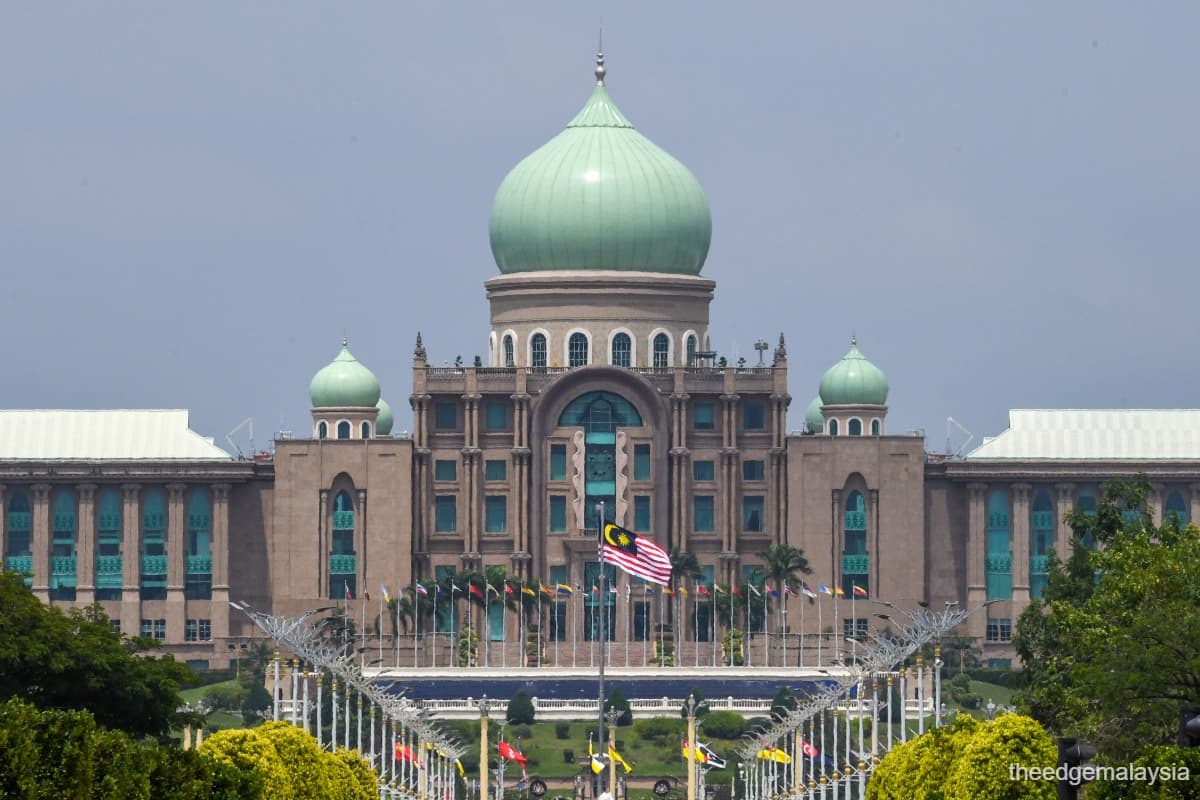
THE government will have to find more fiscal space without slapping on new taxes under Budget 2027. High energy prices are eating into some of the savings from subsidy reforms even as Putrajaya wants to cushion households, invest for growth and continue narrowing the fiscal deficit.
For context, Malaysia does not have a large tax base to work with. Deloitte Malaysia tax and legal leader Sim Kwang Gek puts the country’s tax revenue at about 12.4% of gross domestic product in 2024 and a revised estimate of 12.6% in 2025, which she says is relatively low compared with several regional peers.
The tax experts whom The Edge spoke to therefore believe Putrajaya should sweat the existing system by fixing issues arising from the expanded sales and service tax (SST), using e-invoicing more effectively to close compliance gaps, and simplifying administration and reviewing incentives that are outdated or underutilised. They have outlined six areas they believe will be refined in Budget 2027, which will be tabled in parliament on Oct 9.
1 Refining the SST
After several years of changes to the tax regime, Budget 2027 should give businesses some breathing space, say the tax experts.
“The government’s decision to focus on refining the SST rather than introducing new taxes is a pragmatic approach. At this stage, businesses are looking for greater certainty, consistency and simplicity rather than additional tax measures,” says Soh Lian Seng, head of tax at KPMG in Malaysia.
Putrajaya should be collecting existing taxes more effectively and making compliance less cumbersome, while outdated provisions should be clarified.
One example is the investment allowance for approved service projects under Schedule 7B of the Income Tax Act 1967. Deloitte’s Sim notes that while the provision remains in force, new applications have not been accepted since Jan 7, 2021. “Budget 2027 should clarify whether it will be revived, redesigned as part of the services sector phase of the New Investment Incentive Framework (NIF), or formally closed,” she says.
Other recommendations include using e-invoicing to police SST better. PwC Malaysia tax leader Steve Chia suggests that transaction-level e-invoicing data be used more aggressively to detect leakages, verify taxable supplies and improve compliance.
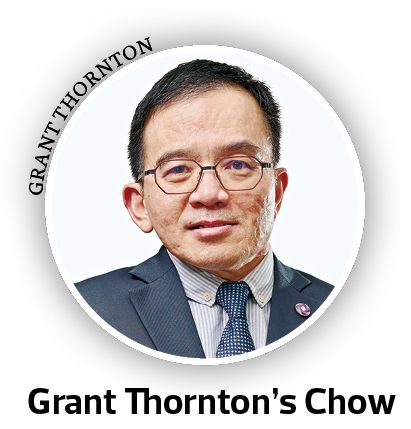
“One of the key differences between the goods and services tax (GST) and the current SST system is the availability of input tax credits. While GST provides for an input tax credit mechanism, SST instead relies on exemption facilities,” says Chow Chee Yen, senior executive director of tax advisory and compliance at Grant Thornton.
“If the government were to fully adopt the input tax credit mechanism under SST while maintaining the existing exemptions available to businesses, this would represent a significant change. Such a change would pose challenges not only to businesses and the public, but also to the tax authorities themselves.”
“A more practical approach would be to fine-tune the exemptions available under SST, either by broadening the scope of exempted services or by making the existing exemptions less restrictive. One key condition for SST exemption is that the recipient of the services must provide the same services as those acquired from the service provider [even if] the definition of ‘same services’ is arguably too narrow.”
2 Reducing tax cascading
The tax veterans say among the biggest practical problems arising from the expanded SST is tax cascading, as businesses can incur service tax on inputs that they cannot recover, turning the tax into part of their cost base before another taxable transaction takes place further down the supply chain. The problem is particularly evident in sectors with several layers of service providers such as leasing, construction, professional services, financial services and logistics.
The tax experts say the government can address this in Budget 2027 through the following targeted changes rather than another broad expansion of SST:
- Broadening business-to-business (B2B) exemptions for genuine business inputs, such as leasing a taxable construction project, logistics and warehousing used to deliver taxable goods, and professional or information technology (IT) services acquired as inputs to an onward taxable service.
- Introducing clear apportionment rules where an input supports both taxable and non-taxable activities. Rather than denying relief altogether, businesses should be allowed to apportion qualifying inputs on a clear and consistent basis, says Deloitte’s Sim. “This would reduce embedded tax costs without turning every business input into a blanket exemption,” she explains.
- Making existing exemption rules less restrictive. Grant Thornton’s Chow says the present requirement that businesses provide the “same services” as those they acquire is too narrow. An example would be an e-commerce platform that outsources delivery but “failing to qualify for relief because the two services fall under different taxable service categories”. He suggests broadening the scope of exempted services or relaxing the existing conditions rather than grafting a full GST-style input-tax-credit mechanism onto SST.
- Using e-invoicing to verify B2B relief and contain leakages. PwC’s Chia sees e-invoicing data as a way for the authorities to check whether taxable services are being correctly identified, charged and exempted. “This would allow Putrajaya to broaden legitimate relief while still policing abuse,” he says.
“While a return to GST does not appear imminent, the government could consider incorporating certain value-added tax principles into SST over time,” KPMG’s Soh suggests.
The experts emphasise that the aim is not to remove so many exemptions that the additional SST revenue is reduced, but to stop the tax from becoming an unrecoverable business cost every time it passes through another layer of the supply chain.
3 Using e-invoicing efficiently, easing tax compliance
Supposing there will be no increase in headline tax rates, the tax experts see stronger compliance as an obvious source of additional revenue. KPMG’s Soh says “one of the most significant opportunities for revenue enhancement lies in improving compliance rather than increasing tax rates”.
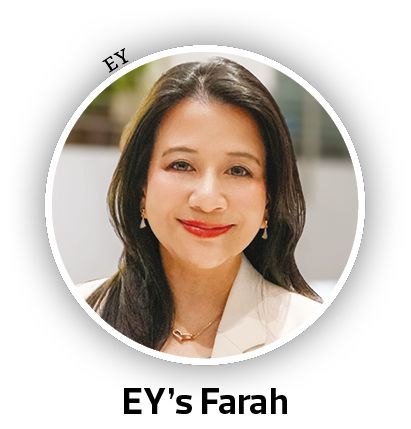
There appear to already be results to show for it. Citing figures from the Inland Revenue Board (LHDN), Ernst & Young Tax Consultants Sdn Bhd’s Malaysia tax managing partner Farah Rosley points out that 52,540 taxpayers voluntarily declared an additional RM4.07 billion in income following the e-invoicing rollout on Aug 1, 2024, resulting in RM1.009 billion in tax payable.
With more than 230,000 taxpayers having adopted e-invoicing, LHDN now has a larger pool of transaction data that can be matched against reported income to identify discrepancies and potential non-compliance.
Additional recommendations from the tax experts include:
- A single tax identification number (TIN) covering direct and indirect taxes, allowing LHDN and the Royal Malaysian Customs Department to see taxpayer activity across both systems. E-invoicing information can be checked against tax returns, payroll filings, customs declarations, SST records and withholding-tax obligations to identify inconsistencies.
- Taxpayers overclaiming personal relief without supporting documents is another area that better data can uncover, while the e-invoice Special Voluntary Disclosure Programme gives taxpayers a chance to correct omissions voluntarily.
Grant Thornton’s Chow says the government could offer incentives or concessions and waive penalties for errors and mistakes to encourage voluntary e-invoice adoption while helping businesses absorb implementation and compliance costs. Meanwhile, Deloitte’s Sim recommends that the existing RM15,000 deduction cap for secretarial and tax-filing fees be removed so that reasonable costs of complying with e-invoicing, SST, transfer pricing and other filing obligations are fully deductible.
4 Addressing cost pressures for middle-income group
Middle-income households are being squeezed by rising housing, healthcare, education and caregiving costs, while salary increases can push them into higher tax brackets without delivering much improvement in real purchasing power. This points particularly at households supporting both children and ageing parents.
Deloitte’s Sim says the tax structure itself may need attention. “Rather than introducing tax relief specifically for the M40 group, this group needs tax bands that keep pace with incomes and living costs,” she adds. For the year of assessment 2025 (YA2025), resident individuals pay 19% on chargeable income of RM70,001 to RM100,000, before the marginal rate jumps to 25% for income above RM100,000 up to RM400,000.
The tax experts’ suggestions:
- Reviewing tax brackets and thresholds, with several experts favouring widening the 19% band or introducing an intermediate rate between 19% and 25% to soften the jump once chargeable income exceeds RM100,000.
- Updating tax relief. PwC’s Chia notes that the basic personal relief of RM9,000 has been unchanged since YA2010. He says even a modest increase would support disposable income without adding complexity, arguing that “adding more category-specific relief may not be the best answer”. Separately, Grant Thornton’s Chow proposes reintroducing a special middle-income personal relief of RM3,000, compared with the RM2,000 relief introduced in 2015.
- Broaden existing relief. Deloitte’s Sim proposes replacing narrowly prescribed expenses with broader purpose-based categories covering healthcare and well-being, education and skills, family and caregiving, retirement and financial resilience, and sustainable living. One option is an overall relief ceiling of RM25,000 to RM30,000, with taxpayers free to allocate claims according to their circumstances.
Similarly, EY’s Farah proposes consolidating training, digital learning resources, subscriptions, certifications and skills development under a broader “personal development relief”, while several other experts advocate for stronger relief for childcare, eldercare and skills development.
5 Incentives for growth-targeted industries
“The government’s investment strategy focuses on sectors that can generate high-value jobs, deepen local supply chains and strengthen Malaysia’s position in global value chains,” notes KPMG’s Soh.
The tax experts suggest that qualifying manufacturing projects under the New Incentive Framework receive either a special tax rate or investment tax allowance. There should also be enhancements for tax deductions or grants for employee training, upskilling and reskilling, alongside support for automation, research and development, commercialisation and supplier certification, they say.
6 Easing SMEs’ burden
With tariff uncertainty weighing on exporters, the tax experts expect targeted, temporary support to help businesses adjust rather than broad subsidies dished out to the small and medium enterprise (SME) segment. Measures could include export-market diversification grants, automation incentives, SME financing and credit guarantees, working-capital and trade-finance support, product testing and origin verification, faster tax refunds and assistance with supply chain restructuring.
Deloitte’s Sim says more flexible tax instalments could be considered in genuine hardship cases, and argues against another blanket loan moratorium. PwC’s Chia, meanwhile, points to clearer mergers and acquisition tax rules, including tax-neutral treatment for qualifying corporate reorganisations.
Sim also proposes to have the Stamp Act 1949 and its First Schedule reviewed to remove obsolete categories and overlapping provisions, as well as relief for “double tax” situations such as intra-group financing. She suggests pre-filing clarification for complex instruments and proportionate penalties for reasonable errors.
Save by subscribing to us for your print and/or digital copy.
P/S: The Edge is also available on Apple's App Store and Android's Google Play.