

This article first appeared in The Edge Malaysia Weekly on September 28, 2026 - October 4, 2026
THE rapid growth in the “buy now, pay later” (BNPL) space in Malaysia is an indication of its fast-growing popularity among consumers in the country.
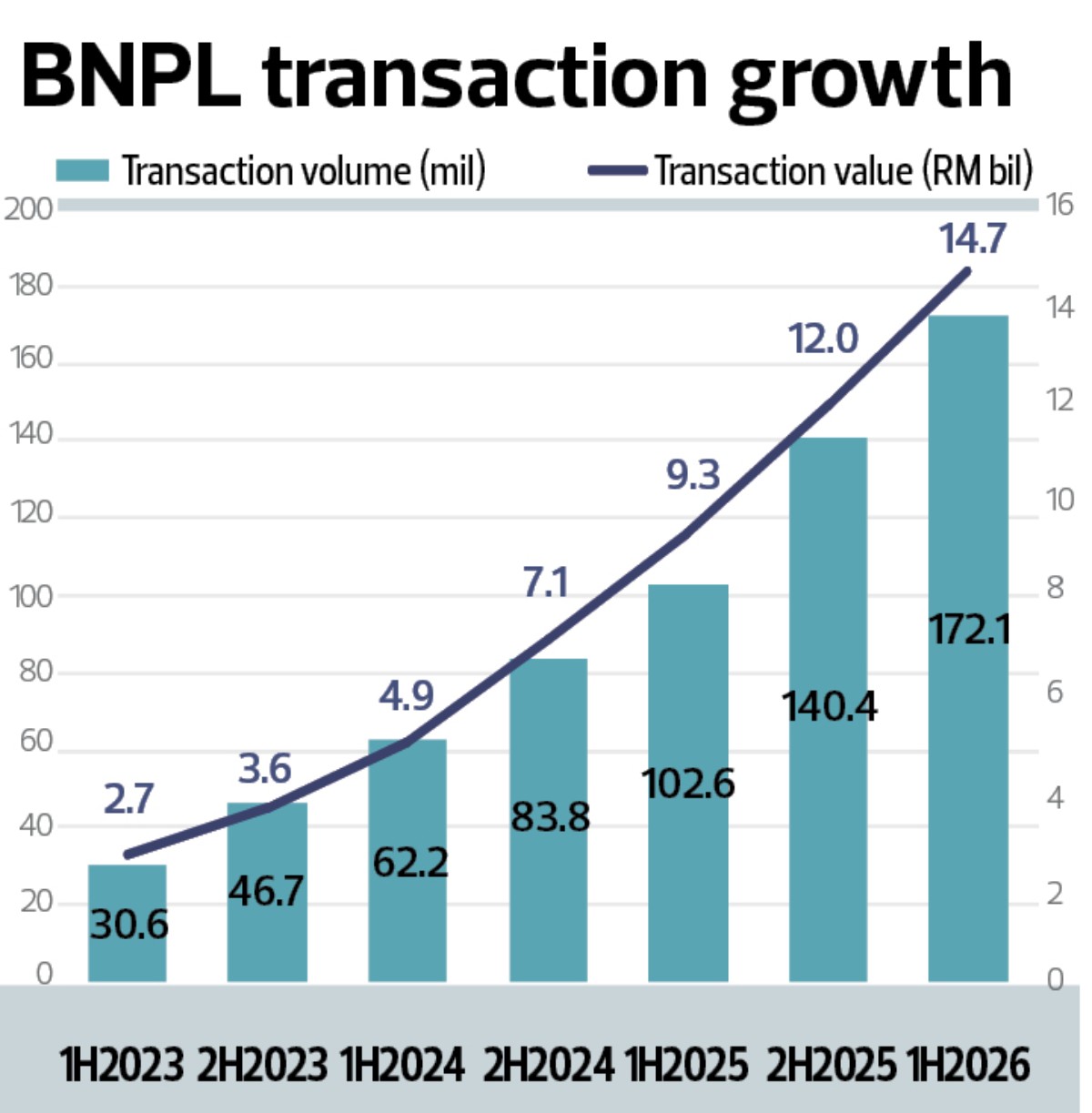
Based on data furnished by the Consumer Credit Commission (CCC), the total number of BNPL transactions made during the first half of the year (1H2026) hit a staggering 172.1 million, up 22.6% from 2H2025. Meanwhile, transaction value reached RM14.7 billion for 1H2026, some 22.5% higher from 2H2025.
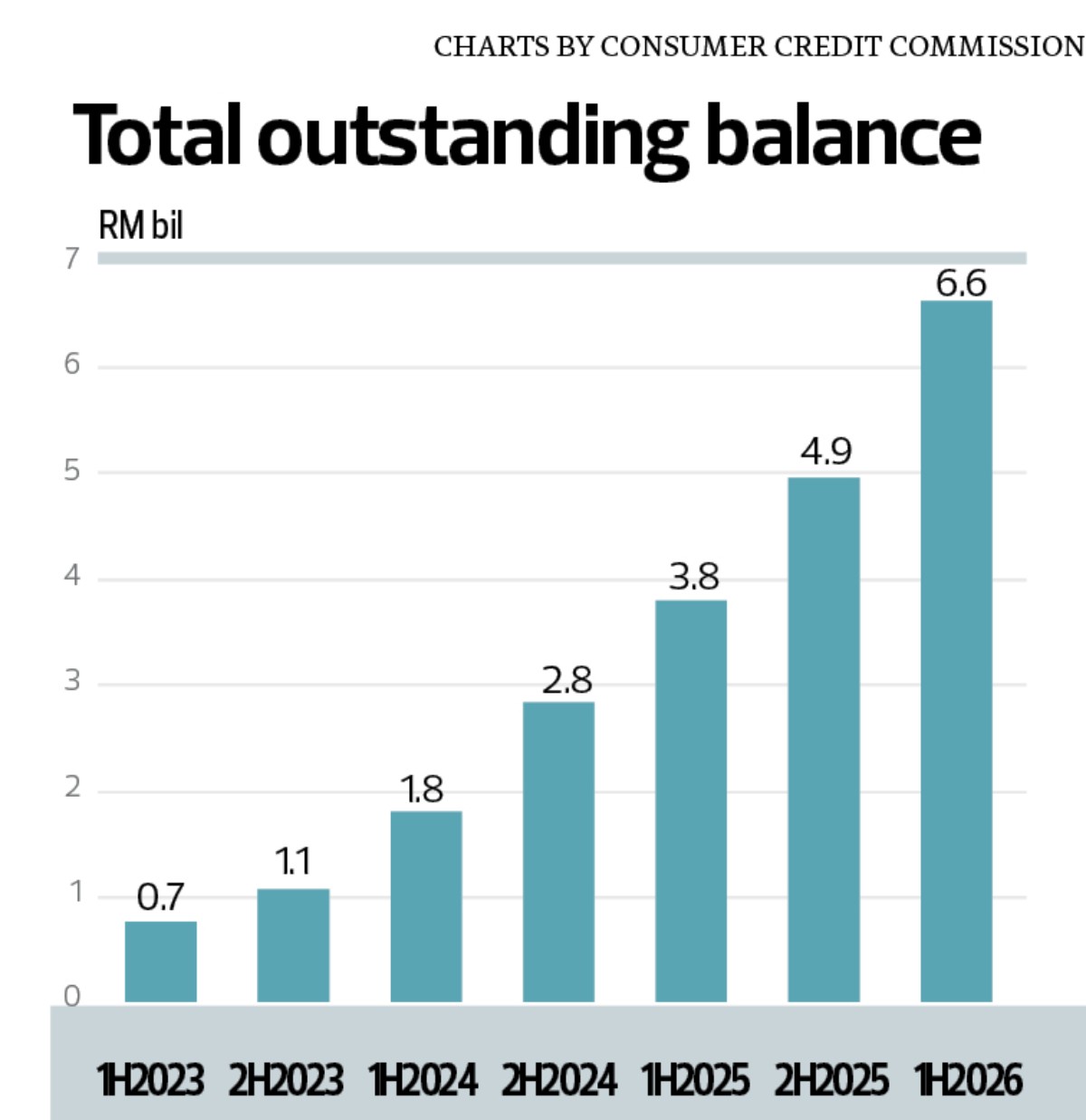
BNPL’s total outstanding balance grew to RM6.6 billion as at end-June 2026, some RM1.7 billion more than 2H2025. At RM6.6 billion, it accounted for 0.4% of total household debt.
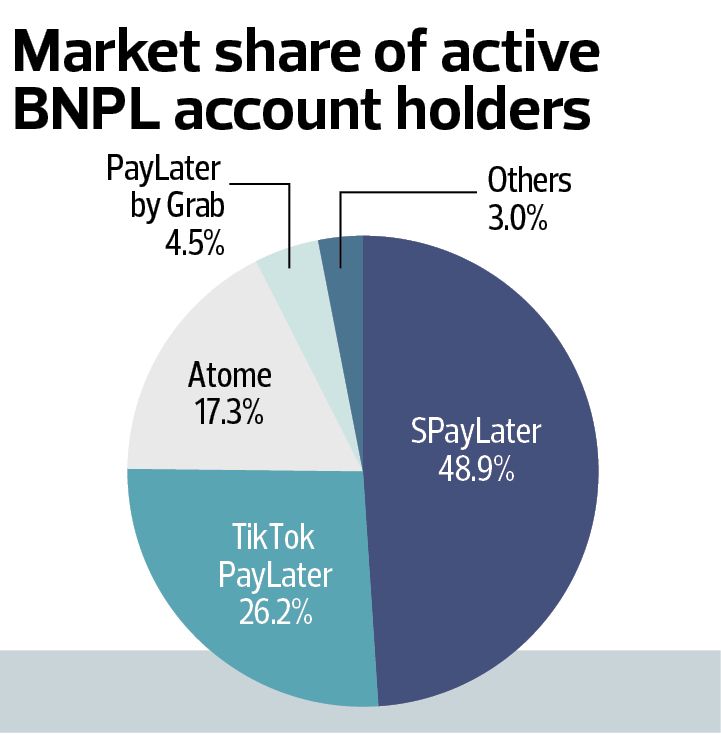
In this fairly new credit scheme in Malaysia, the key players in the industry have also changed. TikTok PayLater, one of the later entrants to the market, has grown rapidly, eating into the market share of SPayLater, Atome and PayLater by Grab in less than a year.
The top three BNPL operators in Malaysia are now SPayLater with a 48.9% market share, TikTok PayLater with 26.2% and Atome with 17.3%. PayLater by Grab has fallen to fourth place, with just 4.5% of the market. Together, these four operators command close to 97% of the market comprising 16 BNPL providers.
The BNPL landscape is also undergoing consolidation, with Grab Holdings recently announcing plans to acquire a controlling 60% stake in Atome Financial for US$1.49 billion (RM6 billion).
Anecdotal evidence indicates that the industry is benefiting not just from organic growth but also from the shifting of consumer preferences from moneylenders or even banks, because of the convenience BNPL offers.
“We should not prejudge whether this is actually going to be a significant risk or a bad thing. When we did the survey previously, we saw that the ticket items purchased were around RM80 to RM90. This shows that people are using it for small purchases. They are also using it for essentials, not discretionary items. So, BNPL is increasingly becoming part and parcel of their cash flow management,” says CCC executive chairman Abu Hassan Alshari Yahaya, highlighting how BNPL is becoming more “mainstream” for small purchases, especially among those aged 30 and below.
He believes that BNPL providers create options for consumers among different types of credit facilities. He adds that as a regulator, the CCC wants to be neutral about consumers’ preferences in how they choose to use the BNPL credit.
“What is important here is that we want the credit providers to be responsible in terms of how they actually undertake their activities,” he says.
The CCC, which commenced operations in March this year, is the statutory body responsible for regulating the non-bank consumer credit industry, which includes BNPL providers. It derives its powers from the Consumer Credit Act 2025 (CCA).
One of the CCA’s requirements is for BNPL operators to conduct affordability assessments to ensure, to the best of their ability, that credit is not extended to those who cannot afford to borrow.
“Although BNPL only comprises 0.4% of the Malaysian household indebtedness, with more people using BNPL now, we need to be pre-emptive on how we are actually managing this,” Abu Hassan says, emphasising the importance of the affordability assessments.
He says the CCC recognises that BNPL is an industry where decisions on whether to extend credit need to be made quickly. As such, operators are given the flexibility to use alternative models to assess a customer’s creditworthiness, rather than relying solely on conventional assessment methods.
“So, we have issued a guideline for alternative models which states that the BNPL providers have to be accountable for it. They must have the capability internally to be able to validate and continuously revalidate this model, as to whether [they are] able to manage the risk of the credit.
“This is actually evolving, and we are not stopping them from using it. They just need to prove to us that that model actually works for them,” he explains.
With BNPL providers now under the CCC’s regulatory purview, the commission has, since June, introduced Authorisation Standards and Conduct Standards setting out the minimum requirements for professionalism, integrity, responsible conduct and fair treatment of consumers that operators must meet to be licensed or registered under the CCA. This policy document also applies to leasing and factoring companies, debt collection agencies, impaired loan buyers and financial counselling and debt management agencies.
Another noteworthy requirement for BNPL operators is that they must consider hardship relief for consumers facing financial difficulties who seek such assistance.
Abu Hassan is quick to point out that this does not mean BNPL operators are required to provide relief to the creditor. Rather, they must make an informed assessment of whether it is justified to restructure or reschedule the loan, or even reduce the interest penalty.
“It is a requirement in the law, and not just based on goodwill that they have to consider it. If they are not seriously considering it, that is where the regulator would come in to see if they have provided due consideration to make a proper assessment of the situation,” he explains.
Another significant change for the industry is that BNPL operators will also soon be required to submit consumer lending and repayment reports to a credit rating agency of their choice.
While some may see these new requirements as potentially restricting access to credit for underserved consumers who may need it, Abu Hassan says that they should instead be viewed positively. He says that it is actually an opportunity for credit consumers to build good credit history. Individuals who may be just launching into the workforce could already have a positive credit history if they have been using BNPL responsibly. This would help these individuals when they eventually seek financing from a bank to purchase big-ticket items such as a house or car.
“Those who haven’t been very good at repaying their loans may be affected by this, but that is the whole point. People must be responsible when they borrow, they must pay it back. Similarly, we want to make sure that credit providers are not reckless in terms of how they carry out their lending operations,” says Abu Hassan.
He is hopeful that better credit information on borrowers in the ecosystem will incentivise consumers to use credit more responsibly, while encouraging lenders to adopt more responsible lending practices.
Read also: Save by subscribing to us for
your print and/or
digital copy. P/S: The Edge is also available on
Apple's App Store and
Android's Google Play.
Cover Story 2: Credit under watch