

This article first appeared in The Edge Malaysia Weekly on September 21, 2026 - September 27, 2026
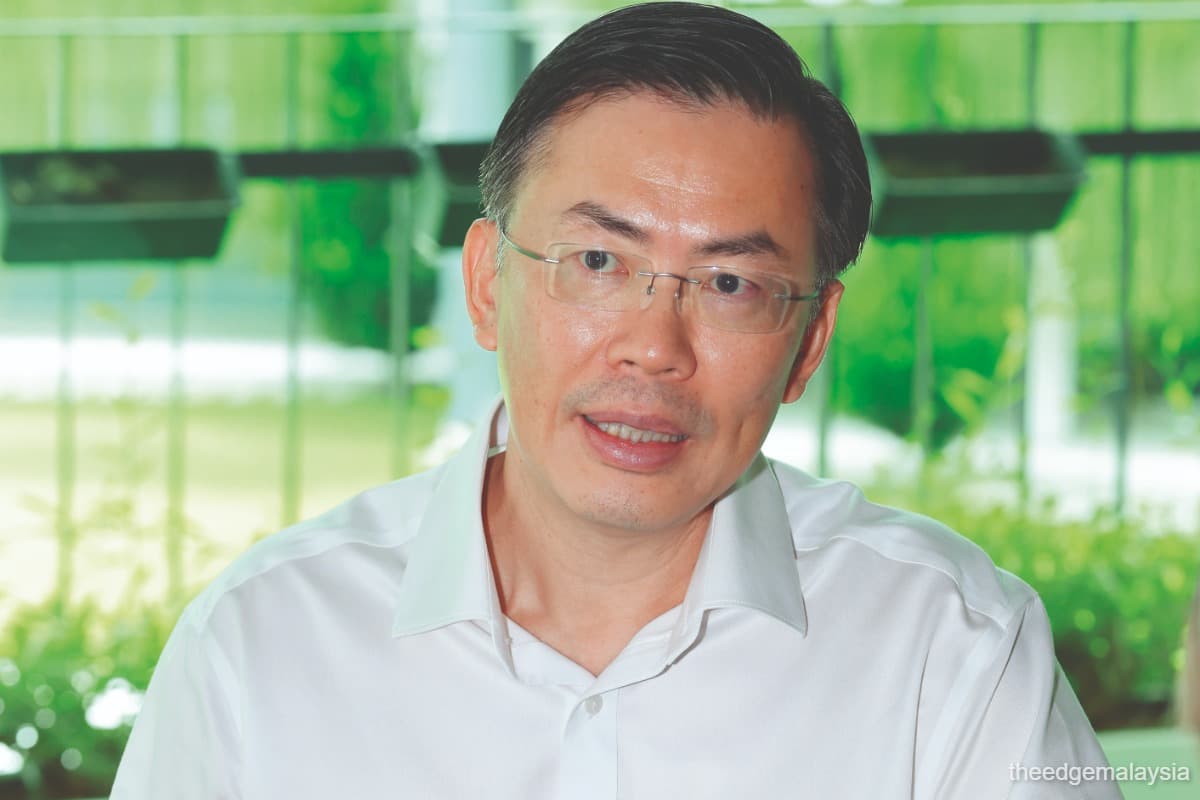
FOR Datuk Chu Jenn Weng, solving Malaysia’s talent shortage in the technology sector means taking steps long before graduates enter the workforce.
That conviction led ViTrox Corp Bhd (KL:VITROX) to build an education arm designed to bridge the gap between classroom learning and industry needs, giving students early exposure to real-world manufacturing problems, advanced equipment and working engineers.
Established in 2020, the initiative was part of the ViTrox co-founders’ broader ambition to build a technology ecosystem around the group’s industrial base in Batu Kawan, Penang, bringing together talent, capital and industry.
ViTrox College officially commenced operations in February 2023. It is registered with the Ministry of Higher Education (MoHE) and offers programmes accredited by the Malaysian Qualifications Agency (MQA) and the relevant professional bodies, including the Board of Engineers Malaysia (BEM) and the Malaysia Board of Technologists (MBOT).
The education arm’s activities extend beyond conventional higher education. Through ViTrox Technical Academy Sdn Bhd, the group provides technical and vocational education, while its collaboration with Khazanah Nasional Bhd offers the K-Youth Development Training programme for SPM leavers and unemployed individuals.
ViTrox also provides technical and soft-skills training for working adults. More than 2,000 students have completed its academic and Technical and Vocational Education and Training (TVET) programmes to date, according to Chu, the company’s managing director and group CEO.
In collaboration with UCSI University, ViTrox College currently offers a franchise degree programme in mechatronics engineering. It is also working with local public universities, such as Universiti Sains Malaysia (USM), on applications to MoHE to also offer franchise degrees in electrical and electronics engineering and computer science.
But the model is deliberately different from that used in conventional tertiary education. From their first year, students are exposed to ViTrox’s engineering environment, working alongside engineers and gaining hands-on experience with the equipment and technologies used in industry.
“We want to ensure that when they graduate, they already have adequate and relevant working experience,” Chu tells The Edge in an interview.
The aim is to make industrial exposure part of the learning process, rather than something students encounter only after graduation.
Each student is assigned three mentors: an academic mentor, an industry mentor and a life mentor. Together, they cover academic development, an understanding of the workplace and broader personal growth.
For Chu, technical knowledge alone is increasingly insufficient, particularly as artificial intelligence (AI) makes information more accessible. “Knowledge is almost free in the AI era. What is important is learning, curiosity and human values,” he stresses.
The emphasis is therefore not simply on training students for a particular job. ViTrox wants them to develop the ability to keep learning, adapt, innovate and apply their knowledge to new problems.
Students have access to innovation facilities, including a RM60 million innovation laboratory where they can work with advanced equipment and technologies. The group also operates a RM1 million maker space designed to introduce younger students, from as early as primary school, to areas such as robotics, cameras, AI and automation.
The idea is to give students access to facilities that would otherwise be difficult for a conventional educational institution to replicate, while allowing them to learn in an environment closely connected to an operating technology company.
More importantly, student life is closely integrated with the wider ViTrox environment. Students interact with working professionals not only through their studies, but also through activities such as voluntary work, sports and corporate training. Through these day-to-day interactions, they develop essential life skills, learning how to work, live and communicate with others well before they enter the workforce.
Opening another route to technical careers
ViTrox’s education initiative also extends beyond conventional academic pathways. Through the collaboration with Khazanah, the group provides training opportunities for students from underprivileged backgrounds, including those who may have struggled academically and would otherwise have found it difficult to pursue further education.
Specifically, ViTrox TVET is a six-month, fully sponsored “college-in-industry” programme aimed at SPM leavers and designed to equip them with semiconductor-related technical skills. Participants receive a monthly allowance of RM1,700 while undergoing practical training in an industrial environment.
Chu describes the programme as a second route to technical careers. “They stay two months at ViTrox. We train them, we mould them, we discipline them so that they are ready and competent to be placed in the industry,” he says.
Those who perform well can subsequently be hired by companies, while participants with higher aspirations can continue their studies through TVET or pursue Malaysian Skills Certificate (SKM) qualifications.
For those who enter the workforce, the programme provides a pathway to technician roles, with opportunities to increase their earnings through overtime as they gain experience. About 500 students graduated from the programme last year, with the number expected to rise to 600 this year, says Chu.
For him, the value of the programme goes beyond technical training. “It’s very touching,” he says, recalling how students who once struggled with discipline issues have gone on to find a clearer path in life.
“We have this environment that helps to transform them and get them to see what is possible because they come from a different environment where certain things are normal for them, and they never see other parts of the world.”
The programme has helped many of them broaden their horizons and discover possibilities they may not have previously considered, he adds.
Keeping education separate from the listed company
The scale of the ambition, however, comes at a cost.
Chu and his ViTrox co-founders Steven Siaw Kok Tong and Yeoh Shih Hoong plan to eventually spin off the education division as a private entity. The intention is to allow it to pursue its longer-term mission without placing the financial burden of a still-developing education business on the listed company’s shareholders. The education operation remains loss-making and requires substantial upfront investment for infrastructure, programme development and the recruitment and development of teaching staff.
Rather than expecting ViTrox to continually fund those costs, the co-founders intend to support the education arm themselves, together with the foundation. For the co-founders, the initiative is a long-term, not-for-profit mission rather than a conventional commercial venture.
Chu and his co-founders have sold some of their shares in ViTrox. They disposed of RM442.29 million worth of shares, based on the disclosed prices of RM4.30, RM5.328 and RM8.531, between March and August.
Following the disposals, Chu now has a 24.65% stake in ViTrox, while Siaw and Yeoh hold 18.32% and 9.22% respectively. Prominent institutional investors, the Employees Provident Fund and Kumpulan Wang Persaraan (Diperbadankan), have 5.07% and 2.48% respectively.
Chu acknowledges that the investment may take years to generate a financial return, if any. “This needs long-term investment. Just to break even, we will probably need a few more years.”
Any returns generated from the education business would ultimately be channelled back to the foundation to support and further enhance the education mission, he says. That approach effectively separates the commercial objectives of the listed company from the founders’ longer-term ambition to develop Malaysia’s technology talent base.
Scaling up the education ecosystem
The next phase is considerably larger.
The first phase of new education facilities is expected to accommodate about 2,000 students, compared with the current college and university population of roughly 600 students at any one time, says Chu. Over the longer term, he is targeting 15,000 students and about 2,000 graduates a year over a decade.
The curriculum is expected to focus on disciplines closely linked to the technology industry, including IT, advanced semiconductor packaging, engineering, machine vision, AI and robotics, as well as Industry 4.0 and 5.0. It could eventually expand into fields such as business, supply chain management, entrepreneurship and psychology.
The longer-term ambition is to establish ViTrox Institute of Technology, which Chu sees eventually evolving into an industry-driven research university.
Three pillars of a ‘Silicon Valley’ in Malaysia
Education, however, is only one part of Chu’s broader plan for Batu Kawan. The second pillar is capital.
Cambrian Fund, a RM150 million seed and growth fund backed by ViTrox, Khazanah, Southern Capital Group and other industry players, invests in regional start-ups in areas such as AI, machine vision and robotics.
For Chu, the presence of venture capital is crucial to creating a self-reinforcing technology ecosystem. “If companies are going to become unicorns, then all the funds from other areas will come here. That’s the Silicon Valley concept,” he says.
He envisions a future where the interaction between capital, academia and industry becomes commonplace in Batu Kawan. “Very soon you will see in Batu Kawan, venture capitalists talking to students, to professors, on how to develop a new start-up. There will also be a lot of big tech companies here.”
The third pillar is infrastructure.
ViTrox has plans for an innovation park and a larger education hub, including a potential additional 50-acre site. Chu envisions the eventual development as a long-term ecosystem that brings together universities, start-ups, venture capital firms and technology companies.
His thesis is that the three components reinforce one another: industry creates demand and real-world problems; universities and educational institutions develop talent; while venture capitalists provide the funding for new companies to emerge and scale. That is the kind of virtuous cycle that helped technology ecosystems such as Silicon Valley, Shenzhen and Hangzhou develop, he points out.
According to Chu, ViTrox itself provides evidence that world-class technology companies do not necessarily require a workforce drawn from the world’s most prestigious universities.
“Ninety-nine per cent of our talent are all local graduates,” he notes. “These are not graduates from Stanford, MIT … or Tsinghua. But why can they build these kinds of machines and become No 1 or No 2 in the world?”
That is ultimately the Malaysian ambition, says Chu: to create an environment where local talent can build globally competitive technology companies, while giving the next generation the opportunity to do the same.
Save by subscribing to us for your print and/or digital copy.
P/S: The Edge is also available on Apple's App Store and Android's Google Play.