

_0_0_1_0_1_1_2.jpg&w=1920&q=75)
This article first appeared in The Edge Malaysia Weekly on September 14, 2026 - September 20, 2026
UPSTREAM-centric palm oil player Kim Loong Resources Bhd (KL:KMLOONG) has built its reputation as a relatively steady operator in Malaysia’s plantation sector, backed by three commercial mills running efficiently and a productive estate portfolio that consistently outperforms the national average in terms of yield.
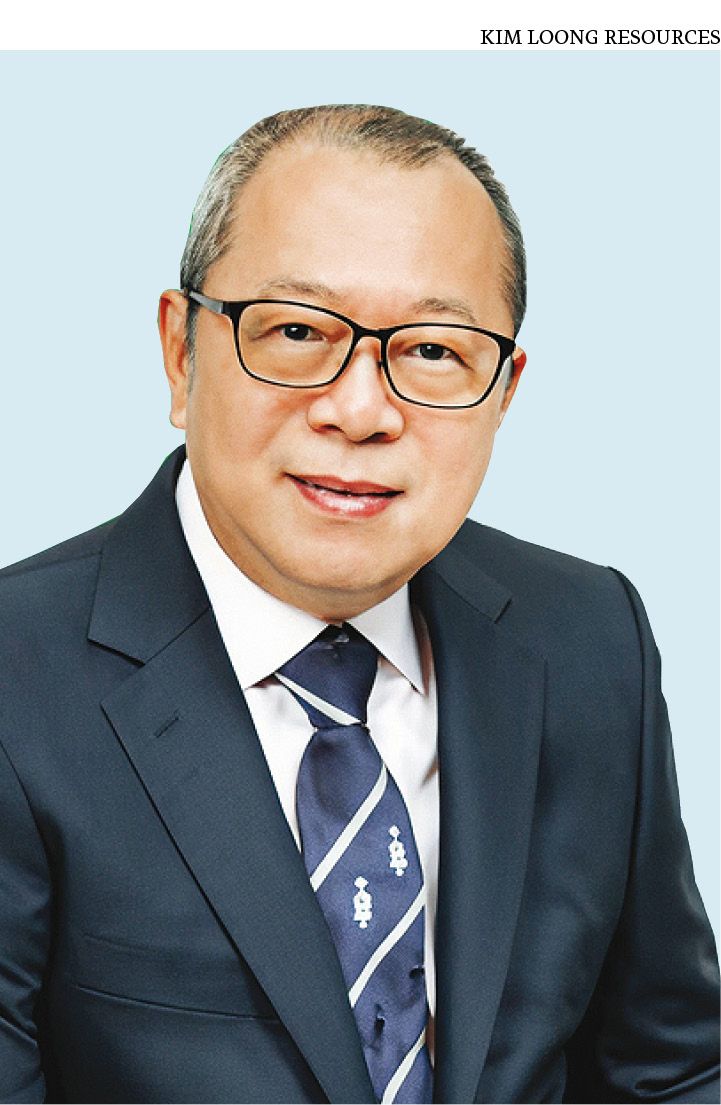
Managing director Gooi Seong Heen sees little reason to change that formula as the group enters its next phase of growth.
Kim Loong is building its fourth commercial palm oil mill in Pantu, Sarawak, with a processing capacity of 60 tonnes of fresh fruit bunches (FFB) per hour. The new mill will expand the group’s total milling capacity by about 20%, from 295 tonnes per hour currently across its three existing mills — one in Johor and two in Sabah.
The mill is expected to begin operations in early 2028 and will tap the abundant crop supply in Sarawak. The group expects its own crop to supply only about 20% of the new mill’s requirements, like its other mills, which source the majority of their FFB from external parties.
Essentially, the Sarawak expansion allows Kim Loong to leverage its milling expertise to tap the abundant third-party FFB supply in the state and capture more value from its operations.
“It took a bit long to convert our land and get the application approved, but now we are making real progress,” says Gooi, referring to the development of the Sarawak operations.
For now, the biggest variable is the weather, which is always the case for a plantation company.
The possibility of an El Niño event is being watched closely, although Gooi says the impact on Kim Loong’s estates is not expected to be immediate. He notes that the first effects of a prolonged dry spell could take several months to feed through to crop production, with the impact potentially becoming more pronounced later.
“For next year’s cropping, the price is the one that’s going to help us,” he says, pointing to the possibility of higher palm oil prices if competing crops such as soybeans in Brazil and other producing regions are hit by adverse weather.
Gooi says rainfall conditions in Sabah and Johor during the first eight months have so far been “not too bad”, and the group is hoping the monsoon will provide sufficient rainfall.
The potential for an El Niño-related supply disruption is seen as a double-edge sword for Kim Loong: its own yields could come under pressure if the dry spell is severe, but tighter global vegetable oil supply could provide support for crude palm oil (CPO) prices.
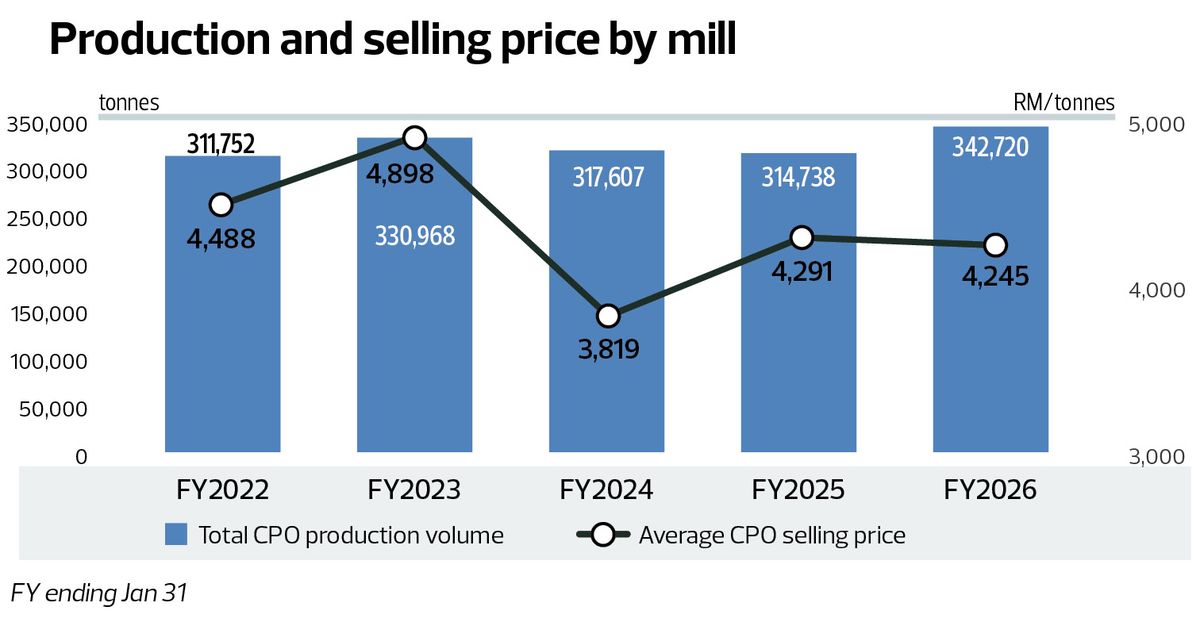
Kim Loong recorded an average CPO selling price of RM4,245 per tonne in the financial year ended Jan 31, 2026 (FY2026), very similar to the RM4,291 level achieved in FY2025. Management has said the plantation business should continue to perform well if CPO prices remain within the RM4,000 to RM4,500 per tonne range.
Seizures of oil palm plantation land in Indonesia could also tighten global supply, particularly if the affected estates face disruptions following changes in ownership and management.
Against this backdrop, Gooi believes CPO prices could reach RM5,000 a tonne.
At the time of writing, the Malaysian Palm Oil Board spot CPO price stood at RM4,658.80.
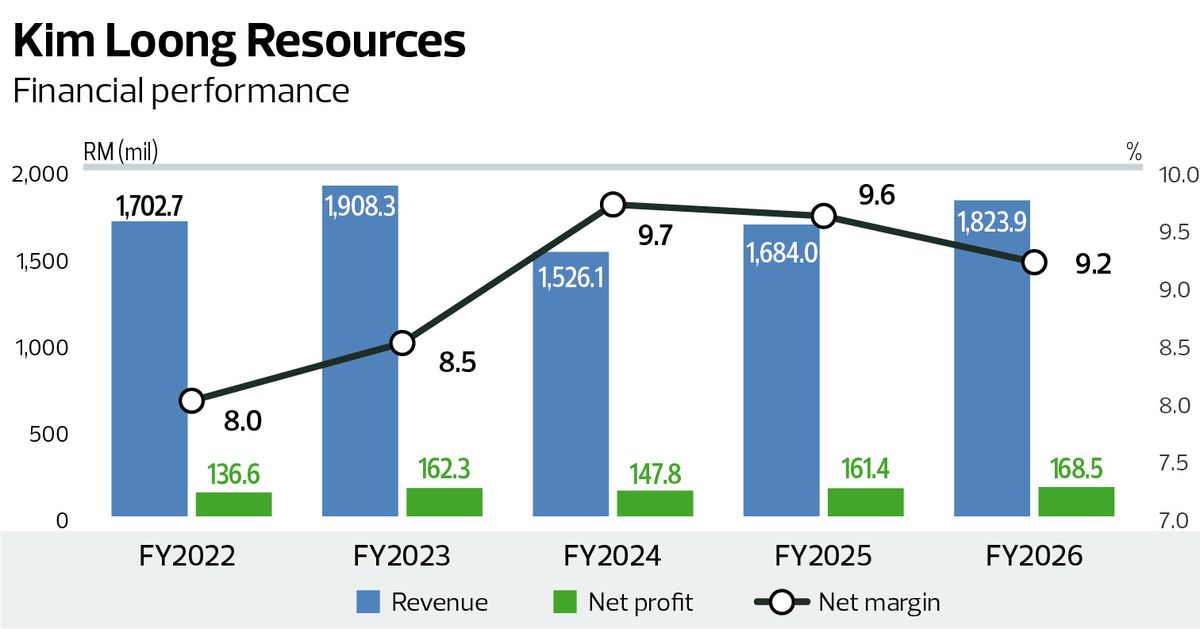
In FY2023, Kim Loong achieved record revenue of RM1.91 billion and a net profit of RM162.26 million, while its average CPO selling price reached RM4,898 per tonne.
Favourable age profile supports estate growth
Looking at Kim Loong’s own oil palm estates, the group does not need to look far for production growth. This is because its estates are entering a favourable phase of the planting cycle, providing the group with an organic growth runway even before the new Sarawak mill comes onstream.
FFB production increased 6.4% year on year to 330,021 tonnes in FY2026, a five-year high, while FFB yield rose to a five-year high of 23.53 tonnes per hectare, compared with an average of about 21 tonnes per hectare over the preceding four years. The group’s yield was also substantially above Malaysia’s national average of 17.77 tonnes per hectare.
Management is targeting another 5% growth in FFB production for FY2027.
As at Jan 31, 2026, the group’s total planted area in Sabah, Sarawak and Johor totalled 15,908ha, with an average palm age of 14 years. About 51% of its trees are in the peak production phase, between seven and 20 years old.
Gooi describes the age profile as “quite a fruitful mix”. He adds, “If the weather is okay, the age profile will still be in a growth mode in terms of production.”
The group nevertheless plans to replant about 700ha in FY2027 to maintain a sustainable age profile over the longer term.
For FY2027, Kim Loong has allocated about RM85 million for capital expenditure, nearly double the RM42.5 million spent in FY2026. The majority will go towards the Pantu mill, while about RM13 million has been earmarked for plantation-related capex, lower than the RM19 million incurred in FY2026.
On fertiliser costs, Kim Loong typically procures its requirement one year ahead, hence it is not subject to cost-spike volatility until at least the end of 2026. However, going into next year, Gooi is unable to offer any guidance on fertiliser costs.
Overall, Gooi is satisfied with the performance of the group’s plantations, crediting Kim Loong’s managers for maintaining high operating standards.
Putting cash pile to work
Elevated CPO prices — averaging more than RM4,000 per tonne in recent years and approaching RM5,000 per tonne in 2022 — have enabled Kim Loong to return substantial cash to shareholders.
Despite its small land bank, the group has paid nearly RM100 million every year to shareholders on average over the past five years, with dividend payout ratios ranging from 82% to 99%.
Even after these distributions, Kim Loong is sitting on a substantial cash pile of RM621.86 million against total borrowings of RM137.85 million, giving it net cash of RM484.02 million as at April 30, 2026.
Gooi says the company has identified large-scale solar (LSS) projects as potentially viable investments. The group is considering participating as an asset owner in the LSS6 programme, with projects of at least 100mw and a battery energy storage system (BESS) component.
The returns appear attractive, according to Gooi.
The identified land is in Peninsular Malaysia, although it is not owned by Kim Loong.
Beyond solar, the group already captures methane from its mills and uses biogas to generate electricity. Its three mills have methane-capture facilities and a total installed biogas generation capacity of 5.4mw for internal consumption. It also sells renewable electricity to the national grid, generating RM12.97 million in revenue in FY2026.
The appeal of renewable energy goes beyond cost savings. As electricity demand from data centres grows in Johor and elsewhere, the ability to participate in green-energy supply could eventually give plantation companies another avenue to monetise land and diversify their earnings.
Beyond renewables, the group is also considering coconut farming.
Gooi says coconut was chosen partly because its biological characteristics are similar to oil palm, making it a natural fit with the group’s plantation expertise, while its end products offer greater exposure to consumer markets. Coconut water and fresh coconuts, for instance, could command higher margins and returns than primary agricultural commodities.
Coconut farming may also face fewer sustainability-related constraints than oil palm, potentially offering the group a less regulated avenue for diversification. However, for now, the coconut initiative remains relatively small, with only a few hundred acres being explored as a research project before the group decides whether to scale it up.
Family-owned, professionally managed
Gooi, 75, has been on the board since 1990. His elder brother Seong Lim, 77, is executive chairman of Kim Loong, while his two younger brothers, Seong Chneh, 71, and Seong Gum, 70, also sit on the board as executive directors.
The third generation of the family has also moved into senior management and director roles within the company, with succession planning already in place to ensure continuity.
While the company remains family-run, continuity is not dependent solely on the next generation of Goois.
“We are a family-run business and will continue to be so, but our senior leadership and staff are equally important,” says Gooi.
Systems and organisational framework have been established to sustain the group over the long term, he adds.
Kim Loong is 63.23% controlled by Sharikat Kim Loong Sdn Bhd, the private vehicle of the Gooi brothers.
The other top 30 shareholders of Kim Loong include Teo Chuan Keng Sdn Bhd, Aliran Insaf (M) Sdn Bhd, Krishnan Chellam and Koperasi Polis DiRaja Malaysia Bhd.
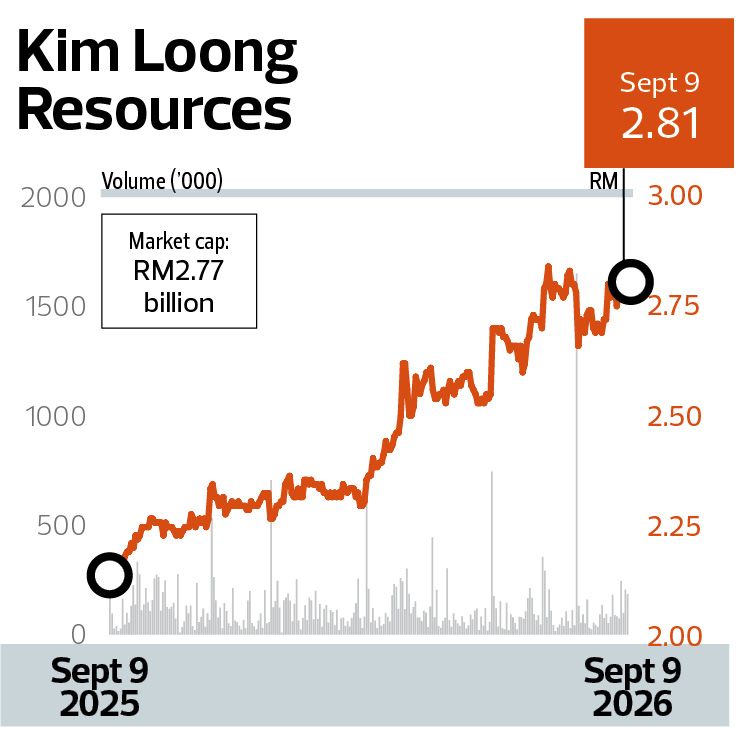
Kim Loong’s share price has gained 23.3% over the past year. At its closing price of RM2.81 last Wednesday — giving the company a market capitalisation of RM2.77 billion — the Johor-based planter is valued at a trailing price-earnings ratio of 15.2 times.
Currently, there are two “buy” and one “hold” ratings on the stock, with target prices ranging from UOB Kay Hian’s RM2.25 to AmInvestment Bank’s RM3.30.
Save by subscribing to us for your print and/or digital copy.
P/S: The Edge is also available on Apple's App Store and Android's Google Play.