

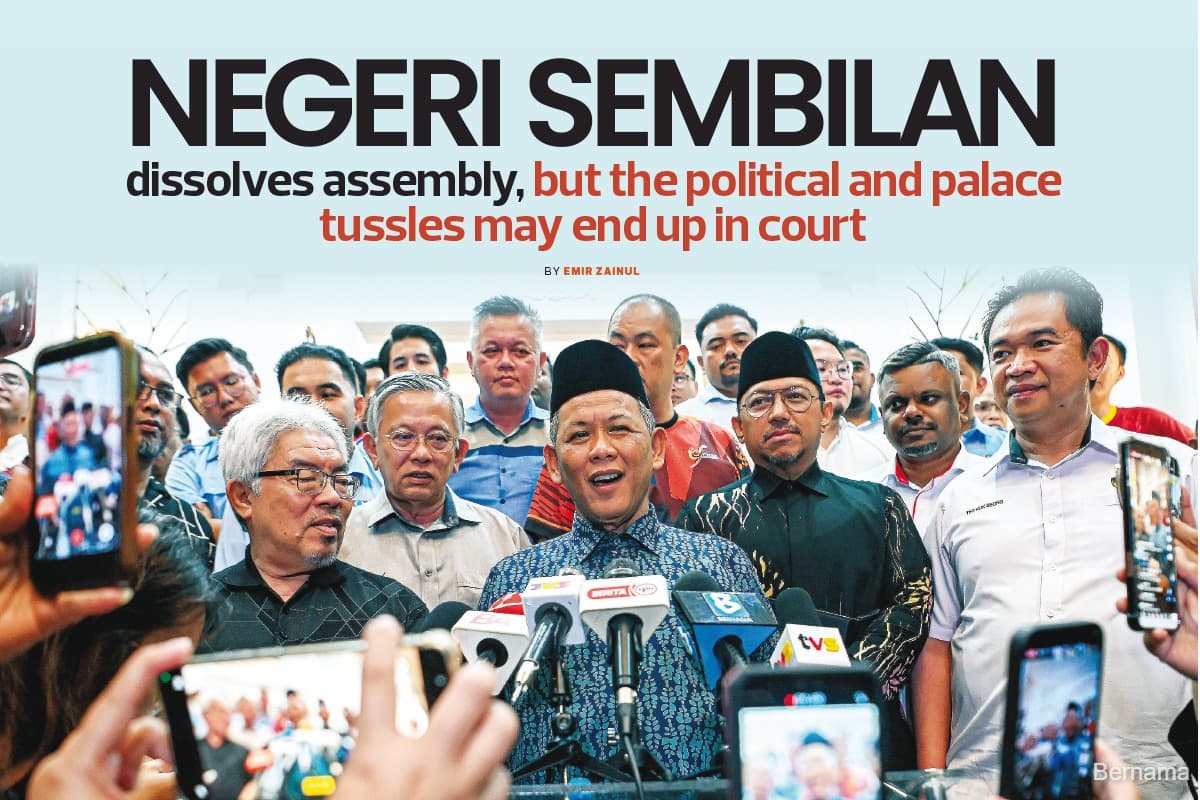
This article first appeared in The Edge Malaysia Weekly on June 8, 2026 - June 14, 2026

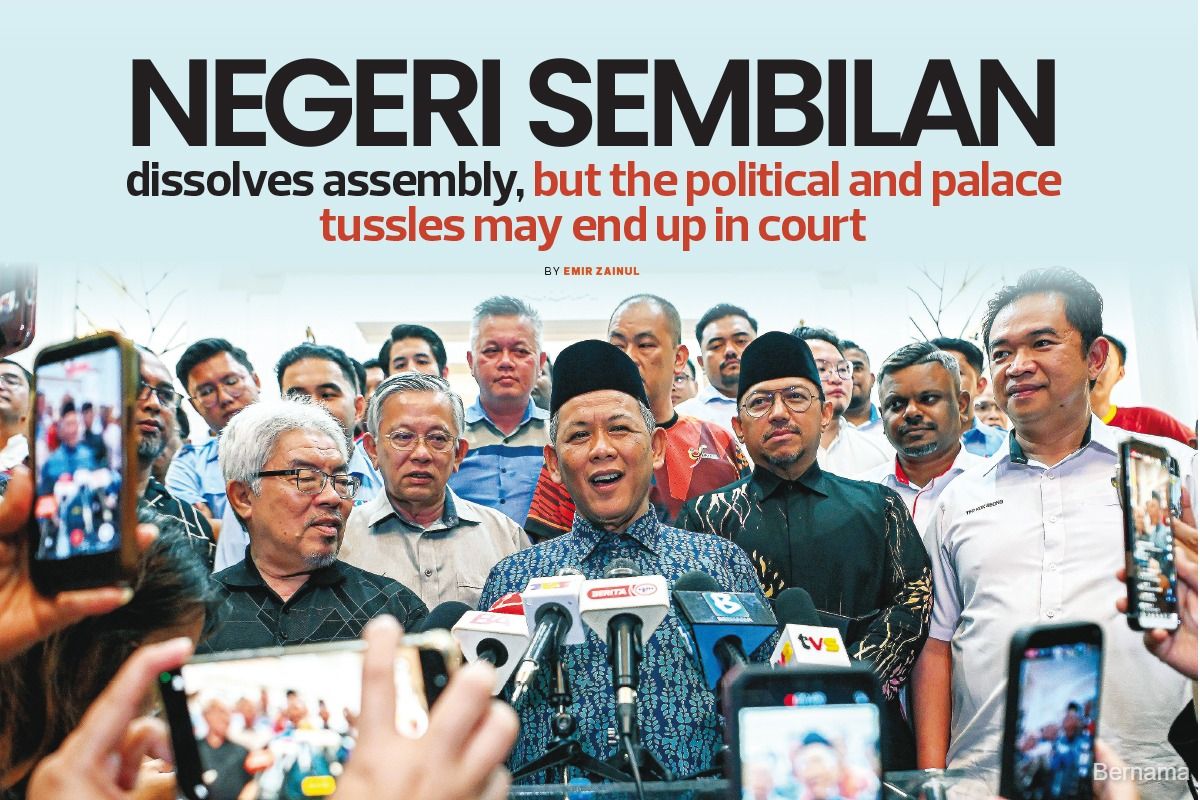
MALAYSIA’S political landscape has seen a few firsts in recent years.
They include:
• A sitting federal government in Malaysia being toppled not through an election but through defections — as in 2018, when Barisan Nasional (BN) was voted out — when a group of Bersatu Members of Parliament (MPs) joined forces with BN/Umno and PAS in the infamous Sheraton Move in February 2020;
• A prime minister (Datuk Seri Ismail Sabri Yaakob) taking office after his predecessor (Tan Sri Muhyiddin Yassin, who became PM following the Sheraton Move) was forced to resign in August 2021 after Umno withdrew its support;
• An MP who is not the leader of a party being appointed PM. Ismail was only a vice-president of Umno. Its president Datuk Seri Zahid Hamidi was on trial on corruption charges, while deputy president Datuk Seri Mohamad Hasan was ineligible, as he was not an MP at the time; and
• Many states not holding their state elections concurrently with the federal parliamentary elections called by Ismail in November 2022. Instead, these six states held their polls concurrently a year later.
In 2023, BN and Pakatan Harapan (PH) extended their unity federal government partnership, formed the previous year after the November 2022 general election. They negotiated seats, avoided multi-cornered fights and focused on preventing PN from building on its GE15 momentum and making further inroads.


One of the six states was Negeri Sembilan, and the strategy proved fairly successful. PH secured 17 of the 36 state assembly seats, followed by BN (14) and PN (five).
The two partners then formed a supermajority state government with 31 assemblymen, well above the minimum 19 required.
The situation today, however, is different. With the dissolution of the Negeri Sembilan state assembly two years ahead of its five-year term, BN and PH are contesting separately while PN is again seeking to expand its footprint, alongside new entrants such as Datuk Seri Rafizi Ramli’s Parti Bersama Malaysia.
Can the incumbents retain their seats in a free-for-all? Negeri Sembilan is the home turf of both Umno deputy president Datuk Seri Mohamad Hasan and DAP secretary-general Anthony Loke. Unlike Johor, however, where Umno is seen as dominant, it could turn out to be a close contest in Negeri Sembilan.
The situation may not be straightforward, as the Malay and Chinese voter bases are shifting at a time when political allegiances could influence sentiment. It will be challenging for any single coalition to secure a simple majority in the state, according to The Edge’s assessment of past election trends.
Big test in Malay-majority seats
Incumbent PH heads into the election with DAP holding 11 seats, followed by PKR (five) and Amanah (one). Among the PH component parties, DAP was the most insistent on calling for Negeri Sembilan to hold early state elections, together with Johor, in the coming months.
That push is supported by DAP’s consistent track record: The 11 seats — all in non-Malay majority areas — have been held by the party for three terms since 2013. Prior to that, in 2008, it held 10 of those seats, compared with just two in 2004.
In 2023, DAP won the seats with comfortable margins of between 22.97% and 88.78%. The smallest margin was seen in Chennah, which was won by incumbent Loke.
PKR is under a lot more stress. It traditionally contests 12 seats in the state, of which 10 are Malay-majority seats.
Of the 12, PKR will fight in four traditional Umno seats (Sungai Lui, Jeram Padang, Juasseh and Linggi), as well as three seats that PN managed to wrest in a straight contest in 2023 (Bagan Pinang, Labu and Gemas).
Among the remaining five where PKR is incumbent, two were won with slim margins of 2.21% (Ampangan) and 9.49% (Pilah).
For Amanah, which was given just two seats to contest in 2023, this election could go either way. It represents an opportunity for the party — a breakaway from PAS — to boost its relevance (it won three of seven seats contested in 2018), but those victories came with margins of between 6.3% and 15%.
Against this backdrop sits Umno, which holds all 14 BN seats in the state.
A deeper look shows that eight of those seats were won with margins of under 10% in straight fights against PN, making them most vulnerable in multi-cornered contests, as PH supporters may swing back to their own candidates after backing Umno in 2023. Nonetheless, Umno’s confidence rests on the weaknesses faced by its main rival, PN.
After a strong showing in 2023, with five seats won and 11 lost by narrow margins, PN’s tempo has been disrupted by cracks in Bersatu that extended into disputes with its biggest partner, PAS.
Internal issues within Bersatu and PN, which can be described as “retak menanti belah” (on the verge of breaking apart), have persisted for at least six months, with no clear resolution in sight. It is understood that PAS leadership will hold a special meeting on June 8 to finalise its position on its partnership with Bersatu.
If PN splits, Negeri Sembilan — alongside Johor — will be a litmus test of whether PAS can on its own win over a less conservative Malay electorate, having previously relied on the more moderate image projected by Bersatu and PN in areas where its presence is weak. In 2023, PAS won three of the 13 seats it contested while Bersatu won two of 17.
Will MCA stage a comeback?
Even if Umno delivers as many as 15 seats — the number it won in 2018 — it would still fall short of forming the state government. Outside Malay-majority areas, BN’s prospects of winning additional seats rest on MCA’s ability to tap current voter sentiment and stage a comeback in seats long dominated by DAP.
Historically, MCA typically contests 10 seats in Negeri Sembilan. Under unity government partnership negotiations, however, it fielded no candidates in 2023, as the seats were allocated to PH. The last time MCA had representation in the state assembly was in 2008-2013, when it held just one of the 10 seats it contested — Chennah (now Loke’s seat), which was won by Siow Chen Pin with a majority of 18.9%. In 2004, MCA won eight of the 10 seats it contested.
The partnership between MCA and Umno appears to be on good terms, as seen in how Negeri Sembilan MCA councillors resigned with immediate effect, following Umno’s move against PH Menteri Besar Datuk Seri Aminuddin Harun in April.
MCA will, nonetheless, “face a real challenge to win seats” in Negeri Sembilan, says University of Nottingham Asia Research Institute Malaysia honorary research associate Bridget Welsh.
“For now, DAP has more of an advantage in Negeri Sembilan than in Johor,” the political analyst tells The Edge. “Chinese voters will also have to decide whether they want representation in the state government, recognising that the real challenge will be in the Malay-majority seats.”
That will shape MCA’s ability to deliver, alongside MIC, which had won one seat (Jeram Padang) consistently since 2008 up until 2023, when it, too, did not contest. MIC, which previously expressed plans to join PN, has now said it will remain in BN for now.
Bersama, PAS wildcards
There are also other splinter parties that could eat into PH’s and PN’s traditional support base.
For example, DAP’s showing “will depend on whether Bersama contests”, says Welsh.
Just six months ago, the Sabah state polls saw DAP lose all eight seats that it contested because of a swing in Chinese voter support away from PH towards other parties (in Sabah’s case, Parti Warisan). MCA, too, lost both seats that it contested in the Borneo state.
Bersama, led by former PKR deputy president Rafizi, has expressed interest in contesting in Johor and will continue its tour of Peninsular Malaysia states, including Negeri Sembilan, to drum up support, with the aim of scraping away fence-sitters from PKR.
Meanwhile, former Bersatu deputy president Datuk Seri Hamzah Zainuddin is also planning his next move after taking away more than a dozen MPs from his former party, following a rift with party president Muhyiddin. It is unclear whether Hamzah’s camp will rush into state elections — unlike Rafizi, he has yet to establish a new political platform.
“The coalition dynamics will make it challenging for voters, as they are not sure of who they are voting for in a potential alliance,” says Welsh.
“Also, the Undang issue resonates differently locally among different communities. It will be interesting to see how it affects Malay support for different parties.”
This refers to the ongoing dispute among Negeri Sembilan royals and chieftains over the alleged sacking of the current Yang di-Pertuan Besar Tuanku Muhriz Tuanku Munawir, as well as the appointment of his successor Tunku Nadzaruddin Tuanku Jaafar by the four chieftains (Undang Yang Empat).
PKR’s Aminuddin previously said Tuanku Muhriz had decreed that he remain as menteri besar despite Umno’s attempted move to unseat him.
Given the fluid political situation, who leads the new government will depend on the new form of partnership, not discounting how politics are intertwined with the royal and customary system unique to Negeri Sembilan.
Another wildcard emerged on June 5 when PAS president Tan Sri Abdul Hadi Awang confirmed he had been informed of a meeting between party leaders and Umno on June 4.
When Umno pulled support for PKR’s Aminuddin, PAS assemblymen backed a move for BN to form a new government while those from Bersatu later reversed their position and decided to remain in opposition “to ensure stability in the state”.
Is this a hint of things to come in Negeri Sembilan after the election? Everything depends on how many seats each of the key blocs — PH, BN/Umno and PN/PAS/Bersatu — wins in what is expected to be a hotly contested election set against the backdrop of an ongoing palace tussle.
Read also:
Negeri Sembilan: Election War Drums Beating Amid Palace Tussle: Negeri Sembilan dissolves assembly, but the political and palace tussles may end up in court
Palace drama, cracks in PH/BN alliance set stage for Negeri Sembilan showdown
Politics, palace and power: The road to dissolution
Negeri Sembilan: Election War Drums Beating Amid Palace Tussle: Negeri Sembilan state seat composition over the years
Save by subscribing to us for your print and/or digital copy.
P/S: The Edge is also available on Apple's App Store and Android's Google Play.