

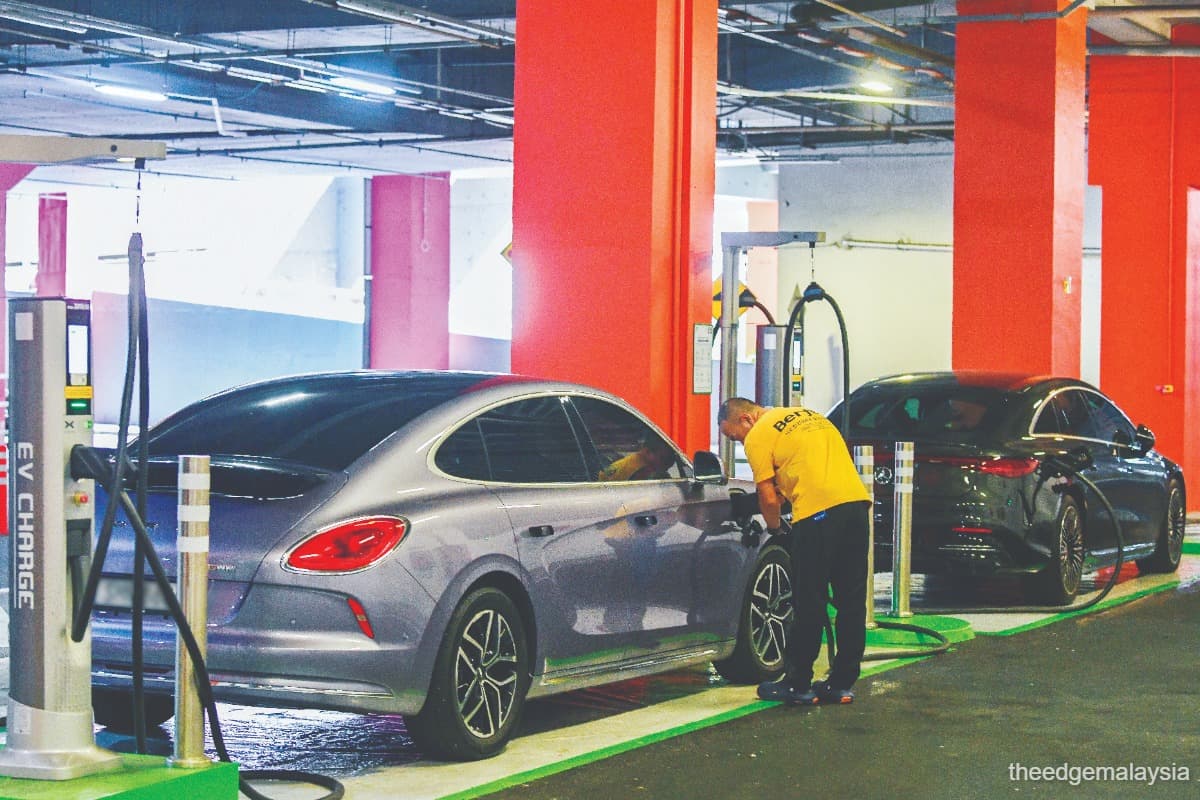
This article first appeared in The Edge Malaysia Weekly on June 8, 2026 - June 14, 2026
THE country’s electric vehicle (EV) adoption rate could slow significantly under recently tightened investment regulations for new foreign EV entrants, even though overall sales are still expected to grow, owing to the low-base effect.
“Consumers who are comfortable owning a second vehicle may still opt for an EV. In addition, there are attractive sales incentives in the market, so we will continue to see growth in EV sales.
“The issue is that adoption may not be as strong or as rapid as policymakers hope,” says an automotive analyst, who notes that higher maintenance costs and lower resale values remain key barriers to EV ownership.
TA Securities observes that consumer demand in the mass-market EV segment remains highly price sensitive amid elevated living costs and cautious discretionary spending.
“As such, limiting the availability of lower priced, imported EVs may narrow consumer choices and slow adoption momentum in the near term, especially as Malaysia’s EV penetration remains relatively low compared with more developed regional markets,” it says in a May 7 note.


Although Proton’s EV rollout has gained encouraging early traction, TA Securities believes broader adoption dynamics in the affordable EV segment remain uncertain.
“This is particularly relevant for entry-level EV offerings targeting Perodua’s mass-market customer base, where affordability and value-for-money considerations continue to play a critical role in purchasing decisions,” it adds.
Malaysia’s EV penetration rate stood at just 3% in 2025, significantly below Singapore’s 45% and Thailand’s 18%. Under the National Energy Transition Roadmap (NETR), EVs are expected to account for an ambitious 20% of new-vehicle sales by 2030, before rising to 80% by 2050.
In the first quarter of 2026, EV sales totalled 13,359 units, after recording 30,848 units in 2025, more than double the 14,766 units in 2024.
Proton’s e.MAS, currently Malaysia’s best-selling EV model, recorded almost 10,000 units in the first four months of the year.
Meanwhile, the overall automotive market continued to reach new highs in 2025, with total industry volume (TIV) rising to 820,752 units, against 816,747 units in 2024. Still, the Malaysian Automotive Association expects the TIV to be lower at 790,000 units in 2026, amid moderating economic growth, rising cost pressures as well as policy changes that could weigh on vehicle affordability.
For the first four months of 2026, TIV rose 2% year on year to 254,318 units, from 250,239 units.
Chinese automotive brands have gained significant traction in Malaysia in recent years. Late last year, TQ Wuling — a partnership between Tan Chong Motor Holdings Bhd (KL:TCHONG) and China’s Wuling — launched the TQ WULING Bingo EV in Malaysia, further intensifying competition in the affordable EV segment.
Read also:
Cover Story: Shifting tone in automotive sector needs delicate balance
Cover Story: A less exciting year expected for auto stocks
Save by subscribing to us for your print and/or digital copy.
P/S: The Edge is also available on Apple's App Store and Android's Google Play.