

This article first appeared in The Edge Malaysia Weekly on May 18, 2026 - May 24, 2026
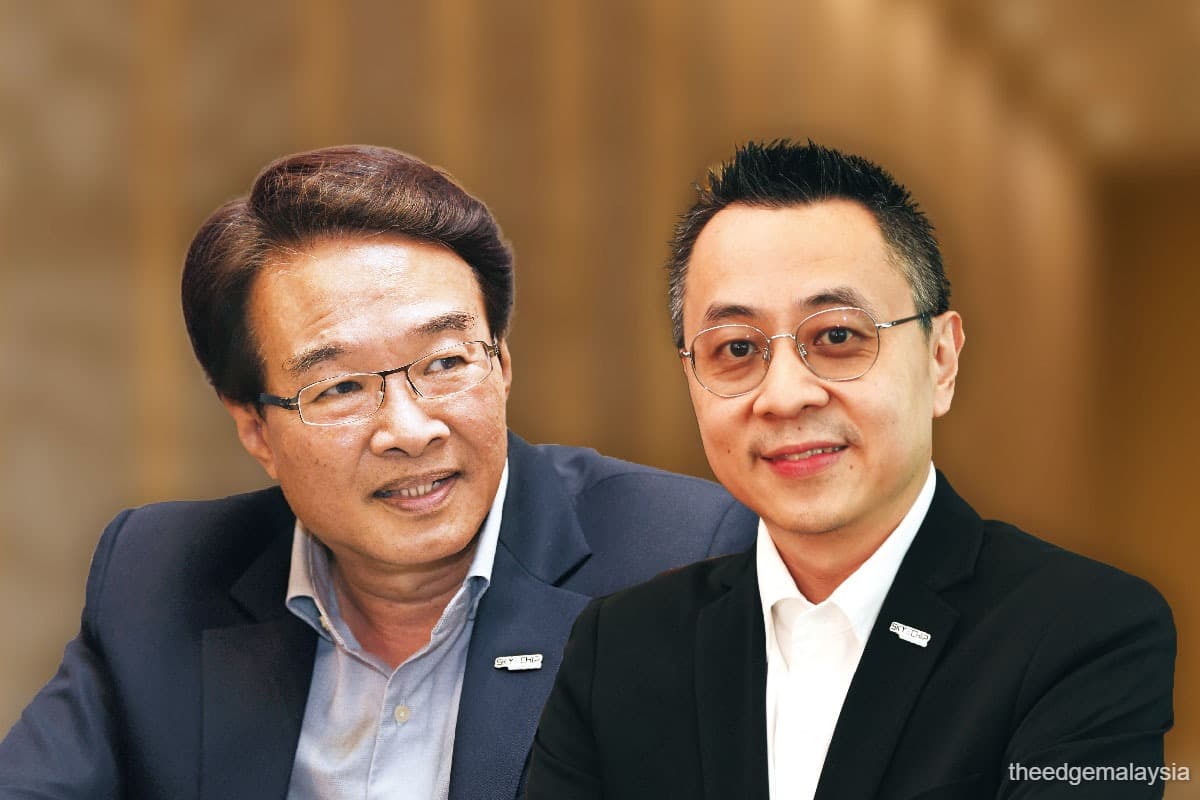
SKYECHIP Bhd co-founder and CEO Datuk Fong Swee Kiang, 63, has more than three decades of experience in the semiconductor industry.
The electrical engineer, who had graduated from Universiti Teknologi Malaysia, worked at Intel Corp for over 20 years before joining Altera Corp as vice-president of research and development. He was a senior director of Broadcom, overseeing the global operation of a US$1 billion division, before starting SkyeChip in 2019.
The following is an excerpt from The Edge’s exclusive interview with Fong.
The Edge: SkyeChip was founded in 2019, yet in a relatively short period, it has emerged as one of Malaysia’s most visible chip design firms and is now heading for a Main Market listing. Could you walk us through the important milestones?
Datuk Fong Swee Kiang: SkyeChip set out to be the ‘Broadcom of Malaysia’, focusing on silicon intellectual property (IP) and silicon products like the custom application-specific integrated circuit (ASIC). In 2020, we secured our first memory interface IP design and custom silicon IPs contract. Subsequently, we initiated the design of coherent network-on-chip (NoC) IP in 2021 and secured our first NoC development contract in 2022. We then expanded into the design and development of custom ASIC in 2023 with two contracts secured.
Last year, SkyeChip joined the Intel Foundry Accelerator IP Alliance and Samsung Foundry CONNECT IP platform. Our group has registered 36 patents, while 77 are pending registration in Malaysia, China and the US.
Why does SkyeChip aspire to be the Broadcom of Malaysia? Why not Nvidia Corp or Advanced Micro Devices Inc (AMD)?
We say we want to become the Broadcom of Malaysia, not the Nvidia of Malaysia, because Broadcom’s model is more practical and complementary. There is no way we can compete head on with Nvidia, AMD or Intel Corp. They have massive ecosystems, patents and market leadership. We are still tiny compared to them.
But Broadcom doesn’t try to become Nvidia either. Instead, it builds technologies that make Nvidia systems operate more efficiently. Nvidia is like Gordon Ramsay — the star chef. You don’t want to have Gordon Ramsay washing vegetables or chopping onions. You want support systems around him so the entire kitchen operates efficiently.
You also said you want SkyeChip to be like J K Rowling, the British author best known for writing the Harry Potter series. Could you elaborate on that analogy?
Anything can be IP as long as you create it and it belongs to you. The J K Rowling analogy is a very good way of explaining the value of IP. Her IP is the story and the characters she created. Once she created Harry Potter, she could sell millions of copies of the book if it became a blockbuster, but the creation cost was incurred only once. After that, the incremental cost is very low — just paper and ink.
It is the same for us at SkyeChip. We spend resources to create the silicon IP. But once it is created, we can license it to three, five or 10 customers. The cost of licensing is negligible. That’s the beauty of the IP model.
And there is another layer to the analogy. J K Rowling’s books eventually became movies. For us, our IP can eventually become a chip.
Talent is your key asset in chip design. How do you compete for and retain engineers?
As at March 31, our total staff strength was 391, including 365 engineers. It’s always about the talent supply. SkyeChip follows Silicon Valley’s model. Rewarding employees with stock options is our way of telling our employees: ‘You don’t have to go overseas to look for greener pastures. You can also build your wealth by working in Malaysia while staying close to your family members.’ This helps with the brain drain situation many countries are facing now.
SkyeChip’s initial public offering consists entirely of new shares, with no offer-for-sale shares put by existing shareholders. How should investors interpret the decision of the co-founders to stay fully invested at this stage?
What we are going to witness in the next 10 years or so is the exponential growth of the artificial intelligence-related industry. This requires a lot of computing power and it will lead to higher demand for high-performance chips, in which SkyeChip is heavily involved. Hence, there’s no reason for us to sell our shares with that positive outlook.
Save by subscribing to us for your print and/or digital copy.
P/S: The Edge is also available on Apple's App Store and Android's Google Play.