

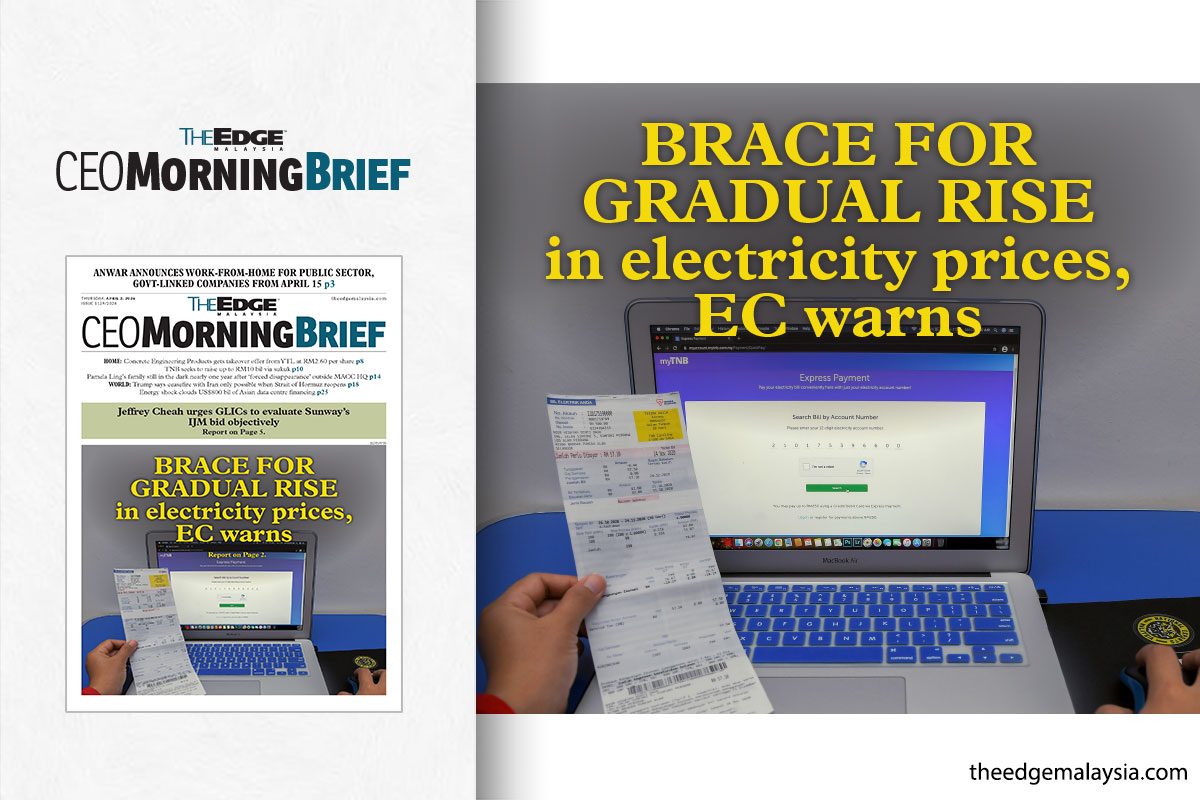
PUTRAJAYA (April 1): Malaysians need to start preparing for higher electricity tariffs this year, the Energy Commission said amid rising generation fuel costs.
The adjustment for higher fuel prices will be gradual under the existing mechanism, though more than eight out of 10 household users will not be affected for now, said the commission’s chief executive officer Siti Safinah Salleh at the annual regulatory review briefing on Wednesday.
Still, “we do have to brace ourselves on the increasing costs in the fuel price,” she said.
Prices of coal and natural gas, which contributed 92% of Peninsular Malaysia’s energy mix in 2025, have been on the rise following the Middle East conflict as gas supply from the region gets cut off while countries ramp up coal-fired power generation as well.
Brent, the global benchmark for crude oil, is still above US$100 per barrel, while the most traded Newcastle coal futures have jumped to 2024 highs at US$142 per tonne. Natural gas prices, meanwhile, have retreated from the recent surge driven by the Iran war.
While 80% of natural gas for the power sector comes from domestic supply with price caps, there will be impact from global price increases, Siti Safinah noted. The balance 20% is imported, largely from Australia, and subjected to market prices, she said.
Malaysia’s automatic fuel adjustment mechanism is expected to provide rebates up until July, based on the latest forecast by Tenaga Nasional Bhd (KL:TENAGA).
Under the system, a rebate or surcharge will be applied, depending on the difference between actual fuel prices and benchmarked fuel prices. The automatic adjustment is capped at three sen per kilowatt-hour — and anything exceeding this threshold will require Cabinet approval.
WATCH: Malaysians told to brace for higher electricity prices
Manage demand
The energy squeeze comes at a time when Malaysia heads into the summer season in May, when maximum electricity demand is typically recorded from higher usage of air conditioning.
Malaysia currently has secured the supply for coal and natural gas to meet projected demand until the end of the year.
"We have safeguards in our contracts" and key suppliers Indonesia and Australia have continued to commit to providing the contracted supply to Malaysia, she said.
Nearly two-thirds of Malaysia's coal supply comes from Indonesia, 22% from Australia and the rest in other parts of the world.
However, consumers too "need to play their part and contribute to managing the security of the system" to address the demand side and reduce pressure on supply requirement, she added.