

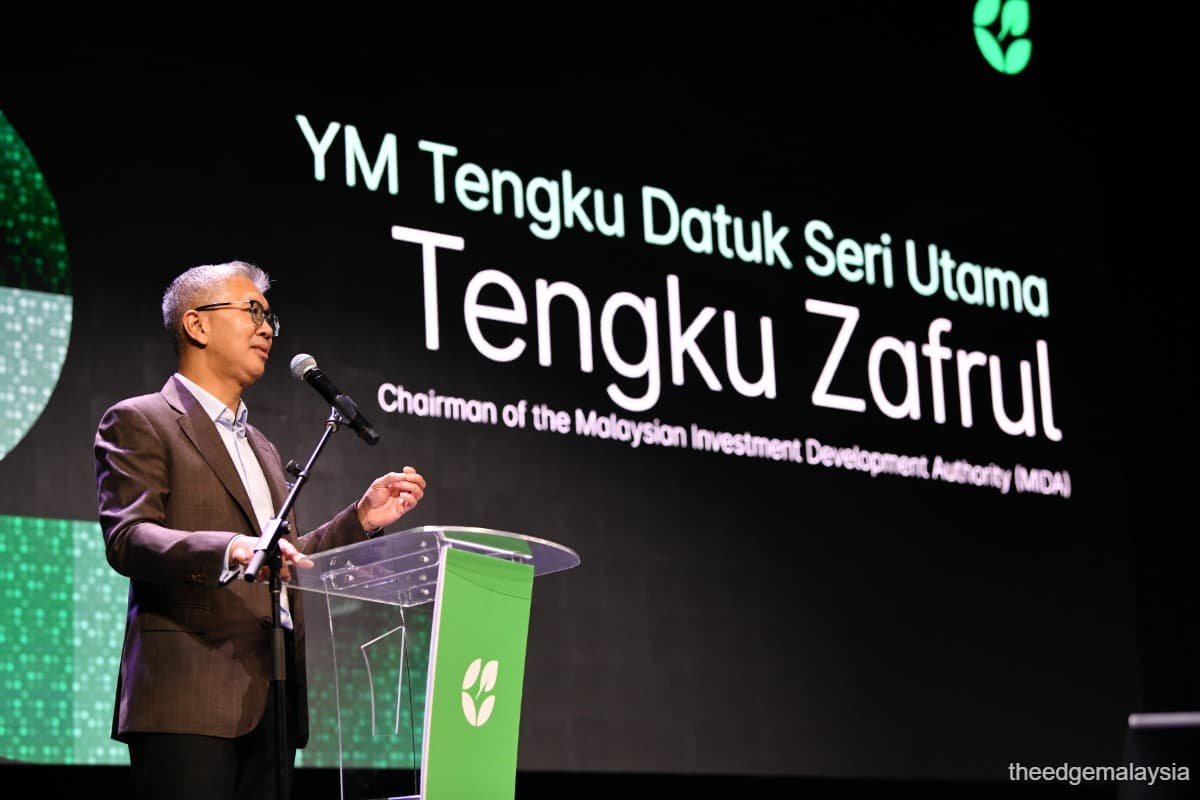
KUALA LUMPUR (Feb 12): Malaysia will give priority to investments that create better economic spillovers when determining incentives, said Malaysian Investment Development Authority (Mida) chairman Tengku Datuk Seri Zafrul Abdul Aziz.
Under the New Incentive Framework (NIF), which comes into effect on March 1, tax incentives will be tied to measurable economic outcomes, assessed using the National Investment Aspirations (NIA) scorecard.
“The higher the score, the more incentive you get. Given the limited resources that we have, I think we need to reward those who are giving the right kind of spillover to the economy,” Zafrul said after the launch event for One Credit.
The scorecard evaluates contributions in areas such as job quality, technology transfer, domestic supply chain resilience and sustainability.
Zafrul stressed that companies can still invest in Malaysia, but those seeking incentives must demonstrate tangible benefits to the country.
“We want quality-driven investment and gain the right spillover to the economy.
"This is a new incentive framework. You can still come in, but if you want an incentive, you must show that you are bringing benefit to the people and the economy,” he added.
He gave an example of low-value-added assembly operations that import most of their components and contribute little to local supply chains.
“Let’s say they want to assemble an E&E (electrical and electronics) product but 90% all import, just assemble and then export and say this is made in Malaysia, when the value-add is only 10%, and totally no spillover to Malaysian input. Why should we give incentives?” he said.
Asked whether the outcome-based regime could lead to a moderation in investment approvals, Zafrul said he does not expect a slowdown, noting that the framework had been in preparation for over a year.
He added that feedback from investors so far had been positive, particularly from those aligned with Malaysia’s push for investments that generate better economic spillovers.
On the investment prospect this year, Zafrul said the digital economy is expected to drive investment momentum this year, supported by demand for computing power, data centres and semiconductor-related activities.
“Data centres coming in help build the ecosystem around the digital economy. We are seeing more and more of these companies coming in, not just on the service side, but also on the equipment side,” he said.
However, Zafrul did not disclose the specific investment target for 2026, saying it will depend on the evolving global economic conditions.
Malaysia approved RM285.2 billion in investments during the first nine months of 2025, representing a 13.2% increase from the same period a year earlier. More than half of the investments were from foreign sources and domestic investments accounted for 43% of total investments.
The country recorded record approvals of RM329.5 billion in 2023 and RM378.5 billion in 2024.