

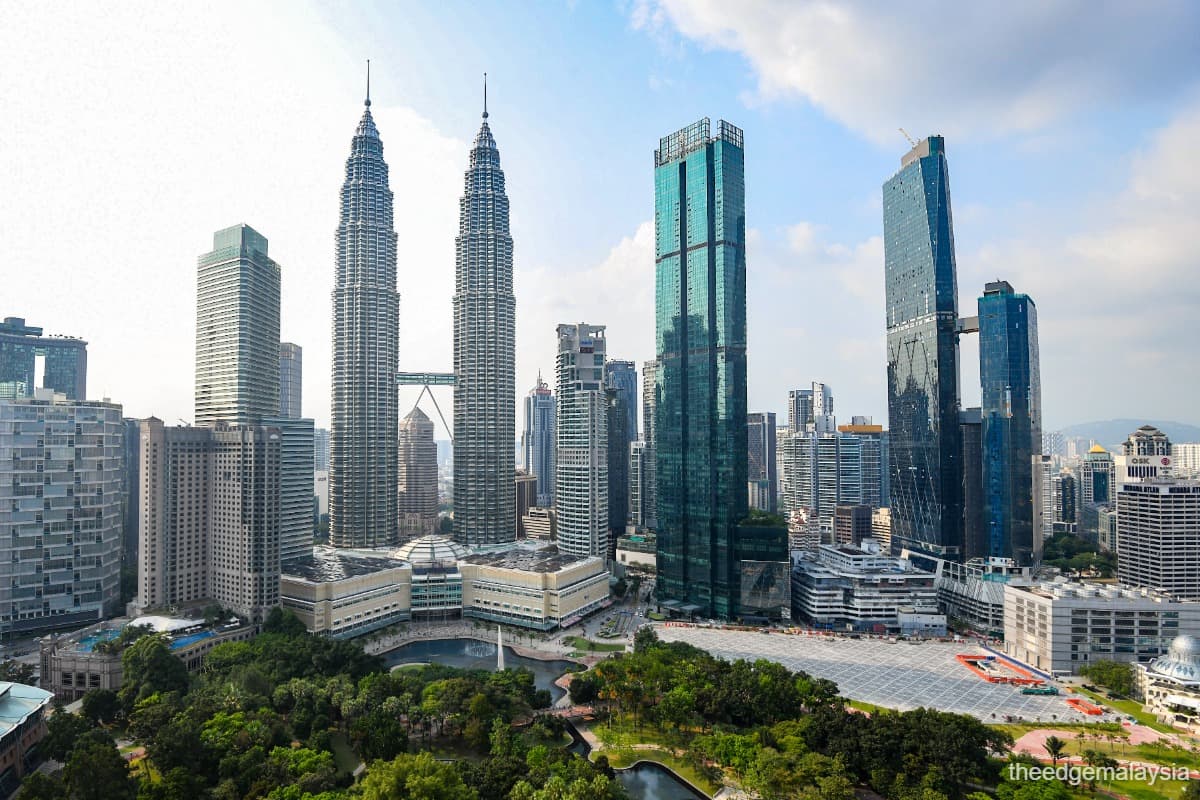
Auditor bans, cyber hacks and tycoon trials — these are among the top 10 stories that shook Corporate Malaysia in 2025.
1. PETRONAS and Petros’ neverending dispute
The protracted dispute between Putrajaya and the Sarawak state government over the rights to gas distribution in Sarawak was seemingly put to bed after the two parties inked a joint declaration in May this year. However, the declaration — which established the principle of co-existence by recognising PETRONAS’s national mandate under the Petroleum Development Act 1974, alongside Petros’ role as the state aggregator under Sarawak’s Distribution of Gas Ordinance (DGO) 2016 — did not resolve the legal ambiguities on the ground. This is evident in two key, ongoing lawsuits.
The RM7.95 mil bank guarantee dispute
Petros initiated this lawsuit against PETRONAS in late 2024 after PETRONAS called on a bank guarantee of RM7.95 million following Petros’ refusal to pay for gas supplied by PETRONAS under the Sarawak Gas Sales agreement. Petros argued that PETRONAS’s demand was unlawful as it doesn’t have a licence as required under the DGO to supply gas, while PETRONAS argued that the gas was supplied and accepted by Petros. The case was adjourned in August 2025 to allow both parties to pursue a collaborative resolution, but negotiations failed. The Kuching High Court then heard final submissions and fixed Jan 30, 2026 to deliver its judgement on the lawfulness of PETRONAS’s payment demand.
The Shell MDS dual-invoicing case
This dispute arose after Shell MDS Malaysia received dual invoices for gas supply – one from Petronas under a prior agreement and one from Petros in its new aggregator role. Fearing double payment, Shell secured a High Court court injunction to withhold monthly gas payments to both PETRONAS and Petros. The injunction also compelled PETRONAS to continue supplying gas to Shell’s plant in Bintulu. In September 2025, the Court of Appeal set aside this injunction and ordered Shell to pay all arrears owed to PETRONAS, ruling the latter had not breached its agreement.
While Petronas secures the payment, the underlying issue over who is the rightful recipient of future payments, remains. The Kuala Lumpur High Court in October rejected PETRONAS’s bid to expand the case into a full trial. The case will proceed as an originating summons in 2026, with the court deciding based on documentary evidence and legal interpretation of the competing Petroleum Development Act 1974 and DGO.
PETRONAS’s right-sizing and restructuring
A month after the May declaration, Petronas announced it was cutting its workforce by 10%, affecting over 5,000 employees whom it said were enablers and contract workers. It said the move was necessary as the organisation was restructuring to become “a more agile integrated energy company”, to strengthen its resilience and remain competitive. A hiring freeze, lasting till December 2026, was also announced. Petronas first mentioned this “right-sizing” plan “to ensure the survival of Petronas in the coming decades” in early February.
Despite a challenging year, Petronas still has something to cheer about: its Mercedes-AMG Petronas F1 team, which Petronas has been backing since 2010, won the 2025 Singapore Grand Prix in October. — by Tan Choe Choe
2. MEX II crisis escalates: Abu Sahid charged as Maju Holdings faces winding-up
The long-running saga of the stalled Maju Expressway 2 (MEX II) project took a dark turn in late 2025, as the key person behind the concessionaire faced criminal prosecution and the parent company moved a step closer to liquidation.
In September 2025, Maju Holdings founder Tan Sri Abu Sahid Mohamed was hit with a barrage of charges in the Kuala Lumpur Sessions Court. The veteran tycoon pleaded not guilty to four counts of criminal breach of trust (CBT) involving RM313.7 million and 13 counts of money laundering totaling RM139.2 million.
The charges allege the misappropriation of funds raised through a RM1.3 billion sukuk intended for the 16.8km highway extension. Former director Datuk Yap Wee Leong was also charged with 17 counts of using falsified progress claims — amounting to over RM314 million — to deceive bank officers.
_ZHD-07-20251230021829_49bk4p.jpg)
_ZHD-04-20251230021829_i9dwxj.jpg)
While the criminal cases move to trial, the project’s corporate structure is crumbling. In November, the High Court rejected Maju Holdings’ attempt to enter judicial management. Instead, the court cleared the way for a winding-up petition by Bridgex Sdn Bhd over RM68 million in unpaid dues.
MEX II Sdn Bhd remains under the control of receivers (since May 2022). Work on the highway, which started in 2016 and was supposed to be finished by 2019, halted in the fourth year with the project only at 89% completion. Meanwhile, reports indicate that only RM30 million of the original RM1.3 billion funding raised from sukuk for the project remains.
In a December parliamentary reply, Works Minister Datuk Seri Alexander Nanta Linggi revealed that completing the stalled link would require at least RM449 million. With discussions between the government and receivers still ongoing, and no fresh funding in sight, the project — designed to link Putrajaya to KLIA — remains a “thorn” in Malaysia’s infrastructure landscape. — by Choy Nyen Yiau
3. Malaysia’s property giants double down on Singapore
Several Malaysian property giants made significant acquisitions in Singapore this year, namely Sunway Bhd (KL:SUNWAY), Gamuda Bhd (KL:GAMUDA), and IOI Properties Group Bhd (KL:IOIPG).
Between July and September this year, Sunway secured two major land tenders — the first and second Chuan Grove land parcels — via its 35:65 joint venture (JV) with Sing Holdings, for a combined S$1.328 billion (RM4.22 billion). The second parcel is an adjacent plot secured shortly after the first. The JV plans to amalgamate them into a single, large-scale residential project with 1,055 units across five blocks of up to 27 storeys each.
Shortly after that, Sunway grabbed headlines again by acquiring MCL Land, the Singapore property arm of Hong Kong Land, for S$739 million in September. Now branded as Sunway MCL, the deal instantly tripled Sunway’s unbilled sales in the city-state to about S$1.8 billion. The new entity has nine ongoing residential developments in Singapore, with an estimated gross development value (GDV) of S$4.5 billion.
Also in September, a consortium led by Gamuda (50% stake), alongside Singapore-based partners Evia MCS Pte Ltd (30%) and H108 Pte Ltd (20%) won a highly contested tender for the 7.3-acre Chencharu Close site in Yishun. Their winning bid of S$1.01 billion (RM3.33 billion) was nearly 20% higher than the runner-up. The site is slated for a massive mixed-use development comprising 875 residential units with a bus interchange and hawker centre, marking Gamuda’s largest Singaporean residential bet to date.
Meanwhile, IOI Properties acquired the remaining 50.1% stake in the iconic South Beach development for S$834 million (RM2.75 billion). By taking full ownership of the landmark from City Developments Ltd, IOI solidified its position as a premier landlord in Singapore’s central business district, adding Grade-A office space and a JW Marriott hotel to its portfolio.
Collectively, these property giants took control of over S$3.9 billion in prime Singaporean assets this year. — by Tan Choe Choe
4. Genting fails to privatise Genting Malaysia while New York “win” fuels debt concerns
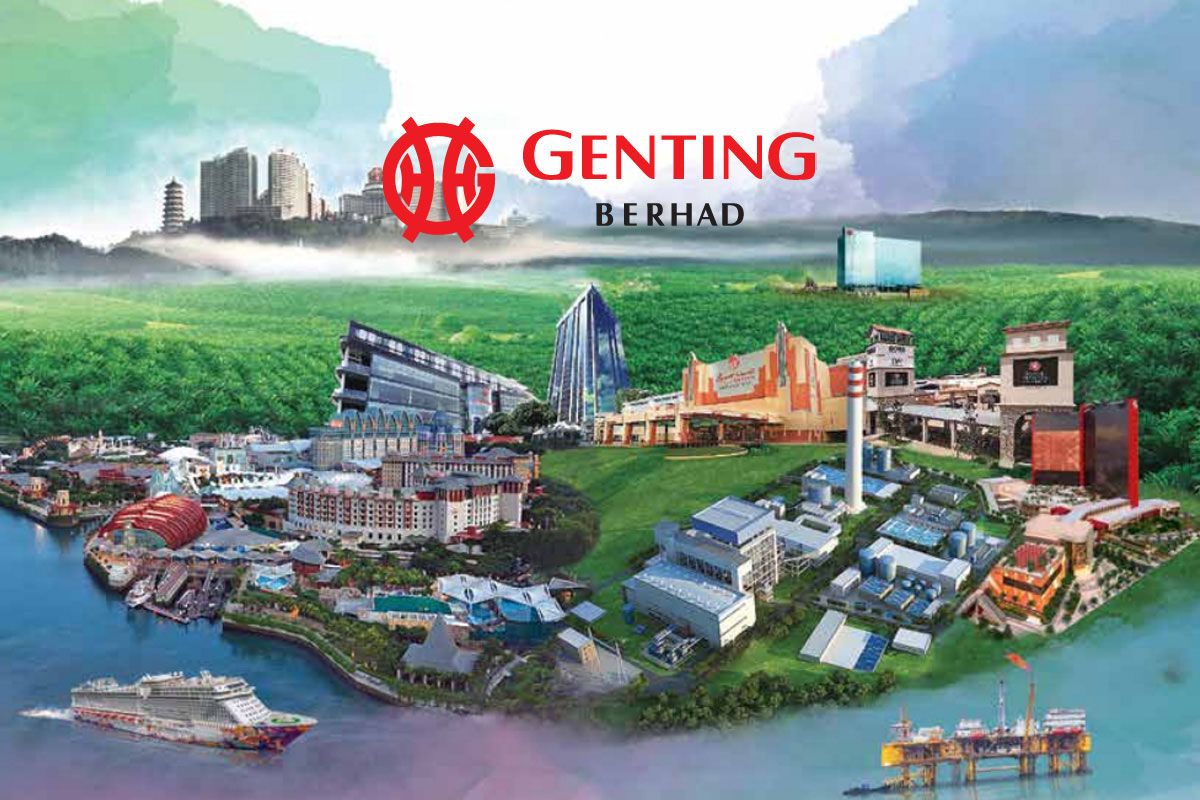
Genting Malaysia Bhd (KL:GENM) will remain a listed entity after an attempt by its parent, Genting Bhd (KL:GENTING), to take the company private fell through in December 2025. The bid’s failure was driven by minority shareholders who held out for the long-awaited New York casino licence — only for the eventual win to trigger a wave of credit downgrades amid concerns of rising debt.
In October, Genting suddenly launched a RM6.7 billion offer to buy out GenM at RM2.35 per share, fuelling speculation that the New York licence win was close at hand. In anticipation of that coveted licence, shareholders viewed the offer as a low-ball attempt to capture the “upside” of the US expansion. Following the advice of an independent valuer — who priced the stock as high as RM3.77 — many refused to budge, leaving the offer to close on Dec 1 with Genting securing only 73.13% of shares, failing to meet the 75% threshold required to delist the company.
The New York licence recommendation arrived the same day the privatisation failed. But, instead of a rally, GENM’s share price trended lower as the market digested the staggering US$5.5 billion (RM23.2 billion) cost of the expansion.
Two days later, analysts at CreditSights warned that the combined debt from the RM3.1 billion stake increase in GENM and the massive New York capital expenditure would “stretch the group’s (Genting’s) balance sheet to its limit,” with debt expected to surge toward RM35 billion by 2028. Shortly after, Moody’s downgraded Genting’s rating to Baa3, while S&P Global shifted the group’s outlook, together with GENM’s, to negative.
So, in an ironic reversal, GENM remains listed because of the New York casino hype, yet that same ambition has now left the group under a cloud of high leverage and market caution. — by Choy Nyen Yiau
5. Wilmar’s legal troubles that caused PPB to bleed
PPB Group Bhd (KL:PPB), the flagship of Malaysia’s richest tycoon Robert Kuok, fell into the red this year — its first in about a decade — dragged by losses at its key associate, Wilmar International Ltd, that stemmed from legal troubles in Indonesia.
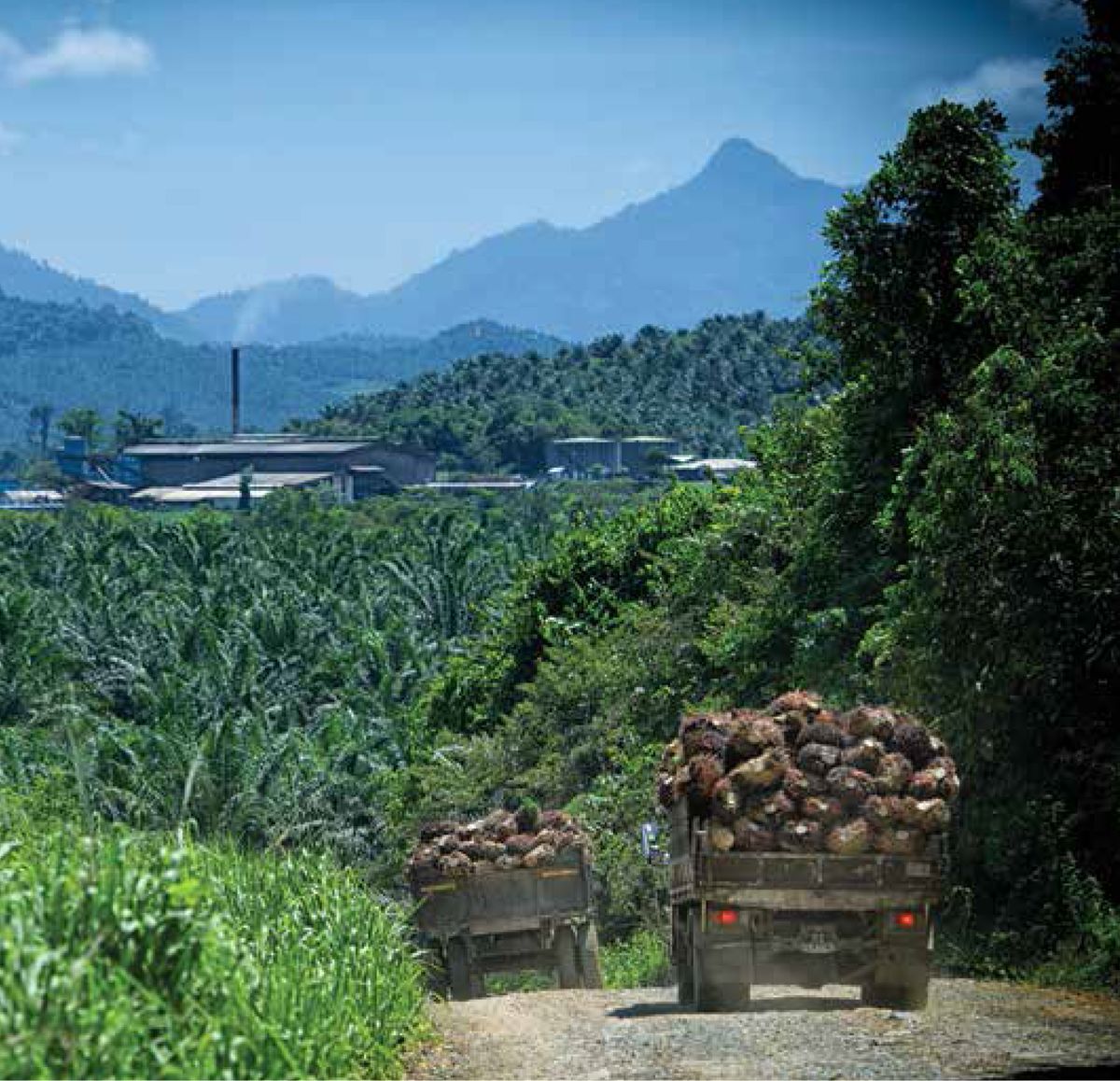
Wilmar’s losses were due to a graft case involving alleged misconduct in obtaining palm oil export permits during a cooking oil shortage in Indonesia in 2021. The Supreme Court overturned an initial acquittal, resulting in Wilmar’s subsidiaries having to forfeit a US$712 million security deposit. Wilmar maintained its actions “were in compliance with prevailing regulations and in good faith”.
Wilmar faces a separate legal challenge in China, where its subsidiary was found guilty of contractual fraud and made jointly liable for a RMB1.88 billion (RM1.1 billion) compensation to a state-owned enterprise (SOE), and fined RM1 million. Wilmar is appealing this ruling, which is connected to the subsidiary’s former general manager being convicted of taking bribes and aiding in the fraud against the SOE, leading to a 19-year jail sentence and a RM2.8 million fine.
These legal troubles weigh heavily on PPB, as its 18.8%-owned Wilmar remains its largest profit contributor. — by Tan Choe Choe
6. Mass auditor shake-up as Chengco hit with two-year audit ban
A wave of auditor changes swept through Bursa Malaysia in mid-2025 after the Audit Oversight Board (AOB) imposed a two-year suspension on Chengco PLT, citing “serious and recurring” lapses in audit quality.
Effective 12 June 2025, following a failed appeal to the Securities Commission, Chengco is barred from auditing public interest entities (PIEs) until 2027. The regulator uncovered multiple breaches of international auditing standards, noting a failure to obtain sufficient evidence for high-risk areas including revenue, bank borrowings, goodwill, and going-concern assessments.
The crackdown extended to the firm’s leadership, with two-year suspensions handed to partners Hong Thuan Boon and Yap Peng Boon (both repeat offenders from a 2019 sanction). Three other partners were banned for one year, during which they cannot take on new PIE clients.
The suspensions triggered the immediate resignation of Chengco from 35 listed companies, the majority of which are micro-cap firms with market capitalisations under RM50 million. While Chengco maintained that its “true and fair” opinions remain valid and that re-audits are unnecessary, its exit has forced dozens of boards to scramble for new auditors amid heightened scrutiny over past accounts.
Another caught in the regulatory heat was Ahmad Aljafree Mohd Razalli, a partner at Al Jafree Salihin Kuzaimi PLT. He was suspended by the AOB for one year and fined RM50,000 for audit failures. This prompted his firm’s resignation as the external auditor for HeiTech Padu Bhd (KL:HTPADU). — by Choy Nyen Yiau
7. Bursa Malaysia mandates cyber overhaul after April trading hack
On April 24, about 80 stockbroking accounts on Bursa Malaysia — less than 0.01% of all online accounts — were affected by unauthorised trades, later determined to be a hack.
The unauthorised activity primarily involved shares of Bina Puri Holdings Bhd (KL:BPURI) and its Warrant-B, which saw unusual price spikes before regulators intervened. The trades were withheld from April 27 while investigations were carried out.
On May 19, Bursa announced that the trades would be reversed, ensuring no investor would incur losses, effectively erasing the effects of the incident.

The incident prompted Bursa Malaysia to form an industry working group, led by the chief regulatory officer, to identify infrastructure and oversight weaknesses and set new IT risk and incident response standards. This culminated in Bursa introducing new cyber resilience rules in November for brokers to oversee third-party tech providers, like order management system vendors, to strengthen market integrity.
Brokers must implement standards for people, processes, and governance — including recovery planning and incident management — within three months and complete more complex system upgrades by Dec 31, 2026. — by Presenna Nambiar
8. Sapura Energy rebrands to Vantris Energy after RM1.1 billion state-backed lifeline
Sapura Energy Bhd, now rebranded as Vantris Energy Bhd (KL:VANTRNG), received a major boost in May 2025 when the Ministry of Finance announced a RM1.1 billion injection into the then Practice Note 17 (PN17)-company to settle long-outstanding vendor debts. The funding, widely seen as a bailout, is conditional on the successful implementation of the company’s regularisation plan by March 11, 2026.
The company began executing the plan on Sept 26, following regulatory and shareholder approvals. Key measures include a 99.99% capital reduction to offset about RM12.8 billion in accumulated losses, a 20-to-1 share consolidation, and a debt restructuring that cut borrowings from RM10.8 billion to RM5.6 billion, moving it closer to exiting its PN17 status under Bursa Malaysia rules.
The impact of its overhaul was seen in the financial results it released earlier this month. For its third quarter ended Oct 31, 2025, the group reported a net profit of RM4.27 billion, as opposed to a net loss of RM293.06 million a year earlier, due to a one-off RM4.47 billion gain from debt forgiveness. However, it posted an operating loss of RM97.07 million, compared with an operating profit of RM215.11 million previously — indicating that its business remains challenging — with operating expenses rising 14.9% to RM1.08 billion.
Adding to the complexity of its turnaround, Vantris remains under the shadow of past governance issues. In September, the Malaysian Anti-Corruption Commission confirmed two separate investigations involving the company. The first involves the forfeiture of RM12 million linked to the alleged misuse of funds by an unnamed party in 2018. The second involves an alleged US$3.3 million (RM14 million) bribe paid by a Brazilian company to a CEO back in 2011, when the company was known as SapuraCrest Petroleum Bhd. — by Presenna Nambiar
9. 2025 IPOs: Decades-high tally, but a reality-check performance
Malaysia’s initial public offering market in 2025 delivered mixed outcomes, reflecting a more selective investor base despite a surge in new listings. While high-profile offerings helped sustain market visibility, overall fund-raising declined, highlighting a widening gap between IPO volume and capital raised.
Total IPO proceeds in 2025 came in at about RM6 billion, down from RM7.42 billion in 2024, even as the number of listings rose to a two-decade high of 60, up from 55 a year earlier. This gap points to smaller deal sizes and conservative valuations amid volatile market conditions.

Some issuers cut prices to attract demand. Eco-Shop Marketing Bhd (KL:ECOSHOP) lowered its IPO price and was rewarded, with a first day premium gaining momentum to end the year 21% higher with a market value of RM8.4 billion. CUCKOO International (Mal) Bhd (KL:CKI) also reduced its IPO price but could not stay above water, losing about half its value by year-end.
Star performers included kopitiam chain operator Oriental Kopi Holdings Bhd (KL:KOPI), water and asset management solutions provider Insights Analytics Bhd (KL:IAB), and bus operator HI Mobility Bhd (KL:HI).
ACE-listed Oriental Kopi shares more than tripled from its IPO price to lift its market cap to RM2.82 billion. Similarly Sarawak-based Insight Analytics’ share price has tripled since its IPO, valuing the group at RM594 million. In the Main Market, HI Mobility’s market cap has risen to RM1.35 billion as its value more than doubled from its IPO price.
This stands out in a weak IPO market. About one-third of 2025 listings debuted below their IPO price, and nearly two-thirds are now trading below it.
Bursa Malaysia passed 1,100 listed companies for the first time in 2025. While listings remain strong, higher IPO numbers have not led to more capital raised, highlighting the importance of disciplined pricing and post-listing performance. — by Jazlin Zakri
10. NexG keeps investors guessing with its investments and management changes
NexG Bhd (KL:NEXG) found itself in the spotlight this past year for a series of investment decisions and boardroom developments that raised questions about the company’s direction.
Formerly known as Datasonic Group, NexG has traditionally been associated with secure identification systems and government-related contracts. However, among the notable moves this year was NexG’s acquisition of a 32.61% stake in Classita Holdings Bhd at a 87.5% premium, targeting its loss-making property and construction business, which includes a CIDB G7-certified unit able to handle large, complex construction projects. The move made it the company’s largest shareholder and Classita was rebranded as NexG Bina Bhd (KL:NEXGBINA). It came on the heels of an acquisition of a 51% stake in Innov8tif Holdings Sdn Bhd for RM40 million in November last year and a 9.53% stake in MMAG Holdings Bhd (KL:MMAG) early this year.
These moves made the stock highly volatile, with prices ranging from a high of 53.5 sen to a low of 21 sen, a level last seen in 2020.
The group also saw the departure of two senior executives, chief operating officer Victor Chin Boon Long and chief strategy officer Jorrine Ang Pei Gaik in September. Subsequently, several directors stepped down after completing their terms. Shareholder dynamics also evolved with businessman Tan Sri Mohd Khairul Adib Abd Rahman relinquishing his executive deputy chairmanship after an eight month stint, only to emerge as a substantial shareholder with his vehicle Skyelimit Alliance Sdn Bhd later and becoming NexG’s largest shareholder at 16.09%.
At the same time, market talk emerged about a potential new major shareholder, with a foreign news portal speculating that Datuk Ishak Ismail could buy a 25% stake in NexG. The company said it had received no formal notification under Bursa Malaysia’s disclosure rules, and as at the time of writing, no new shareholder has appeared.
Despite the turbulence, NexG remains active in government contracts and expansion projects. It secured at least four government projects this year, including a RM1.73 billion six-year deal to supply national identity cards. — by Jazlin Zakri
Read also:
Notable court rulings of 2025