

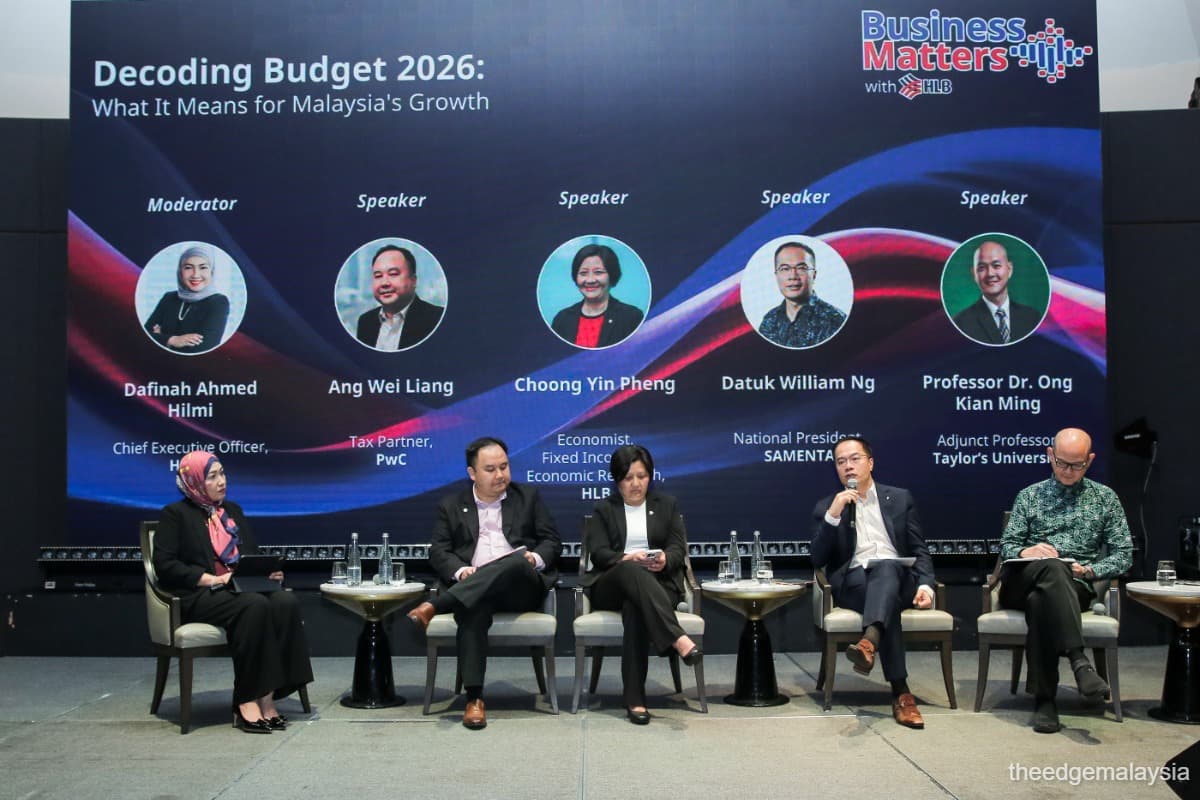
KUALA LUMPUR (Oct 22): Former deputy minister of investment, trade and industry (Miti) Dr Ong Kian Ming on Wednesday (Oct 22) said the government should avoid policy surprises such as the expanded sales and service tax (SST) that took effect on July 1 and caught many SMEs off guard.
The expanded SST, delayed from June 1, 2025, includes an 8% tax on leasing and rental services, which has faced strong opposition.
He also urged greater policy consistency, particularly concerning new taxes like the alcohol and tobacco duty hikes.
“While these taxes may not have had a major impact on the overall economy, they seemed to have been introduced without sufficient planning. I’ve heard from certain sources that the alcohol and tobacco tax increases may have been last-minute decisions following incidents involving the Ministry of Tourism and other events just before the budget announcement.
“That’s not to say I disagree with the taxes themselves but they reflect a lack of consistency in how the government follows up with appropriate mitigation measures — for instance, addressing tobacco-related harm or issues such as ground fires,” he said at the Decoding Budget 2026: What It Means for Malaysia’s Growth forum organised by Hong Leong Bank on Wednesday.
Ong, who is also Taylor’s University adjunct professor, said the government must also strengthen policy execution to ensure that major spending plans under New Industrial Master Plan (NIMP) are implemented comprehensively.
He also suggested that Miti could, for instance, offer incentives of up to RM20,000 for manufacturing SMEs to undergo training and onboarding programmes on ESG reporting, which would also support their Scope 3 emissions compliance within larger supply chains.
Scope 3 emissions, which cover indirect emissions across a company’s value chain, are expected to be included in Malaysia’s mandatory ESG reporting requirements under a phased approach beginning in 2027.
Drawing parallels, Ong noted that Miti had previously implemented the Industry4WRD programme — Malaysia’s national policy to drive manufacturing transformation under Industry 4.0 — which provided grants for SMEs to assess their readiness for digital adoption.
“A similar approach can be applied to ESG reporting. The more SMEs and stakeholders collaborate in this area, the greater the sustainability-related opportunities they can tap into,” he said at the forum.
At the forum, Ong also commended the government for maintaining political stability, navigating geopolitical and trade relations effectively — especially through Miti’s engagement with the US — and for introducing consistent economic and sustainability frameworks, such as the National Energy Transition Roadmap (NETR) and NIMP.