

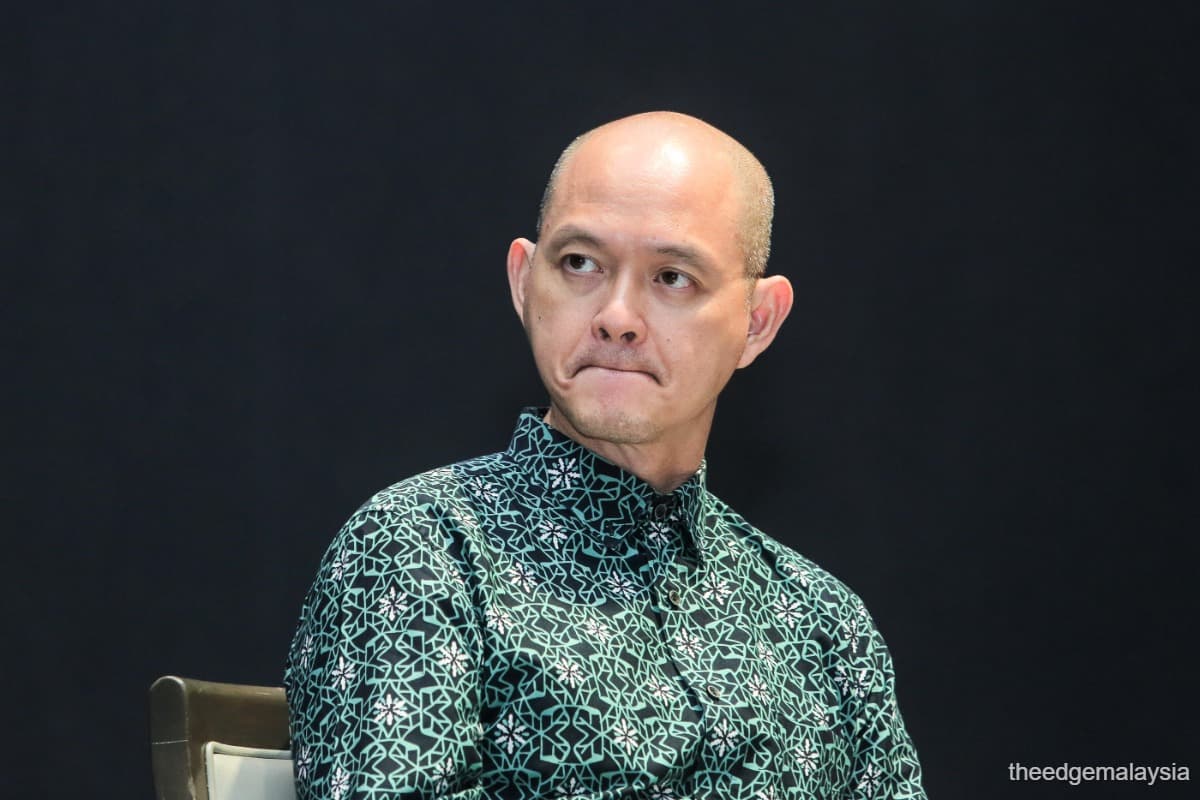
KUALA LUMPUR (Oct 22): Malaysia should consider reintroducing the goods and services tax (GST), possibly in the second half of 2026, said Taylor’s University adjunct professor Dr Ong Kian Ming.
Phased GST reintroduction at a lower rate is likely to be more viable, in light of concerns over the government’s overall debt level, Ong said at the Decoding Budget 2026: What It Means for Malaysia’s Growth forum organised by Hong Leong Bank on Wednesday (Oct 22).
The former deputy trade minister pointed out that Malaysia’s debt servicing ratio is projected to reach 17% in 2026, breaching the 15% comfort threshold of government revenue.
“The second half of 2026 may be a good time for the government to think about calling it (GST) because of certain economic and political factors — after the election — and then see how to start,” he said.
“It actually makes sense from a phased approach. There can be a way in which this can be structured in an acceptable fashion. Meaning, if you reintroduce GST at a lower rate, it will make it more palatable.”
“Yes, the revenue will take a hit [due to the lower rate], but you can also increase subsidy savings by, for example, reducing the Budi95 petrol subsidy quota — from 300 litres to 200 litres — and gradually raising the price from RM1.99 per litre onwards. I think credit should be given to the government for the very smart way they have introduced this,” he added.
Malaysia implemented a 6% GST on April 1, 2015, before replacing it with the sales and service tax (SST), which was reintroduced on Sept 1, 2018, as part of an election pledge by the Pakatan Harapan administration.
GST collection stood at RM44.3 billion in 2017. That amount was overtaken by SST collection last year, at RM44.7 billion, which is expected to rise to RM59.6 billion next year.
Nonetheless, the SST's share of federal government revenue is expected to be 17.4% in 2026, still below GST's 20.1% recorded in 2017.
At the same forum, PwC Malaysia tax partner Ang Wei Liang said the implementation of e-invoicing — a digital system for exchanging transaction documents between suppliers and buyers — will help facilitate the reintroduction of GST.
He explained that the previous GST regime faltered due to what he described as a “trust deficit spiral”.
“One of the insights shared by the Finance Ministry was that the amount of GST refunds they had to pay out was much higher than projected, so some refunds were withheld. This affected businesses’ cash flow, prompting them to price GST into their operations. That’s what I call a trust deficit spiral,” Ang said.
“Hopefully, with e-invoicing — which will be fully implemented next year — it will give the government more confidence in managing GST refunds to taxpayers. With these elements in place, I think it’s a good time to look at bringing back GST,” Ang added.