

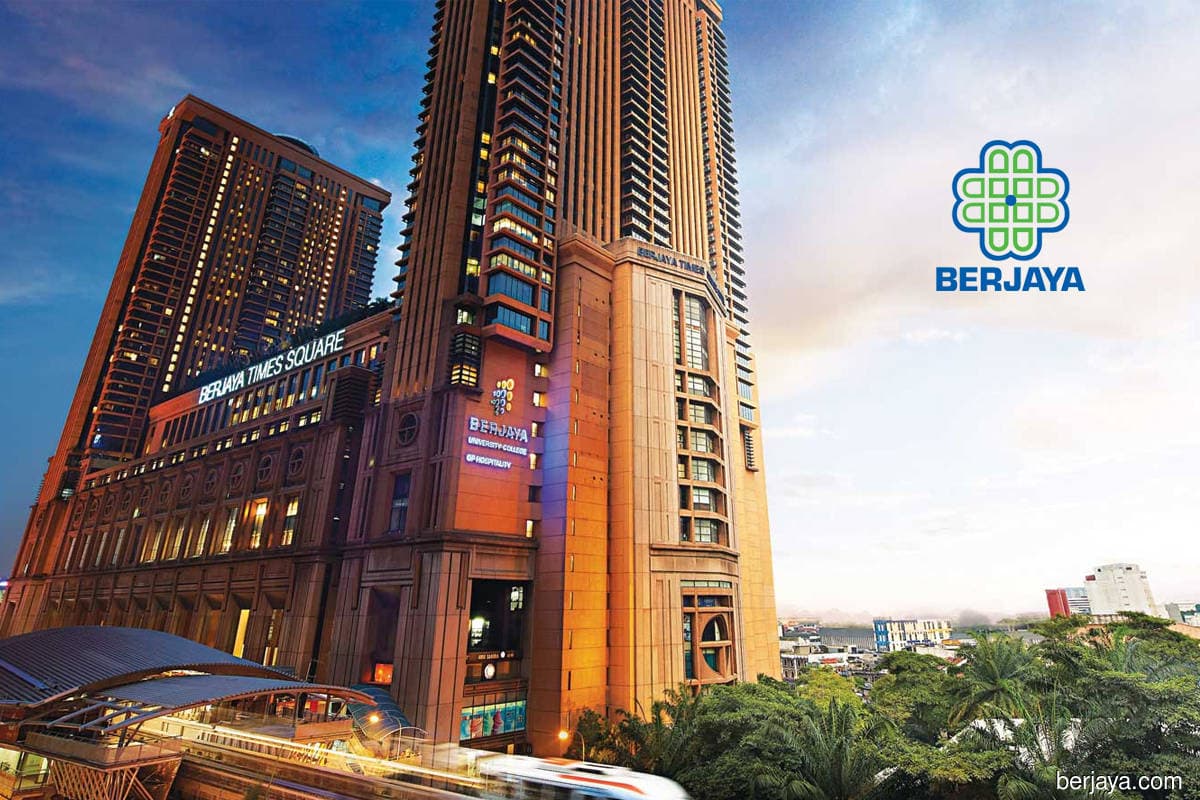
KUALA LUMPUR (Aug 29): Berjaya Corp Bhd (KL:BJCORP) has posted its worst quarterly earnings in four years, dragged by non-cash impairments on non-performing assets.
For the fourth quarter ended June 30, 2025 (4QFY2025), the group’s net loss widened to RM207.2 million from RM152.49 million a year earlier — its weakest quarterly performance since 4QFY2021.
“The loss was primarily attributable to higher net investment related expenses, including non-cash impairments totalling RM323.16 million on non-performing assets, in accordance with applicable accounting standards. These impairments may be subject to reversal in the future should conditions improve,” said Berjaya Corp in a bourse filing.
Quarterly revenue slipped nearly 4% year-on-year to RM2.37 billion from RM2.46 billion, mainly due to weaker contributions from the retail segment — impacted by lower sales at HR Owen plc, Cosway and Starbucks operations — as well as the services segment, which was hit by lower earnings from its telecommunications network services unit.
The property division also saw reduced contributions following the completion of The Tropika Bukit Jalil project in the previous financial year.
No dividend was declared.
For the full year, Berjaya Corp booked a net loss of RM556.07 million — its worst annual earnings on record — against a net profit of RM410.44 million in FY2024. Annual revenue fell 7.39% to RM9.34 billion from RM10.09 billion.
Looking ahead, the group said its domestic business segments are expected to benefit from resilient consumer spending and stronger tourism activities. Its number forecast operator (NFO) unit is also projected to sustain growth, supported by the popularity of its Jackpot and Digit games and its leading market share in the legalised NFO sector.
“The board is cautiously optimistic that the performance of the business operations of the group for the financial year ending June 30, 2026 (FY2026) will be satisfactory,” it added.
Shares of Berjaya Corp closed unchanged at 27.5 sen on Friday, valuing the group at RM1.61 billion. Year to date, the counter has fallen over 11%.