

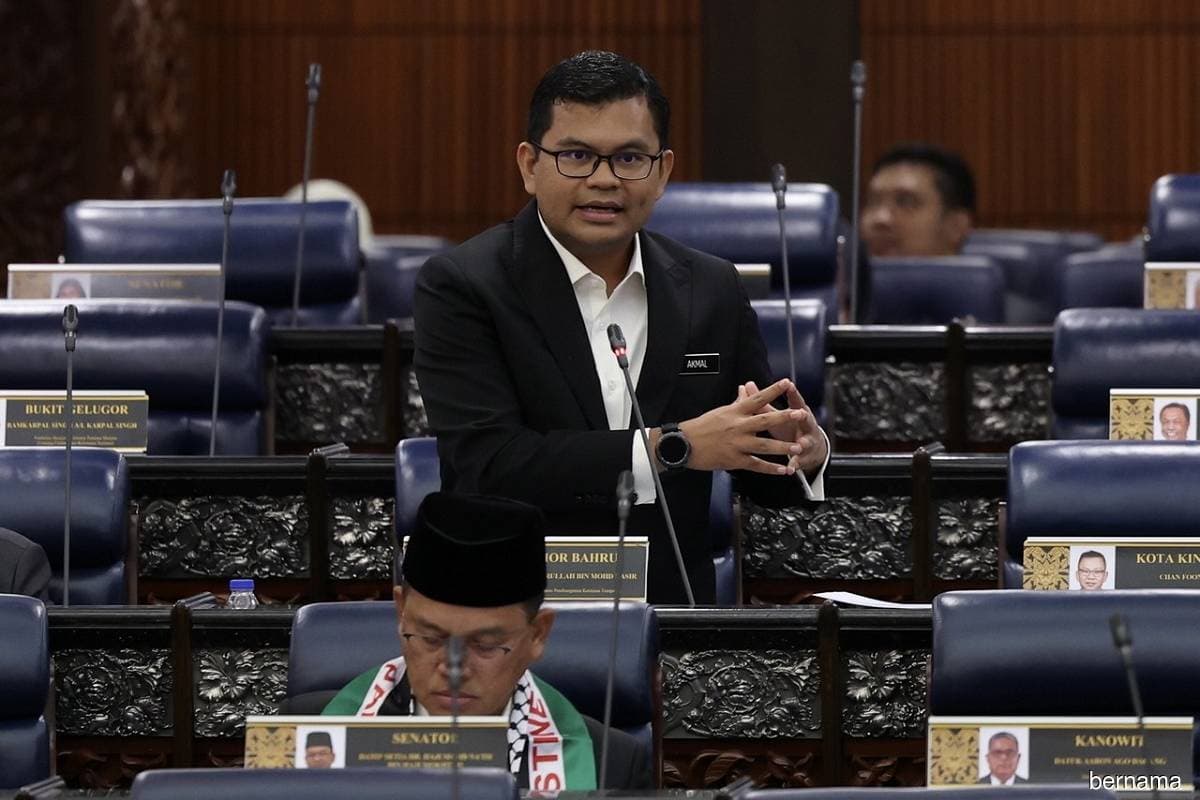
KUALA LUMPUR (July 30): Energy Transition and Water Transformation Deputy Minister Akmal Nasrullah Mohd Nasir has reaffirmed that cross-border electricity trade will only take place when Malaysia has a surplus in power supply and its domestic energy needs are fully secured.
National energy security remains the top priority, Akmal emphasised. In the event of domestic power disruptions or supply shortages, priority will be given to stabilising the local grid before any energy is exported, he added.
“In addition, we have the Asean Power Grid (APG) initiative. Should there be an urgent disruption in electricity supply, it allows us to obtain support from neighbouring countries,” Akmal said during the winding-up of the Electricity Supply (Amendment) Bill debate in Parliament on Wednesday.
On the details of capacity limits and licence durations for energy imports and exports, Akmal said the Energy Commission will outline them through upcoming regulatory guidelines.
Malaysia currently maintains a reserve margin of between 23% and 28% — an optimal level that ensures sufficient backup capacity to handle sudden spikes in demand or outages.
The Dewan Rakyat on Wednesday (July 30) passed the Electricity Supply (Amendment) Bill, which seeks to expand the scope of the Electricity Supply Act 1990 (Act 447) to include the regulation of electricity import and export, as well as the management of green energy attributes.
One of the key provisions in the bill empowers the Energy Commission to oversee cross-border electricity trade. Following the approval of this bill, the House also passed the Energy Commission (Amendment) Bill.
Lawmakers raise implementation concerns
Earlier, several members of Parliament (MPs) expressed cautious support for the bill but voiced concerns over its implementation and the potential impact on national and consumer interests.
Datuk Ahmad Amzad Mohamed @ Hashim (PN-Kuala Terengganu) urged the government to ensure fair distribution of revenue from energy exports.
“Will export profits be distributed fairly to energy-producing states? If not, we risk repeating the mistakes of past federal arrangements — where states provided resources but received no share of the returns,” he said.
Yeo Bee Yin (PH-Puchong) proposed that the government adopt a third-party access (TPA) model to facilitate business-to-business (B2B) energy agreements with foreign utilities or retailers.
Currently, green energy producers are required to sell electricity to a single buyer, which then sells the electricity overseas. The additional margin is channelled back to fund growth of the local renewable energy (RE) industry.
“Without clear thresholds or access rules, the market may become uncompetitive or inaccessible for small renewable energy players,” she said.
Some MPs questioned whether Malaysia had sufficient domestic supply to justify electricity exports — particularly to Singapore — without compromising local energy demands or its net-zero goals.
Jimmy Puah Wee Tse (PH-Tebrau) stressed that achieving the goals outlined in the National Energy Transition Roadmap 2050 depends on strengthening domestic RE capacity.
“If we don’t have enough [renewables], how can we export to Singapore?” he asked, adding that RE should be prioritised for local high-growth sectors such as data centres and semiconductors.
For more Parliament stories, click here.