

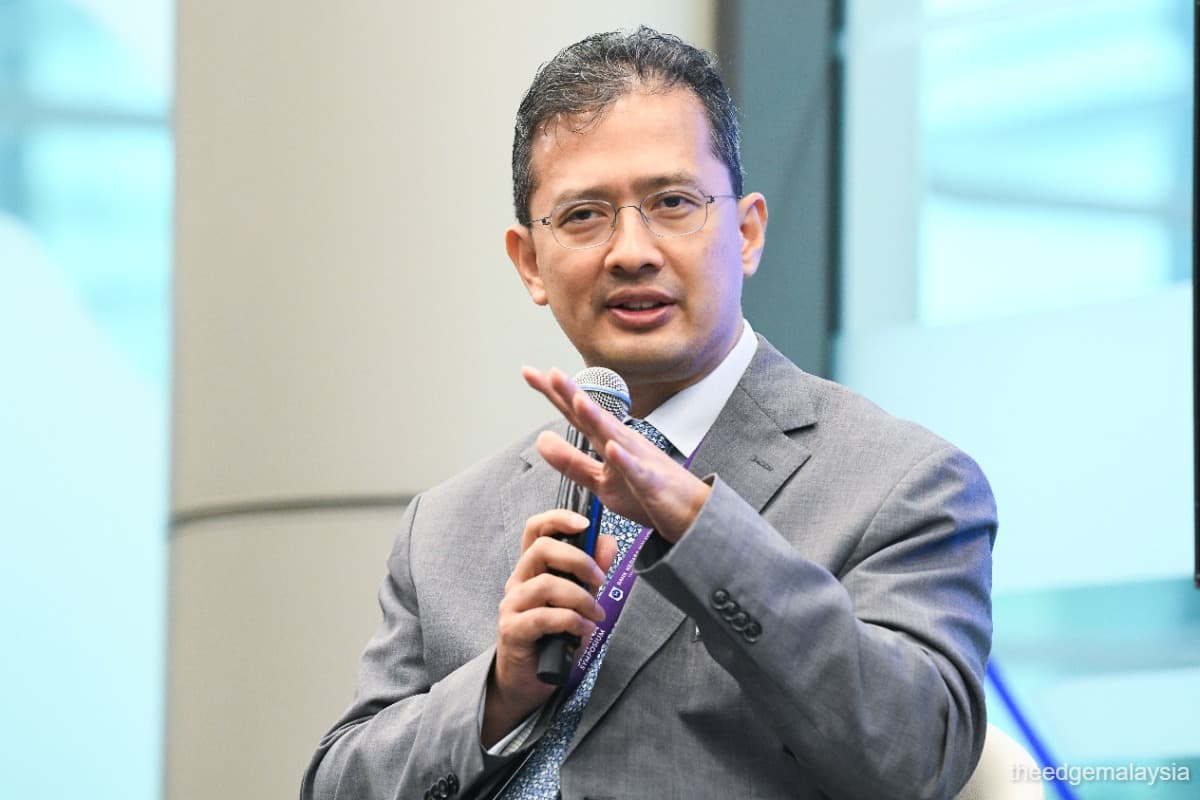
KUALA LUMPUR (June 18): Wealth tax is conceptually attractive but difficult in implementation due to data and administrative limitations, said Datuk Johan Mahmood Merican, the Ministry of Finance's secretary general of Treasury.
“It’s very intellectually attractive, this idea of bringing into tax wealth,” he said. “But maybe from a tax administrator’s point of view, it is quite challenging. Even the declaration of wealth is not a straightforward matter.”
Unlike income or consumption taxes, which are trackable via financial transactions, wealth taxes require complex asset valuations, especially for illiquid or opaque assets such as private businesses or residential property.
“How do you value a home if there’s no recent transaction? How do you assess the worth of a private business that hasn’t been listed or sold?” Johan commented during a panel discussion on Social Safety Nets: Securing the Future at Bank Negara Malaysia’s Sasana Symposium 2025.
He noted that the government has moved to implement a proxy for wealth tax through a 2% tax on dividend income exceeding RM100,000, introduced in Budget 2024.
"We don’t have wealth tax, but at least in last year’s budget we introduced a dividend tax…not very popular, but again it’s an attempt to also tier it because it’s a good proxy,” Johan said.
He emphasised that such incremental measures are part of a broader fiscal strategy that aims to enhance equity without triggering systemic disruptions or creating excessive administrative burdens.
“Reform needs to be phased and carefully sequenced. It’s not just about collecting more revenue, but doing so in a way that maintains public confidence and social cohesion,” Johan said.