

KUALA LUMPUR (June 17): Petroliam Nasional Bhd (Petronas) has confirmed that work is being undertaken towards the development of Malaysia’s third regasification terminal.
This is part of the government’s effort to address the expected surge in electricity demand, which was boosted by energy-intensive data centres.
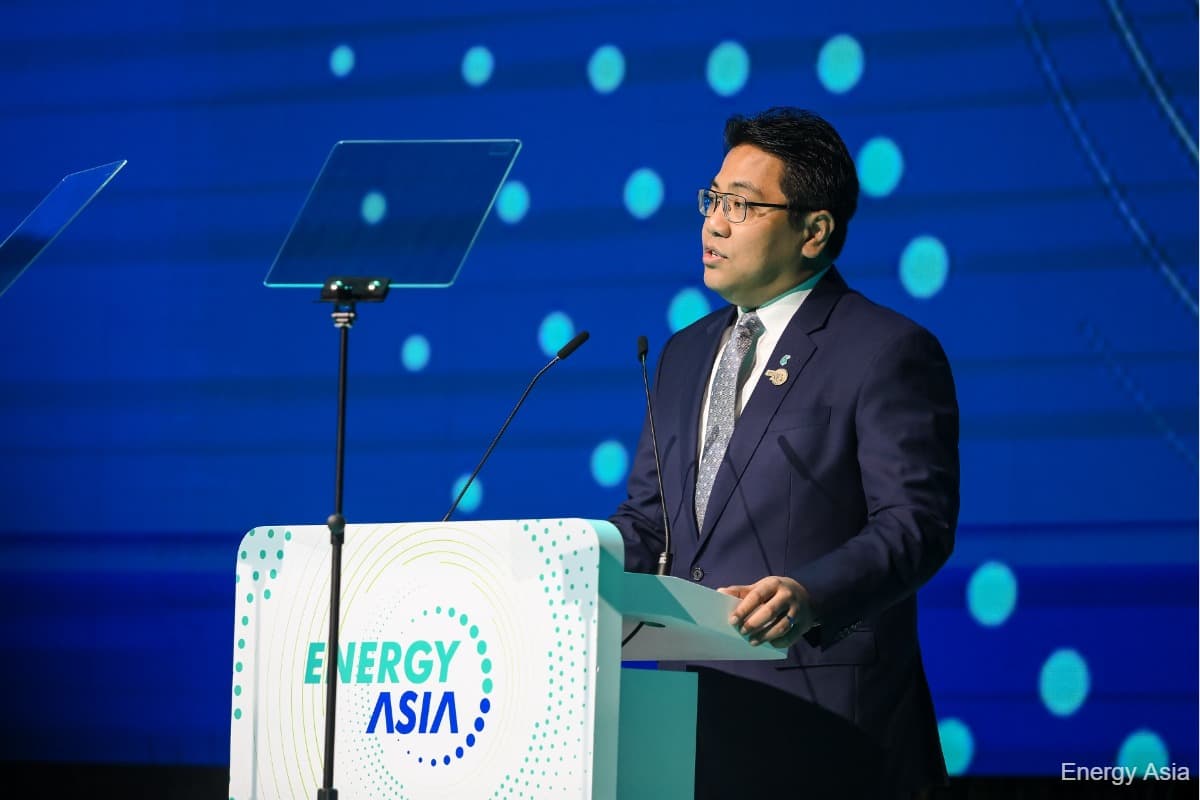
Petronas president and group chief executive officer Tan Sri Tengku Muhammad Taufik Tengku Aziz said the state-owned oil and gas firm is already preparing for this scenario, recognising the future potential need of liquefied natural gas (LNG) imports.
“We are, and I think this has already been reflected in the government’s plans, working to get a third regasification terminal up and running,” Tengku Muhammad Taufik said during a press conference on Tuesday.

The Edge Malaysia weekly, in its March 31 issue, citing sources, wrote that Petronas was to build the country’s third regasification terminal to ensure supply security in Peninsular Malaysia.
Malaysia already has two existing regasification terminals, one in Sungai Udang, Melaka, and another in Pengerang, Johor. Petronas has interests in both via Petronas Gas Bhd (KL:PETGAS), joined by partners.
Tengku Muhammad Taufik on Tuesday said that while Petronas retains an advantageous position in East Malaysia to export LNG to its long-term partners for their energy security, the peninsula’s demand needs are growing, and a growing dependence on LNG is expected.
He noted there will come a time when the peninsula's production will be outstripped by demand, ushering the need for LNG imports.
“And, I think, in tandem with the gas reforms, we can expect in the next four or five years, there is going to be growing dependence on LNG importation,” he said.
Regasification terminals are fundamental to the import of natural gas. To ensure economical transport, natural gas is cooled to sub-zero temperatures turning it into a liquid — enabling 600 times more volume to be shipped.
Once the LNG arrives at the importing country, the regasification terminal will vaporise the LNG into gas, allowing it to be distributed domestically via gas pipelines.