

KUALA LUMPUR (April 22): The government is considering the introduction of specific guidelines for the disposal and recycling of solar panels and electric vehicle (EV) batteries, amid rising volumes of green technology waste and growing environmental concerns.
Minister of Natural Resources and Environmental Sustainability Nik Nazmi Nik Ahmad told The Edge in an interview that while existing regulations under the Department of Environment (DOE) already cover these waste streams, there is a growing need for targeted policies to address their characteristics and life cycles.
“Most of our existing regulations already cater to and address this issue. But it's broad, so you have to go into detail to look at it,” Nik Nazmi said. “Since EVs and solar are a bigger issue now, we’re thinking that we need to focus on those materials under one guideline.”
The move comes as Malaysia experiences a surge in solar panel installations, underpinned by favourable government policies and its long-term renewable energy transition strategy. Under the National Energy Transition Roadmap (NETR), Malaysia aims to generate 70% of its electricity from renewable sources by 2050, with solar energy projected to contribute over half of that figure.
However, concerns mount over the country’s readiness to manage the solar waste that will inevitably accumulate as panels reach the end of their 20- to 30-year life cycles.
Currently, Malaysia lacks a specific infrastructure for large-scale solar panel recycling, raising the risk of improper disposal that could result in environmental harm due to toxic materials such as cadmium and lead in certain panel types, according to industry concerns.
Many decommissioned solar panels are also exported to other developing countries rather than recycled, as reselling yields higher returns. However, the process blurs the visibility of end-of-life management, undermining efforts to develop a circular economy in the renewable energy sector.
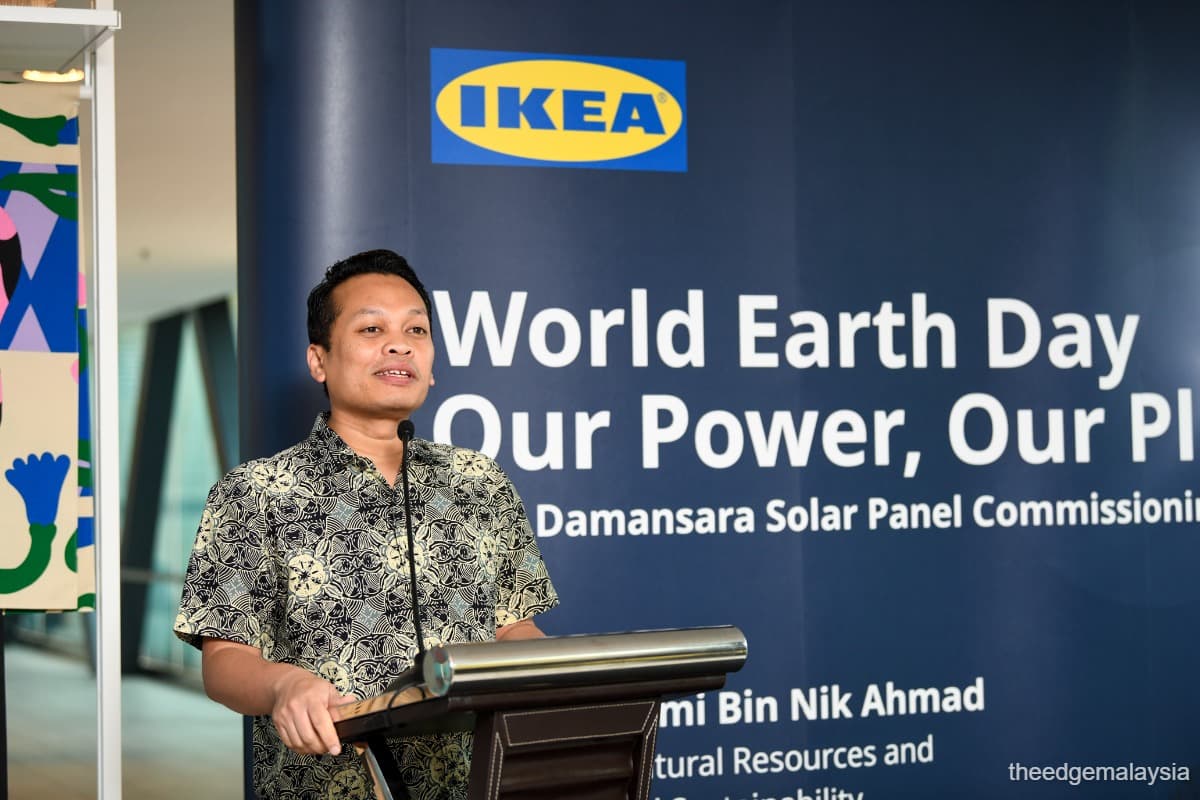
Nik Nazmi was speaking at the sidelines of his visit to IKEA Damansara on Tuesday, where he inspected the installation of 2,668 rooftop solar panels. Covering nearly 12,000 sq m, the installation is expected to generate 2MWh of energy annually and reduce carbon emissions by 1,330 tonnes per year.
IKEA Malaysia now operates a total of 20,437 solar panels across its stores and facilities nationwide, contributing to 6.3MWh in total renewable energy generation annually.
On that note, Nik Nazmi called for greater corporate involvement in the country’s sustainability agenda, particularly in renewable energy adoption.
“We want to encourage more corporate entities, be they multinationals, GLCs or others, to be part of sustainability initiatives like this. We can see the extent to which these companies can play a role in adopting solar energy,” Nik Nazmi said.