

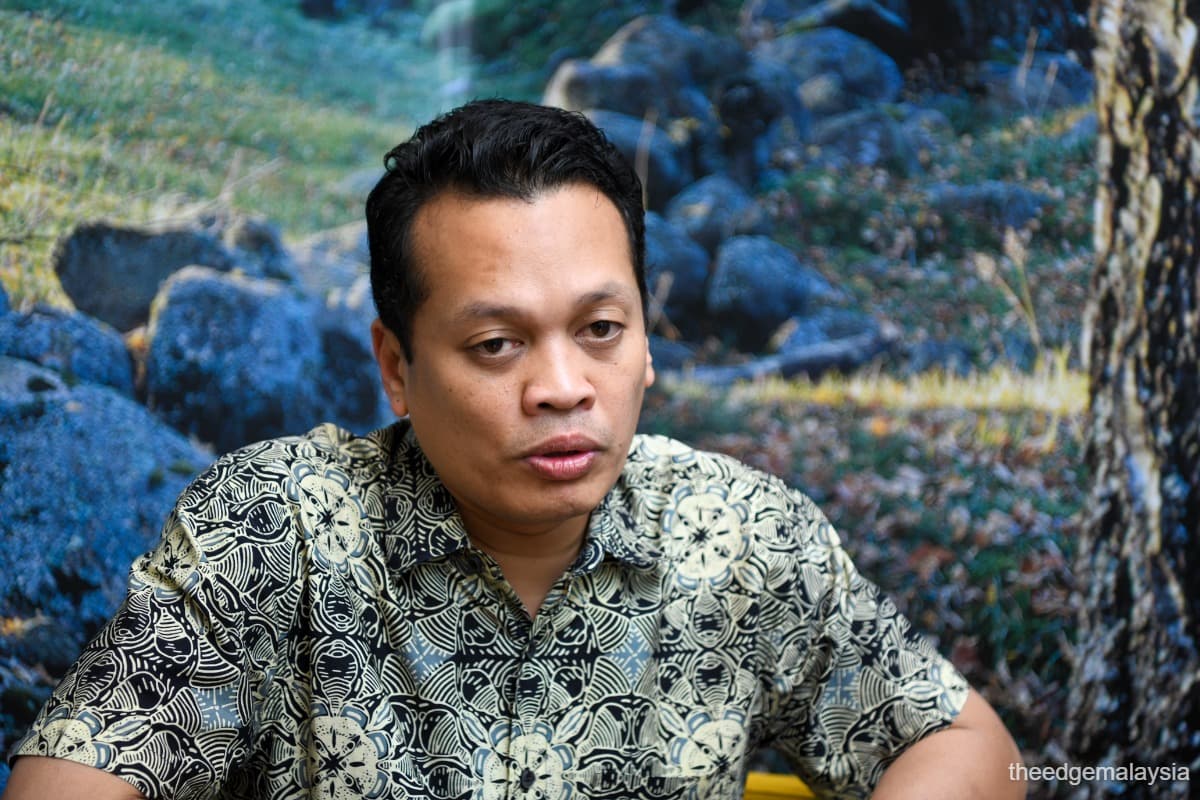
KUALA LUMPUR (April 22): Minister of Natural Resources and Environmental Sustainability Nik Nazmi Nik Ahmad said a carbon tax, which is expected to be imposed on the iron, steel, and potentially energy sectors, from next year should start low before gradually being increased.
Speaking exclusively to The Edge, he said starting with a low carbon tax is important to understand its economic and environmental impact before raising the rate.
Nik Nazmi’s ministry is mandated to drive climate action and catalyse green growth.
“Even if you look at Singapore, they started at a very low carbon tax. When you talk to some activists, they want to go really high. But I think we also want to understand the impact, [and] it is not an easy economic situation,” he said.
“This whole year, we are working on the policy. Engagements have already started, especially with the iron and steel industries, involving my ministry, the Ministry of Finance (MOF), the Ministry of Investment Trade and Industry, and others. As we speak, many of those discussions are being finalised,” Nik Nazmi said.
He stressed that the tax structure would be aligned with Malaysia’s net-zero goals and its upcoming climate legislation. Nik Nazmi did not share any specific rate or start date for the carbon tax, as discussions are still ongoing under the MOF.
The idea follows Singapore’s model, which introduced Southeast Asia’s first carbon tax in 2019 at S$5 per tonne. Singapore plans to raise it to S$50 to S$80 by 2030.
Nik Nazmi said the tax is also intended to protect Malaysia’s exports from the European Union’s Carbon Border Adjustment Mechanism (CBAM), which imposes tariffs on high-emission imports like cement and aluminium.
Malaysia’s energy sector is the biggest contributor to carbon emissions, due to its reliance on fossil fuels for power and transport.
Malaysia’s carbon tax was first announced by Prime Minister Datuk Seri Anwar Ibrahim during the tabling of Budget 2025, as part of the country's push for low-carbon technologies and lower emissions.