

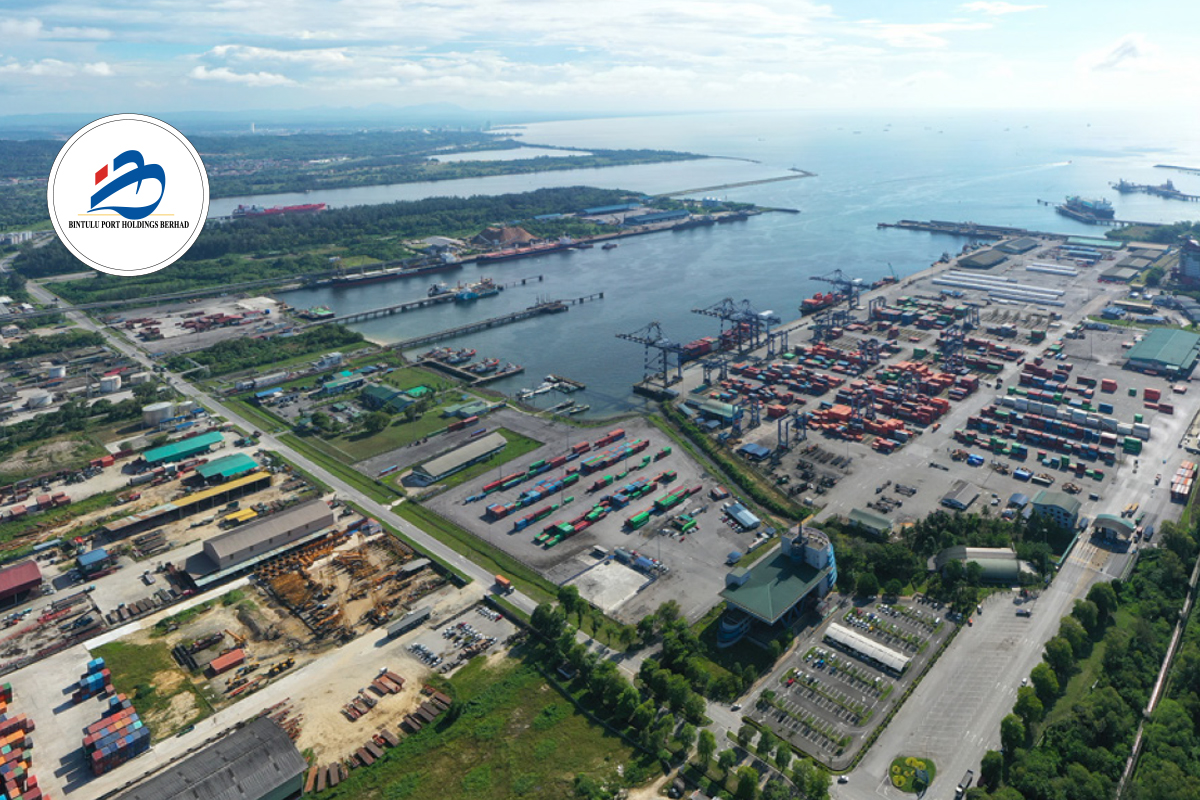
KUALA LUMPUR (Nov 27): Higher maintenance, fuel and manpower costs outweighed gains from stronger cargo handling activities at Bintulu Port Holdings Bhd (KL:BIPORT), causing its third-quarter net profit to more than halve despite higher revenue.
The port operator’s net profit fell 50.8% to RM15.87 million for the third quarter ended Sept 30, 2026 (3QFY2026), from RM32.22 million a year earlier, translating into lower earnings per share of 3.45 sen from seven sen previously.
Quarterly revenue rose 7.6% to RM219.88 million from RM204.43 million, supported by stronger cargo throughput at both Bintulu Port and Samalaju Industrial Port, according to its bourse filing on Friday.
However, the group's total expenditure increased 17.8% year-on-year to RM206.36 million from RM175.12 million, mainly due to higher repair and maintenance costs for port facilities and equipment, as well as higher expenditure on fuel and manpower.
Maintenance and operational supplies expenses surged 45.9% to RM72.91 million from RM49.98 million, while staff costs climbed 26.8% to RM48.06 million from RM37.91 million.
Revenue from port services at Bintulu Port grew 6.3% to RM159.37 million from RM149.93 million, driven by higher revenue from the handling of liquefied natural gas (LNG), bulk fertiliser and petrochemical methanol cargoes.
Revenue from Samalaju Industrial Port rose 12.5% to RM48.47 million from RM43.09 million, supported by the handling of manganese ore, quartz and alumina, while revenue from its bulking facilities increased 5.5% to RM12.04 million from RM11.41 million.
For the first nine months of FY2026, Bintulu Port’s net profit declined 20.2% to RM76.03 million from RM95.34 million in the same period last year, despite revenue growing 8.8% to RM653.92 million from RM600.96 million.
The group declared a third interim dividend of four sen per share, unchanged from a year earlier, payable on Dec 22, bringing its total dividend for FY2026 so far to 10 sen per share.
On prospects, Bintulu Port expects LNG cargo handling and vessel calls to continue underpinning its operational performance.
“Looking ahead, the handling of LNG cargoes and vessel calls will remain the group’s key revenue contributor, supported by the handling of other liquid bulk cargoes at Bintulu Port and bulk cargoes at Samalaju Port,” it said in a separate statement.
Investment losses to drag on 4Q earnings
Bintulu Port’s full-year earnings, however, are set to be affected by the decline in the value of its investments in two unit trust funds managed by AmanahRaya Investment Management Sdn Bhd (ARIM), following the write-off of sukuk issued by Zetrix AI Bhd (KL:ZETRIX).
In a separate filing earlier on Friday, the group disclosed that the carrying value of its investments in the two funds had declined by an estimated RM147.91 million between Nov 6 and Nov 10, an amount nearly twice its net profit for the first nine months of FY2026.
Bintulu Port clarified in its quarterly results filing that the decline in investment value had not been reflected in its third-quarter financial statements as it occurred after the reporting period.
“The decline in NAV (net asset value) is, therefore, not reflected in the financial statements for the current quarter and will be recognised in profit or loss in the fourth quarter of the financial year ending 31 December 2026,” it said.
The group reiterated that the decline constitutes a non-cash fair value adjustment that does not affect its operations or ability to meet its obligations, although the amount and timing of any recovery remain uncertain.
It also disclosed that ARIM had extended the suspension of dealings in units of the two funds to Dec 14, from Nov 23 previously.
Shares of Bintulu Port were untraded on Friday. It last closed at RM5.20 with a market capitalisation of RM2.39 billion.
Read also:
Bintulu Port flags RM147.9m paper loss from Zetrix AI-linked unit trusts
Zetrix AI says unable to repay RM2 bil sukuk now, expects 15% revenue hit from JPJ suspension
AmanahRaya Investment Management writes off Zetrix Al sukuk across four funds — memo
Bintulu Port exposed to Zetrix AI sukuk write-off in two ARIM funds