

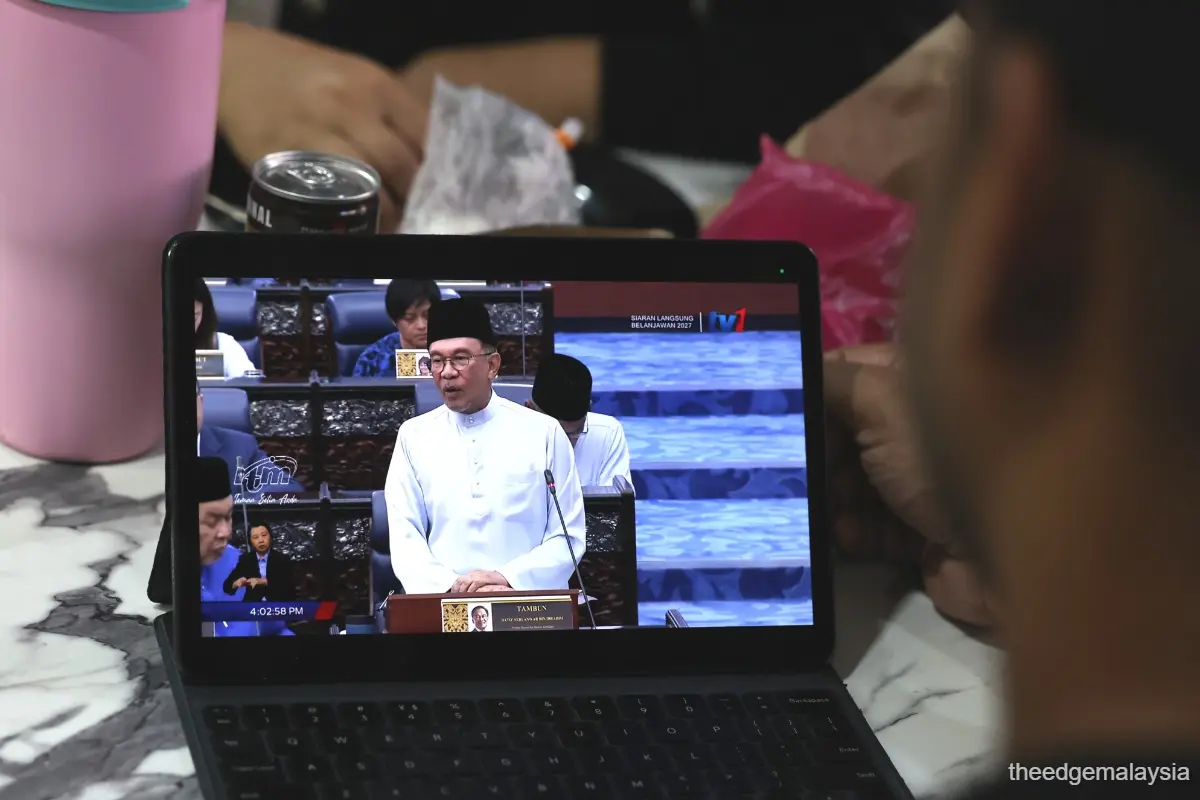
KUALA LUMPUR (Nov 26): Prime Minister Datuk Seri Anwar Ibrahim has survived a crucial political test after the Dewan Rakyat passed the Supply Bill 2027, also known as Budget 2027, on Thursday.
Dewan Rakyat Deputy Speaker Datuk Seri Ramli Mohd Nor announced that the bill had been passed at its third reading through a voice vote, with no opposition members of Parliament rising to demand a bloc division.
Following its passage in the lower house, the bill will be referred to the Dewan Negara before being presented for royal assent.
Anwar's government entered Thursday's vote amid political uncertainty, with tensions growing between the two key coalitions in the administration, Pakatan Harapan (PH) and Barisan Nasional (BN).
The passage of Budget 2027 provides a political reprieve for Anwar, reinforcing his government's position in Parliament at a time when BN leaders have been repeatedly calling for an early general.
Earlier in the afternoon, 33 MPs debated the Education Ministry's allocation, while another 19 debated the Youth and Sports Ministry's budget.
Finance Minister II Datuk Seri Amir Hamzah Azizan subsequently tabled the bill for its third reading and sought its passage.
Budget 2027 was tabled on Oct 9, and underwent eight days of policy-stage debates from Oct 12 to 22, followed by four days of ministerial replies from Oct 26 to 29 and 14 days of committee-stage debates.
The fifth budget under the Anwar administration provides for total federal spending of RM459.8 billion — RM376.8 billion in operating expenditure and RM83 billion in development expenditure.
Anwar is also tapping government-linked investment companies for another RM25 billion, and public-private investments of RM11 billion. Federal statutory bodies and companies owned by Minister of Finance Incorporated are expected to invest a further RM14.2 billion.
Federal revenue for 2027 is projected at RM380.8 billion with the rest funded by borrowings.
The government aims to narrow the fiscal deficit to 3.3% of gross domestic product in 2027 from an estimated 3.6% in 2026.
For more Parliament stories, click here.