

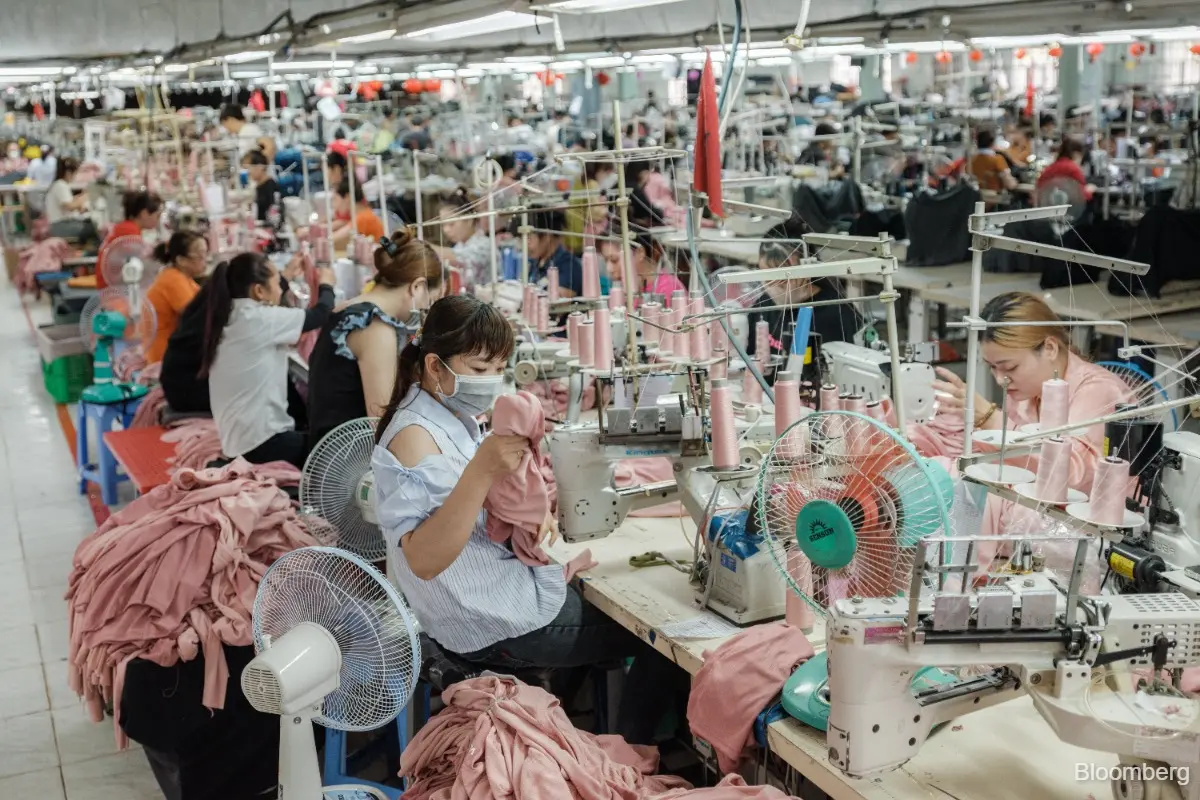
(Nov 26): President Donald Trump’s latest tariff push risks undercutting one of the signature shifts in global manufacturing since the US-China trade war began: the movement of supply chains out of China.
The levies on 14 economies in Asia and Europe would hit some of the biggest winners from the so-called “China+1” investment boom. Countries like Vietnam could end up with rates approaching or even in some cases exceeding those on Chinese goods, though there are many exemptions that keep effective charges lower than the headline rates.
Still, as well as upsetting governments — who’ve been lining up to condemn the latest US trade offensive — the measures announced on Wednesday will likely cause unease in plenty of corporate headquarters too. They signal that shifting production away from America’s superpower rival may no longer be enough to keep companies insulated.
A lot of firms “will say: ‘Well, screw it, we’re just going to go back to China,’” said Deborah Elms, head of trade policy at the Hinrich Foundation in Singapore. “‘Why would we be dealing with this massive amount of paperwork, compliance costs and tariff changes with the threat ahead if we don’t need to.”
Dan Wang, a director at Eurasia Group’s China team, added: “It’s a year for many companies to rethink their cost synergy, and that means more layoffs, more automation, more AI application and consolidation of different markets. So moving things into a different region is not desirable.”
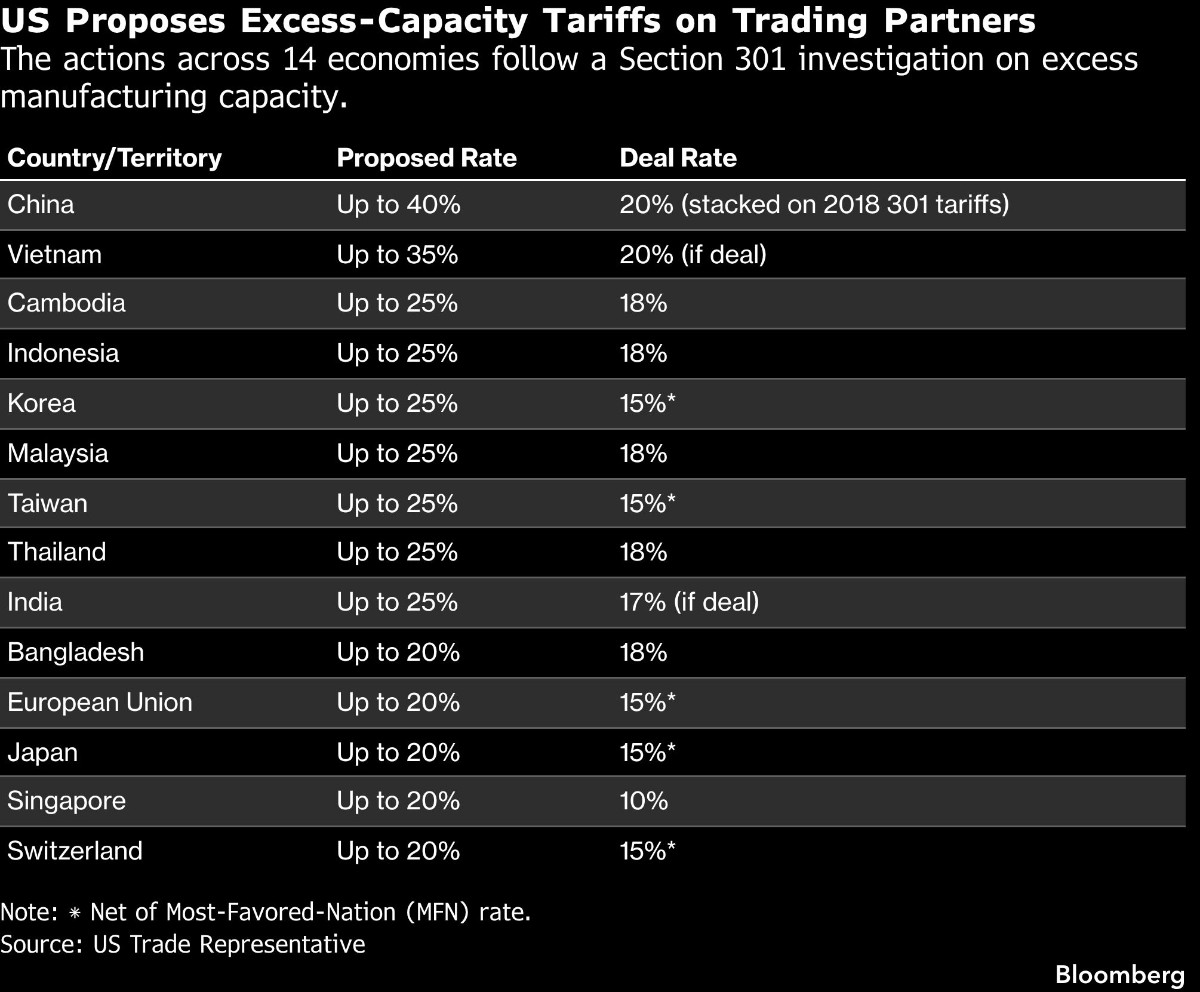
The Trump administration is seeking to restore tariffs that were shot down by the Supreme Court because they lacked proper legal foundations. The new ones will be imposed based on US assessments of overcapacity in manufacturing, defined as production persistently above what market conditions would support because of government policies or intervention.
Outlining its new policy, the US Trade Representative blamed China for encouraging the expansion of manufacturing capacity abroad. That’s particularly relevant in Southeast Asia, where many have seen a surge in factory output and exports to the US as Chinese firms set up shop there. The US faulted the region’s countries for failing to adequately address investment, and transshipment of goods, from “non-market” economies, typically code for China.
The proposed US tariffs could rise as high as 35% for Vietnam, 25% for India and 20% for Singapore, though countries could secure lower rates by cutting deals with Washington. China will be charged 20% on top of other pre-existing duties, and may face steeper levies if the trade truce breaks down.
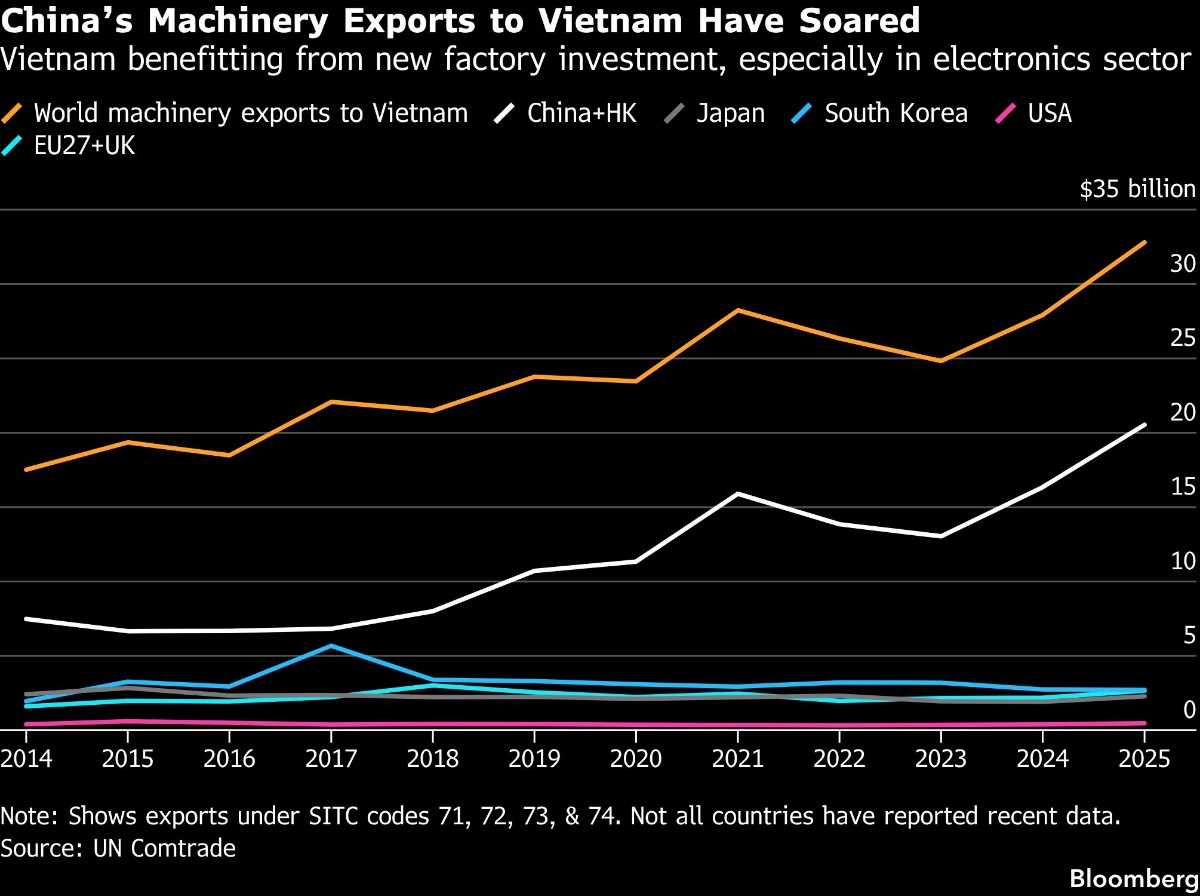
The push to diversify from China accelerated after Washington first imposed tariffs on Chinese goods in 2018, prompting manufacturers to expand elsewhere in Asia while often retaining operations and suppliers in China. By 2025, foreign direct investment into Southeast Asia had reached a record US$246 billion (RM1.012 trillion), surpassing East Asia for the first time since the early 1990s.
Manufacturing FDI soared almost 50% last year alone to US$40 billion, according to the Association of Southeast Asian Nations, as the region attracted investment in electronics, semiconductors, vehicles and other industries.
Assuming outstanding trade deals are completed, the new rates “would narrow” the advantage many Southeast Asian exports have over Chinese goods, though probably not erase it because manufacturing supply chains are “challenging to uproot,” said Erica Tay, an economist at Maybank Securities Singapore.
Vietnam is among the economies most exposed. One of the biggest beneficiaries of Trump’s first trade war, it has emerged as Southeast Asia’s growth champion, driven by surging output of electronic products like smartphones and laptops.
Vietnam posted a US$191 billion trade surplus with the US just in the first nine months of 2026, surpassing the US$178 billion in the full year of 2025, according to US Census data. At the same time, its deficit with China, which supplies most of its imports, also ballooned.
The mooted 35% tariff “would put Vietnam at a competitive disadvantage,” said Travis Mitchell, executive director of the American Chamber of Commerce in Vietnam. “Companies may have little choice but to explore shifting some of their production to other countries, potentially disrupting supply chains that have taken years to build.”
Vietnam’s Ministry of Industry and Trade responded to the new rates by saying it will participate in the next steps of the US investigation and continue to work towards a reciprocal trade agreement.
Other trade partners have voiced objections, with Singapore saying it was “very disappointed” by the latest US measures and Japan calling them “regrettable.”
“It sets a worrying precedent in extending an industry concept — structural excess capacity — to an economy-wide one,” said Jayant Menon, a visiting senior fellow at the ISEAS-Yusof Ishak Institute in Singapore.
For businesses, said Mitchell at the American Chamber in Vietnam, it’s yet another layer of confusion that makes it harder to see the road ahead.
“It is increasingly difficult for companies to make decisions on pricing, sales forecasts, production planning and future investments,” he said, “without knowing what tariff rates they will be facing in the coming months.”
Uploaded by Evelyn Chan