

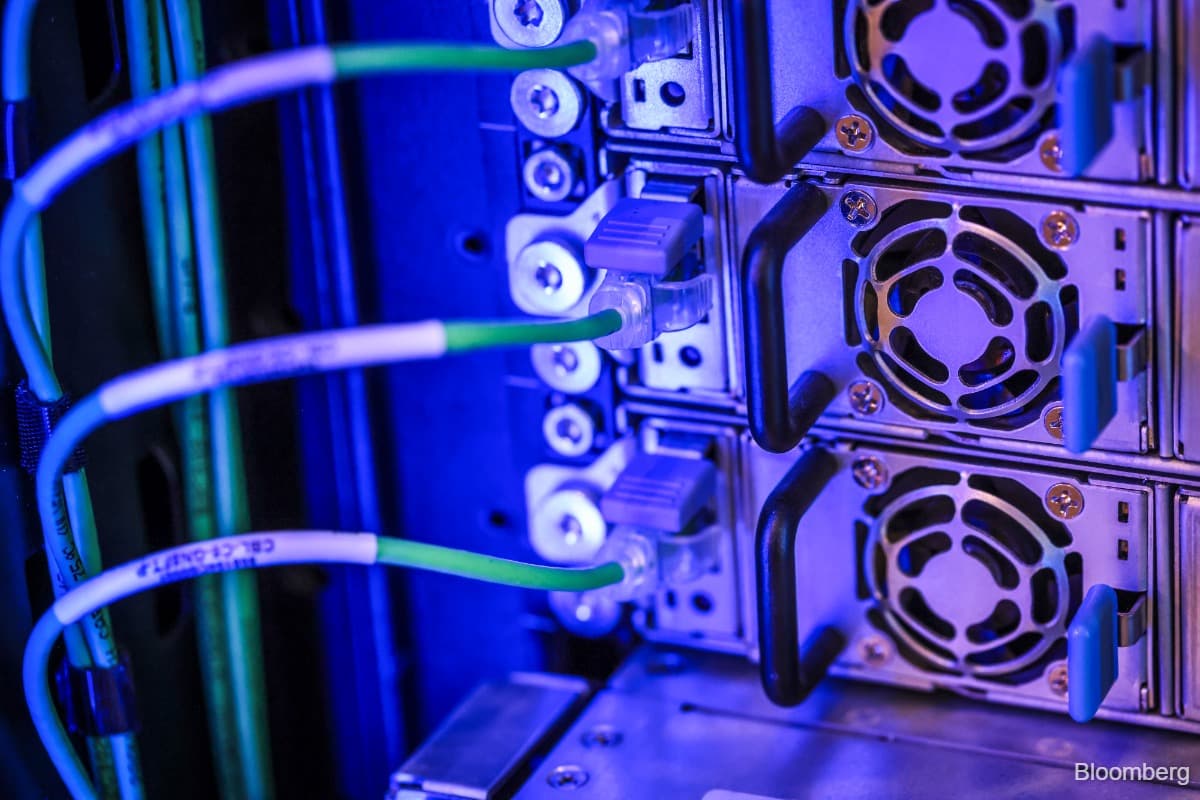
(Nov 26): Somewhere in Johor, behind a security fence and a row of immaculate landscaping, a data centre is humming.
The building sits on Malaysian land. It draws power from a Malaysian grid and water from Malaysian pipes, and it was approved by Malaysian ministries. The chips inside may be American, the investors Singaporean, the customers anywhere.
Since Nov 16, there is a new fact about that building. Under an interim final rule from the US Commerce Department, supplying significant AI computing power from it to a customer headquartered in China is treated as if the chips themselves had been exported. Malaysia, along with Singapore, Indonesia, Thailand and Brazil, has been designated a destination with an "unacceptable risk of diversion", and advanced chips bound here now need an American licence.
Put plainly: every time a customer logs in to that building in Johor, the question of whether the law has been broken is answered in Washington, not Putrajaya.
The return of extraterritoriality
Southeast Asia has seen this arrangement before. In the nineteenth century, Western powers secured extraterritorial rights across Asia: their nationals and their commerce answered to their own consular courts, not to local law. Siam accepted such terms from Britain in the Bowring Treaty of 1855 and spent the next eight decades negotiating its way out. Shanghai's International Settlement ran on foreign rules on Chinese soil.
The comparison should not be pushed too far. Nobody is sending gunboats to Johor, and the American security concern is real. Advanced chips are central to military as well as commercial AI, and reports of smuggling and remote access through third countries are not invented.
But the mechanism is recognisably similar. The physical asset is ours. The legal regime governing its most valuable activity is someone else's. And the local operator becomes the enforcer: data centres must now know not only their customer but, as one analyst put it, their customer's workload.
The treaty ports were also, it is worth remembering, enormously profitable. That is precisely why so few people questioned them at the time.
We have already signed up, partly
Malaysia did not wander into this. In October 2025, Putrajaya signed the Agreement on Reciprocal Trade (ART) with Washington to blunt unilateral US tariffs on our largest export market. Article 5.2 covers cooperation on export controls.
Critics, including MCA president Datuk Seri Dr Wee Ka Siong, read the agreement as requiring Malaysia to adopt measures with equivalent restrictive effect to those the US imposes. The Ministry of Investment, Trade and Industry (Miti) insists the export-control provisions are anchored in Malaysian law and apply only where interests are shared.
The chip rule is the first real test of who is right. If ART means cooperation, Malaysia should have been consulted before being named a diversion risk, and should now have a formal channel to shape how the rule is applied here. If it means only alignment, we have learned what "reciprocal" covers.
Malaysia has kept its side of the bargain on enforcement. In 2025 it introduced permits for the export, transshipment and transit of high-performance US AI chips. Miti and the police are investigating Speedmatrix Sdn Bhd, a tenant at local data centres linked to Singapore-based Megaspeed, over US allegations of chip diversion. Megaspeed says it conducted legitimate business, and no finding of wrongdoing should be assumed.
But the point stands. Malaysia is not a passive back door. It is enforcing, and it was put on the list anyway.
Rules for some, discretion for others
Now consider the fortnight in which all this was announced.
On Nov 12, Jensen Huang resigned as Nvidia's chief executive officer amid reports of a relationship with a former Megaspeed executive. The US Commerce and Justice departments said their investigation into Megaspeed over suspected chip diversion dated back to 2024. At its earnings call days later, Nvidia's board said it did not intend to reinstate him.
On Nov 23, it reversed itself, unanimously. The board said it had received input from senior levels of the US government and was confident his return posed no national security risk. Bloomberg reported that US President Donald Trump had pressed for the move.
I make no judgement on Huang. The lesson for Malaysia is about the system, not the man. Within eleven days, Washington's input helped settle a question of national security risk at the company at the centre of the affair, while a five-country list it drew up in the same window branded an entire region a diversion risk.
That is not a rules-based regime. It is a discretionary one. And discretion is leverage. A licence that can be granted quickly or slowly is a bargaining chip in the next tariff round, the next sanctions request, the next difficult vote. Malaysian operators should price that in. Malaysian negotiators should assume Washington already has.
A two-tier market
One detail of the rule deserves far more attention than it has received. Shipments to companies headquartered in the US, or whose ultimate parent is, are exempt from the new country-specific licence, subject to conditions.
Washington's logic is easy to follow: it trusts its own companies. The commercial effect is just as easy to follow. In Johor, an American hyperscaler and a Malaysian operator may sit a few kilometres apart, buy the same chips and court similar customers. One goes straight through. The other joins a licensing queue whose speed is set in Washington.
Whatever its intent, the effect is a moat. Any Malaysian company hoping to become a regional AI cloud champion now starts behind the American giant down the road, on Malaysian soil and on Malaysian power.
Security policy that quietly picks commercial winners should be named for what it is.
Who actually benefits?
Malaysia approved RM385.7 billion in data-centre-related investment between 2021 and the first half of 2026. It is an extraordinary number, though an approval is not the same as money spent.
A more revealing figure came from Miti last year. When approved data-centre investment stood at RM144.4 billion, the projects were projected to create 1,429 new jobs. That is roughly one job for every RM100 million.
Those jobs matter, and data centres bring construction, power and supply-chain spending that a jobs count misses. But the arithmetic is uncomfortable. On current terms, Malaysia is not building an AI economy. It is renting out land, power and water to other people's AI economies, and under the new rules the landlord no longer decides whom the tenants may serve.
The sector's electricity demand is projected to exceed 5,000MW by 2035. The public are entitled to know what that costs, who pays for the grid upgrades and what host communities receive in return.
Two switches
So who holds the switch? There are two.
Washington holds the legal switch: the chips, the licences and the definition of who may use them. Malaysia holds the physical one: the land, the grid connection, the power tariff and the water. Once the substations are built, a data centre cannot move to a friendlier jurisdiction. That is leverage, and we have barely used it.
Indonesia offers a precedent. When Jakarta banned exports of raw nickel ore in 2020, it was accused of economic nationalism. It also got smelters built onshore and made itself central to the global battery supply chain.
Malaysia could practise compute downstreaming. Grid connections and preferential power tariffs for large data centres could carry a condition: a defined share of capacity reserved, at a regulated price, for Malaysian universities, research institutions, start-ups and SMEs. Reporting on local hiring, local procurement and research done here could be tied to the same terms.
None of this need breach US rules. Malaysian universities and SMEs are not the diversion risk Washington worries about. It simply ensures that some of the computing power installed on our soil serves the people who host it.
It works best if Asean does it together. Malaysia, Singapore, Thailand and Indonesia are now on the same list. If we agree common terms on customer due diligence, ownership transparency and local access, operators cannot play us against one another. Washington would face one regional standard it could recognise, rather than four governments it can manage one at a time.
The aim is not to pick a fight with the US, nor to offer China an escape route. It is to stop mistaking the cheque at the signing ceremony for a strategy.
Back in Johor, the servers will keep humming. The question for Malaysia is whether we intend to help shape the future being built there, or simply provide the room in which somebody else builds it.
Abbi Kanthasamy is a Canadian entrepreneur, photographer and writer.