

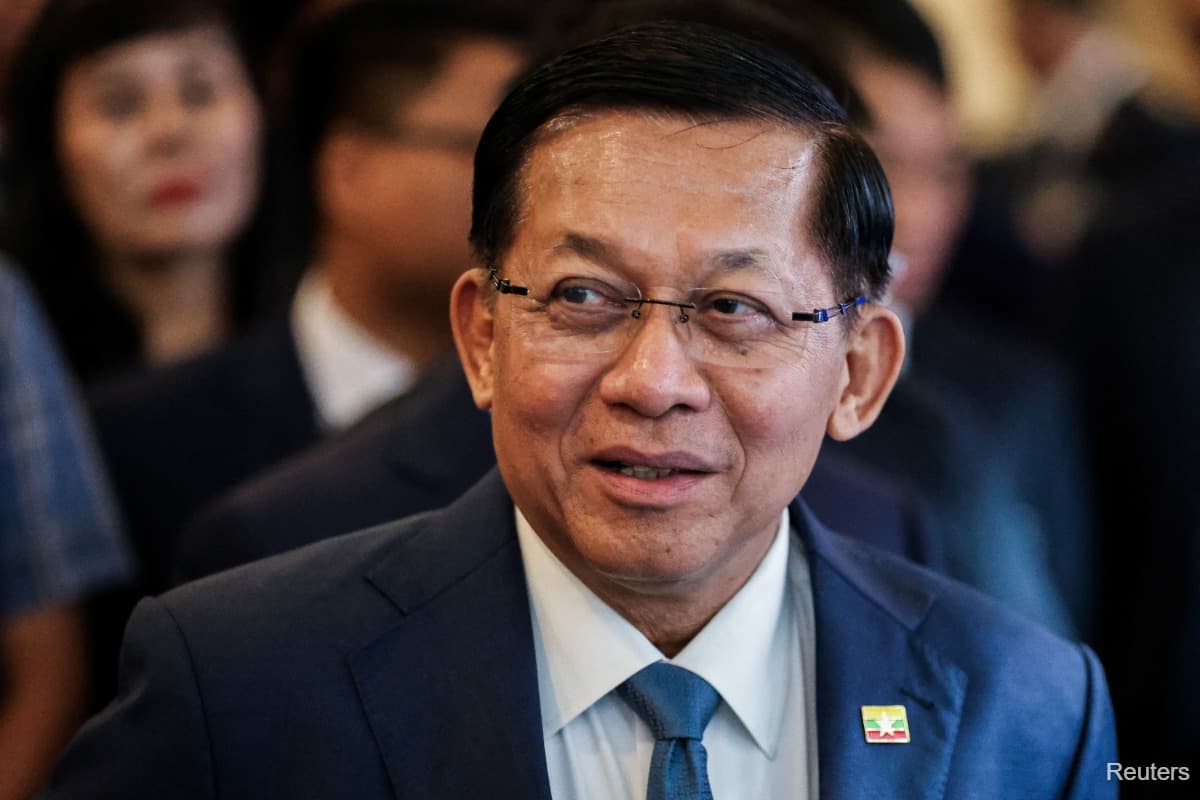
(Nov 26): Myanmar's military-backed president has said his administration will not comply with all measures ordered by the UN's top court, which last week ruled that the country's security forces had committed genocide against the Rohingya.
The International Court of Justice found that the Myanmar military's actions against the mainly Muslim Rohingya minority in 2017, including thousands of killings, the burning of hundreds of villages and widespread sexual violence, amounted to genocide — and ordered a slew of measures.
The ruling by the ICJ, the first instance of the UN court holding a state responsible for genocide, is final but the court has very limited options to enforce it.
In his first public comments since the ruling, Myanmar's junta chief-turned-president Min Aung Hlaing rejected the ICJ verdict and said the term "genocide" had damaged the country's reputation.
"Myanmar would take actions appropriate for a responsible country but would not comply with requirements it considered inappropriate," he said in a meeting on Wednesday, according to state media.
Min Aung Hlaing did not elaborate on what court orders his administration considered inappropriate.
The ICJ has ordered Myanmar to end ongoing breaches of the Genocide Convention and promptly investigate, prosecute and punish people reasonably suspected of involvement in the 2017 military operations. It also ordered the country to provide guarantees that such violations will not be repeated.
Myanmar must also facilitate the return of displaced Rohingya, restore or replace lost property, help locate missing people, provide rehabilitation to survivors, and protect Rohingya from discrimination and persecution.
The court further ordered Myanmar to pay compensation for the harm caused to Rohingya that is not remedied through restitution.
Myanmar must report back within two years on the measures it has taken, including proposed compensation, the order said.
Myanmar has maintained that operations undertaken by its security forces in northern Rakhine state during 2016–2018 were counter-terrorism actions against an insurgent group.
The country's foreign ministry has previously said that operations were "not carried out with genocidal intent but instead were limited in scope and duration, lasting only a matter of days."
The 2017 military crackdown drove more than 730,000 Rohingya from Rakhine state into neighbouring Bangladesh, where the refugee population in sprawling camps has now swelled to about 1.2 million.
Uploaded by Magessan Varatharaja