

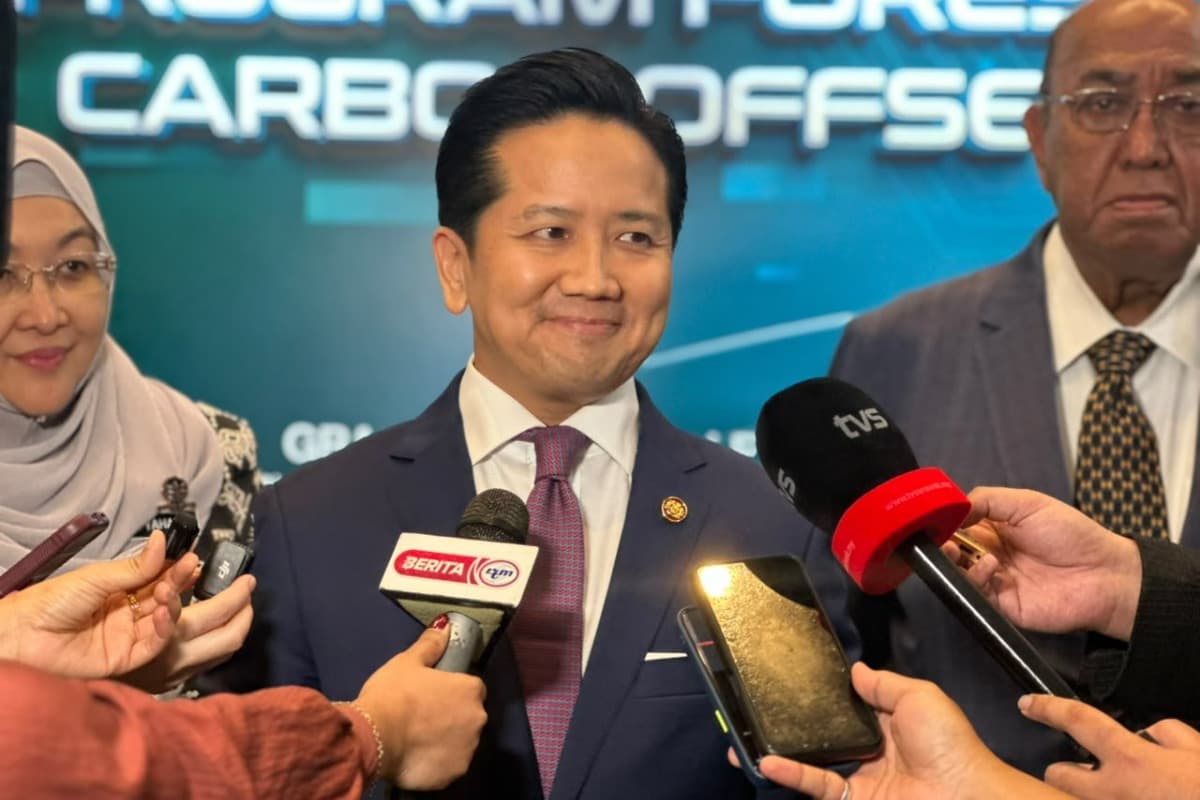
KUALA LUMPUR (Nov 26): The Malaysia Forest Fund (MFF) has launched the Forest Carbon Offset (FCO) programme to mobilise financing for forest conservation, restoration and sustainable management.
FCO, the national carbon crediting system for the forestry sector, is designed specifically around Malaysia’s forest ecosystems and federal and state legal requirements.
It aims to lower participation costs, build local expertise and ensure more funding remains available for conservation and communities.
The programme also gives local forest projects a domestic carbon crediting option alongside international programmes such as Verra’s Verified Carbon Standard (VCS).
The programme was developed by MFF, an agency under the Ministry of Natural Resources and Environmental Sustainability (NRES) tasked with developing financing instruments to support forest conservation and management.
“So it’s important for us to have our own verification, measurement and reporting as well. Once we do this, then we can have a database for what are the carbon credits in our country, and then it will allow international trading, and then we can comply with Carbon Border Adjustment Mechanism and the Carbon Offsetting and Reduction Scheme for International Aviation (CORSIA), which is the aviation carbon offset for international aviation,” said Natural Resources and Environmental Sustainability Minister Datuk Seri Arthur Joseph Kurup.
“We want to be involved in international trading and the international market, but we need to get our system correct first, and have our own established system… As we move forward, then we'll see how we start trading internationally, because we're still waiting for the Climate Change [Bill] to be passed, so then we'll have a clearer picture. But the policy is there,” he said at the launch of the FCO programme at Aloft Kuala Lumpur Sentral.
Under FCO, eligible forest projects can generate carbon credits, known as Forest Carbon Units, for reducing or preventing greenhouse gas emissions or removing these gases from the atmosphere, once the results have been independently verified.
The credits can then be sold to buyers seeking to offset their emissions, subject to the programme’s requirements.
“The launch of the Forest Carbon Offset or FCO programme is a major step in implementing the National Carbon Market Policy (DPKK), introduced in April this year, and in advancing Malaysia's carbon market ecosystem. Among other things, the DPKK recognises FCO as the national crediting system for the forestry sector, which will support Malaysia’s ambition to high integrity carbon credits,” said Arthur.
The credits have the potential for international use through cooperative approaches under Article 6.2 of the Paris Agreement and CORSIA, said the minister.
Project developers can participate in FCO at an initial cost of less than RM8,500, he added.
Ongoing fees for recording and managing carbon credits are also lower than those under other international standards.
“This also ensures that capital remains within the country rather than flowing out to foreign entities solely to cover crediting fees. Through FCO, we are building stronger incentives to protect our forests, restore degraded areas and manage our forest resources sustainably for present and future generations,” said Arthur.
Through the programme, MFF and NRES aim to generate additional sources of financing for state governments and forest stakeholders, create employment opportunities and develop local expertise, including auditors and assessors.
Local communities and Indigenous Peoples will also be key partners in forest protection and management.
“I sincerely hope that MFF will continue its efforts to strengthen the FCO Program through the development of new methodologies, while continuously improving and enhancing those that are already established. This is essential to ensure that any weaknesses and gaps identified during field implementation can be effectively addressed. I also look forward to MFF’s collaboration with domestic and international entities in developing the first forest carbon project capable of generating carbon credits by 2030,” he said.
MFF chairman Tan Sri Dr Abdul Majid Khan said FCO had been shaped through 37 consultations involving stakeholders, including state governments, project implementers and technical experts, to ensure the system was scientifically robust and practical to implement.
“Building a system is only the beginning. Building confidence is the real challenge. The success of FCO will not be measured solely by the number of documents published or carbon credits recorded. Its success will be measured by the level of trust it builds among state governments, project developers, investors and communities,” he said.
MFF will prioritise strengthening the system’s integrity, developing local expertise and expanding the number of high-quality projects while keeping pace with scientific, policy and market developments, said Abdul Majid.
MFF has developed methodologies covering four areas: afforestation, reforestation and restoration; improved forest management; reducing emissions from deforestation and forest degradation; and wetland ecosystems.
The methodologies and supporting tools have been piloted in Kelantan, Johor, Sabah and Negeri Sembilan to assess their suitability under different forest conditions.
Two additional methodologies covering urban forestry and agroforestry are being developed and will undergo pilot implementation and validation before being included in the framework.
FCO requires independent assessors to verify that projects meet its requirements and that the emission reductions or carbon removals they report are supported by evidence.
The central FCO Registry records each project and tracks the issuance, transfer and retirement of carbon credits.
Retired credits are permanently taken out of circulation so they cannot be sold or used again.
These records make credits easier to trace and help guard against double counting, whereby the same climate benefit is claimed more than once.
In addition to FCO, MFF introduced the Forest Conservation Certificate (FCC) in 2024 as a non-market-based financing mechanism that mobilises voluntary contributions from the private sector to support forest conservation efforts.
“FCO and FCC are complementary mechanisms that adopt a finance-stacking approach to mobilise consistent and structured financing over the long term in support of forest conservation, restoration and sustainable management. This approach also ensures that environmental integrity is maintained and double counting is avoided,” said Suhaini Haron, officer acting on behalf of MFF’s CEO.
Corporate and international partnerships support implementation
MFF also formalised collaborations with Tenaga Nasional Bhd (KL:TENAGA), Yinson Holdings Bhd (KL:YINSON), Japan’s Overseas Environmental Cooperation Center (OECC) and FRIM Inc Sdn Bhd to support forest conservation financing, project development and technical capacity building.
The partnerships cover potential forest carbon projects, biodiversity conservation, ecosystem restoration, knowledge-sharing and capacity building.
Under its collaboration with Tenaga, MFF will explore the utility company’s potential participation in both FCC and FCO, including identifying and developing biodiversity conservation projects that could qualify for certification under the two instruments.
The collaboration will also cover technical knowledge-sharing, capacity building and the exploration of methodologies and guidelines for monitoring, reporting and verifying conservation projects.
MFF’s partnership with Yinson focuses on developing nature-based solutions under FCO to halt and reverse forest loss and degradation, conserve biodiversity and manage carbon stocks.
Both parties will explore natural capital assessments and work with landowners to identify suitable areas and projects.
They will also develop a roadmap for potential projects, subject to agreement from the relevant stakeholders and landowners.
MFF and Yinson will explore ways for the company to help fund forest conservation through voluntary contributions under FCC, which could include efforts to help forests adapt to the effects of climate change.
According to MFF, FCC provides a transparent and measurable mechanism to support sustainability reporting by Yinson and other corporations, including disclosures relating to nature and biodiversity.
Meanwhile, the collaboration with OECC will support knowledge-sharing between Malaysia and Japan on carbon financing and crediting mechanisms.
It will also help strengthen FCC under Article 6.8 of the Paris Agreement, which supports international climate cooperation through non-market approaches.
OECC will also provide technical advice to support FCO’s development and operation, drawing on Japan’s experience with the J-Credit Scheme and Joint Crediting Mechanism.
The exchange will cover methodologies, governance, eligibility criteria and safeguards.
The partnership with FRIM Inc will combine MFF’s role in managing forest financing programmes with FRIM Inc’s expertise in forest research, technology and field data collection.
The work will include assessing forest conditions, measuring and verifying the carbon benefits of projects, using digital tools to map and monitor forests, and conducting research and training.